Subtotal $0.00

Red Vietnamese dragon fruit is available through multiple purchase channels, including direct B2B exporters like GOBE IMEX, international supermarkets, Asian grocery markets, e-commerce platforms such as Amazon and Alibaba, and specialty food stores. For international buyers seeking the freshest, most competitively priced pitaya with full traceability, purchasing directly from a Vietnamese exporter remains the most reliable route. Key import markets currently receiving Vietnamese red dragon fruit include Canada, the UAE, the UK, Germany, Japan, and Kuwait.
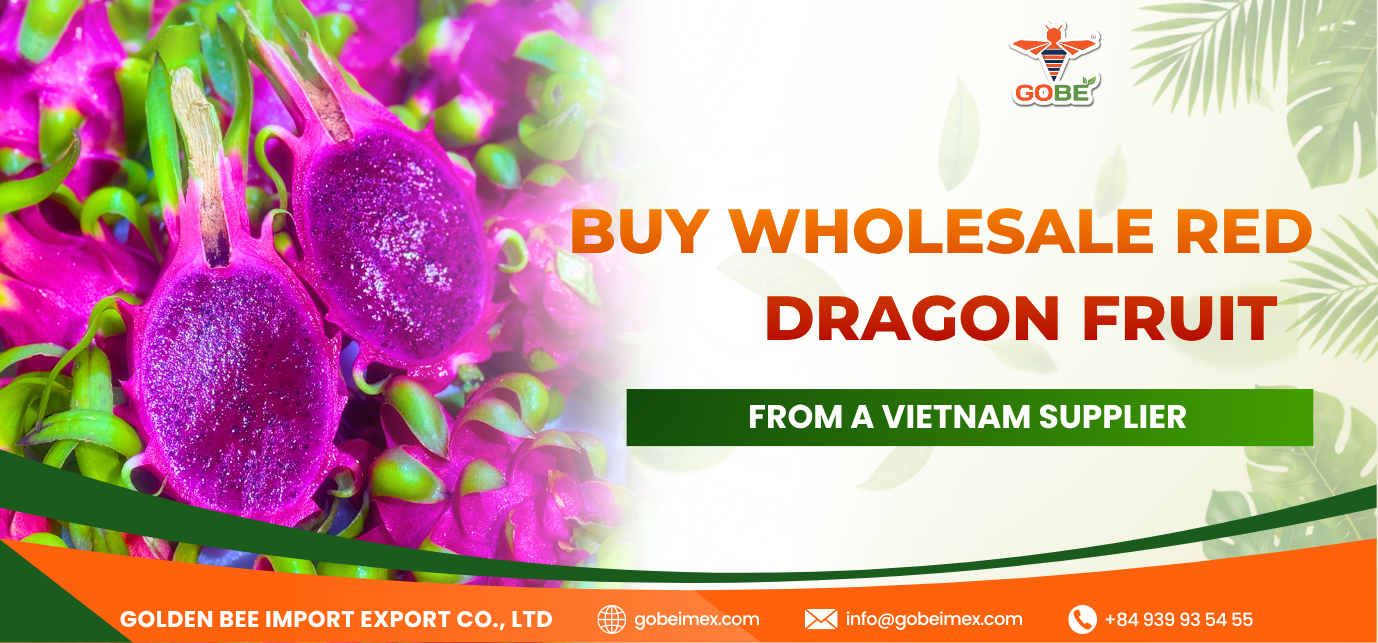
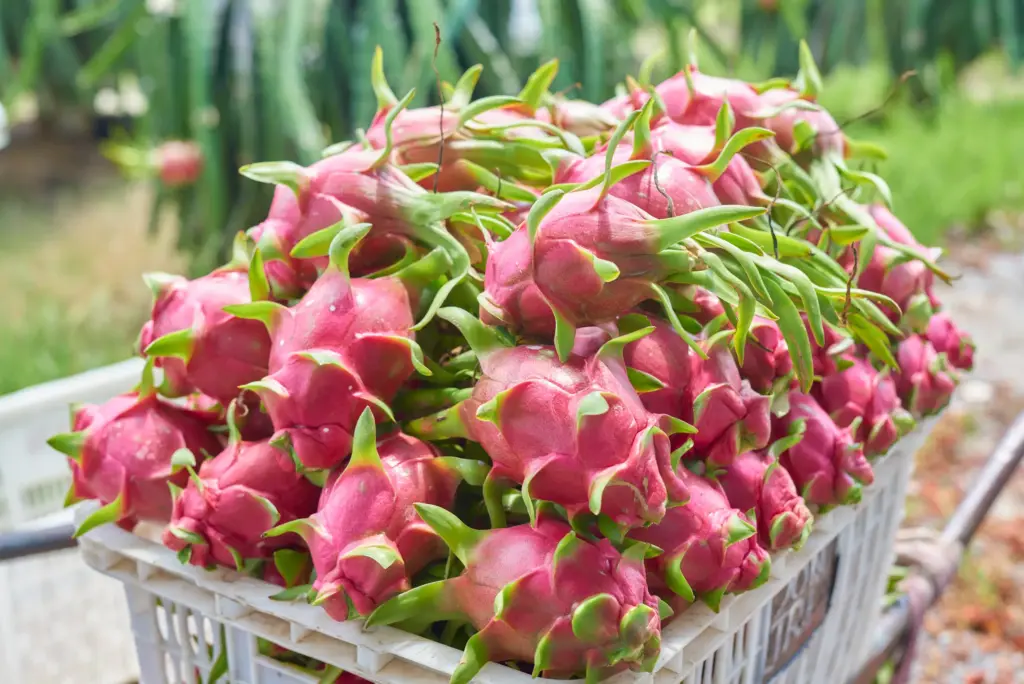
Fresh, sweet red Vietnamese dragon fruit is identifiable by specific visual and sensory cues: a bright, even pinkish-red skin with no brown spots or wrinkling, green and firm wing-like scales (tai), dense and deeply colored red-purple flesh, and a naturally light, pleasant fragrance. The sweetness of Vietnamese red pitaya comes from ideal tropical growing conditions across Binh Thuan, Tien Giang, and Long An provinces, combined with harvest timing and rapid post-harvest processing, ideally within 12 hours of picking, that locks in sugar content and moisture.
Red Vietnamese dragon fruit, known botanically as Hylocereus polyrhizus, is a climbing cactus variety native to tropical climates, producing fruit with a vivid red-pink skin, deep red-purple flesh, and small black seeds. Internationally marketed as pitaya or dragon fruit, and known in Vietnam as Thanh Long, this variety is considered premium due to its striking appearance, richer flavor profile compared to the white-flesh variety, and high nutritional density including vitamin C, dietary fiber, and betacyanin, a powerful natural antioxidant. Vietnam is one of the world’s leading exporters of this fruit, with a supply chain backed by GlobalGAP, ISO, FDA, and Sedex certifications.
Beyond understanding what red pitaya is and where it comes from, buyers and importers need practical guidance on where to source it reliably, how to verify freshness and sweetness at the point of purchase, and what distinguishes Vietnamese red dragon fruit from other pitaya varieties on the global market. The sections below address each of these questions in sequence.
Fresh, sweet red Vietnamese dragon fruit can be purchased through four main channels: direct Vietnamese exporters and B2B suppliers, international supermarkets and specialty grocers, Asian produce markets, and global e-commerce platforms including Amazon and Alibaba. Each channel offers different trade-offs between price, freshness, and minimum order quantity. Below is a breakdown of each purchasing channel and what buyers should expect from each.
International buyers can source red Vietnamese dragon fruit through both B2B platforms connecting directly with exporters and B2C retail platforms serving end consumers. For B2B procurement, Alibaba and Global Sources list verified Vietnamese fresh produce exporters who can supply containerized or air-freight shipments with documentation including GlobalGAP, FDA, and ISO certificates. These platforms allow buyers to filter by certification, minimum order volume, and export destination, making them practical starting points for importers in Canada, the UK, Germany, the UAE, and Japan.
For retail-scale or consumer purchases, platforms such as Amazon Fresh and FreshDirect carry dragon fruit in select markets, though availability of the red-flesh Vietnamese variety specifically depends on regional distribution agreements. In the UK and Canada, online Asian grocery platforms and specialty food delivery services increasingly stock Vietnamese pitaya during peak season, with some offering year-round supply through cold-chain partnerships.
When purchasing red Vietnamese dragon fruit online, buyers should prioritize suppliers who clearly state their cold-chain logistics commitment. This means temperature-controlled storage from the packing house through to the port of export and onward to the destination country. A reputable exporter such as GOBE IMEX, operating packing facilities in Tien Giang and Ho Chi Minh City, processes fruit within 12 hours of harvest and maintains an unbroken refrigerated chain from farm to shipping container, which is the single most important factor in preserving freshness across long-haul routes.
Buyers evaluating online suppliers should look for the following quality indicators before placing an order:
Yes, red Vietnamese dragon fruit is available year-round, not just in season, thanks to multi-region farm networks and advanced cold-chain logistics that allow reliable 52-week supply for international importers. The primary harvest season runs from approximately May through November, when natural light and heat across Vietnam’s growing regions, particularly Binh Thuan and Tien Giang provinces, produce the highest volumes of fruit with peak sugar content.
Outside peak season, experienced exporters maintain supply continuity through a combination of strategies: partnering with farms across multiple microclimates that have staggered harvest windows, utilizing controlled cold-chain storage to extend shelf life after harvest, and sourcing from secondary growing regions in Long An and Dong Thap provinces where seasonal timing differs slightly from the primary zones.
GOBE IMEX, for example, manages over 30 hectares of company-owned farmland and coordinates with more than 200 GlobalGAP-certified hectares of partner farms. This diversified sourcing model enables guaranteed year-round availability, which is a critical requirement for supermarket buyers and importers who cannot afford seasonal supply gaps. For international buyers negotiating long-term supply contracts, confirming a supplier’s off-season sourcing strategy and cold-chain infrastructure is as important as evaluating the fruit itself.
Fresh and sweet red Vietnamese dragon fruit can be identified through a combination of external visual cues, physical feel, and aroma, with five key indicators including skin color uniformity, scale condition, flesh density, weight relative to size, and natural fragrance. Understanding these markers allows buyers, importers, and consumers to assess fruit quality accurately before purchase, whether evaluating a sample shipment or selecting individual fruit at retail.
Fresh red dragon fruit has a uniformly bright pinkish-red skin that is smooth, taut, and free from brown patches, wrinkles, or soft spots. The skin color should be even across the entire surface, without fading toward pale pink or darkening toward blackened areas, both of which indicate either under-ripeness or overripeness and the onset of deterioration.
The most reliable freshness indicator on the exterior is the condition of the tai, the green leaf-like scales or wings that extend from the body of the fruit. On a freshly harvested dragon fruit, these scales are vibrant green, firm, and slightly moist. As the fruit ages or is exposed to temperature fluctuations during transit, the scales begin to yellow, dry, and curl at the edges. A fruit with fully yellowed or dried scales has been off the plant for an extended period and will have lost significant moisture and sugar content regardless of how the skin looks.
Additional external freshness markers to assess include:
Vietnamese red dragon fruit is sweeter than many competing varieties primarily because of the tropical climate conditions across Vietnam’s main growing provinces, combined with the inherent genetic sweetness of the Hylocereus polyrhizus species and farming practices that optimize sugar development before harvest.
Vietnam’s key dragon fruit growing regions, particularly Binh Thuan on the south-central coast and Tien Giang in the Mekong Delta, experience the combination of high solar radiation, warm temperatures, and seasonal rainfall patterns that drive photosynthesis and natural sugar accumulation in the fruit. The long ripening period under these conditions produces higher Brix readings, the standard measurement of dissolved sugar content, compared to fruit grown in cooler or more temperate climates.
At the species level, the red-flesh variety (Hylocereus costaricensis and H. polyrhizus) carries a naturally higher sugar concentration than the white-flesh variety (Hylocereus undatus), which is why experienced tasters consistently describe the red pitaya as richer and more full-flavored. The white-flesh variety, which dominates volume in many export markets, has a milder, more watery taste profile that does not satisfy in the same way.
Farming practices also play a direct role in flavor development. Under GlobalGAP-certified cultivation, which GOBE IMEX applies across both its own farms and partner growing areas, soil nutrition, irrigation timing, and pesticide residue levels are controlled within internationally permitted limits. Healthy, well-nourished soil produces fruit with more complex flavor compounds, while disciplined harvest timing, picking the fruit at optimal maturity rather than early for extended shelf life, ensures that the sugar content has fully developed before the fruit leaves the farm.
A brief comparison illustrates the sweetness advantage of Vietnamese red pitaya:
| Variety | Origin | Flesh Color | Typical Brix (Sugar Level) | Flavor Profile |
|---|---|---|---|---|
| Red pitaya (H. polyrhizus) | Vietnam (Binh Thuan, Tien Giang) | Deep red-purple | 13–18° Brix | Sweet, rich, full-bodied |
| White pitaya (H. undatus) | Vietnam / worldwide | White | 10–14° Brix | Mild, lightly sweet, watery |
| Yellow pitaya (Selenicereus megalanthus) | Ecuador, Colombia | White | 15–23° Brix | Very sweet, tropical, citrus-like |
This table compares three commercial pitaya varieties by origin, flesh color, typical sugar content, and taste to help buyers understand where Vietnamese red dragon fruit sits in the global market.
Vietnamese red dragon fruit occupies a strong middle position: sweeter and more visually striking than the white variety, and more widely available and cost-competitive than yellow pitaya, which commands the highest price point but is produced in much smaller volumes.
Red Vietnamese dragon fruit (pitaya) is a tropical cactus fruit of the species Hylocereus polyrhizus, originating from Central America and now cultivated extensively in Vietnam, with a vivid red-pink skin, deep red-purple flesh, small black seeds, and a sweet, mildly rich flavor. It is considered premium in international markets due to its visually distinctive appearance, higher sugar content compared to the white-flesh variety, strong nutritional profile, and relative scarcity compared to the more widely traded white pitaya.
The fruit is known by multiple names across different markets. In English-speaking countries it is called dragon fruit. In the United States and Canada, particularly in Hispanic food retail channels, the Spanish name pitaya is commonly used. In Vietnam, it is called Thanh Long, which translates loosely as “green dragon,” a name that predates the red variety’s commercial development. When the term pitaya appears on international packaging or trade documents, it typically refers to the red-flesh variety, since the white-flesh version is more commonly marketed simply as dragon fruit.
Vietnam is one of the world’s leading producers and exporters of red dragon fruit, with cultivation concentrated in three major provinces. The table below summarizes the key growing regions and their characteristics:
| Province | Region | Key Advantage |
|---|---|---|
| Binh Thuan | South-central coast | Largest production volume; optimal sun exposure; highest sugar development |
| Tien Giang | Mekong Delta | Proximity to Ho Chi Minh City port; rich alluvial soil; rapid harvest-to-pack logistics |
| Long An | Mekong Delta | Staggered harvest seasons enabling off-peak supply continuity |
This table identifies Vietnam’s three main red dragon fruit producing provinces, the geographic region each occupies, and the specific advantage each zone contributes to overall export quality and supply reliability.
The nutritional profile of red Vietnamese dragon fruit contributes significantly to its premium positioning in health-conscious international markets. Key nutritional attributes include:
The “premium” designation in trade and retail contexts reflects several converging factors. First, the red-flesh variety is produced in smaller absolute volumes than the white variety, making it less ubiquitous and commanding higher per-unit prices at wholesale and retail. Second, its visual impact, the deep magenta flesh against the speckled black seeds, creates strong shelf appeal and social media visual value that buyers in premium grocery and fine food retail specifically seek. Third, Vietnamese producers supplying international markets operate under internationally recognized certifications including GlobalGAP, GRASP, ISO, FDA, and Sedex, which give importers and retailers the food-safety documentation required for compliance in regulated markets.
GOBE IMEX, as a Vietnam-based packer and exporter of fresh tropical produce, exemplifies the supply chain infrastructure that supports premium red dragon fruit export. With packing facilities strategically located in Tien Giang to process fruit within 12 hours of harvest, an owned refrigerated vehicle fleet for unbroken cold-chain management, and an established buyer network spanning North America, Europe, the Middle East, and Asia, GOBE IMEX supplies red Vietnamese dragon fruit to importers, distributors, and supermarket buyers who require consistent grade, reliable year-round supply, and full certification documentation.
No, red dragon fruit is not the same as white or yellow pitaya. These are three distinct species with different skin colors, flesh colors, flavor intensities, betacyanin content, and market positioning. Understanding the differences helps buyers select the right variety for their target market, and explains why the red variety commands growing preference among international importers.
Yes, the deep red-purple color of red pitaya is entirely natural, produced by betacyanin, a water-soluble pigment and antioxidant that occurs organically in the flesh of Hylocereus polyrhizus and related red-flesh species. No artificial dyes or color treatments are applied. Betacyanin belongs to the betalain family of pigments and is the same compound responsible for the deep color of beetroot. In red dragon fruit, it functions as a natural antioxidant with documented associations with cardiovascular support and anti-inflammatory activity. For buyers, the deeply saturated red-purple flesh is a direct signal of fruit grown and ripened naturally to full maturity under proper agricultural conditions, with no chemical color enhancement involved.
Yes, red Vietnamese dragon fruit has multiple uses beyond fresh consumption, making it commercially valuable across several market segments. Its natural betacyanin pigment makes it a popular natural food colorant for smoothie bowls, yogurt, ice cream, pasta, pastry fillings, and beverages without any artificial additives. At the functional food level, the oligosaccharide fiber in red dragon fruit acts as a prebiotic, supporting beneficial gut microbiota, which positions the fruit strongly within the health food and wellness retail segment. For importers and retailers, this versatility expands the addressable market well beyond fresh produce aisles into food manufacturing, food service, and specialty health food channels.