Shopping cart

Subtotal $0.00

View cartCheckout

Fresh Fruit Export

  • Home
  • Fresh Fruit Export

A fresh fruits export hub is a centralized trade network that directly connects verified suppliers, international importers, and wholesale distributors within a single, transparent supply chain ecosystem. Unlike conventional brokers who act as intermediaries without ownership of the sourcing process, a true export hub maintains direct control over growing areas, quality verification, and logistics. This structural advantage makes a hub the most reliable entry point for buyers seeking consistent, compliant, and traceable fresh produce at global scale.

Identifying verified fresh fruit suppliers requires a clear evaluation framework built on internationally recognized certifications such as GlobalGAP, FDA, ISO, GRASP, and Sedex, combined with assessable operational indicators including cold chain capacity, on-time delivery history, and farm-level traceability. Buyers who apply this framework eliminate guesswork from their sourcing process and reduce the risk of shipment rejections, quality failures, and regulatory non-compliance across destination markets.

Importers and wholesalers operating in the global fresh fruit market range from supermarket chains and regional distributors to specialty wholesalers and online grocery platforms, each with distinct procurement requirements by region. North American, European, Middle Eastern, and Asian markets apply different standards for packaging, labeling, maximum residue limits, and delivery schedules. Understanding how these buyer categories operate is the first step toward building partnerships that scale and sustain.

Beyond connection and verification, the critical question for any buyer is whether a supplier or hub can guarantee supply 52 weeks per year without seasonal disruption. The answer depends on the supplier’s multi-farm network depth, cross-seasonal variety management, and cold chain integrity from farm to port. The sections below break down each of these dimensions in full detail.

What Is a Fresh Fruits Export Hub and Why Does the Global Trade Need One?

A fresh fruits export hub is a structured network that centralizes sourcing, quality verification, logistics coordination, documentation management, and market matching functions needed to move fresh produce reliably from origin farms to international buyers. The global trade needs this model because the fresh fruit supply chain is inherently complex, time-sensitive, and fragmented across multiple countries, standards bodies, and regulatory environments. A hub removes the opacity and coordination failures that traditional multi-layered brokerage introduces.

To better understand why this structure matters, it helps to examine both the specific functions a hub performs and the types of fresh fruit products it moves through global trade channels.

What Are the Key Functions of a Fresh Fruits Export Hub?

A fresh fruits export hub performs five core functions that distinguish it from a standard trading intermediary: sourcing and farm network management, quality and certification verification, cold chain logistics coordination, trade documentation support, and buyer-supplier market matching. Each function addresses a distinct failure point in traditional fresh produce export, and together they eliminate the coordination gaps that cause shipment rejections, quality inconsistencies, and delivery delays in conventional arrangements.

Specifically, each function operates as follows:

  • Sourcing and farm network management: A hub maintains direct relationships with growing areas, reducing reliance on secondary intermediaries who lack farm-level visibility. Gobeimex owns 30 or more hectares of GlobalGAP-certified farmland and co-manages 200 or more partner hectares across Vietnam.
  • Quality and certification verification: The hub validates that every shipment complies with the food safety standards required by the destination market, covering GlobalGAP, FDA, ISO, GRASP, and Sedex across its certified supplier base.
  • Cold chain logistics coordination: Maintaining an unbroken temperature-controlled environment from harvest through packing house to export port protects product integrity and extends shelf life for the importer.
  • Trade documentation support: Export hubs manage phytosanitary certificates, certificates of origin, packing declarations, and customs documentation tailored to each importing country’s specific requirements.
  • Market matching: The hub connects sellers with the right buyer profiles, whether supermarket chains, regional wholesalers, or specialty importers, based on product type, volume, and seasonal availability.

Which Fresh Fruit Varieties Are Most In-Demand in Global Export Markets?

Six tropical fresh fruit varieties consistently rank among the most in-demand across global export markets: durian, longan, jackfruit, passion fruit, mango, coconut, mangoteen, lychee, and dragon fruit, with demand distribution varying significantly by destination region. Grouping demand by importing market reveals clear patterns that suppliers and buyers can use to align sourcing strategy with market opportunity.

The regional demand breakdown is as follows:

  • Americas (Canada, USA): Dragon fruit, passion fruit, and papaya hold strong positions in Asian-ethnic retail segments, while longan sees steady demand in Vietnamese and Chinese diaspora communities. Canada has emerged as a priority market for premium tropical produce exporters including Gobeimex.
  • Europe (UK, Germany, Netherlands): Passion fruit and papaya lead in mainstream supermarket channels; dragon fruit and longan are gaining traction in specialty and organic retail. EU buyers prioritize MRL compliance and full supply chain traceability.
  • Middle East (UAE, Kuwait): Durian commands a premium price point among Southeast Asian expatriate communities; papaya and longan are staples in Gulf Cooperation Council retail. Year-round availability is a non-negotiable requirement for this market.
  • Asia (Japan): Japan’s import standards rank among the most stringent globally, with particular focus on pesticide residue limits and insect-free phytosanitary inspection. Longan, passion fruit, and dragon fruit meet Japanese consumer quality expectations when sourced from GlobalGAP-certified farms.

Vietnam’s tropical growing conditions, combined with its geographic position within the region, make it a competitive origin for all six varieties. Gobeimex processes these varieties at its Tien Giang packing house within 12 hours of harvest, a logistical advantage that directly supports freshness outcomes in destination markets.

How Do You Identify and Connect with Verified Fresh Fruit Suppliers Worldwide?

There are clear, measurable criteria for identifying verified fresh fruit suppliers, and the process follows a structured evaluation across three dimensions: certification portfolio, operational capability, and supply track record. Buyers who apply this framework can distinguish genuinely compliant exporters from those who self-declare quality without third-party verification.

Following this overview, the next two sections break down the specific certifications a verified supplier must hold and the practical due diligence checklist importers should use before signing any supply contract.

What Certifications Should a Verified Fresh Fruit Supplier Have?

A verified fresh fruit supplier should hold at minimum five internationally recognized certifications: GlobalGAP, GRASP, ISO, FDA registration, and Sedex membership. Each certification addresses a distinct layer of compliance that matters to importers and wholesalers across different markets, and the absence of any one of them can block market access or trigger regulatory rejection at the destination port.

Here is what each certification means in practical terms for a buyer:

  • GlobalGAP: Covers the entire production process from soil and water management to pesticide application and worker hygiene. For importers, GlobalGAP certification is the baseline indicator that a supplier’s farm operations meet international food safety requirements. Without it, market access to EU and Japanese retail channels is blocked.
  • GRASP: The GlobalGAP Risk Assessment on Social Practice add-on evaluates labor conditions, worker rights, and social accountability at the farm level. Retailers in Europe and North America increasingly require GRASP as part of their ethical sourcing policies.
  • ISO: ISO quality management certification confirms that the supplier operates standardized, auditable processes across its packing and processing operations. For importers ordering high volumes, ISO is a structural reliability indicator.
  • FDA registration: For any supplier exporting to the United States or shipping through US-regulated supply chains, FDA facility registration and Prior Notice compliance are mandatory. FDA registration signals that the supplier has met the regulatory entry requirements of the world’s largest fresh produce import market.
  • Sedex: The Supplier Ethical Data Exchange platform membership enables buyers to audit a supplier’s ethical business conduct, supply chain transparency, and environmental responsibility through a shared data infrastructure widely used by UK and European supermarket groups.

Gobeimex holds all five of these certifications, which is why the company operates as a trusted exporter to retail buyers in Canada, the UAE, the UK, Germany, the Netherlands, Russia, Japan, and Kuwait simultaneously.

How Can Importers Evaluate the Reliability of a Fresh Fruit Supplier Before Signing a Contract?

Importers can evaluate the reliability of a fresh fruit supplier by assessing five operational indicators: farm traceability depth, cold chain capacity and ownership, on-time delivery performance history, annual export volume data, and the quality control process applied at the packing house level. This structured evaluation framework replaces subjective vendor assessments with verifiable operational evidence.

A practical due diligence checklist buyers should apply includes the following checks:

  • Farm traceability: Can the supplier provide lot-level data linking each shipment to the specific farm block, harvest date, and input records? Traceability systems that reach farm level are the gold standard.
  • Cold chain ownership: Does the supplier own its refrigerated logistics infrastructure, or does it outsource temperature control to third parties? Supplier-owned cold chain fleets reduce the risk of temperature excursions between packing house and port.
  • On-time delivery record: Request documented shipping performance data across a minimum of 12 months. Consistent on-time delivery rates above 95 percent indicate a mature export operation.
  • Export volume history: Annual export volume data confirms that the supplier has the raw material base and processing capacity to handle your order size without compromising quality or substituting produce sources.
  • Packing house audit: Request an in-person or video-documented audit of the packing house facility, including temperature log records, product flow from intake to pallet build, and pest control documentation.

Importers should also request reference contacts from existing buyers in markets with regulatory environments similar to their own. A supplier who can demonstrate successful, repeat business with a Canadian or EU importer has already passed the compliance requirements those markets impose.

Who Are the Key Importers and Wholesalers in the Global Fresh Fruit Market?

There are four main categories of buyers in the global fresh fruit market: supermarket and hypermarket chains, regional distributors, specialty and ethnic wholesale importers, and online grocery fulfillment platforms. Each operates with distinct procurement structures, volume requirements, and compliance expectations depending on their geographic market.

Before examining what each buyer type looks for in a supplier, it helps to clarify the structural distinction between categories:

  • Importers take legal responsibility for the product at the port of destination, manage customs clearance, and often handle downstream distribution directly or through their own wholesale network.
  • Wholesalers operate within the destination country, purchasing from importers or directly from exporters and redistributing to retail, food service, or industrial buyers.
  • Distributors are a subset of wholesaler that typically hold exclusive or semi-exclusive territory agreements with specific brands or origin suppliers.

Understanding which category a potential buyer belongs to determines the commercial terms, documentation requirements, and lead time expectations that will govern the relationship.

What Do Fresh Fruit Importers Look for When Choosing a Supplier?

Fresh fruit importers look for six core attributes when choosing a supplier: product quality consistency, full certification compliance, competitive and transparent pricing, guaranteed 52-week availability, flexible packaging customization, and verifiable cold chain reliability throughout the export journey. Each attribute addresses a specific risk that importers carry when sourcing from international suppliers.

The practical implications of each attribute are:

  • Product quality consistency means every shipment matches the agreed specifications for size, color, brix level, and absence of defects. Importers whose retail buyers have strict quality windows cannot absorb variance between shipments.
  • Certification compliance directly determines whether the product can legally enter the destination market. An importer who receives a non-compliant shipment faces rejection costs, disposal fees, and potential regulatory penalties.
  • Competitive pricing must be evaluated against total landed cost, not just FOB price. A supplier who offers a lower unit price but has a higher rejection rate or inconsistent cold chain generates a higher effective cost per usable kilogram.
  • 52-week availability is particularly important for supermarket buyers who operate on promotional calendars and cannot substitute out of category. Suppliers like Gobeimex who manage 230 or more hectares across owned and partner farms can deliver this continuity reliably.
  • Flexible packaging means the ability to customize carton dimensions, label formats, weight specifications, and pallet configurations to match the importer’s retail distribution requirements.
  • Cold chain reliability is the non-negotiable operational baseline. Importers require documented evidence of temperature management at every transfer point between origin and destination port.

How Do Fresh Fruit Wholesalers Operate Across Different Global Markets?

Fresh fruit wholesalers in the Americas prioritize volume throughput and distribution speed, while European wholesalers compete primarily on compliance depth and private-label customization, and Middle Eastern and Asian wholesalers differentiate through ethnic segment specialization and year-round availability commitments. These structural differences require suppliers to adapt their export approach per market rather than applying a single global configuration.

The region-by-region breakdown is as follows:

  • Americas (Canada, USA): Wholesalers operate through large consolidated distribution centers and typically require FCL (full container load) volumes with standardized retail-ready packaging. Canadian wholesalers serving Asian-ethnic supermarket chains also require bilingual labeling and specific net weight declarations compliant with Canadian Food Inspection Agency regulations.
  • Europe (UK, Germany, Netherlands): EU General Food Law requires batch-level traceability from farm to retail shelf. Wholesalers here frequently conduct supplier audits through Sedex or SMETA frameworks and require MRL (maximum residue level) test results per shipment from accredited laboratories.
  • Middle East (UAE, Kuwait): Gulf Cooperation Council wholesalers operate with a strong emphasis on shelf life at point of receipt, as logistics hubs in Dubai and Kuwait redistribute to markets across the broader Middle East and South Asia. Cold chain continuity from origin port to final hub is a hard procurement requirement.
  • Asia (Japan): Japanese wholesale importers operate within the world’s most restrictive pesticide residue regulatory framework. Japan’s Positive List System sets near-zero MRL defaults for any chemical not explicitly registered, meaning suppliers must provide comprehensive agrochemical usage records for every shipment.

These regional differences explain why a supplier operating in multiple markets simultaneously, such as Gobeimex with active exports across all four regions, must maintain a flexible documentation and packaging system rather than applying a single export configuration globally.

Is It Possible to Secure Year-Round Fresh Fruit Supply Through an Export Hub?

Yes, it is possible to secure year-round fresh fruit supply through an export hub, provided the hub operates a multi-farm network spanning diverse growing zones, manages cross-seasonal variety scheduling, and maintains an unbroken cold chain that prevents product loss during logistics transitions. These three conditions must be met simultaneously for 52-week supply continuity to be a genuine operational capability rather than a marketing claim.

The reasoning behind this answer involves three interconnected factors that importers and wholesalers should verify with any hub they partner with.

First, geographic and varietal diversification within the farm network is the foundational requirement. A hub that sources from a single growing region is inherently vulnerable to localized weather disruptions, pest outbreaks, and seasonal harvest gaps. Gobeimex addresses this by combining its own 30 or more hectares in the Mekong Delta with 200 or more partner hectares distributed across multiple provinces in Vietnam, enabling continuous harvest rotation across varieties with overlapping and complementary seasonal windows.

Second, cross-seasonal variety management requires active planning at the agronomic level, not reactive purchasing. A well-structured hub schedules planting cycles, harvest timing, and packing house throughput to ensure that when one variety’s peak season closes, another opens without a supply gap. For tropical producers in Vietnam, the combination of longan, passion fruit, papaya, dragon fruit, jackfruit, and durian provides a natural staggering of harvest peaks across the calendar year.

Third, cold chain integrity determines whether the physical product that reaches the importer maintains the quality specification agreed at the point of sale. Year-round supply is meaningless if the cold chain breaks between origin farm and destination port. Gobeimex operates its own fleet of refrigerated container trailers and processes produce at its Tien Giang packing house within 12 hours of harvest, preserving maximum brix levels and shelf life across all shipment windows regardless of season.

According to trade data tracked by Fresh Plaza and international produce market analysts, year-round supply capability from a single certified origin source has become a top-three purchasing criterion for European supermarket buyers when evaluating tropical fresh fruit partnerships, reflecting the direct commercial value of this operational attribute.

What Are the Cold Chain and Phytosanitary Requirements Fresh Fruit Exporters Must Meet for Key Import Markets?

Fresh fruit exporters must meet two parallel compliance tracks for key import markets: an unbroken cold chain from farm to destination port, and market-specific phytosanitary protocols that vary significantly between Canada, the EU, the UAE, and Japan. Meeting both tracks simultaneously is what separates exporters who win long-term importer relationships from those who lose contracts after the first rejected shipment.

These supplementary requirements build on the macro-level understanding of hub structure, supplier verification, and buyer categories covered in the main content above, operating at the level of logistics and regulatory compliance detail that drives day-to-day export execution.

How Does an Unbroken Cold Chain Protect Fresh Fruit Quality from Farm to Destination?

An unbroken cold chain protects fresh fruit quality by maintaining continuous temperature-controlled conditions from the moment of harvest through packing, port loading, ocean transit, and customs clearance at the destination, eliminating the enzymatic and microbial degradation that accelerates when temperature excursions occur at any transfer point. This principle applies universally across all tropical fruit varieties and all destination markets, making cold chain ownership a supplier selection criterion rather than a logistical preference.

Gobeimex’s cold chain model demonstrates this in practice. Produce moves from field to packing house within 12 hours of harvest at the Tien Giang facility, is pre-cooled and packed under temperature-controlled conditions, and is transported to port in company-owned refrigerated trailers that eliminate third-party handling gaps. This approach directly extends shelf life at the importer’s end and reduces rejection rates caused by premature ripening or microbial load issues.

What Phytosanitary Protocols Must Fresh Fruit Exporters Follow for Different Import Countries?

Phytosanitary protocols vary substantially by destination market and require exporters to prepare separate compliance documentation for each importing country rather than applying a single universal certificate package. The table below summarizes the key market-specific requirements across the four major fresh fruit import regions; it is an essential reference for exporters building their compliance calendar and documentation infrastructure.

Import Market Key Phytosanitary Requirements
EU MRL thresholds under Regulation (EC) No 396/2005, mandatory batch traceability to farm of origin, pre-export laboratory testing from accredited facilities; any exceedance triggers automatic border rejection and RASFF notification
Japan Positive List System with a default MRL of 0.01 ppm for any unregistered pesticide; full agrochemical input records per harvest lot required; strict insect interception inspection at Japanese ports of entry
Canada and USA FDA Prior Notice filing for every shipment before departure; CFIA compliance for Canadian entry; pesticide residue testing aligned with North American MRL standards; FDA-registered facility status is a prerequisite for US market entry
UAE Certificate of conformity from an approved UAE-recognized body; Halal-adjacent labeling compliance for certain product categories; shelf life declarations at point of entry meeting Gulf Cooperation Council retail standards

Exporters who prepare market-specific phytosanitary files and pre-departure residue test results for each destination build a compliance infrastructure that enables rapid customs clearance, strengthens importer confidence, and reduces the administrative friction that delays repeat business relationships.

Gobeimex, Elevating Vietnamese Produce, Connecting Global Markets.

GOLDEN BEE IMPORT EXPORT COMPANY LIMITED

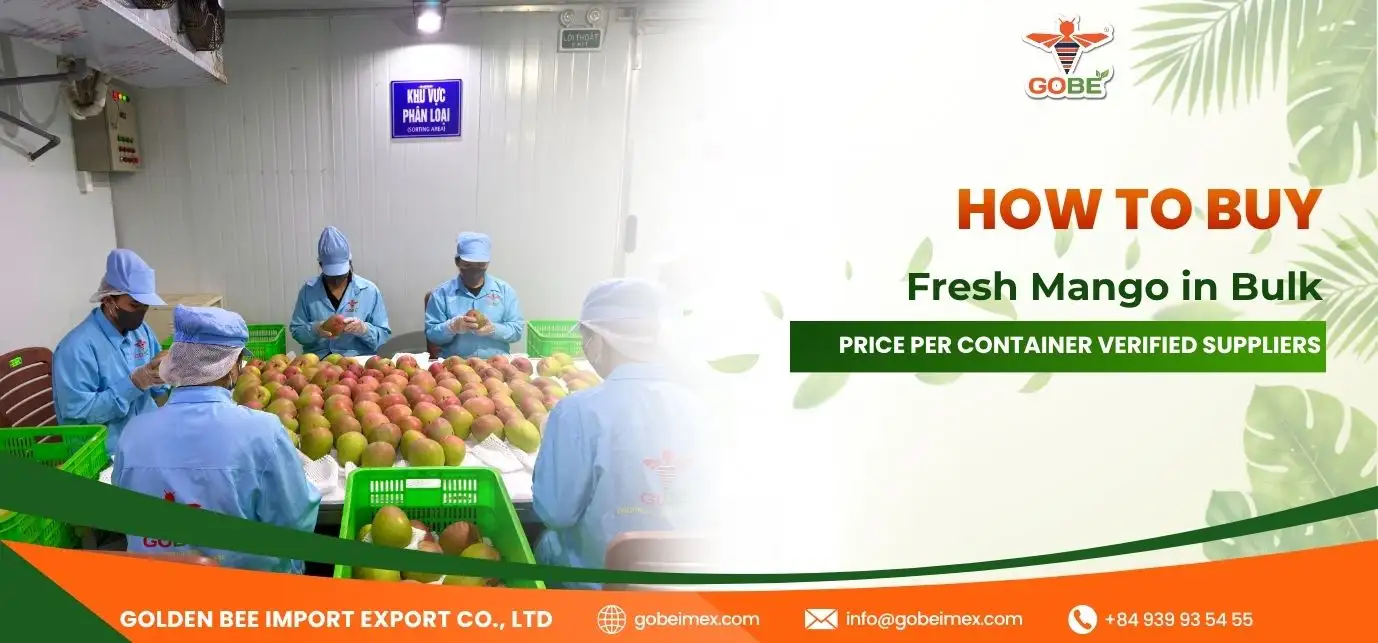
How to Buy Fresh Mango in Bulk: Price per Container Verified Suppliers

How to Buy Fresh Mango in Bulk: Price per Container Verified Suppliers

Buying fresh mango in bulk means sourcing via FCL or LCL container shipments directly from exporters, with MOQs typically starting at one 20ft FCL (around 18 to 20 metric tons), priced under FOB,

Read More
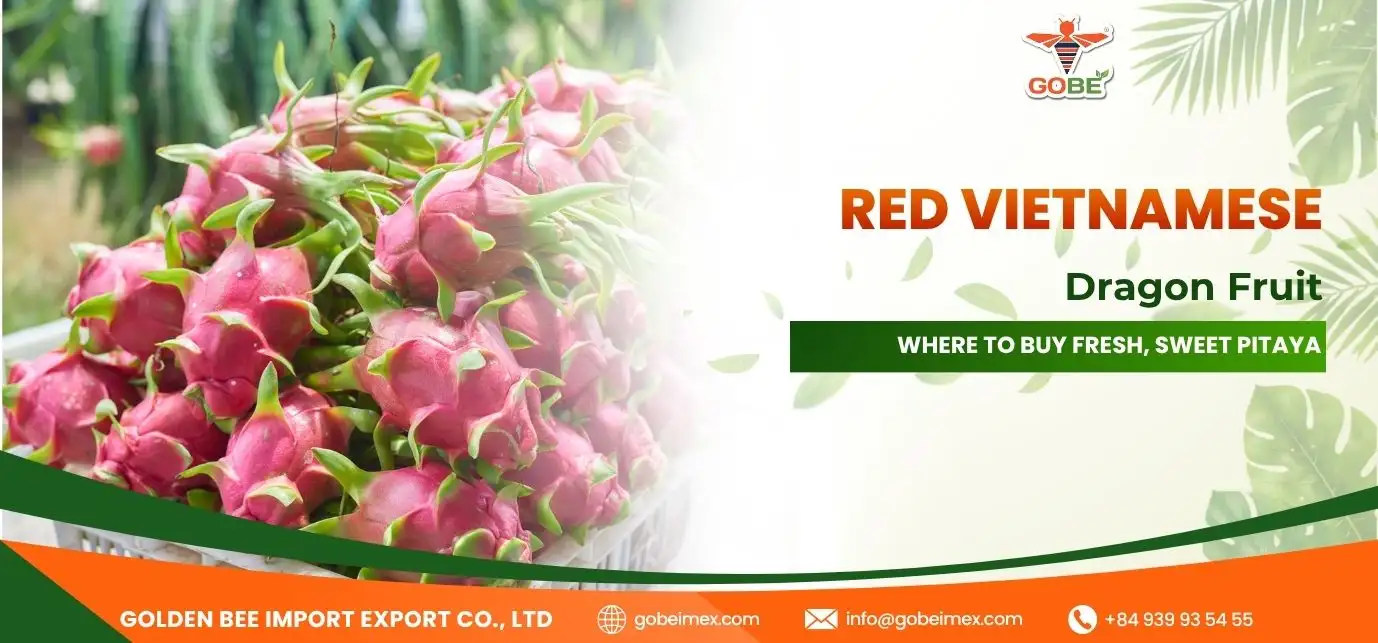
Red Vietnamese Dragon Fruit: Where to Buy Fresh, Sweet Pitaya

Red Vietnamese Dragon Fruit: Where to Buy Fresh, Sweet Pitaya

Red Vietnamese dragon fruit is available through multiple purchase channels, including direct B2B exporters like GOBE IMEX, international supermarkets, Asian grocery markets, e-commerce platforms such as Amazon and Alibaba, and specialty food stores.

Read More
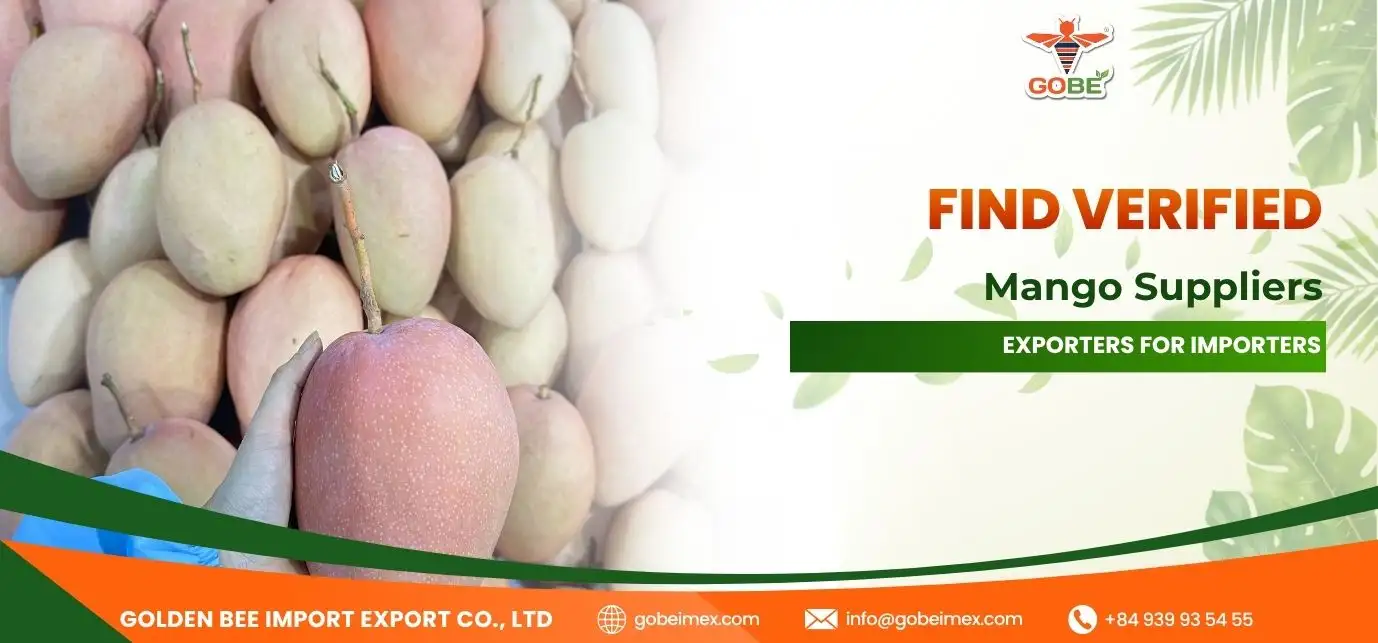
Find Verified Mango Suppliers Exporters for Importers

Find Verified Mango Suppliers Exporters for Importers

Verified mango suppliers and exporters are producers or packing companies that have undergone third-party audits, hold internationally recognized certifications, and can demonstrate traceable, export-grade operations from farm to port. For importers, working with

Read More
Track Mango Imports in the USA: Top Suppliers, Volume Value

Track Mango Imports in the USA: Top Suppliers, Volume Value

Tracking mango imports in the USA means monitoring official customs and trade data using sources like USDA ERS, USITC DataWeb, U.S. Census Bureau Foreign Trade, and UN Comtrade, all filtered through HS Code

Read More
Buy Wholesale Red Dragon Fruit from a Vietnam Supplier

Buy Wholesale Red Dragon Fruit from a Vietnam Supplier

Yes, you can buy red dragon fruit at wholesale prices directly from Vietnam exporters, bypassing intermediaries to access farm-gate pricing, full traceability, and consistent 52-week supply. Vietnam is one of the world’s leading

Read More
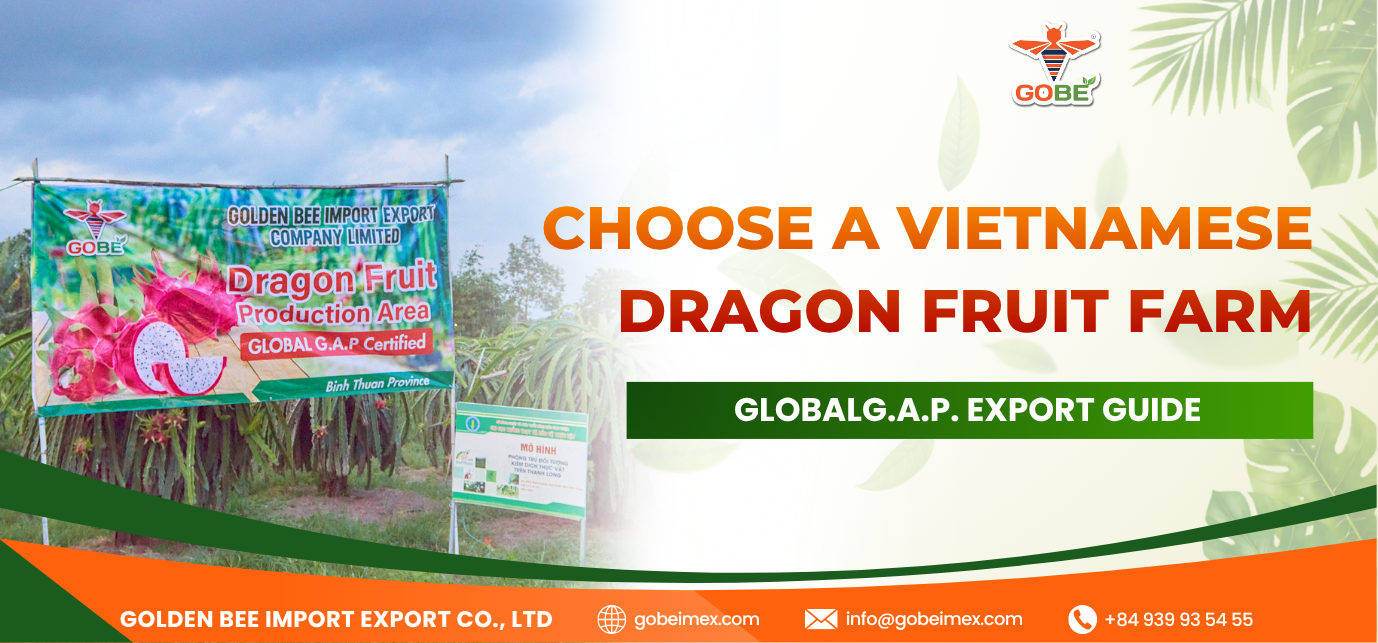
Choose a Vietnamese Dragon Fruit Farm: GlobalG.A.P. Export Guide

Choose a Vietnamese Dragon Fruit Farm: GlobalG.A.P. Export Guide

A GlobalG.A.P.-certified Vietnamese dragon fruit farm is one that meets internationally recognized agricultural standards covering food safety, traceability, labor welfare, and environmental protection — and this certification has become the baseline entry requirement

Read More
Import Dragon Fruit from Vietnam: Wholesale Supplier for Importers

Import Dragon Fruit from Vietnam: Wholesale Supplier for Importers

Vietnam is one of the world’s leading dragon fruit exporters, supplying international markets across Europe, North America, the Middle East, and Asia with consistent volumes, internationally certified quality, and year-round availability. For importers,

Read More
Dragon Fruit Vietnam Price 2026: Latest Farm-Gate & Export Rates

Dragon Fruit Vietnam Price 2026: Latest Farm-Gate Export Rates

Dragon fruit Vietnam price in 2026 ranges from approximately VND 8,000 to VND 35,000 per kilogram at the farm gate, depending on variety, quality grade, and harvest season, while FOB export prices typically

Read More
Source White Dragon Fruit from Verified Vietnam Exporters

Source White Dragon Fruit from Verified Vietnam Exporters

Importers can source white dragon fruit from verified Vietnam exporters through three primary channels: direct partnerships with packer-exporters whose packing houses are located in key growing regions (Tien Giang, Binh Thuan, Long An),

Read More
Explore Fresh Mango Export from India: Process & Buyer Guide

Explore Fresh Mango Export from India: Process Buyer Guide

India is the world’s largest mango producer, supplying approximately 40% of global mango output and exporting fresh mangoes to more than 40 countries across the Middle East, Europe, North America, and Southeast Asia.

Read More