Subtotal $0.00


Dragon fruit Vietnam price in 2026 ranges from approximately VND 8,000 to VND 35,000 per kilogram at the farm gate, depending on variety, quality grade, and harvest season, while FOB export prices typically fall between USD 0.80 and USD 3.50 per kilogram depending on destination market and certification status. Vietnam remains one of the world’s leading dragon fruit exporters, with Binh Thuan, Long An, and Tien Giang as the three dominant production provinces supplying fruit to buyers across China, Europe, the Middle East, and North America.
For importers and distributors evaluating sourcing options, understanding price differences across varieties, regions, and seasons is critical to making informed procurement decisions. Red-flesh dragon fruit consistently commands a premium over white-flesh varieties due to stronger demand from premium retail channels, while yellow dragon fruit remains a niche product with the highest per-kilogram value. Seasonal fluctuations further create price gaps of 40 to 80 percent between peak harvest months and off-season periods, making timing a key variable in total landed cost.
Beyond price data, international buyers are increasingly weighing certification requirements, logistics infrastructure, and supplier reliability when requesting quotations. Exporters holding GlobalGAP, ISO, FDA, and Sedex certifications are able to access higher-value markets in the EU, the United States, and the UAE, where price premiums of 15 to 30 percent over uncertified product are regularly achieved. The sections below cover each of these dimensions in detail, beginning with current farm-gate rates and moving through export FOB pricing, regional and seasonal variation, and Vietnam’s competitive position against other global suppliers.
The farm-gate price of dragon fruit in Vietnam in 2026 averages between VND 8,000 and VND 35,000 per kilogram (approximately USD 0.32 to USD 1.40 per kilogram), varying significantly by variety, quality grade, harvest timing, and growing region. This price reflects what farmers receive directly at the orchard before any packing, cold-chain handling, or export logistics costs are applied.
To understand how these figures translate into export economics, it helps to examine each variety separately, since red-flesh, white-flesh, and yellow dragon fruit operate in distinct price tiers with different demand drivers and production volumes across Vietnam’s three main growing provinces.
Related posts: Source White Dragon Fruit from Verified Vietnam Exporters
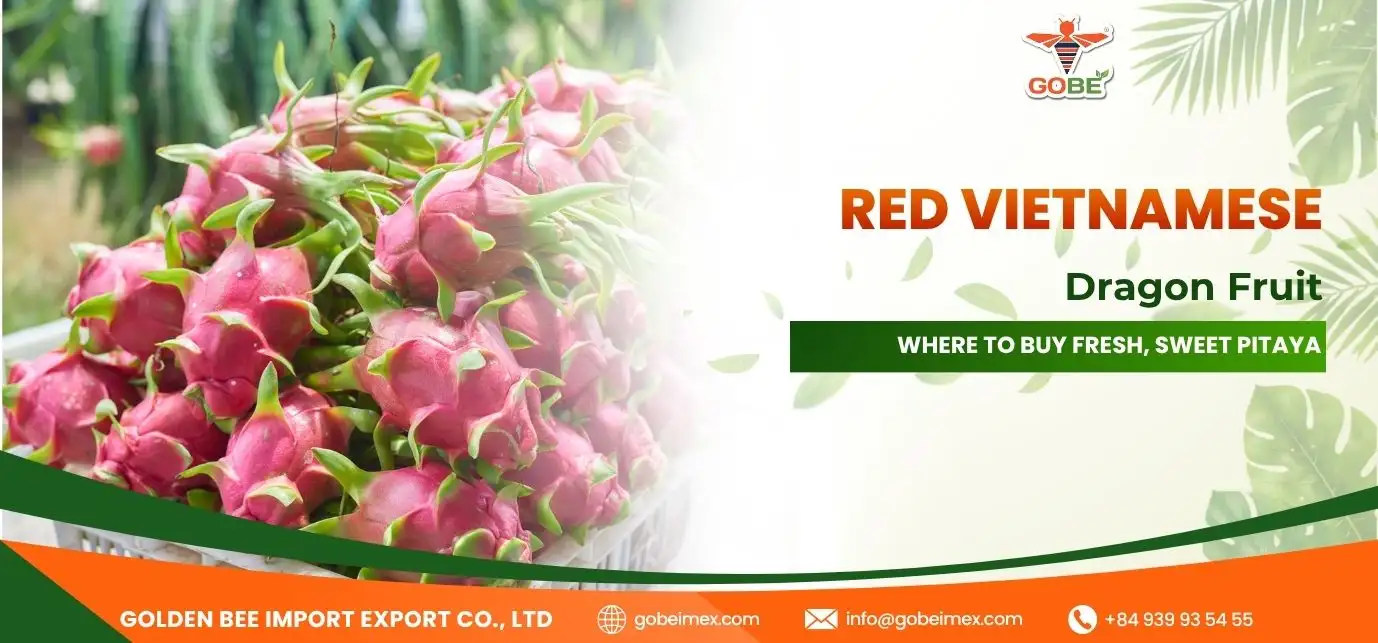
Red-flesh dragon fruit (Hylocereus costaricensis, also marketed as Pitaya Roja) fetches farm-gate prices of approximately VND 18,000 to VND 35,000 per kilogram (USD 0.72 to USD 1.40 per kg) during standard market conditions in 2026, making it consistently the highest-priced variety grown at scale in Vietnam.
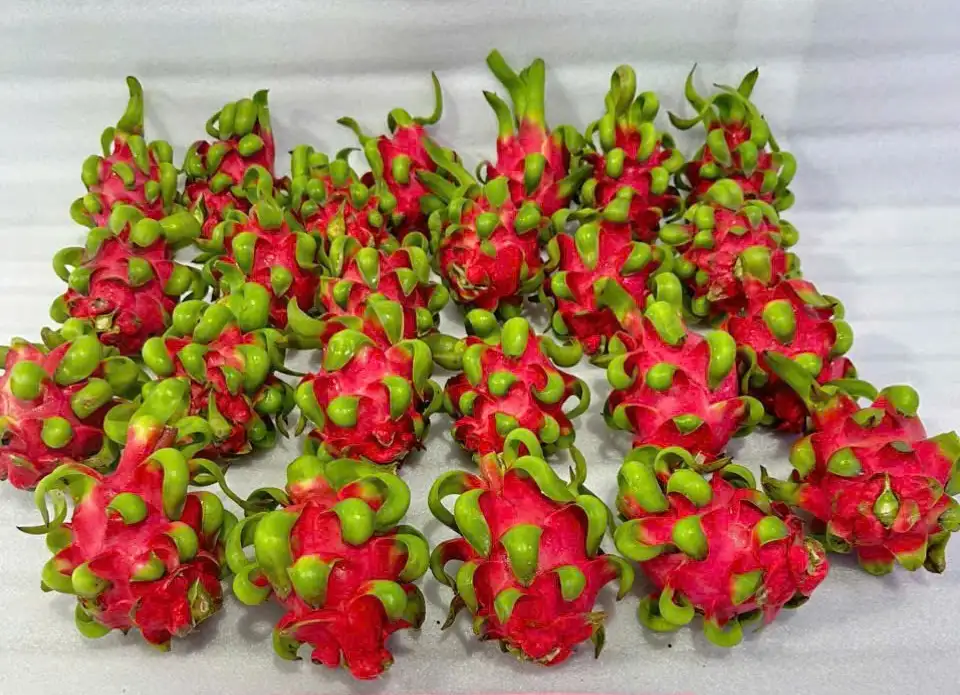
Specifically, price variation within the red-flesh category follows a clear quality-grade structure that farmers, packers, and buyers all reference when negotiating:
| Grade | Weight per Fruit | Farm-Gate Price (VND/kg) | Farm-Gate Price (USD/kg) |
|---|---|---|---|
| Grade 1 (Export-ready) | 400 g and above | 28,000 to 35,000 | 1.12 to 1.40 |
| Grade 2 (Domestic/processing) | 250 to 399 g | 18,000 to 27,000 | 0.72 to 1.08 |
| Grade 3 (Juice/processing) | Below 250 g | 8,000 to 15,000 | 0.32 to 0.60 |
This table summarizes the three quality grades used in the Vietnamese dragon fruit trade, showing the weight threshold, Vietnamese Dong price range, and USD equivalent for each grade at the farm gate in 2026.
The most significant price driver for red-flesh dragon fruit is the on-season versus off-season harvest cycle. During peak season (roughly May through August, when natural daylight hours support high fruit set), oversupply regularly pushes farm-gate prices toward the lower end of the Grade 1 range. Conversely, off-season production requires farmers to use electric lighting to artificially induce flowering, raising production costs by an estimated VND 3,000 to VND 5,000 per kilogram while simultaneously reducing supply volume, which supports prices at or above the upper end of the Grade 1 range. This means importers sourcing off-season red-flesh dragon fruit should expect farm-gate prices 40 to 60 percent higher than the same grade purchased during peak season.
Long An and Tien Giang are the primary provinces growing red-flesh varieties at export scale, and both regions have seen increasing adoption of GlobalGAP-compliant cultivation practices, which adds a modest cost premium at the farm level but enables access to higher-value export markets.
White-flesh dragon fruit (Hylocereus undatus) is the most widely grown variety in Vietnam, accounting for the majority of total national output, and its farm-gate price in 2026 ranges from approximately VND 8,000 to VND 20,000 per kilogram (USD 0.32 to USD 0.80 per kg) depending on grade and season.
Because white-flesh dragon fruit represents the bulk of Vietnamese production, its price is more sensitive to seasonal supply fluctuations than either red-flesh or yellow varieties. The following points characterize the price behavior of this variety in 2026:
The lower price point of white-flesh dragon fruit relative to red-flesh reflects primarily its higher supply volume rather than inferior quality. For export markets where price competitiveness is the primary selection criterion, white-flesh Vietnamese dragon fruit remains one of the most cost-efficient tropical fruits available at scale globally.
Vietnamese dragon fruit export prices in 2026 range from approximately USD 0.80 to USD 3.50 per kilogram on an FOB basis, with significant variation driven by variety, quality grade, destination market, packaging specification, and certification status. FOB (Free On Board) price represents the cost of the fruit delivered to the Vietnamese port of export, after which the buyer assumes freight, insurance, and import duties.
Understanding the distinction between FOB and CIF pricing is essential for accurate landed-cost comparisons. CIF (Cost, Insurance, and Freight) adds sea or air freight costs and insurance to the FOB base, meaning the actual price a European or North American importer pays per kilogram is substantially higher than the FOB figure quoted by a Vietnamese exporter. The table below summarizes the 2026 FOB price ranges for each major dragon fruit variety and export grade.
| Variety | Grade | FOB Price (USD/kg) | FOB Price (USD/carton, 5 kg) |
|---|---|---|---|
| White-flesh | Grade 1 Export | 0.80 to 1.20 | 4.00 to 6.00 |
| Red-flesh | Grade 1 Export | 1.40 to 2.20 | 7.00 to 11.00 |
| Yellow dragon fruit | Grade 1 Export | 2.50 to 3.50 | 12.50 to 17.50 |
This table shows the 2026 FOB price range per kilogram and per standard 5-kilogram export carton for the three main dragon fruit varieties at Grade 1 export specification, loaded at Vietnamese ports.
Beyond the base FOB price, several cost components are added before the fruit reaches the Vietnamese port. Packing house processing fees in Tien Giang and Ho Chi Minh City typically add USD 0.08 to USD 0.15 per kilogram. Export carton and packaging materials contribute approximately USD 0.05 to USD 0.12 per kilogram depending on box specification and brand printing requirements. Cold-chain logistics from growing region to port adds USD 0.03 to USD 0.08 per kilogram. International certification compliance costs (GlobalGAP audit fees, residue testing, phytosanitary inspection) are spread across volume but generally represent USD 0.02 to USD 0.05 per kilogram for high-volume exporters.
Dragon fruit exported to China from Vietnam in 2026 carries FOB prices of approximately USD 0.75 to USD 1.80 per kilogram for white-flesh and red-flesh varieties combined, with China remaining the single largest destination market by volume but not by per-unit value.
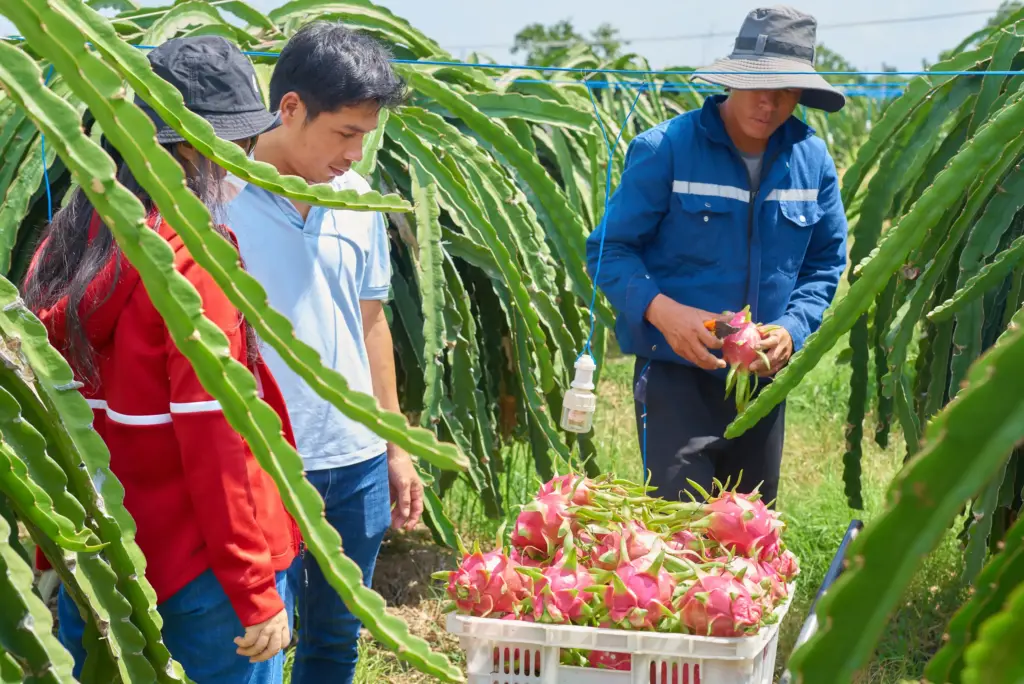
China’s influence on Vietnamese dragon fruit export prices is substantial and operates through several mechanisms that any exporter or importer tracking 2026 market conditions must understand:
Dragon fruit exported from Vietnam to Europe, the Middle East, and North America commands significantly higher FOB prices than Chinese-market shipments, with rates ranging from USD 1.50 to USD 3.50 per kilogram depending on destination, variety, and certification status in 2026.
These premium markets reward certified, consistently high-quality produce and carry different logistics cost structures than the China land-border trade, which fundamentally changes the price equation for exporters serving them:
European Union (UK, Germany, Netherlands):
FOB prices for certified Grade 1 red-flesh dragon fruit destined for EU retail markets range from USD 1.80 to USD 2.80 per kilogram in 2026. The EU market requires compliance with Maximum Residue Limits (MRLs) under European food safety regulations, GlobalGAP certification for farm-level practices, and often retailer-specific social audit requirements such as GRASP or Sedex. These compliance costs are reflected in the higher FOB price, but so is the willingness of European importers to pay a premium for verifiable quality and traceability. Air freight is commonly used for red-flesh varieties destined for premium EU retailers, adding approximately USD 2.50 to USD 4.00 per kilogram in freight cost on top of the FOB price.
United States and Canada:
FOB prices for dragon fruit exported to the US and Canadian markets range from USD 1.60 to USD 2.60 per kilogram for red-flesh varieties meeting FDA import standards, with additional FDA Prior Notice and Bioterrorism Act compliance costs absorbed by the exporter. The North American market is smaller by volume than the EU but growing steadily, driven by Vietnamese and Southeast Asian diaspora communities as well as increasing mainstream grocery adoption. Exporters holding FDA registration and supplying under USDA phytosanitary protocols can command the upper end of this price range.
UAE, Kuwait, and Middle East:
FOB prices to Middle Eastern markets range from USD 1.40 to USD 2.20 per kilogram for Grade 1 red-flesh dragon fruit in 2026. The Middle East is a strategically important destination for Vietnamese exporters because it combines reasonable volume, year-round import demand (driven by a large South and Southeast Asian expatriate population), and less stringent MRL requirements than the EU, reducing compliance costs while still supporting above-China price levels. Sea freight from Ho Chi Minh City to UAE ports (Jebel Ali) is the standard logistics method, taking approximately 12 to 16 days.
Dragon fruit prices in Vietnam vary by region primarily based on production volume, proximity to export infrastructure, and dominant variety grown, while seasonal variation creates price swings of 40 to 80 percent between peak harvest months (May to August) and off-season periods (October to February). These two variables, geography and timing, are the most practically useful tools for importers planning annual procurement calendars.
Understanding how Binh Thuan, Long An, and Tien Giang each function as distinct market zones with different price dynamics, and how the seasonal calendar intersects with those regional differences, enables more precise cost forecasting for long-term supply contracts.
Binh Thuan offers the lowest farm-gate prices due to the highest production volume, while Tien Giang and Long An offer better logistics costs and faster farm-to-port transit times, making them more cost-competitive for export after logistics are factored into total delivered cost.
The three regions compare as follows on the dimensions most relevant to export price competitiveness:
| Region | Primary Variety | Farm-Gate Price Range (USD/kg, Grade 1) | Key Logistics Advantage |
|---|---|---|---|
| Binh Thuan | White-flesh | 0.32 to 0.72 | Largest volume, but 200 km from Ho Chi Minh City port |
| Long An | Red-flesh | 0.72 to 1.20 | 40 to 60 km from Ho Chi Minh City, rapid port access |
| Tien Giang | Red-flesh, White-flesh | 0.60 to 1.10 | Packing houses located in-region, 12-hour farm-to-pack capability |
This table compares the three main dragon fruit growing regions of Vietnam by primary variety, 2026 farm-gate price range for Grade 1 export fruit, and the logistics factor that most directly affects total export cost competitiveness.
Binh Thuan’s price advantage at the farm gate is partially offset by higher inland transport costs to port (roughly USD 0.04 to USD 0.07 per kilogram more than Tien Giang and Long An). Tien Giang’s strategic positioning, with major packing facilities located directly within the Mekong Delta growing region, means that fruit can move from orchard to export-ready pack within 12 hours, preserving quality and reducing post-harvest loss, which in turn reduces the quality-related price discounts that affect longer supply chains.
Long An benefits from extremely short transport distances to Ho Chi Minh City’s container terminals, making it the preferred sourcing region for time-sensitive air freight consignments to EU and North American premium retail buyers.
Dragon fruit prices in Vietnam are at their lowest from June through August (peak natural harvest season with maximum supply) and at their highest from November through February (off-season production with reduced supply and elevated production costs from electric light induction).

The following monthly price calendar for 2026 provides importers with a practical planning framework based on observed seasonal patterns and 2026 market conditions:
| Month | Season Status | Price Level | Notes for Importers |
|---|---|---|---|
| January | Off-season | High | Pre-Chinese New Year demand spike, FOB premiums apply |
| February | Off-season | Very High | Chinese New Year peak, lowest natural supply |
| March | Transition | Moderate-High | Early season fruit beginning, prices start to ease |
| April | Early season | Moderate | Supply increasing, prices softening |
| May | Full season | Low-Moderate | Main harvest begins, prices declining |
| June | Peak season | Low | Maximum supply, most competitive farm-gate prices |
| July | Peak season | Lowest | Price trough, highest risk of quality discounts in oversupply |
| August | Peak season | Low | Continued high volume, prices recovering slightly |
| September | Late season | Moderate | Supply tapering, prices beginning to rise |
| October | Off-season onset | Moderate-High | Electric lighting begins, production costs rising |
| November | Off-season | High | Reduced supply, premium pricing returns |
| December | Off-season | High | Year-end retail demand, prices firm |
This calendar shows the seasonal price positioning of Vietnamese dragon fruit by month throughout 2026, with guidance notes for importers on optimal procurement timing relative to price and supply conditions.
For importers seeking to optimize procurement costs, the most effective strategy combines forward contracts signed during peak season months (June to August) at near-trough prices for delivery across the calendar year, supplemented by spot purchases during off-season months when specific retail windows require fresh supply. Exporters with both own-farm production and partner-farm networks are better positioned to honor year-round contracts because they can blend on-season natural harvest with off-season induced production to maintain consistent volume and price stability.
Vietnamese dragon fruit is price-competitive against all major global suppliers in 2026, particularly for white-flesh and red-flesh varieties at scale, with production cost advantages over Ecuador, Mexico, and Thailand supported by lower land and labor costs, established export infrastructure, and a growing certification base that enables access to premium-market price tiers unavailable to lower-compliance competitors.
The supplementary analysis below examines two specific attributes that shape Vietnam’s competitive price position in ways not captured by basic FOB comparisons: the pricing premium generated by international certifications, and the price volatility risk introduced by Chinese border policy dependency.
GlobalGAP and equivalent certifications increase Vietnamese dragon fruit export prices by approximately 15 to 30 percent above uncertified equivalents when selling into EU, US, and premium Middle Eastern markets, representing one of the most measurable value-creation levers available to Vietnamese exporters.
The certification premium operates through two mechanisms. First, certified fruit qualifies for market access in retail channels that are closed to uncertified product (major European supermarket chains, US natural food retailers, and premium UAE hypermarkets), effectively expanding the buyer universe and increasing negotiating leverage. Second, within shared market segments, certified suppliers can defend price floors more effectively because buyers face higher switching costs when changing certified supply partners. Exporters such as GOBE IMEX (Golden Bee Vietnam), which hold GlobalGAP, GRASP, ISO, FDA, and Sedex certifications across more than 230 hectares of growing area, demonstrate this model in practice: their certification portfolio enables direct supply relationships with leading global supermarket chains across North America, Europe, and the Middle East, where uncertified Vietnamese exporters cannot participate. The incremental certification compliance cost for a mid-sized exporter typically ranges from USD 0.02 to USD 0.05 per kilogram when spread across annual export volume, making the 15 to 30 percent price premium highly accretive to net margin.
Chinese border policy changes create the single largest source of price volatility for Vietnamese dragon fruit exporters, with border closures, increased phytosanitary inspections, or quota adjustments capable of causing FOB price swings of 20 to 40 percent within weeks, directly affecting farm-gate prices throughout Vietnam’s major growing regions.
The mechanism is straightforward: because China absorbs a dominant share of Vietnamese dragon fruit exports by volume, any policy action that restricts or delays Chinese import activity creates an immediate domestic supply surplus. This surplus must be redirected to alternative markets (often at lower prices) or absorbed by domestic consumption channels (at significantly lower per-kilogram returns), compressing margins across the entire supply chain from farmer to exporter. In response to this structural vulnerability, leading Vietnamese dragon fruit exporters are actively pursuing market diversification strategies focused on Europe, the Middle East, and North America, where regulatory requirements are demanding but price levels are higher and buyer relationships are not subject to unilateral border policy risk. Exporters who have already built certified supply chains and established buyer relationships in these markets are considerably more insulated from Chinese border policy shocks and better positioned to offer price stability to international buyers seeking dependable long-term supply partners.
For importers evaluating Vietnamese dragon fruit sourcing in 2026, working with exporters who demonstrate active diversification across multiple destination markets, hold internationally recognized certifications, and maintain integrated farm-to-port supply chains represents the most effective approach to securing both competitive pricing and supply continuity throughout the year. GOBE IMEX supplies to buyers across more than 10 countries year-round for 52 consecutive weeks, supported by GlobalGAP, GRASP, ISO, FDA, and Sedex certifications, and packing facilities in Tien Giang and Ho Chi Minh City that process fruit within 12 hours of harvest. For detailed FOB pricing, product specifications, and sourcing inquiries, contact the GOBE IMEX team at Info@gobeimex.com or visit gobeimex.com.