Subtotal $0.00


Vietnam, China, Thailand, Ecuador, Colombia, and Israel lead global dragon fruit exports, with Vietnam holding the dominant position because of its cultivation scale, three commercially viable varieties, and fully integrated cold-chain export infrastructure. These countries collectively supply North America, Europe, the Middle East, and Asia year-round, making dragon fruit one of the fastest-growing exotic fruit categories in international trade.
For importers, distributors, and supermarket procurement teams, the right supplier goes beyond country of origin. Certifications including GlobalGAP, FDA, ISO, GRASP, and Sedex, combined with cold-chain continuity and 52-week supply reliability, are non-negotiable criteria that separate dependable partners from unreliable ones. Understanding which exporting countries offer this full package is essential before any sourcing decision is made.
The type of supplier you engage determines quality consistency and traceability on every shipment. Direct farm exporters and certified packers provide the most reliable produce-to-port control, while trading companies and broker networks introduce layers that can compromise freshness and accountability. This article maps both dimensions: which countries lead, and which supplier profiles deliver.
The sections below move from macro market context to country rankings, head-to-head comparisons, supplier evaluation criteria, and a real-world Vietnam sourcing case study.
The global dragon fruit export market is a high-growth segment within the tropical fresh produce industry, driven by health-conscious consumption, premium positioning of exotic fruits, and expanding retail infrastructure across Europe, North America, and the Middle East. Total international trade value already exceeds USD 1 billion annually, with the market projected to grow at a CAGR of approximately 7 to 9 percent through 2030, according to multiple agricultural trade analyses.
Three converging forces are accelerating demand growth in ways few other fruit categories can match. The following factors explain why dragon fruit has become a staple import commodity for premium grocers and specialty distributors worldwide.
Health-driven consumer behavior across Western markets is the most powerful demand engine for dragon fruit globally. Dragon fruit is consistently positioned as a superfood because of its antioxidant content, dietary fiber, and low caloric density.
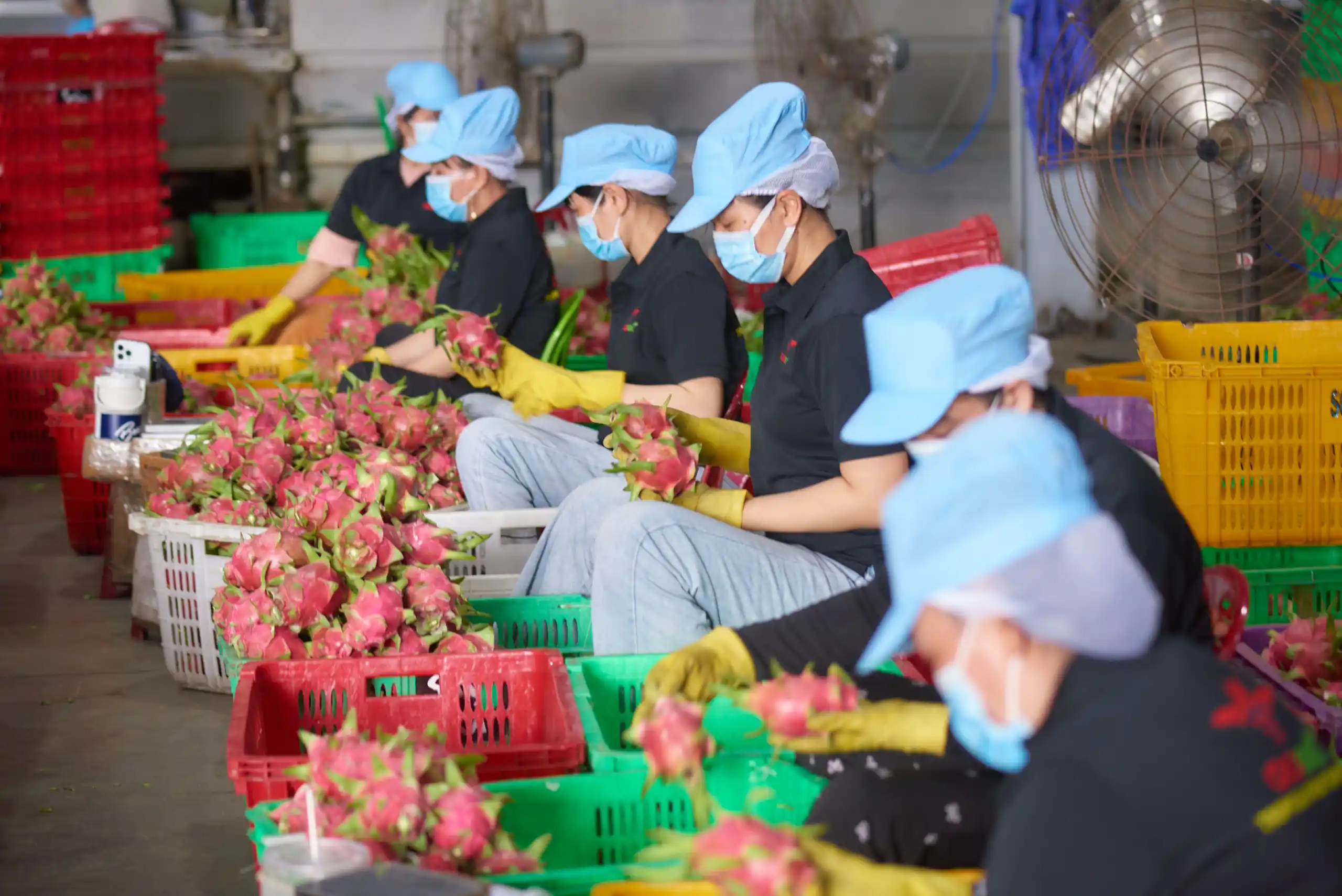
Retailers in Germany, the Netherlands, the United Kingdom, and Canada have expanded dragon fruit shelf space significantly since 2018 as consumer interest in tropical wellness produce has accelerated. Specialty and ethnic grocery segments in the UAE, Kuwait, Japan, and the United States pay a consistent premium for consistent-quality dragon fruit, particularly the yellow-skin variety (Hylocereus megalanthus), which reaches sugar content of 13 to 19 percent. This margin structure makes long-haul refrigerated air and sea freight economically sustainable for exporters.
Improved cold-chain receiving capabilities at major ports now allow dragon fruit to arrive with commercially viable shelf life remaining, making year-round retail programs viable for importers who previously managed only seasonal campaigns.
Ports in Rotterdam, Hamburg, Dubai, and Toronto have upgraded their fresh produce handling and temperature-controlled storage capacity over the past decade. This infrastructure investment has removed historical barriers to market access that previously limited dragon fruit to niche or seasonal import programs. Each key destination market, including Canada and the United States in North America, Germany, the Netherlands, and the United Kingdom in Europe, the UAE and Kuwait in the Middle East, and Japan in Asia, also maintains distinct phytosanitary requirements, MRL (Maximum Residue Level) standards, and packaging specifications that exporters must meet to gain and maintain access.
Six primary dragon fruit exporting countries are evaluated by global buyers: Vietnam, China, Thailand, Ecuador, Colombia, and Israel, each with distinct competitive advantages in terms of volume, variety, certification readiness, and target market alignment. Vietnam leads by a substantial margin across all commercial metrics, while others occupy specialized positions within the global supply network.
The sections below provide a detailed breakdown of Vietnam’s leading position and the competitive role of emerging exporters.
Vietnam ranks as the world’s number one dragon fruit exporter because it combines the largest cultivated area globally, three commercially dominant varieties, and the most developed export logistics infrastructure among all producing nations. These three factors reinforce each other, creating a supply system no other country currently replicates at scale.
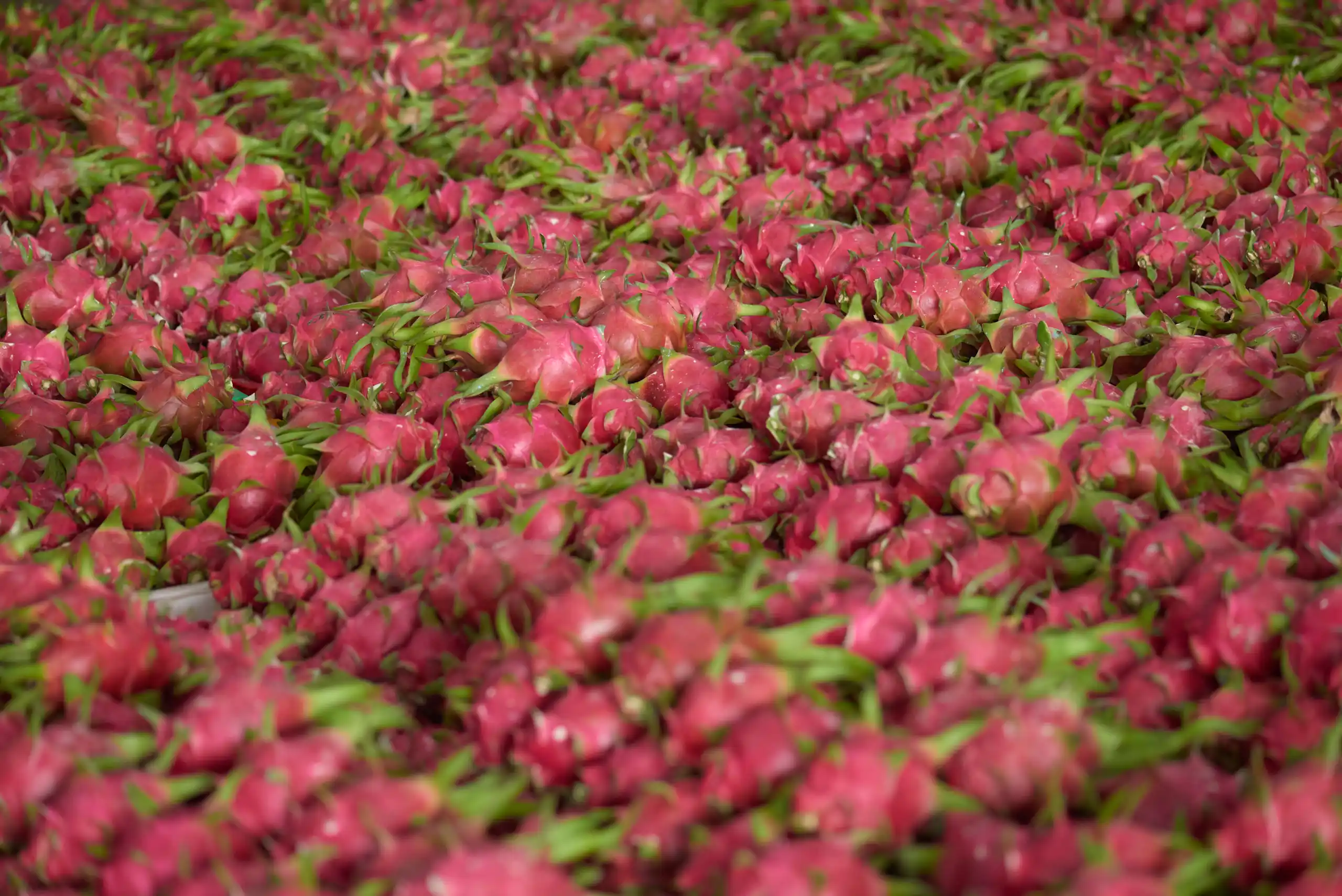
Vietnam’s dominance is built on the following measurable foundations:
According to agricultural trade data compiled by multiple international produce market analysts, Vietnam’s annual dragon fruit export revenue consistently represents the largest single national contribution to global trade in this category.
Four countries beyond Vietnam are establishing meaningful positions in global dragon fruit trade: Thailand, China, Ecuador, and Colombia, each with distinct strengths and limitations that global buyers must weigh carefully. Israel also participates at a premium-quality niche level.
Thailand is positioned primarily as a yellow dragon fruit supplier targeting affluent markets in Japan, Hong Kong, Singapore, and parts of the Middle East. Thai producers benefit from strong brand recognition for tropical fruit quality, but export volumes remain considerably smaller than Vietnam’s, and year-round supply continuity is less guaranteed because off-season production capacity is limited.
China produces dragon fruit at substantial domestic scale in Guangdong, Guangxi, and Fujian provinces, but the overwhelming majority of production is consumed within the domestic market. Exports are primarily directed toward ASEAN neighbors. China has not yet developed the international certification infrastructure or cold-chain export capacity to compete effectively in European or North American premium markets.
Ecuador and Colombia are growing their relevance as suppliers to North American and European importers by leveraging geographic proximity and favorable freight economics to Atlantic-facing ports. Both countries are still developing their GlobalGAP certification coverage, and their aggregate export volumes remain a fraction of Vietnam’s. Their primary advantage is supply diversity and the ability to complement Asia-sourced shipments during peak demand periods.
Israel represents a technology-driven premium niche. Israeli producers use advanced precision agriculture techniques, resulting in consistently high brix levels and excellent post-harvest presentation. However, production scale is small, prices are high, and Israel functions more as a premium complement to volume supply than a primary sourcing country for large-scale importers.
The key limitations buyers must evaluate for all non-Vietnam exporters include lower GlobalGAP certification coverage, less developed dedicated cold-chain logistics, limited 52-week supply guarantees, and higher per-unit cost structures in most cases.
Vietnam outperforms on volume and variety, Thailand leads on yellow fruit premium quality, Ecuador and Colombia offer logistical advantages for North American buyers, and Israel delivers the highest-quality niche product. No single country other than Vietnam currently provides the full combination of scale, variety, certification readiness, and year-round supply reliability that large-scale importers require.

The table below compares the six primary dragon fruit exporting countries across the sourcing criteria most relevant to importers, distributors, and supermarket procurement teams. Reviewing this comparison before supplier qualification will clarify which origin country aligns with each buyer’s volume, certification, and continuity requirements.
| Criterion | Vietnam | Thailand | Ecuador / Colombia | China | Israel |
| Export Volume | Highest globally | Medium | Low to medium | Medium (mostly domestic) | Very low |
| Dragon Fruit Varieties | White, Yellow, Red | Primarily Yellow | White and Red | White | White and Yellow |
| Shelf Life (Red Skin) | Up to 45 days | Up to 35 days | Up to 40 days | Up to 35 days | Up to 40 days |
| GlobalGAP Coverage | Extensive | Moderate | Developing | Limited | High (niche) |
| FDA Compliance | Available | Limited | Developing | Limited | Available |
| Cold Chain Maturity | Advanced | Moderate | Moderate | Limited for export | Advanced |
| 52-Week Supply | Yes (with low season management) | No | Partial | No | No |
| Price Competitiveness | High | Moderate | Moderate | Moderate | Low (premium pricing) |
| Primary Target Markets | Global (EU, ME, NA, Asia) | Asia, Middle East | North America, Europe | ASEAN | Europe, Japan |
For importers and supermarket chains sourcing for year-round programs, Vietnam is the only country that delivers across all six key dimensions simultaneously: volume, variety diversity, cold chain continuity, certification breadth, price competitiveness, and 52-week availability.
For specialty buyers seeking yellow dragon fruit for high-end retail or food service, Thailand and Israel offer differentiated quality at higher price points, but with significant supply continuity limitations.
For North American buyers looking to diversify sourcing risk or reduce sea freight transit times, Ecuador and Colombia offer a viable complement to Vietnam-origin supply, particularly during Vietnam’s low season from January to May and October to December.
Choosing the right country is step one in the sourcing process. Choosing the right verified supplier within that country is step two, and it is the decision that determines actual product quality, delivery reliability, and commercial risk.
Three main supplier types operate in the dragon fruit export market: direct farm exporters and certified packers, trading companies, and broker or agent networks. Each model carries distinct advantages and risks that global buyers must evaluate in relation to their volume needs, quality standards, and risk tolerance.
The following analysis defines the concrete criteria that should govern every supplier selection decision and identifies the Vietnam sourcing model that best meets large-scale importer requirements.
A qualified dragon fruit supplier for global markets must meet five non-negotiable criteria: internationally recognized certifications, unbroken cold-chain capability, post-harvest processing within 12 hours of harvest, a 52-week supply guarantee, and market-specific packaging compliance. These five criteria together define the operational baseline that separates commercially viable exporters from high-risk vendors.
Each criterion carries concrete verification requirements that buyers should confirm through documentation and facility inspection:
According to GlobalGAP certification data and fresh produce industry procurement guidelines, suppliers holding the full five-certification portfolio have demonstrably lower rates of customs detention and retail quality complaints than those holding partial certification coverage.
Yes, sourcing dragon fruit directly from Vietnam is the best primary choice for global buyers, for four concrete reasons: Vietnam produces the highest global volume across three commercial varieties, its export infrastructure is the most mature among all producing nations, its supplier ecosystem includes multiple certified packers with verifiable international credentials, and its geographic position supports both sea freight and air freight routes to all key importing markets.
Vietnam’s two strategic packing hub locations create a structural advantage that directly benefits importers. The Tien Giang packing facility, located in the heart of the Mekong Delta fruit-growing region, processes dragon fruit within 12 hours of harvest, locking in maximum brix levels and shelf life before refrigerated transport begins. The Ho Chi Minh City facility serves as a multi-source consolidation point for air freight and sea freight export routes, enabling importers to access diverse product specifications and flexible shipment scheduling from a single exporter.
Seasonal supply planning for Vietnam-origin dragon fruit follows a clear structure. The table below outlines the monthly availability pattern for dragon fruit exported from Vietnam. Buyers working with suppliers who manage both owned farms and certified partner farm networks can use this calendar to plan procurement across all 52 weeks of the year.
| Month | Jan | Feb | Mar | Apr | May | Jun | Jul | Aug | Sep | Oct | Nov | Dec |
| Season | Low | Low | Low | Low | Low | High | High | High | High | Low | Low | Low |
Gobeimex (Golden Bee Vietnam) is a concrete example of the certified packer and direct exporter model that global buyers should benchmark against when qualifying Vietnamese suppliers. With over 12 years of experience in fresh produce export, Gobeimex manages more than 30 hectares of company-owned growing areas and partners with growers across more than 200 GlobalGAP-certified hectares. The company holds GlobalGAP, GRASP, ISO, FDA, and Sedex certifications, operates its own refrigerated trailer fleet for unbroken cold-chain logistics, and exports to more than 10 countries across four continents, including Canada, the UAE, the United Kingdom, Germany, the Netherlands, Japan, Kuwait, and Russia. Its packing house in Tien Giang processes dragon fruit within 12 hours of harvest, and a secondary facility in Ho Chi Minh City supports air freight consolidation and market diversification. This operational profile, spanning supply scale, certification depth, logistics control, and market reach, represents the standard that international buyers should require from any primary Vietnam-origin dragon fruit supplier.
Certifications are mandatory gateways to premium retail markets in the EU, the United States, Japan, and the UAE, and sustainable sourcing practices are increasingly a procurement requirement rather than a differentiating feature. The sections below address both dimensions as essential pre-contract verification criteria.
Certification coverage varies significantly across dragon fruit exporting countries, with Vietnam offering the broadest range of internationally recognized credentials, while Thailand, Ecuador, and China lag in GlobalGAP coverage, FDA registration, and ISO-certified packing operations.
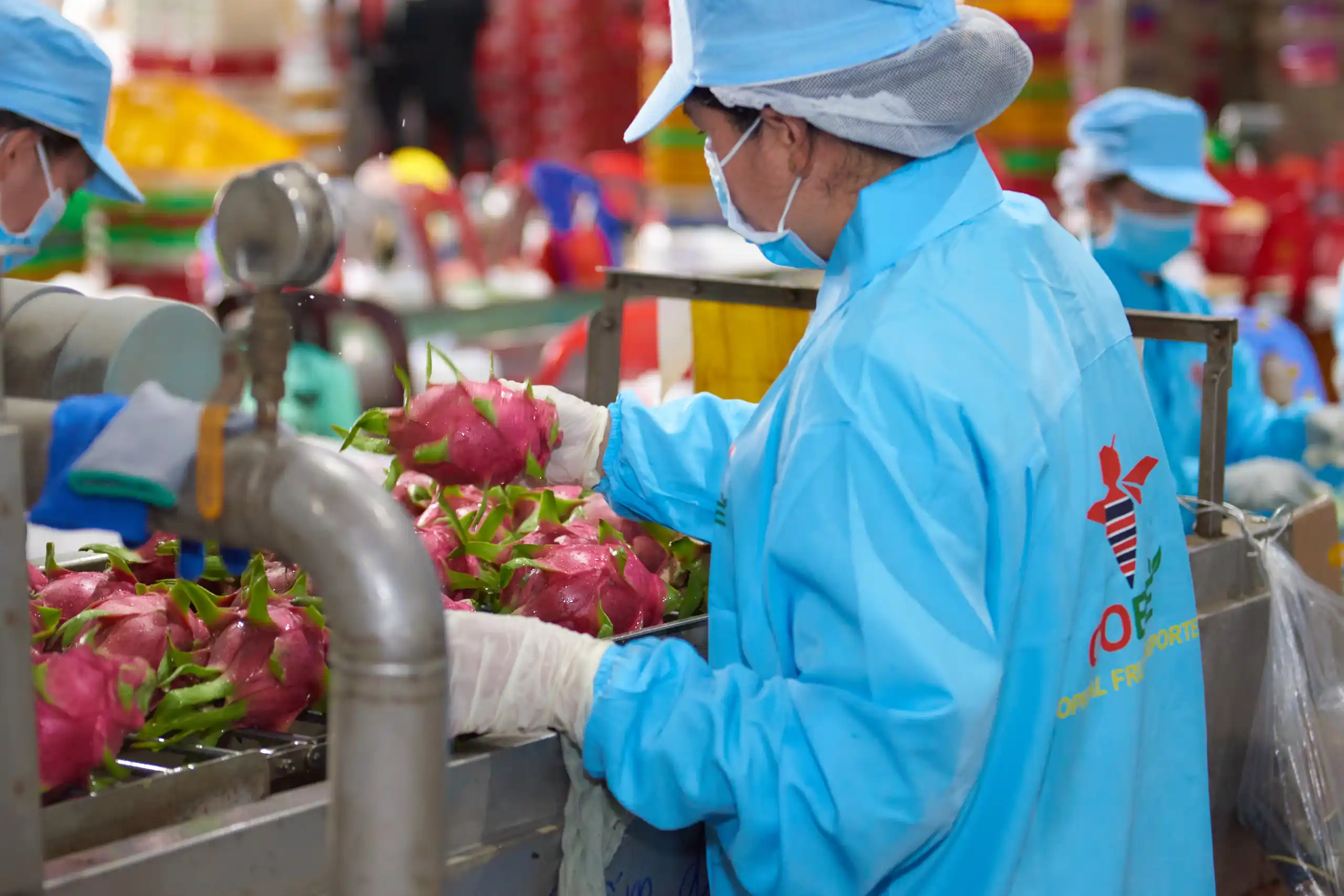
Vietnam leads in GlobalGAP adoption because its export dependency on EU and North American markets created regulatory pressure to invest in certification infrastructure over the past decade. A significant proportion of Vietnamese dragon fruit packing houses hold ISO-certified quality management systems, and a growing number hold FDA registration for the US market. Thailand has moderate GlobalGAP coverage primarily among larger commercial producers, but FDA registration is less common. Ecuador and Colombia are in earlier stages of building certification ecosystems, with GlobalGAP adoption concentrated among the largest export-oriented farms. China has limited certification coverage for internationally exported produce, as domestic regulatory frameworks have historically taken priority over international standards compliance.
MRL control is a critical sourcing risk variable. The EU operates under some of the strictest Maximum Residue Level thresholds globally. Dragon fruit shipments that exceed permitted pesticide residue levels are detained at port, triggering recall procedures, financial losses, and reputational damage with retail partners. Buyers sourcing from suppliers without documented MRL testing and GlobalGAP-controlled input management protocols carry measurable regulatory risk on every shipment.
ESG-driven procurement is reshaping dragon fruit sourcing decisions in Europe and Canada, with supermarket chains now requiring suppliers to demonstrate ethical labor practices, environmental stewardship, and supply chain traceability as conditions of long-term commercial partnership. Sedex membership and GRASP certification have moved from differentiating credentials to baseline requirements for entry into major European retail programs.
The Sedex platform enables buyers to access suppliers’ self-assessment data on labor practices, health and safety, environmental impact, and business ethics across the entire supply chain. GRASP certification specifically addresses the social welfare conditions of agricultural workers in the growing areas, a dimension that EU-based retailers scrutinize closely following tightened corporate due diligence regulations. Suppliers who cannot produce current Sedex and GRASP documentation are increasingly excluded from European supermarket tender processes.
Sustainable sourcing models that combine company-owned farm management with certified partner farm networks, such as the 30-plus hectare direct farm and 200-plus hectare GlobalGAP partner model operated by Gobeimex, offer a practical template for how traceable, ethical dragon fruit supply chains operate at commercial scale. This model enables buyers to verify input management, labor conditions, and post-harvest handling at every node of the supply chain, reducing traceability risk while maintaining the volume flexibility that supermarket programs require. Long-term sourcing relationships built on this foundation also contribute to measurable carbon footprint reductions in cold-chain logistics by enabling consolidated, optimized shipment planning that minimizes empty runs and unnecessary refrigeration cycles.
According to the Ethical Trading Initiative and Sedex global supply chain benchmarking reports, suppliers with verified GRASP and Sedex credentials demonstrate materially higher rates of long-term contract retention with European supermarket buyers compared to non-certified equivalents.
Yes, there are specific scenarios in which buyers should strategically supplement Vietnam-origin sourcing with supply from other countries. Sourcing exclusively from one origin country concentrates both quality risk and geopolitical supply risk. The sections below address the most credible reasons to diversify sourcing geographically, without abandoning Vietnam as the primary supply base.
For North American buyers, Ecuador and Colombia offer faster sea freight transit times and lower per-unit freight costs to US East Coast and Canadian Atlantic ports than Vietnam-origin shipments on certain routes. This logistics advantage is commercially meaningful when Vietnam is in low season and air freight premiums from Vietnam would otherwise make unit economics unviable.
Ecuador and Colombia also produce White Flesh and Red Flesh varieties with shelf lives of up to 40 days, sufficient for sea freight routes to North America. Buyers who have developed supplier relationships in these countries report that quality consistency is improving as GlobalGAP certification adoption increases among larger commercial farms. The practical sourcing strategy most large North American importers apply is to maintain Vietnam as the primary year-round supply base and use Ecuador or Colombia as a complementary origin during Vietnam’s January-to-May and October-to-December low seasons.
For retailers whose product positioning centers on ultra-premium exotic fruit with visually differentiated presentation, Israel and Thailand offer product characteristics that Vietnam’s dominant commercial varieties do not replicate in the same way. Israeli dragon fruit, produced under precision agriculture protocols, achieves exceptionally consistent brix readings and post-harvest cosmetic quality that suits ultra-premium fruit gift box programs and high-end food service applications.
Thai yellow dragon fruit commands a recognized premium in Japanese and high-end Singaporean retail, where brand-of-origin positioning matters to the consumer. In these specific contexts, paying a higher per-unit cost for Thai or Israeli product is justified by the retail price premium the channel can support. The limitation for buyers in this segment is supply volume. Neither Israel nor Thailand can supply at the scale required by national supermarket chains, making both countries relevant only for specialty lines rather than mainstream range programs.
For sourcing inquiries, product specifications, or to request the full Gobeimex product catalog and certification documentation, contact Golden Bee Vietnam (Gobeimex) directly at Info@gobeimex.com, by phone or WhatsApp at +84 939 93 54 55, or visit gobeimex.com.


