Shopping cart

Subtotal $0.00

View cartCheckout

Jackfruit export

Vietnam is one of the world’s leading jackfruit exporters, with annual export value reaching hundreds of millions of USD and supply flowing to more than 40 countries across Asia, Europe, the Middle East, and North America. The country holds a strong position in the global jackfruit trade, driven by favorable tropical growing conditions in the Mekong Delta and Central Highlands, a rapidly modernizing cold chain infrastructure, and a growing base of export-certified packing operators. For importers, buyers, and industry analysts seeking reliable data, Vietnam’s jackfruit export market represents one of the most dynamic segments within the broader tropical fresh fruit trade.

Vietnam’s jackfruit export growth has accelerated significantly over the past decade, with particularly sharp gains recorded after the formalization of trade routes into China and the global surge in demand for plant-based food ingredients. Growth trend data from Vietnam’s Ministry of Agriculture and Rural Development (MARD) and the Vietnam Import-Export Report consistently show jackfruit among the country’s top-performing fresh fruit export categories. Understanding where this growth is coming from, and whether it is structurally sustainable, requires a close look at both supply-side investments and demand-side market shifts.

The top buyer countries for Vietnamese jackfruit are led overwhelmingly by China, which absorbs the majority of export volume, followed by emerging demand from Japan, South Korea, EU member states such as Germany and the Netherlands, and Gulf markets including the UAE and Kuwait. Beyond these established corridors, Western markets are recording accelerating import volumes as jackfruit’s profile as a meat substitute gains ground in plant-based food retail. The sections below provide a structured breakdown of current market data, growth dynamics, and buyer country profiles with supporting figures.

What Is the Current State of Vietnam’s Jackfruit Export Market?

Vietnam ranks among the top three jackfruit-producing and exporting countries globally, alongside Thailand and Bangladesh, with total export value in the fresh and processed jackfruit segment estimated at over 300 million USD in recent reporting years. The country’s export volume exceeds 150,000 metric tons annually across all forms, with the fresh category dominating shipment records. Jackfruit consistently ranks as one of Vietnam’s top five fresh fruit exports by value, contributing a meaningful share of the country’s total fruit and vegetable export revenue, which surpassed 5.6 billion USD in 2023 according to MARD reporting.

To understand the full picture of Vietnam’s jackfruit trade, it is useful to examine the specific product forms, price benchmarks, and market positioning that define the sector today.

Vietnam’s Position as a Global Jackfruit Exporter

Vietnam is a Tier 1 jackfruit supplier in the global market, recognized for producing large-format, high-Brix tropical jackfruit varieties suited to both fresh consumption and industrial processing. The country’s two primary growing belts are the Mekong Delta provinces, including Tien Giang, Long An, and Dong Thap, and the Central Highlands regions such as Dak Lak and Gia Lai. These zones collectively produce jackfruit year-round, with peak harvest seasons running from March through June and a secondary flush from August through November, giving Vietnam a structural supply advantage over more seasonally constrained producers.

According to data compiled by the International Trade Centre (ITC Trade Map) and Vietnam Customs, Vietnam’s jackfruit export volumes have grown at a compound annual rate of approximately 12 to 18 percent over the five years preceding 2024. The country supplies fruit to over 40 destination markets, with concentration in East and Southeast Asia but with rapidly expanding flows into Europe and the Middle East. The combination of tropical climate, large cultivated area, and proximity to the world’s largest jackfruit import market in China positions Vietnam uniquely among competing exporter nations.

Export Volume, Export Value, and Product Form Breakdown

Vietnam’s jackfruit export market is structured across four primary product forms, each targeting distinct buyer segments and price points. The table below summarizes the key categories:

The following table outlines the main export forms of Vietnamese jackfruit, the typical destination markets for each form, and their relative share of total export volume, providing buyers and analysts with a comparative overview of how the product flows from Vietnam to international markets.

Export Form Primary Destination Markets Estimated Share of Export Volume
Fresh whole jackfruit China, Southeast Asia 55 to 65 percent
Frozen jackfruit (IQF segments) EU, Middle East, North America 20 to 25 percent
Dried jackfruit (chips/slices) EU, USA, Japan 8 to 12 percent
Canned/processed jackfruit EU, USA, Australia 5 to 8 percent

Fresh whole jackfruit dominates export volume by a significant margin, primarily because of demand concentration in China and neighboring Southeast Asian markets, where consumer preference for whole fresh fruit remains high. However, frozen and processed forms are growing at faster rates, driven by jackfruit’s expanding role as a plant-based meat alternative in Western retail and foodservice channels. Export price benchmarks vary accordingly, with fresh jackfruit FOB Vietnam typically ranging from 0.4 to 0.9 USD per kilogram depending on season and grade, while IQF frozen segments command 1.2 to 2.0 USD per kilogram and processed products fetch significantly higher per-unit values.

Data sourcing note: Figures referenced in this section draw from MARD annual agricultural reports, Vietnam Customs General Department export statistics, the Vietnam Trade Information Center (VITIC), and ITC Trade Map bilateral trade data.

How Has Vietnam’s Jackfruit Export Grown Over the Years?

Vietnam’s jackfruit export sector has expanded dramatically over the past decade, with total export value growing from an estimated 50 to 70 million USD in 2015 to well above 300 million USD by 2022 to 2023. The compound annual growth rate (CAGR) over the 2015 to 2023 period is estimated at 18 to 22 percent, placing jackfruit among Vietnam’s fastest-growing agricultural export categories alongside dragon fruit and durian. The trajectory, while strong on average, has not been linear, with several years of exceptional growth punctuated by periods of disruption from border policy changes and the COVID-19 pandemic.

To trace how this growth unfolded and what forces shaped it, the following sections examine both the structural drivers and the constraints that have defined Vietnam’s jackfruit export trajectory over recent years.

What Factors Are Driving the Growth of Vietnam Jackfruit Exports?

At least five major factors are driving the sustained growth of Vietnam’s jackfruit exports: rising global demand for plant-based foods, Vietnam’s geographic and climatic advantages, supportive government trade policy frameworks, improving cold chain and logistics infrastructure, and the growing role of export-certified professional packing operators.

Specifically, each of these drivers contributes a distinct layer to Vietnam’s export growth story:

Global demand for plant-based and vegan foods. Jackfruit’s texture when unripe closely mimics pulled meat, making it a popular ingredient in vegan and flexitarian diets across Europe and North America. The global plant-based food market was valued at over 11 billion USD in 2022 (Good Food Institute, 2023) and continues to expand, creating structural import demand for jackfruit as a raw ingredient in meat alternatives. This trend is pulling more volume through frozen and processed export channels from Vietnam.

Geographic and climatic advantages. Vietnam’s Mekong Delta provides near-ideal growing conditions for jackfruit: warm temperatures year-round, rich alluvial soils, and abundant water access. The region’s proximity to Ho Chi Minh City’s logistics infrastructure means that harvested fruit can reach export packing facilities within hours. The Central Highlands complement Delta supply by providing altitude-grown varieties with slightly different flavor profiles and maturation windows, extending the effective supply season.

Government trade policy frameworks. Vietnam’s membership in EVFTA (EU-Vietnam Free Trade Agreement, effective August 2020), CPTPP (Comprehensive and Progressive Agreement for Trans-Pacific Partnership), and RCEP (Regional Comprehensive Economic Partnership) has progressively lowered tariff barriers for Vietnamese agricultural exports into key markets. Under EVFTA, EU import tariffs on fresh tropical fruit from Vietnam are on a scheduled reduction path, improving price competitiveness against Thai competitors who do not hold an equivalent bilateral agreement with the EU.

Cold chain infrastructure improvement. Investment in refrigerated transport, port handling, and pre-cooling facilities has accelerated significantly in the Mekong Delta over the past five years. Packing houses equipped with forced-air pre-cooling, controlled-atmosphere storage, and reefer container logistics have extended fresh jackfruit shelf life sufficiently to service long-haul routes to Europe, the Middle East, and North America, markets that were previously impractical for fresh whole fruit shipments.

Professional export operators. The emergence of vertically integrated exporters with farm-to-port control has materially improved consistency and compliance standards. Companies such as GOBE IMEX (Golden Bee Vietnam), operating out of Tien Giang and Ho Chi Minh City with packing houses positioned within 12 hours of harvest, demonstrate how professional export operators are reducing post-harvest losses, improving export-grade yield rates, and meeting the documentation and certification requirements of demanding international buyers. GOBE IMEX holds GlobalGAP, GRASP, ISO, FDA, and Sedex certifications, enabling it to supply retailers and distributors in Canada, the UAE, the UK, Germany, the Netherlands, Japan, and Kuwait with traceable, compliant jackfruit year-round.

What Challenges Have Affected Vietnam Jackfruit Export Growth?

Yes, several significant challenges have affected Vietnam’s jackfruit export growth, including seasonal price volatility, increasingly stringent phytosanitary and food safety requirements, market concentration risk, and intensifying competition from regional exporters.

More precisely, these constraints are worth examining in detail because they represent structural risks rather than temporary disruptions:

Seasonal price volatility. Jackfruit export prices fluctuate sharply between peak harvest months and off-season periods. When supply is abundant, FOB prices can compress by 40 to 60 percent relative to off-season highs, squeezing grower and exporter margins and discouraging investment in quality upgrading. Weather events, particularly flooding in the Mekong Delta and drought in the Central Highlands, introduce additional supply unpredictability that amplifies price swings. Exporters who lack multi-region sourcing capability are especially exposed to this volatility.

Phytosanitary and food safety requirements. The regulatory bar for jackfruit exports is rising across all major destination markets. The EU’s Maximum Residue Limit (MRL) framework applies to jackfruit imports and any detection of non-compliant pesticide residues can trigger suspension of consignments or enhanced border inspection regimes. The United States FDA requires food facility registration and adherence to the Foreign Supplier Verification Program (FSVP). China’s General Administration of Customs (GACC) has tightened registration requirements for Vietnamese fruit exporters since 2022, including mandatory packing house registration, pest interception protocols, and traceability documentation. Meeting these requirements demands investment in farm-level practices, testing infrastructure, and documentation systems that many smaller operators cannot easily sustain.

Market concentration risk. Vietnam’s jackfruit export flows are heavily concentrated in the China corridor, which absorbs an estimated 65 to 75 percent of total export volume. This concentration creates significant vulnerability to Chinese policy changes, border disruptions, and shifts in Chinese consumer preference. When China tightened border inspection protocols in 2022, backlogs at key land border crossings caused substantial losses for Vietnamese exporters, highlighting the systemic risk of over-dependence on a single market.

Competition from Thail and, Bangladesh, and India. Thailand exports jackfruit of high consistent quality, particularly in processed and canned forms, and benefits from well-established trade routes into Japan, South Korea, and the EU. Bangladesh produces the world’s largest jackfruit volumes domestically but has historically limited formal export infrastructure; however, that is changing. India’s jackfruit production is enormous but export volumes remain modest due to domestic consumption patterns. As these competitors invest in export infrastructure, Vietnam’s pricing and quality positioning will face greater scrutiny.

Which Countries Are the Top Buyers of Jackfruit from Vietnam?

There are five primary destination groups for Vietnamese jackfruit exports: East Asian markets led by China, Japan, and South Korea; Southeast Asian regional buyers; Middle Eastern importers including the UAE and Kuwait; European markets anchored by Germany, the Netherlands, and France; and North American buyers in Canada and the United States. China alone accounts for approximately 65 to 75 percent of total export volume, making it by far the dominant buyer, but the remaining 25 to 35 percent is increasingly distributed across more diverse geographies as Vietnam’s export infrastructure and certification base improve.

The table below maps the leading buyer countries for Vietnamese jackfruit by estimated market share and primary import form, giving importers and analysts a structured reference for market positioning:

This table presents the top importing countries of Vietnamese jackfruit, organized by geographic region, their approximate share of Vietnam’s total jackfruit export volume, and the product forms they predominantly import, enabling a comparative view of buyer market structure.

Country/Market Estimated Share of Vietnam Jackfruit Exports Primary Import Form
China 65 to 75 percent Fresh whole, frozen
Japan 5 to 8 percent Fresh, frozen, dried
South Korea 3 to 5 percent Fresh, processed
UAE and Gulf States 3 to 5 percent Fresh, frozen
Germany and Netherlands 2 to 4 percent Frozen, processed
Canada and USA 1 to 3 percent Frozen, processed, fresh
Other Southeast Asia 2 to 4 percent Fresh
Other markets 2 to 5 percent Mixed

How Much Jackfruit Does Vietnam Export to China Each Year?

China is Vietnam’s largest single jackfruit import market by a wide margin, receiving an estimated 100,000 to 130,000 metric tons of jackfruit annually from Vietnam, representing export values in the range of 150 to 220 million USD depending on the year and prevailing price environment. This volume has built up over nearly a decade of growing Chinese consumer appetite for Vietnamese tropical fruit, supported by the geographic proximity of southern Vietnam’s growing regions to southern Chinese markets such as Guangxi, Guangdong, and Yunnan provinces.

The trade relationship between Vietnam and China for jackfruit has historically operated through a mix of formal border gate trade (chính ngạch) and informal/semi-formal small-border trading (tiểu ngạch). However, China’s regulatory evolution under the GACC system has progressively pushed the trade toward formal channels, requiring Vietnamese packing houses and exporters to register with GACC and comply with documented traceability and phytosanitary protocols. This shift has had two effects: it has raised compliance costs and eliminated some informal operators, but it has also created a more stable and predictable trade framework for compliant exporters.

Chinese policy changes have significant ripple effects on Vietnam’s jackfruit trade flows. The 2022 tightening of border inspection protocols, introduced alongside China’s Zero-COVID border management measures, caused extended delays at Huu Nghi (Friendship Pass) and Mong Cai border crossings, leading to reported post-harvest losses estimated at tens of millions of USD for Vietnamese fresh fruit exporters. This experience reinforced the industry’s urgency around diversifying export markets and transitioning to sea freight reefer container logistics rather than land border truck transport, which is more susceptible to policy disruption.

Which Western Markets Are Importing More Jackfruit from Vietnam?

Several Western markets are recording accelerating jackfruit imports from Vietnam, with the most significant growth occurring in Germany, the Netherlands, France, Canada, and the United States, driven by both diaspora community demand and mainstream consumer adoption of jackfruit as a plant-based protein source.

More specifically, the growth vectors in Western markets break down as follows:

European Union markets. Germany and the Netherlands function as primary entry points for Vietnamese jackfruit into the EU, with the Netherlands particularly important as the continent’s dominant fresh produce import hub. EVFTA’s tariff reduction schedule has improved the price competitiveness of Vietnamese jackfruit relative to Thai competitors that access the EU under standard MFN tariff rates. France is an emerging destination, driven by its substantial Southeast Asian diaspora community and growing interest in tropical produce. EU buyers primarily import frozen IQF jackfruit segments and processed jackfruit in cans or pouches, though fresh whole fruit shipments via reefer containers are increasing as cold chain reliability from Vietnam improves. Certification requirements for EU market access center on GlobalGAP farm certification, MRL compliance documentation, and for major retailer supply chains, Sedex membership for ethical sourcing verification.

North American markets. Canada and the United States represent a combined import opportunity that is growing at an estimated 15 to 25 percent annually from a still-modest base. Demand comes from two distinct consumer segments: Asian diaspora communities who are familiar with jackfruit as a traditional food product, and mainstream consumers adopting jackfruit through plant-based food brands that use jackfruit as a meat substitute. The United States requires FDA food facility registration and compliance with FSVP for all importers. Canada’s food import regulatory framework administered by the Canadian Food Inspection Agency (CFIA) requires phytosanitary certification and compliance with the Safe Food for Canadians Regulations.

Middle Eastern markets. The UAE, Kuwait, and other Gulf Cooperation Council markets maintain stable import demand for Vietnamese jackfruit, primarily fresh whole fruit serving the region’s large South and Southeast Asian expatriate communities. UAE-based importers increasingly require GlobalGAP certification and Sedex supplier data, reflecting the influence of major international retail chains operating in the region. GOBE IMEX’s active trading network in Canada, the UAE, the UK, Germany, the Netherlands, Japan, and Kuwait reflects the geographic spread of demand for compliant, professionally packed Vietnamese jackfruit from a single certified supplier source.

How Does Vietnam Compare to Other Major Jackfruit Exporters Globally?

Vietnam outperforms Thailand on supply volume and year-round availability, while Thailand holds advantages in processed product maturity and some premium fresh market segments; Bangladesh and India produce enormous domestic volumes but trail significantly in formal export infrastructure, international certification compliance, and cold chain capability. Vietnam’s most distinctive competitive advantages lie in its fully integrated supply chain model, strategically positioned packing houses in the Mekong Delta growing heartland, comprehensive international certification portfolio, and the structural ability to supply 52 weeks per year from a multi-region sourcing base.

To put this comparison in practical terms for international buyers, the following points clarify where each major exporter stands:

Vietnam versus Thailand. Thailand’s jackfruit exports are well-established in processed categories, particularly canned jackfruit sold to Japanese and European buyers under Thai food industry brands. For fresh whole jackfruit, Vietnam’s proximity to China gives it a logistics cost advantage on that corridor that Thailand cannot easily match. On price, Vietnamese jackfruit FOB benchmarks are generally competitive with or slightly below Thai equivalents for comparable grades. Where Thailand retains advantages is in the maturity of its processed product export ecosystem and in premium niche markets where Thai food brand recognition and retailer relationships are long established.

Vietnam versus Bangladesh and India. Bangladesh is the world’s largest jackfruit producer by volume, but formal export infrastructure is limited, with most production consumed domestically or traded informally with neighboring countries. India similarly produces enormous quantities for domestic consumption but maintains relatively modest formal jackfruit export volumes to Western markets, constrained by phytosanitary compliance challenges and limited cold chain investment in jackfruit-specific logistics. For international buyers requiring documented, certification-backed supply chains, Vietnam currently offers a significantly stronger compliance infrastructure than either Bangladesh or India.

Vietnam’s structural competitive advantages. Vietnam’s export operators who have invested in integrated farm-to-port control demonstrate the country’s capability ceiling. A company like GOBE IMEX, with GlobalGAP, GRASP, ISO, FDA, and Sedex certifications, own and partner farmland exceeding 200 certified hectares, packing facilities that process fruit within 12 hours of harvest, and an unbroken cold chain from farm to port, represents the benchmark standard for what Vietnamese jackfruit supply can deliver. This model enables year-round supply continuity that competitors dependent on narrow harvest windows cannot match.

What Certifications Does Vietnam Jackfruit Need to Enter Global Markets?

Vietnamese jackfruit exports require a market-specific set of certifications, with GlobalGAP being the baseline requirement for EU and UK markets, FDA facility registration mandatory for US and Canada-bound shipments, Sedex required by major Western retail buyers, and phytosanitary certificates issued by Vietnam’s Plant Protection Department required for all export markets globally.

More precisely, the certification landscape by market is as follows:

EU and UK: GlobalGAP farm certification for fresh produce, MRL compliance documentation, phytosanitary certificate. Sedex is required by major retail chains including supermarket groups in Germany, France, and the Netherlands. EVFTA preferential tariff benefit requires proof of origin documentation.

United States and Canada: FDA food facility registration under the Bioterrorism Act (US) and Safe Food for Canadians Regulations (Canada), Foreign Supplier Verification Program compliance, phytosanitary certificate. Organic certification (USDA NOP or equivalent) required for organic-labeled products.

China: GACC-registered packing house and exporter, phytosanitary certificate with pest-free area documentation, traceability records meeting Chinese Customs requirements. Since 2022, packing house GACC registration has been mandatory for all fresh fruit categories, including jackfruit.

Middle East: Phytosanitary certificate, halal certification where required by specific buyers, GlobalGAP increasingly requested by UAE and Gulf retail chains.

The role of professional export operators in managing this certification complexity is significant. GOBE IMEX’s five-certification portfolio (GlobalGAP, GRASP, ISO, FDA, Sedex) positions it to supply markets across all major regulatory frameworks from a single compliant supply chain, reducing the complexity burden for international importers who need to source from multiple markets simultaneously.

China’s GACC registration requirement has had a restructuring effect on the Vietnamese jackfruit export sector, effectively raising the minimum compliance standard for market participation and filtering out operators unable to meet documentation and traceability requirements, while benefiting established compliant exporters with reduced informal competition on formal trade routes.

Is There Growing Demand for Processed Jackfruit Exports from Vietnam?

Yes, demand for processed jackfruit exports from Vietnam is growing meaningfully, particularly in the frozen IQF segment, the dried jackfruit chip category, and most significantly in canned and packaged jackfruit positioned as a plant-based meat substitute in EU and North American retail markets.

The following emerging niche dimensions are particularly relevant for exporters and buyers tracking where value-added jackfruit trade is heading:

Jackfruit as a plant-based meat substitute. Unripe jackfruit’s fibrous texture when cooked closely resembles pulled pork or shredded chicken, making it the primary ingredient in a growing range of vegan ready-to-eat products sold under brands in the UK, Germany, the Netherlands, and North America. This has created structural import demand for IQF young green jackfruit segments from Vietnam, which processors in destination markets purchase as an ingredient rather than as a finished food product. The Good Food Institute estimates the European plant-based food retail market grew at over 20 percent annually between 2019 and 2022, a demand signal that directly benefits Vietnamese IQF jackfruit exporters.

Organic jackfruit niche. The organic jackfruit segment is an emerging niche with premium price potential. Certified organic jackfruit, carrying USDA NOP, EU Organic Regulation, or equivalent certifications, commands FOB price premiums of 30 to 60 percent above conventional equivalents in some market segments. Vietnam’s agronomic conditions are compatible with organic jackfruit production, but the certification investment at farm level and the transition period required mean that organic supply development is a medium-term opportunity rather than an immediate volume play.

Dried jackfruit chips. The dried jackfruit category, sold as a snack product in natural food retail channels across Europe, Japan, and the United States, draws on Vietnam’s processing capacity and is a high-margin export category relative to fresh fruit. Export values per kilogram for dried jackfruit are five to eight times higher than for fresh whole fruit, making this category attractive for exporters investing in processing capability.

Implications for Vietnam’s export product mix. The shift toward value-added jackfruit products will require Vietnamese exporters to invest in processing infrastructure, additional food safety certifications specific to processed categories, and brand development or contract processing partnerships with destination-market food companies. Exporters who remain focused exclusively on fresh whole fruit trade face growing price pressure from an increasingly competitive market, while those who can supply certified processed jackfruit to specification are positioned to capture the higher-margin growth segments that the global plant-based food trend is generating.

For international buyers seeking a compliant, year-round, multi-format Vietnamese jackfruit supplier with verified certifications and an established global trading network, GOBE IMEX (Golden Bee Vietnam) provides a practical starting point. The company can be reached at Info@gobeimex.com or through its website at gobeimex.com, with trading inquiries handled by Managing Director Scarlett Huynh and her team across the company’s Tien Giang and Ho Chi Minh City facilities.

Where to Buy Jackfruit in Bulk Near You: Stores, Online Wholesale

Where to Buy Jackfruit in Bulk Near You: Stores, Online Wholesale

Buying jackfruit in bulk means sourcing this tropical fruit in quantities ranging from 20 lbs to full shipping containers, through physical stores, online platforms, or direct wholesale suppliers. Whether you need fresh whole

Read More
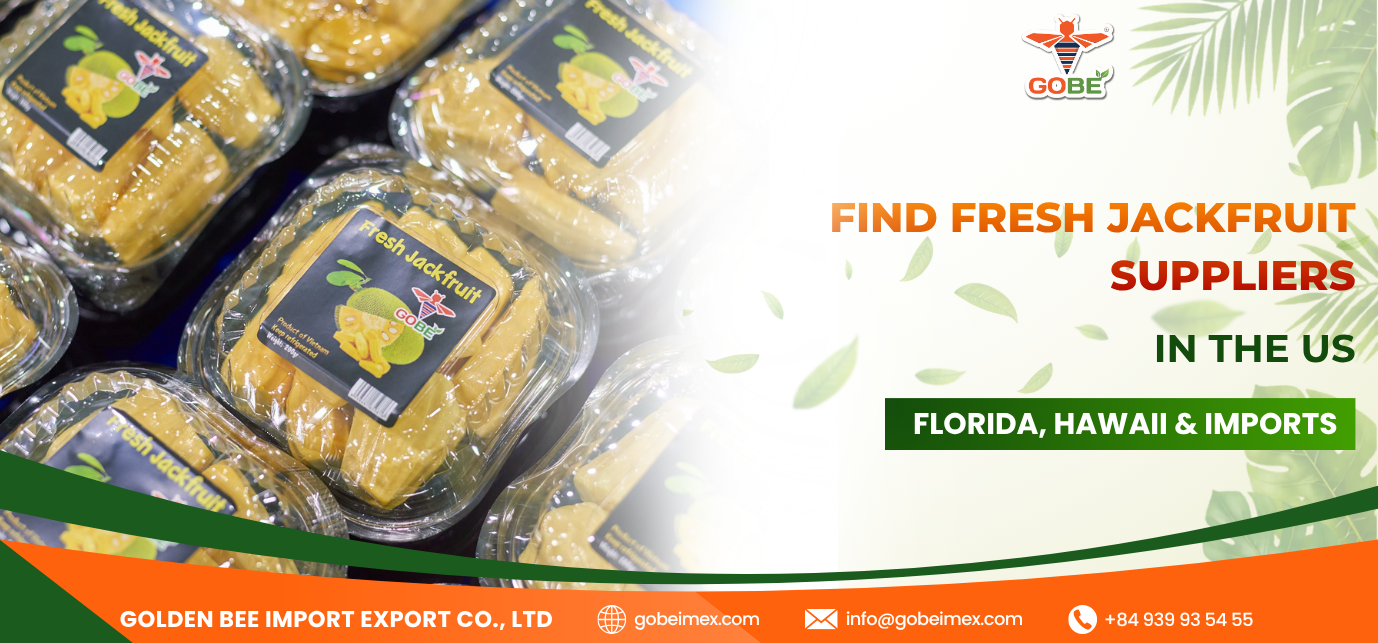
Find Fresh Jackfruit Suppliers in the US: Florida, Hawaii & Imports

Find Fresh Jackfruit Suppliers in the US: Florida, Hawaii & Imports

Fresh jackfruit suppliers in the US fall into two main categories: domestic growers concentrated in Florida and Hawaii, and certified importers bringing supply from Southeast Asia and Mexico. For buyers seeking stable, year-round

Read More
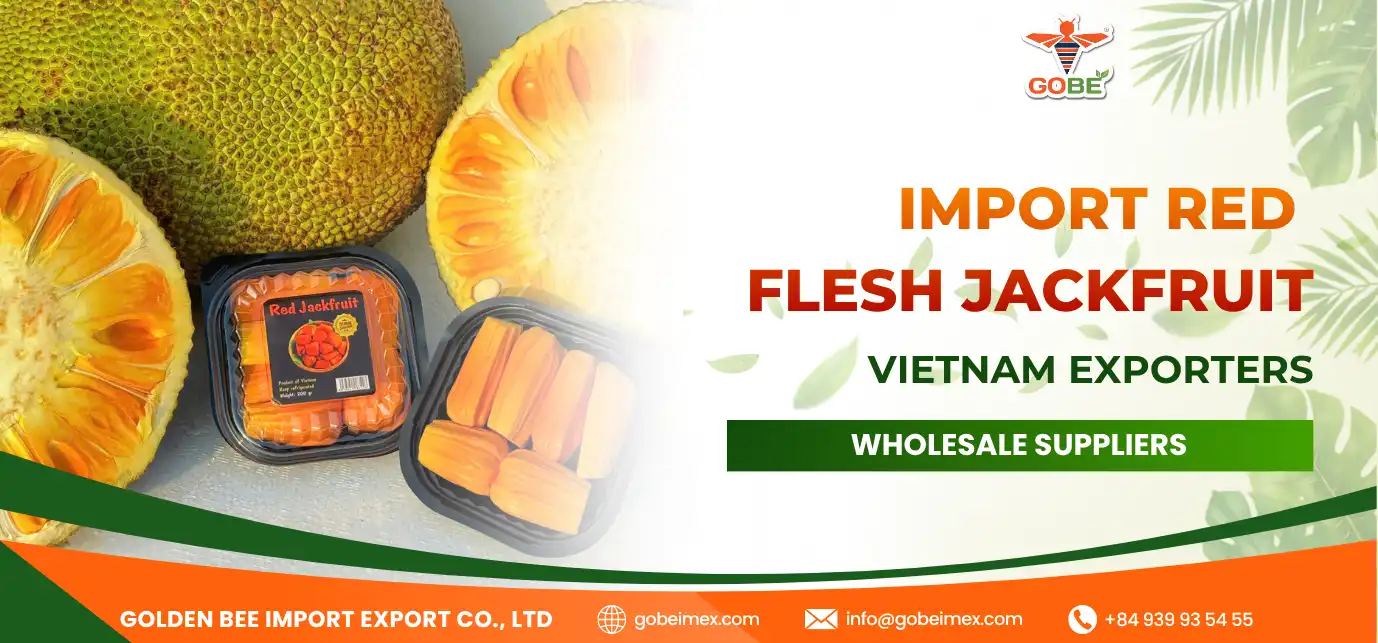
Import Red Flesh Jackfruit: Vietnam Exporters & Wholesale Suppliers

Import Red Flesh Jackfruit: Vietnam Exporters Wholesale Suppliers

Red flesh jackfruit from Vietnam is one of the most sought-after tropical commodities in global B2B fresh produce trade, offering importers a rare combination of distinctive flavor, striking appearance, and year-round availability backed

Read More
How to Cut a Whole Jackfruit: Remove the Core, Pods & Seeds

How to Cut a Whole Jackfruit: Remove the Core, Pods Seeds

Cutting a whole jackfruit step by step involves oiling your knife and hands, halving the fruit lengthwise, removing the central core with a V-cut, pulling out the yellow pods by hand, and pressing

Read More
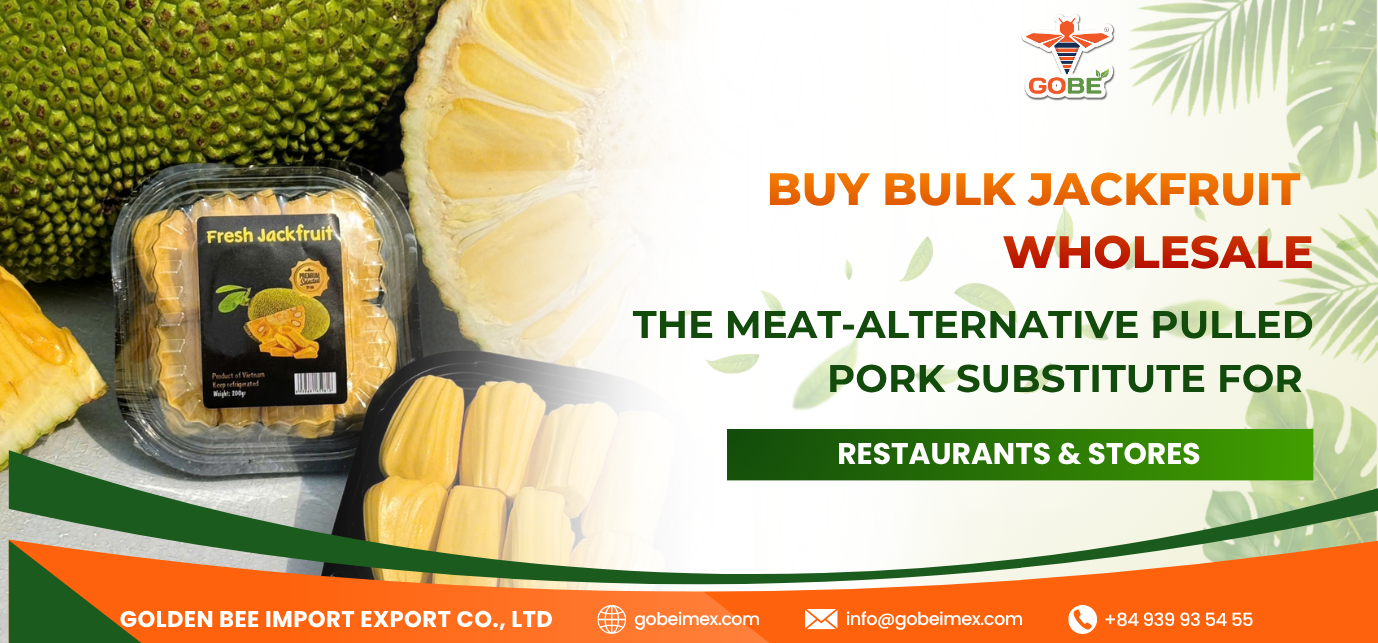
Buy Bulk Jackfruit Wholesale: The Meat-Alternative Pulled Pork Substitute for Restaurants & Stores

Buy Bulk Jackfruit Wholesale: The Meat-Alternative Pulled Pork Substitute for Restaurants & Stores

Bulk wholesale jackfruit is one of the fastest-growing procurement categories for international retailers, food service operators, and distributors seeking premium tropical produce at scale. Whether you are sourcing fresh jackfruit for ethnic grocery

Read More
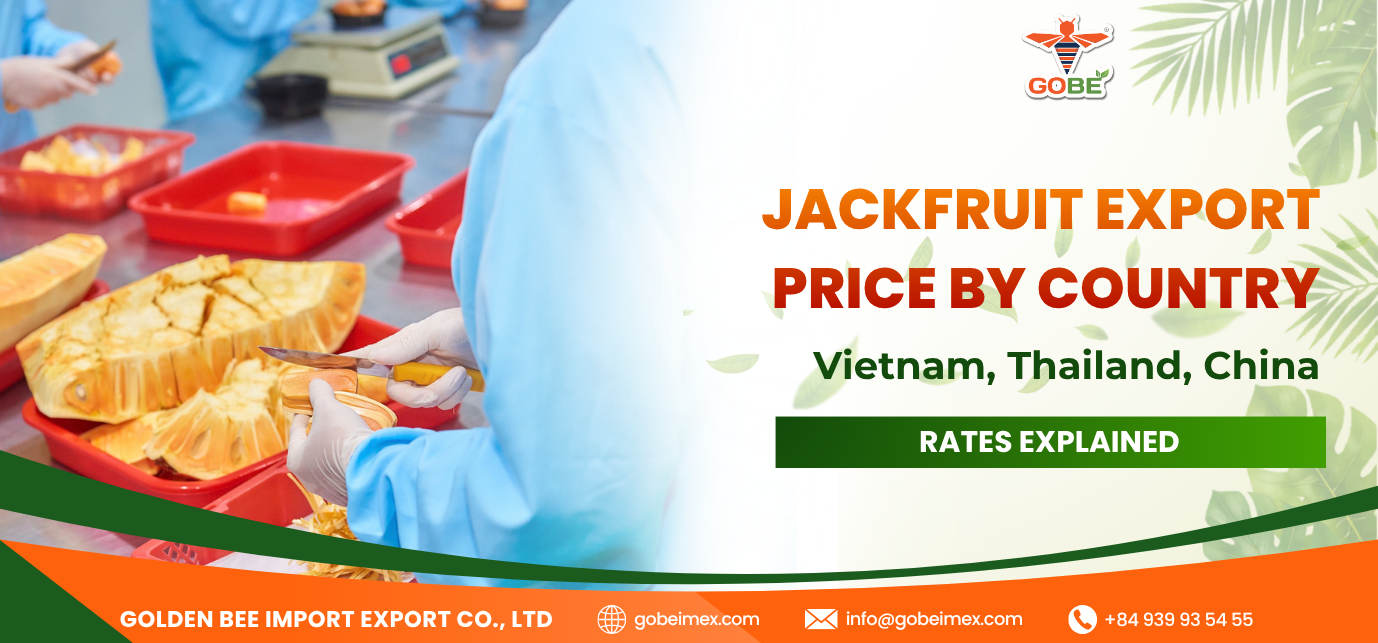
Jackfruit Export Price by Country: Vietnam, Thailand, China Rates Explained

Jackfruit Export Price by Country: Vietnam, Thailand, China Rates Explained

Jackfruit export price is not a single fixed number. It is a layered cost structure that varies by country of origin, product form, quality certification, and trade terms, with Vietnam, Thailand, and China

Read More
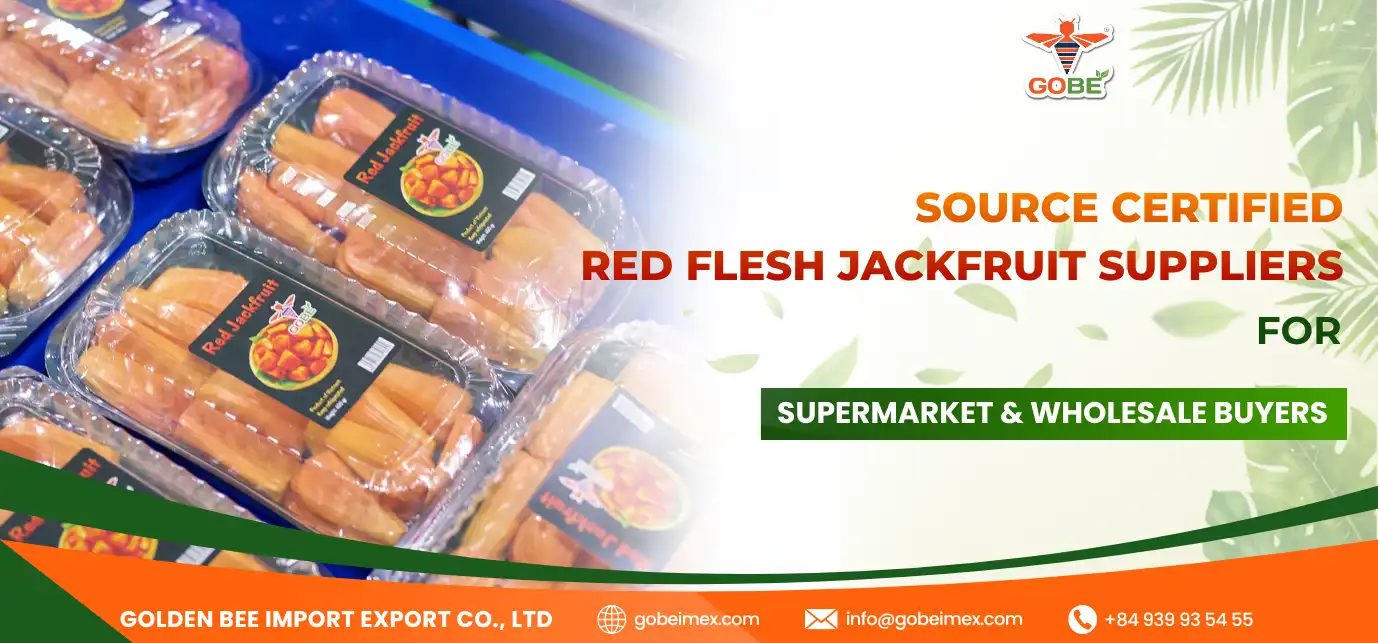
Source Certified Red Flesh Jackfruit Suppliers for Supermarket & Wholesale Buyers

Source Certified Red Flesh Jackfruit Suppliers for Supermarket Wholesale Buyers

Certified red flesh jackfruit suppliers are specialized exporters holding internationally recognized credentials — including GlobalGAP, FDA, ISO, Sedex, and GRASP — who supply consistent volumes of export-grade red flesh jackfruit to supermarket chains

Read More
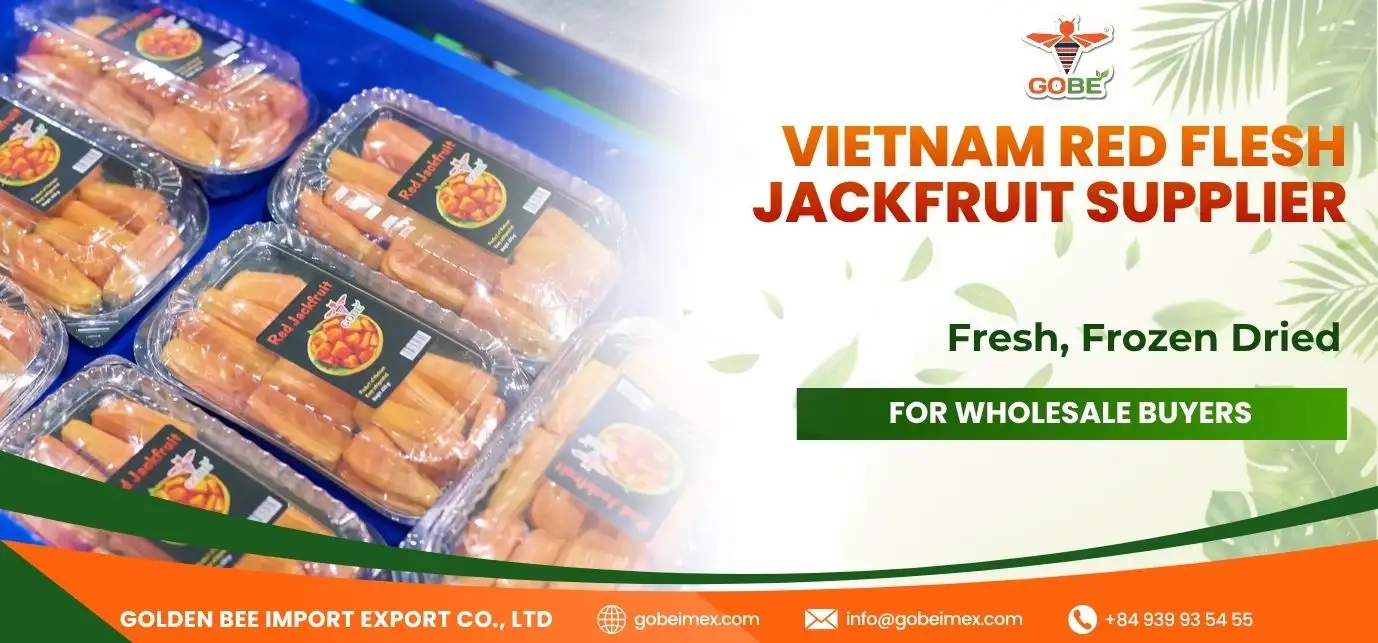
Vietnam Red Flesh Jackfruit Supplier: Fresh, Frozen Dried for Wholesale Buyers

Vietnam Red Flesh Jackfruit Supplier: Fresh, Frozen Dried for Wholesale Buyers

Vietnam is one of the world’s leading sources of red flesh jackfruit, offering wholesale buyers a reliable, year-round supply in fresh, frozen, and dried forms backed by internationally recognized certifications. As import demand

Read More
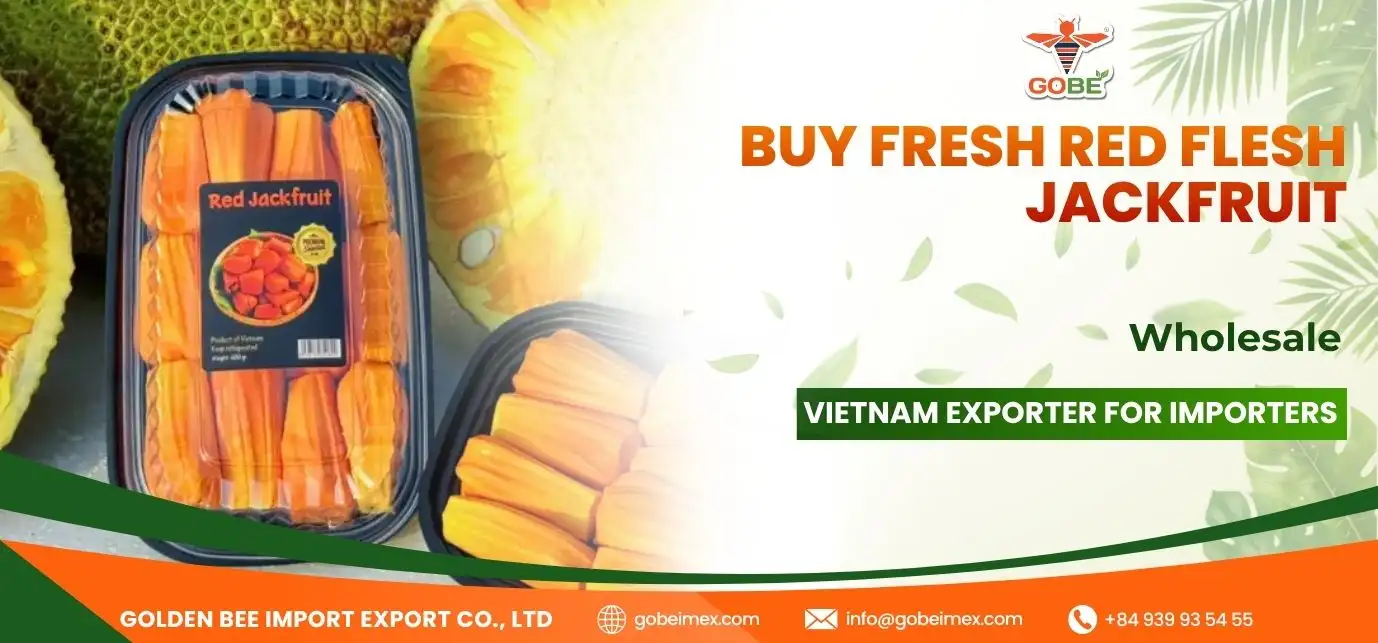
Buy Fresh Red Flesh Jackfruit Wholesale: Vietnam Exporter for Importers

Buy Fresh Red Flesh Jackfruit Wholesale: Vietnam Exporter for Importers

Fresh red flesh jackfruit wholesale from Vietnam is available year-round through certified exporters operating in the Mekong Delta region, offering export-grade quality backed by GlobalGAP, ISO, FDA, GRASP, and Sedex certifications. Vietnam ranks

Read More
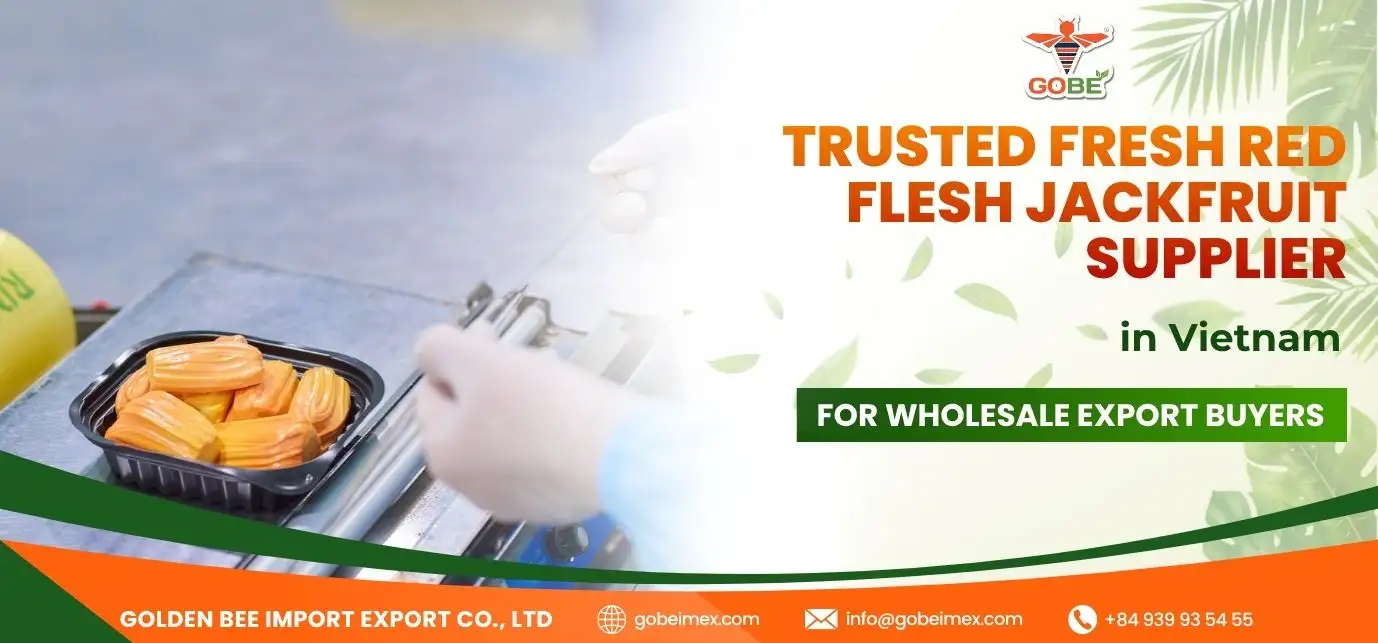
Trusted Fresh Red Flesh Jackfruit Supplier in Vietnam for Wholesale Export Buyers

Trusted Fresh Red Flesh Jackfruit Supplier in Vietnam for Wholesale Export Buyers

Vietnam is one of the most reliable sources of fresh red flesh jackfruit for wholesale and export buyers worldwide, offering year-round supply, internationally certified growing areas, and a supply chain designed to preserve

Read More