Subtotal $0.00


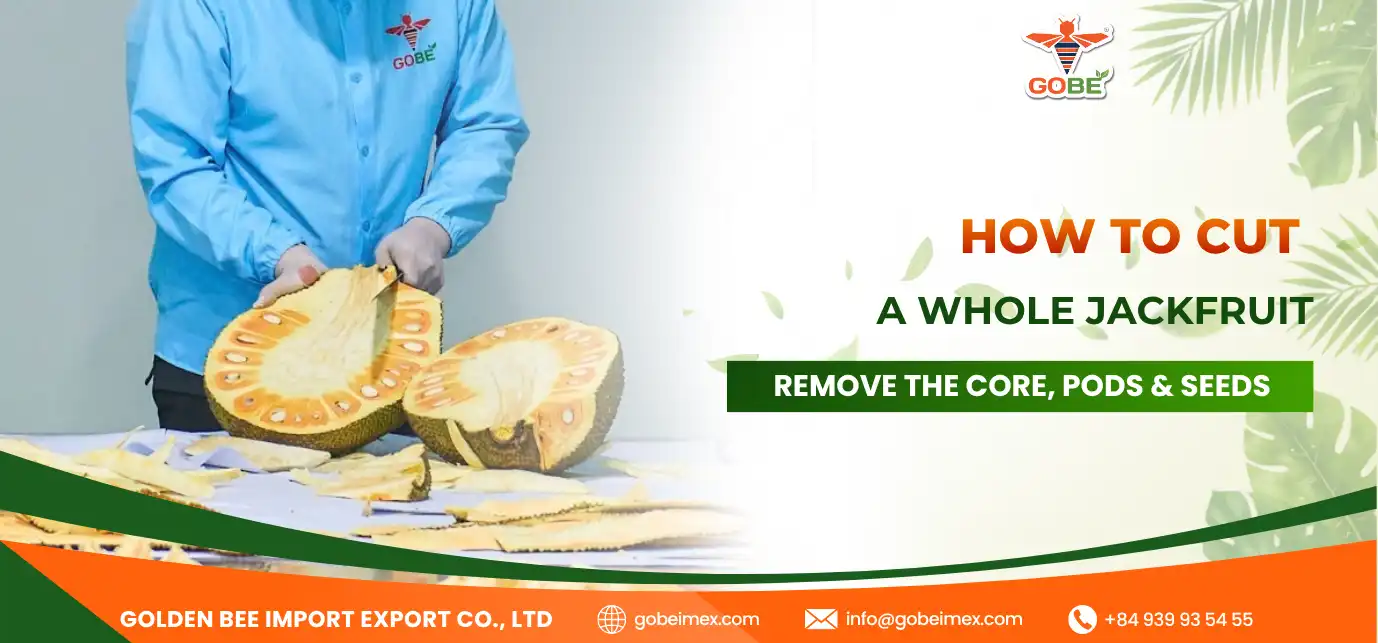
Cutting a whole jackfruit step by step involves oiling your knife and hands, halving the fruit lengthwise, removing the central core with a V-cut, pulling out the yellow pods by hand, and pressing each pod to release the seed inside. This process transforms an intimidating 5–35 kg tropical fruit into clean, ready-to-eat portions in under 30 minutes when you follow the right sequence and use the right tools.
Removing the core, pods, and seeds from jackfruit requires understanding how each part connects to the others. The white fibrous core runs straight down the center of every half, the golden pods (arils) are embedded in the surrounding fibrous flesh, and each pod contains exactly one seed wrapped in a thin membrane. Once you identify these three structural layers, separating them becomes straightforward and methodical rather than messy and frustrating.
Before any cutting begins, the most important preparation step is oiling your knife and both hands to prevent the natural latex from bonding to your skin and blade. Jackfruit latex is one of the stickiest plant saps in the tropical produce world, and skipping this step turns a 20-minute task into a lengthy cleanup. Beyond the oil, having a large stable cutting surface, gloves, and a wide container ready will make the entire process cleaner and faster.
To better understand exactly what you are working with and why each preparation step matters, the sections below walk through every stage from tool selection to the final seed removal.
Before cutting a whole jackfruit, you need a large sharp chef’s knife, a wide stable cutting board, cooking oil for your hands and blade, latex gloves, and a large bowl or tray to collect the pods. These five essentials address the two biggest challenges of working with jackfruit: its size and its latex.
Specifically, each item on this list solves a concrete problem you will encounter the moment the knife first breaks the rind. Below is a detailed look at what to prepare and why each element matters before you make your first cut.
Jackfruit produces a white latex sap that begins flowing the instant you cut through the outer rind, and this sap bonds almost immediately to skin, metal, and porous surfaces. The latex is a natural defense mechanism of the fruit, and it does not wash off easily with water alone.
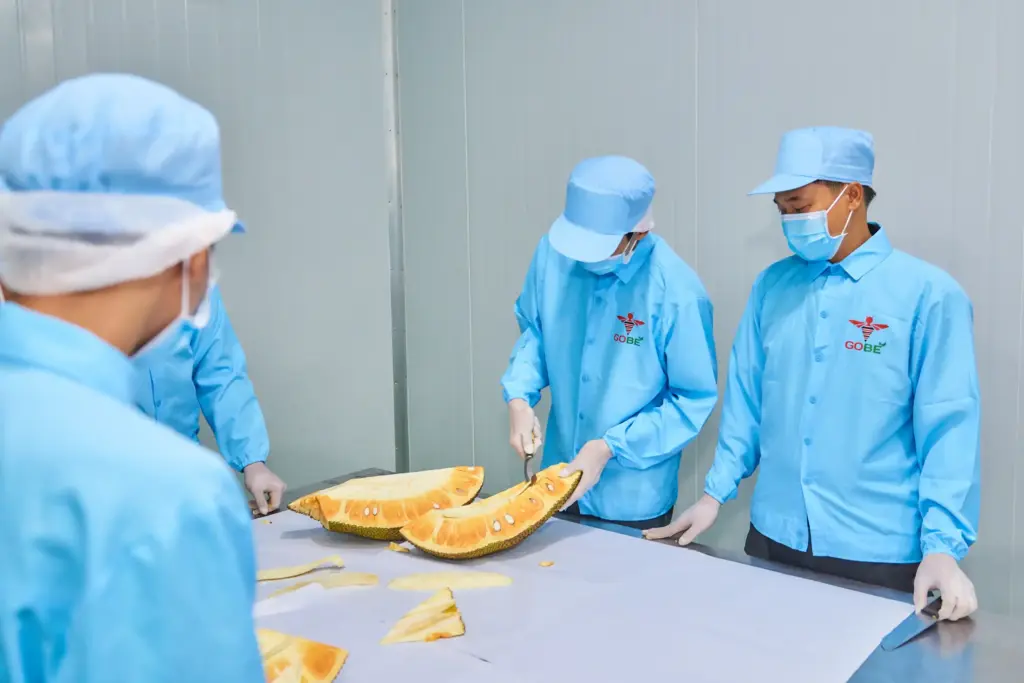
To prevent latex from sticking, generously coat your knife blade, both hands, and the surface of your cutting board with a neutral cooking oil such as coconut oil, vegetable oil, or sunflower oil before you begin. For example, pour roughly one tablespoon of oil onto a paper towel and wipe it across the full length of both sides of the blade. Repeat this oiling process on your palms, fingers, and the top surface of your cutting board.
More importantly, wear latex or nitrile gloves underneath the oil layer as an added barrier, particularly if you plan to pull pods out by hand. To clean latex residue from your knife and hands after finishing, rub the affected area with more cooking oil first to loosen the sap, then wash with dish soap and warm water. Scrubbing with oil before water is far more effective than going straight to soap.
There are four tool categories that work best for cutting a whole jackfruit: a large knife, a stable cutting surface, hand protection, and a collection container.
The table below compares the most common tool options across each category so you can choose based on what you already have at home.
| Tool Category | Best Option | Acceptable Alternative | Why It Matters |
|---|---|---|---|
| Knife | Chef’s knife (25–30 cm blade) | Cleaver or heavy santoku | Long blade allows single smooth cuts through the rind without sawing |
| Cutting surface | Large hardwood or thick plastic board | Newspaper laid flat on a clean table | Absorbs latex and provides a stable base for a heavy fruit |
| Hand protection | Nitrile or latex gloves | Heavily oiled bare hands | Prevents latex from bonding to skin and staining fingernails |
| Collection container | Wide shallow tray or large mixing bowl | Any food-safe container over 30 cm wide | Holds pods cleanly and prevents them from rolling onto a sticky surface |
Additionally, lay several sheets of newspaper or a large plastic bag under and around your cutting board before you start. Jackfruit can weigh between 5 and 35 kg, and the latex drips steadily once cutting begins. The newspaper catches the drips and makes cleanup significantly faster when you are done.
Cutting a whole jackfruit step by step follows this sequence: stand the fruit upright and halve it lengthwise, then quarter each half, identify and remove the central white core, pull the yellow pods free from the surrounding fiber, and finally press each pod to push out the seed. This five-stage process works for any size jackfruit and produces clean, separated components: edible pods, seeds for optional cooking, and fibrous waste for composting.
Following this order matters because each step makes the next one easier. Halving before quartering gives you manageable sections, and removing the core before pulling pods means the pods come free without resistance. Let’s explore each stage in detail.
The core is the firm white column running through the exact center of every jackfruit half, and you remove it by making two diagonal cuts in a V-shape on either side of the core strip, then lifting it cleanly away from the surrounding flesh.
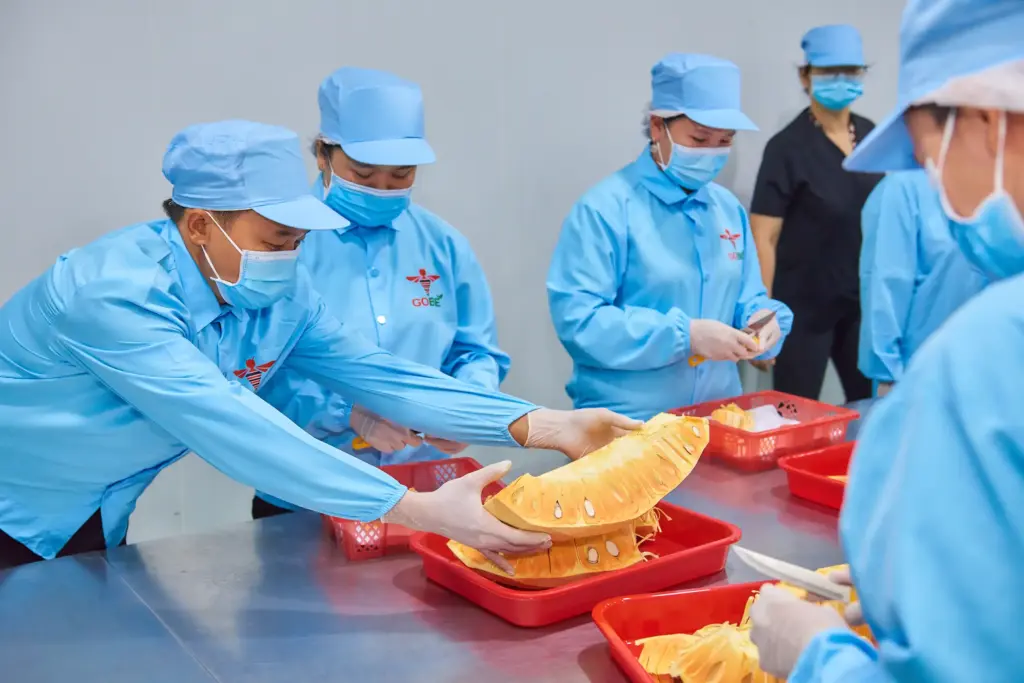
To identify the core precisely: after you slice the jackfruit in half lengthwise and place one half cut-side up on your board, you will see a pale, almost white, fibrous column approximately 4–6 cm wide running from the stem end to the tip of the fruit. The pods (yellow arils) radiate outward from this core like spokes from a hub.
Follow these steps to remove the core from each jackfruit quarter:
The core is technically edible when cooked, since simmering or roasting softens its tough texture, but most cooks discard it because it carries very little flavor compared to the pods. Furthermore, distinguishing the core from the surrounding stringy fiber is straightforward: the core is bright white and firm under pressure, while the fiber is off-white, lighter, and pulls apart easily by hand.
After removing the core, you separate the golden pods from the fibrous flesh by pulling each pod free by hand, then press or slit each pod lengthwise to push out the single seed inside. This two-motion technique, pull then press, extracts the edible portion cleanly and quickly.
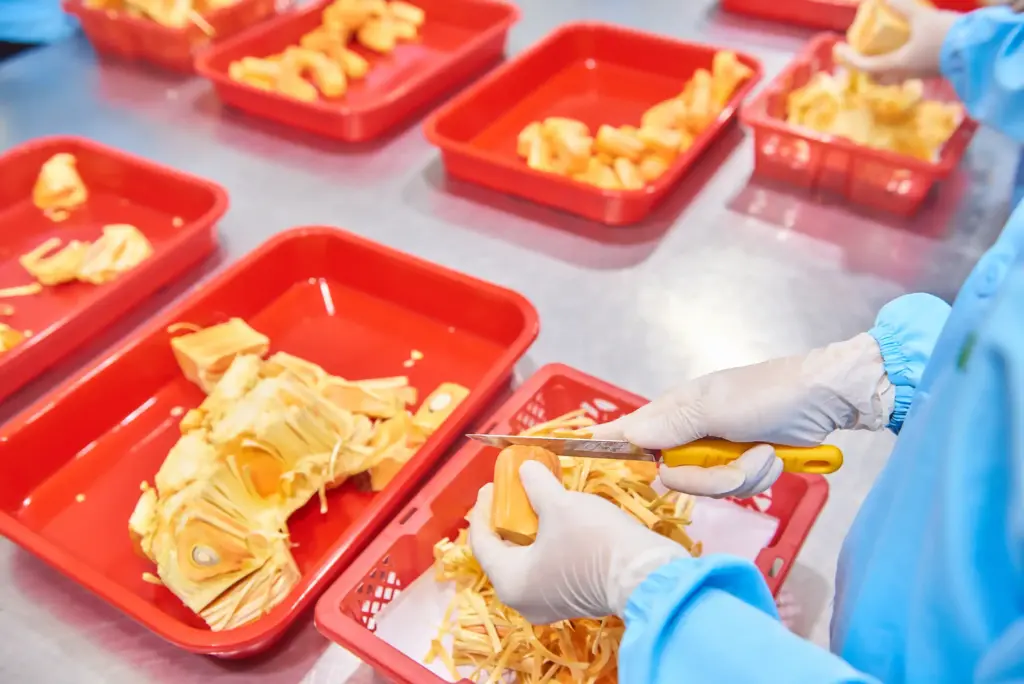
More precisely, here is how to work through the fibrous flesh to reach the pods:
Separating the pods from the fiber:
Recognizing a ripe pod ready to eat:
Removing the seed from each pod:
The remaining stringy fiber is not toxic but is generally unpleasant to eat raw due to its tough, chewy texture. However, it can be simmered in curries or soups where it softens considerably and absorbs flavor well.
A jackfruit is ready to cut and eat when it emits a strong sweet fragrance, its outer skin has shifted from green to yellow-brown, its surface spines feel noticeably softer to the touch, and it produces a hollow sound when tapped firmly with a knuckle. These four sensory indicators, smell, color, texture, and sound, together confirm ripeness more reliably than any single sign alone.
Additionally, understanding the difference between a ripe fruit and an unripe one before you begin cutting helps you choose the right approach and the right recipes. Below is a complete guide to both ripeness assessment and post-cutting storage.
Ripeness indicators at a glance:
The table below summarizes the key differences between ripe and unripe jackfruit across five observable characteristics, so you can assess your fruit accurately before cutting.
| Indicator | Ripe Jackfruit | Unripe Jackfruit |
|---|---|---|
| Skin color | Yellow to yellow-brown | Bright or dark green |
| Surface spines | Softer, slightly flattened | Hard, sharp, and pointed |
| Fragrance | Strong sweet tropical aroma | Little to no scent |
| Sound when tapped | Hollow, slightly dull thud | Dense, solid sound |
| Flesh color (after cutting) | Deep golden yellow | White to pale cream |
Storing jackfruit after cutting:
Once you have cut and separated the pods, proper storage prevents waste and extends shelf life significantly:
Notably, pre-ripened jackfruit bought from a market may continue ripening at room temperature for 1 to 2 days if the skin is still partially green. Place the whole fruit in a warm area away from direct sunlight and check it daily using the indicators in the table above.
Ripe jackfruit is softer and yields more easily to the knife, while unripe jackfruit is significantly firmer and produces more latex, requiring greater cutting force and heavier oil application on both hands and blade. The cutting technique is similar, but the physical effort and latex management differ considerably between the two.
Yes, jackfruit seeds are completely edible after cooking and are a nutritious by-product of the cutting process that many people discard unnecessarily.
The most common preparation methods are boiling for 20 to 30 minutes until tender (similar to a boiled potato), roasting in a dry pan or oven with salt until the outer skin crisps, or adding them directly to slow-cooked savory dishes such as curries and stews. Nutritionally, jackfruit seeds are rich in complex carbohydrates, plant-based protein, dietary fiber, and B vitamins. Never eat them raw, as raw seeds contain compounds that interfere with digestion. Store freshly removed seeds submerged in cold water in the refrigerator and cook within 3 days for best texture.
Yes, unripe jackfruit is one of the most widely used plant-based meat substitutes in vegan and vegetarian cooking, largely because its fibrous strands mimic the texture of pulled pork or shredded chicken when simmered or braised.
The fiber structure of young green jackfruit separates into long strands under heat, producing a texture remarkably similar to slow-cooked pulled pork. Because unripe jackfruit has almost no natural sweetness, it absorbs marinades, spice rubs, and braising liquids readily, making it ideal for bold-flavored dishes. Popular applications include vegan pulled jackfruit sandwiches, jackfruit tacos with smoked paprika and cumin, and jackfruit curry. When using canned unripe jackfruit (packed in brine, not syrup), rinse it thoroughly and squeeze out excess moisture before cooking to ensure it accepts seasoning evenly.
This article was prepared based on international food and fresh produce content standards. Vietnamese tropical jackfruit, including Thai jackfruit and finger jackfruit varieties, is one of the flagship export products of GOBE IMEX (Golden Bee Vietnam), supplied to international markets across North America, Europe, the Middle East, and Asia.