Subtotal $0.00


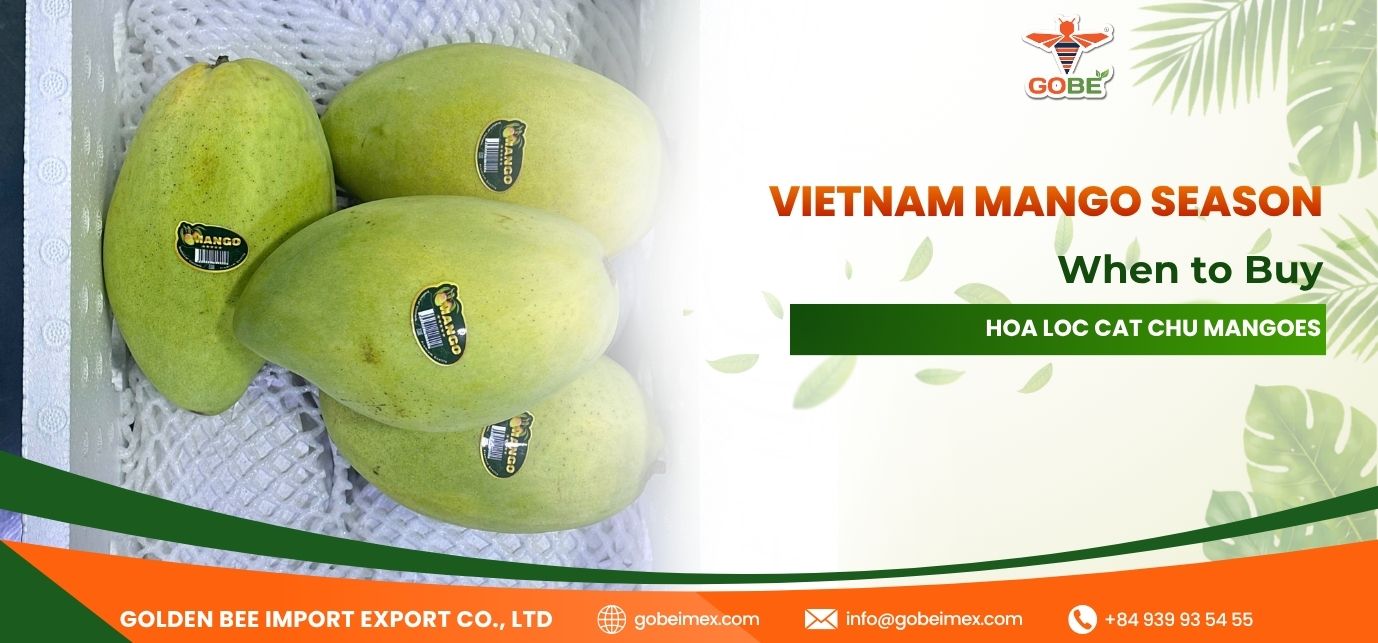
Vietnam mango season runs primarily from March through July each year, with peak quality and supply concentrated between April and May. During this window, growing regions across the Mekong Delta and Central Vietnam produce the country’s finest tropical mangoes at their natural best, making it the ideal period for importers, distributors, and fresh produce buyers to secure premium-grade fruit.
When it comes to when to buy, April through May consistently delivers the highest Brix readings, the most vibrant color development, and the most competitive pricing due to peak supply volume. Buyers who place orders 4 to 6 weeks ahead of this window secure the best allocations and allow sufficient lead time for cold chain logistics and phytosanitary clearance at destination ports.
Hoa Loc and Cat Chu mangoes represent the two most commercially significant varieties in Vietnam’s export portfolio. Hoa Loc, originating from Dong Thap and Tien Giang, peaks in May with its signature elongated shape, fiber-free golden flesh, and delicate sweetness that resonates with European and North American consumers.
Cat Chu, also from Dong Thap, peaks in April with a rounder profile, deeper orange-yellow skin, and a richer sweetness that appeals strongly to Middle Eastern and Southeast Asian markets. Together, these two varieties create an overlapping supply window from March through June, offering importers a practical pathway to continuous sourcing.
Understanding how these two varieties complement each other, how Vietnam’s tropical climate shapes their flavor, and what quality benchmarks to apply at the point of purchase are the key decisions that determine whether a mango shipment arrives in peak condition or falls short of market expectations. The sections below address each of these decisions in full detail.
Vietnam mango season is a recurring annual harvest cycle that spans from March through July, driven by the country’s tropical monsoon climate, with the highest-quality fruit concentrated in April and May across three primary growing belts: the Mekong Delta, the South Central Coast, and the Central Highlands.
Specifically, the season is shaped by Vietnam’s distinct dry and wet seasonal pattern. The dry season from December through April creates the warm, low-humidity conditions that trigger natural flowering in mango trees, leading to fruit set in February and March and ripening through mid-year.
This climate produces fruit with exceptionally high sugar content, pronounced aroma, and the firm yet yielding texture that export-grade buyers require. To better understand the geography and timing that define this season, the following sections break down the key growing regions and the full duration of the harvest cycle.
Vietnam’s mango production is concentrated across three distinct growing belts, each contributing to a different phase of the seasonal supply chain. The Mekong Delta, led by Dong Thap and Tien Giang provinces, forms the largest and most commercially significant zone, producing the majority of export-grade Hoa Loc and Cat Chu mangoes.
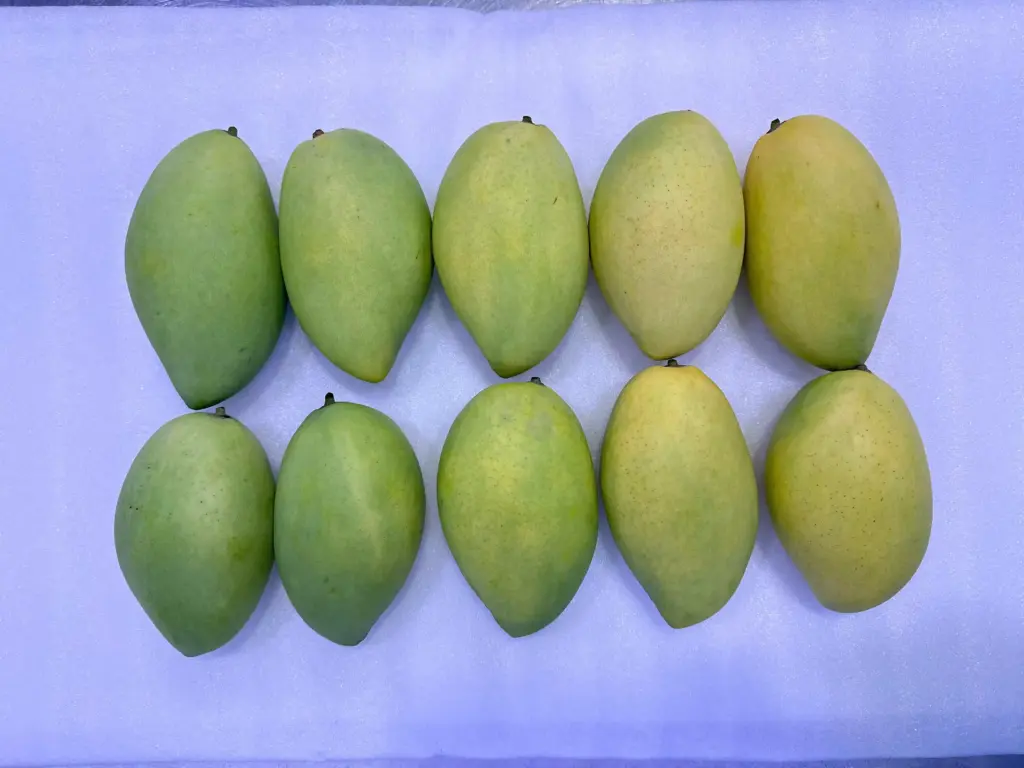
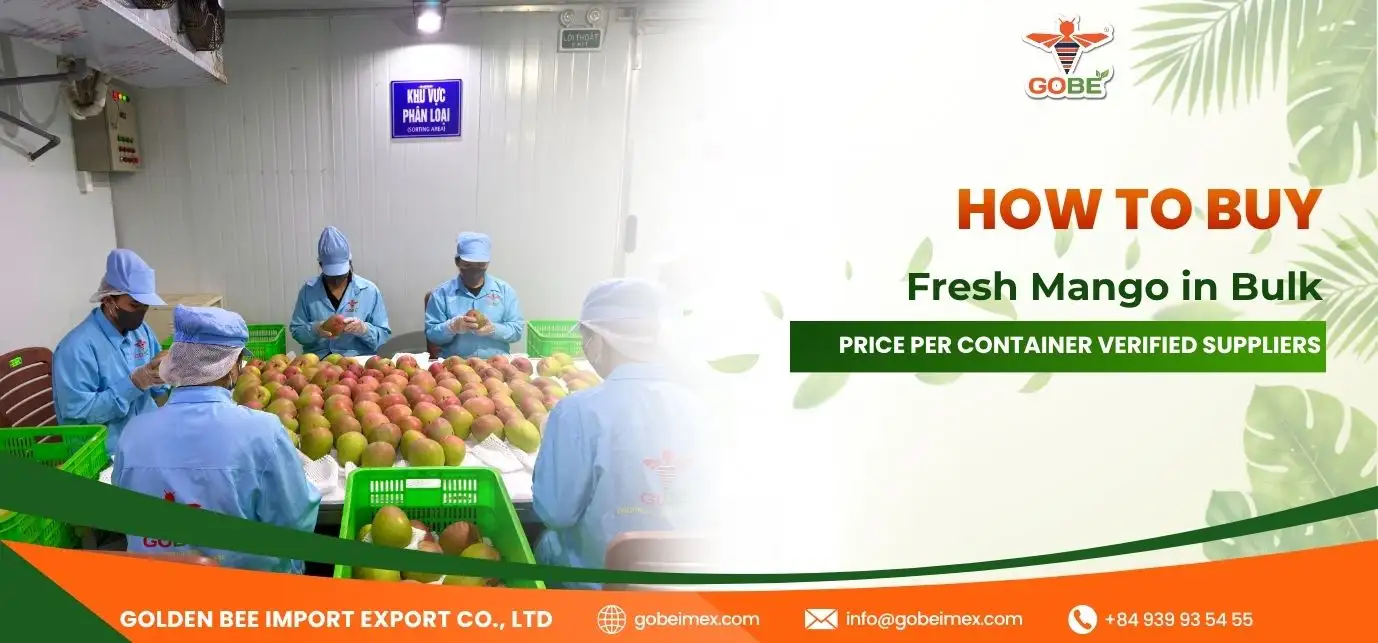
The climate here, characterized by rich alluvial soil, consistent warmth, and well-managed irrigation, creates ideal conditions for fruit development with high Brix values and uniform size grading. Tien Giang in particular serves as the base for major packing operations, including the GOBE IMEX facility, which processes fruit within 12 hours of harvest to lock in peak freshness before cold chain loading.
The South Central Coast, particularly Khanh Hoa and Ninh Thuan provinces, produces early-season mangoes that enter the market from March onward. These regions benefit from a slightly earlier dry season onset, giving them a timing advantage that helps importers bridge the gap before the Mekong Delta reaches full output.
The Central Highlands and other southern provinces contribute smaller volumes but play an important role in extending supply continuity across the mid-year window.
The table below summarizes Vietnam’s primary mango-growing regions, the varieties they predominantly produce, and their approximate harvest timing, giving buyers a clear reference for planning sourcing calendars:
| Growing Region | Key Provinces | Primary Varieties | Harvest Window |
|---|---|---|---|
| Mekong Delta | Dong Thap, Tien Giang | Hoa Loc, Cat Chu | March to July |
| South Central Coast | Khanh Hoa, Ninh Thuan | Cat Hoa Loc, local varieties | March to May |
| Central Highlands | Dak Lak, Dak Nong | Mixed local varieties | April to June |
| Southern Vietnam | Dong Nai, Binh Duong | Mixed varieties | Year-round (off-season) |
Vietnam’s mango harvest season lasts approximately five months in its natural main-crop cycle, running from March through July, with a secondary off-season supply window available from September through November through managed flowering techniques.
The main season, peaking between April and May, delivers the highest volume of export-grade fruit with optimal sugar content, natural aroma, and pack-ready size. Early-season fruit arriving in March tends to be available in smaller volumes at higher prices, while late-season fruit from June onward gradually decreases in Brix readings and uniformity as the wet season approaches.
The secondary off-season supply, enabled by ethephon-assisted or smoke-induced flowering techniques widely practiced by Vietnamese growers, extends the commercial availability of varieties like Hoa Loc beyond their natural cycle.
This technique, combined with GOBE IMEX’s multi-region sourcing network spanning over 200 GlobalGAP-certified hectares across both company-owned and partner farms, makes it operationally viable to maintain consistent supply across 52 weeks per year.
For importers requiring year-round contract supply, this combination of natural seasonal staggering and managed off-season production eliminates the sourcing gaps that would otherwise occur between July and the following March.
The best time to buy Vietnamese mangoes is April through May, when both Hoa Loc and Cat Chu varieties reach their natural peak in terms of sugar content, aroma, skin color development, and overall pack-grade uniformity, while supply volume is at its highest and pricing is most competitive.
This two-month window represents the intersection of optimal fruit quality and maximum sourcing flexibility. The reasoning behind this timing, as well as the practical indicators buyers can use to verify quality at the point of purchase, are examined in the following sections.
Yes, Vietnamese mangoes are available year-round for import, thanks to a combination of staggered natural harvest seasons across multiple growing regions and managed off-season flowering techniques that extend supply beyond the traditional March-to-July window.
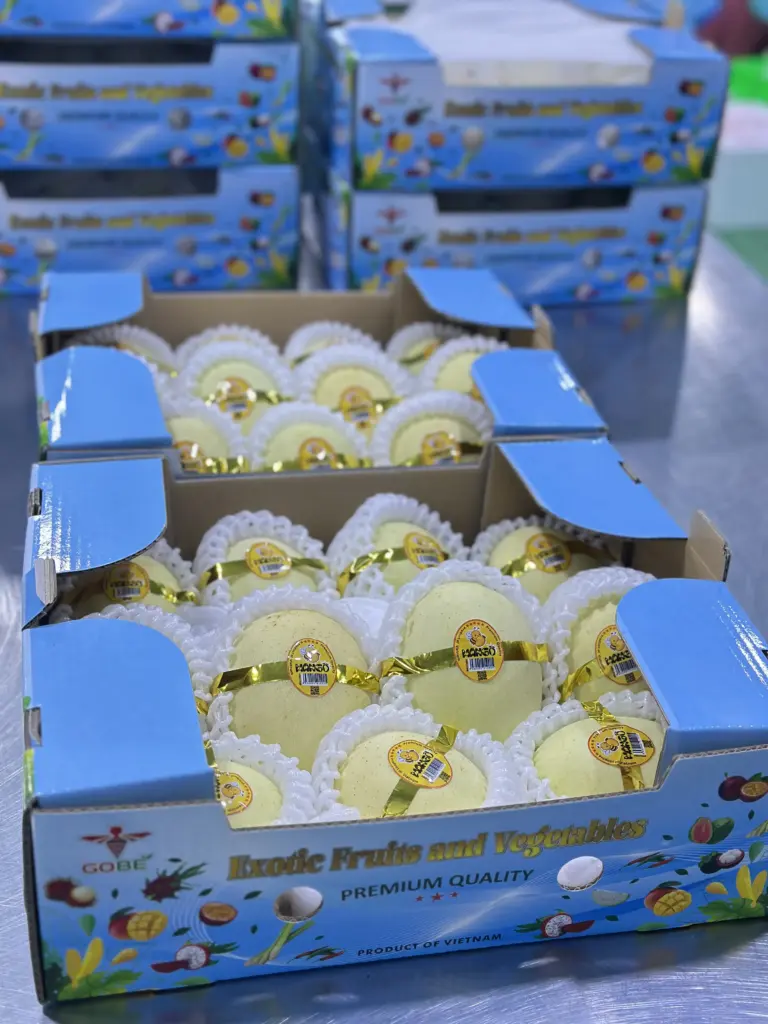
Exporters like GOBE IMEX maintain a 52-week supply guarantee by drawing from a network of owned farms covering more than 30 hectares and partner-operated growing areas across more than 200 GlobalGAP-certified hectares. This multi-source model means that when one region reaches end-of-season, another is either entering peak production or supplying off-season fruit.
Cold chain logistics play an equally critical role in making year-round availability practical for international buyers. From the packing house in Tien Giang, fruit moves through a continuous refrigerated supply chain, transferred via GOBE IMEX’s own refrigerated container fleet to maintain temperature integrity from farm gate to port. This unbroken cold chain extends shelf life sufficiently to support shipping timelines to North America, Europe, the Middle East, and Asia without compromising the quality that end consumers and retail buyers expect.
Buyers should evaluate Vietnamese mangoes against four primary quality indicators: skin color uniformity, flesh firmness, natural aroma at the stem end, and certified compliance with food safety standards. Skin color should display an even yellow to orange-yellow tone without brown spotting, surface bruising, or irregular green patches that suggest harvesting before optimal maturity.
Flesh firmness should be consistent across the fruit, firm enough to withstand handling and transit pressure but with slight elasticity that indicates full sugar development. The aroma at the stem end serves as one of the most reliable non-destructive indicators of ripeness and Brix level, with a pronounced, clean tropical sweetness confirming that the fruit was harvested at the correct maturity index.
From a compliance perspective, export-grade Vietnamese mangoes destined for regulated markets must meet a defined set of international standards. The table below outlines the key certifications that buyers should require from their Vietnamese mango supplier, what each certification covers, and which markets mandate it:
| Certification | Coverage | Markets That Require or Strongly Prefer It |
|---|---|---|
| GlobalGAP | Good agricultural practices, residue control, traceability | EU, Japan, UK, Australia |
| FDA Registration | Food safety compliance for U.S. market entry | United States, Canada |
| ISO | Packing and processing quality management systems | All regulated markets |
| Sedex | Ethical supply chain, labor standards | European retailers and supermarket chains |
| GRASP | Social practice risk assessment in farming | EU buyers sourcing under ethical procurement policies |
Additional indicators for commercial buyers include Brix readings, which should sit between 14 and 18 degrees for peak-season Hoa Loc and Cat Chu mangoes, and fruit weight consistency within the declared size grade. GOBE IMEX’s quality control team conducts random batch testing at the packing stage against these parameters before any shipment is released for export.
Hoa Loc and Cat Chu are Vietnam’s two most premium export mango varieties, each carrying a distinct flavor profile, seasonal timing, and target market preference that makes them complementary rather than competitive within an importer’s sourcing plan.
Both varieties have earned international recognition and are actively exported to markets across Canada, the European Union, the Middle East, and Japan. Individually, they serve different consumer preferences and price points. To understand each variety on its own terms before the direct comparison, the following sections profile their origin, characteristics, and peak buying windows.
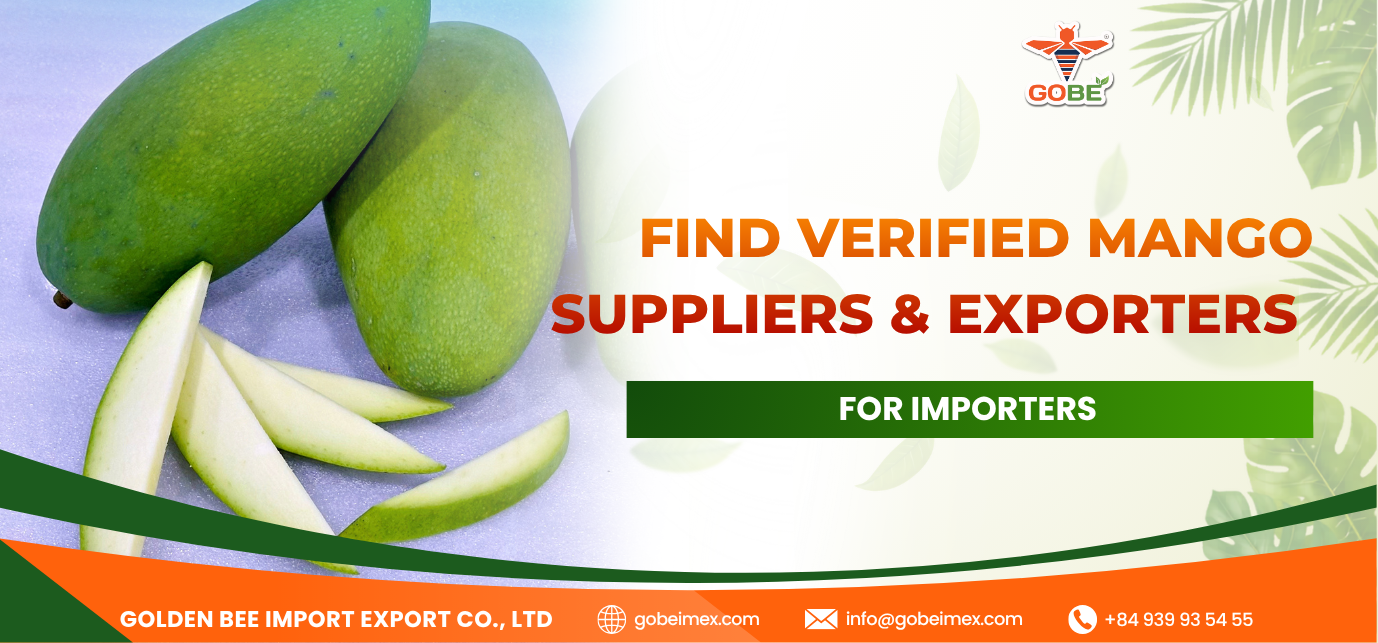
Hoa Loc mango is a premium Vietnamese variety originating from Dong Thap and Tien Giang in the Mekong Delta, recognized internationally for its elongated shape, completely fiber-free golden flesh, and a clean, delicate sweetness that distinguishes it from other tropical mango varieties in the global market.
The fruit’s skin transitions from green-yellow at harvest maturity to a consistent golden yellow as it ripens, a color development pattern that retail buyers in European and North American markets find visually appealing and consumer-ready.
Following this profile, Hoa Loc’s key attributes break down as follows:
For importers serving premium retail channels where consumers pay attention to appearance and eating experience, Hoa Loc consistently performs as a top-tier SKU. Its fiber-free flesh makes it particularly suitable for ready-to-eat fresh-cut applications, which have become a growing category in European and Canadian supermarket produce sections.
Cat Chu mango is a locally developed Vietnamese variety from Dong Thap province, characterized by its rounder, smaller form compared to Hoa Loc, and a deeper, richer sweetness that gives it strong commercial appeal in markets where bold tropical flavor is the primary purchasing driver.
The skin develops a vivid orange-yellow color at full ripeness, making it visually distinctive on retail shelves without requiring any post-harvest treatment. Its flesh is firm, juicy, low in fiber, and carries a Brix reading that frequently exceeds that of Hoa Loc, ranging from 16 to 20 degrees at peak season.
More precisely, Cat Chu’s defining attributes are:
Cat Chu’s earlier peak season relative to Hoa Loc gives importers an important logistical advantage: Cat Chu supply reaches maximum quality and volume in April, just as Hoa Loc supply is beginning to ramp up. This natural overlap creates a continuous high-quality sourcing window from March through June when both varieties are coordinated within the same procurement plan.
Hoa Loc leads on size, aroma elegance, and premium market positioning, while Cat Chu leads on sweetness intensity, earlier seasonal availability, and price competitiveness, making the two varieties strategically complementary for importers managing multi-market distribution.
The most efficient way to see where each variety excels and where they differ is through a side-by-side attribute comparison. The table below covers the key commercial parameters that matter most to importers, distributors, and retail buyers, from harvest timing and physical characteristics through to sweetness level and target market fit:
| Attribute | Hoa Loc Mango | Cat Chu Mango |
|---|---|---|
| Peak Season | April to June (peak: May) | March to May (peak: April) |
| Shape | Elongated, slightly curved | Round to slightly oval |
| Average Weight | 350 to 500 g | 250 to 400 g |
| Skin Color at Ripeness | Golden yellow | Orange-yellow, occasional red blush |
| Flesh Color | Deep golden yellow | Orange-yellow |
| Fiber Content | None | Very low |
| Brix Range (Peak) | 15 to 18 degrees | 16 to 20 degrees |
| Aroma Profile | Delicate, floral sweetness | Rich, full tropical sweetness |
| Post-Harvest Shelf Life | Slightly longer due to firmer skin | Moderate shelf life |
| Primary Export Markets | Europe, North America, Japan | Middle East, Southeast Asia |
| Price Point | Premium | Competitive mid-range |
From a sourcing strategy perspective, an importer working with both varieties gains a March-to-June supply window of overlapping availability, where Cat Chu covers the early peak in March and April while Hoa Loc carries the mid-to-late peak through May and June.
This overlap means that a single supply relationship with an exporter holding both varieties in its portfolio can deliver uninterrupted weekly shipments through the full four-month prime window without gaps or substitution products.
For importers supplying European retail chains, Hoa Loc’s larger fruit size, elegant appearance, and fiber-free flesh make it the preferred SKU for premium fresh mango categories. For importers supplying Gulf and Southeast Asian markets, Cat Chu’s higher Brix readings and bolder flavor profile better match regional consumer preferences for intensely sweet tropical fruit.
A coordinated procurement plan that phases Cat Chu shipments from March through April and transitions to Hoa Loc from April through June allows buyers to maintain a continuous high-quality mango offering throughout the season without over-relying on either variety.
GOBE IMEX exports both Hoa Loc and Cat Chu mangoes through its Tien Giang packing house, where both varieties are processed within 12 hours of harvest, packed to the specific size and weight specifications of each destination market, and shipped under continuous cold chain management to Europe, North America, the Middle East, and Asia.
Yes, importers can source export-grade Vietnamese mangoes outside of peak season through a combination of managed off-season flowering techniques, multi-region sourcing, and cold chain logistics that together sustain commercially viable supply throughout the year.
The following sections address two of the most consequential external factors that influence year-round sourcing decisions for international buyers: climate variability and certification compliance.
El Niño conditions accelerate mango flowering by extending the dry season, which can advance the harvest timeline by 2 to 4 weeks but also increases the risk of fruit drop if temperatures spike above optimal ranges during early fruit set.
La Niña conditions, which bring heavier and more prolonged rainfall, dilute Brix content in developing fruit and raise the rejection rate for export-grade sorting, as excess moisture uptake produces fruit with lower sugar density and increased susceptibility to skin blemishes.
Over the past decade, climate pattern shifts have created greater variability in the onset of Vietnam’s mango flowering cycle, with some years recording April peaks arriving as early as late March and other years experiencing delayed peak supply into early June.
For importers, this variability makes the relationship with an exporter who operates an on-the-ground monitoring system across growing areas a commercially significant advantage. Exporters with direct farm connections, such as GOBE IMEX with its 30-plus hectares of owned farmland and 200-plus hectares of partner-operated GlobalGAP-certified growing areas, can track flowering progress and adjust harvest scheduling in real time, providing buyers with more accurate supply forecasts than off-season spot-market purchases allow.
Vietnamese mango exporters should hold at minimum GlobalGAP, FDA registration, and ISO certification to serve the core regulated import markets of Europe, North America, and Japan, with Sedex and GRASP increasingly required by European supermarket chains operating under ethical procurement mandates.
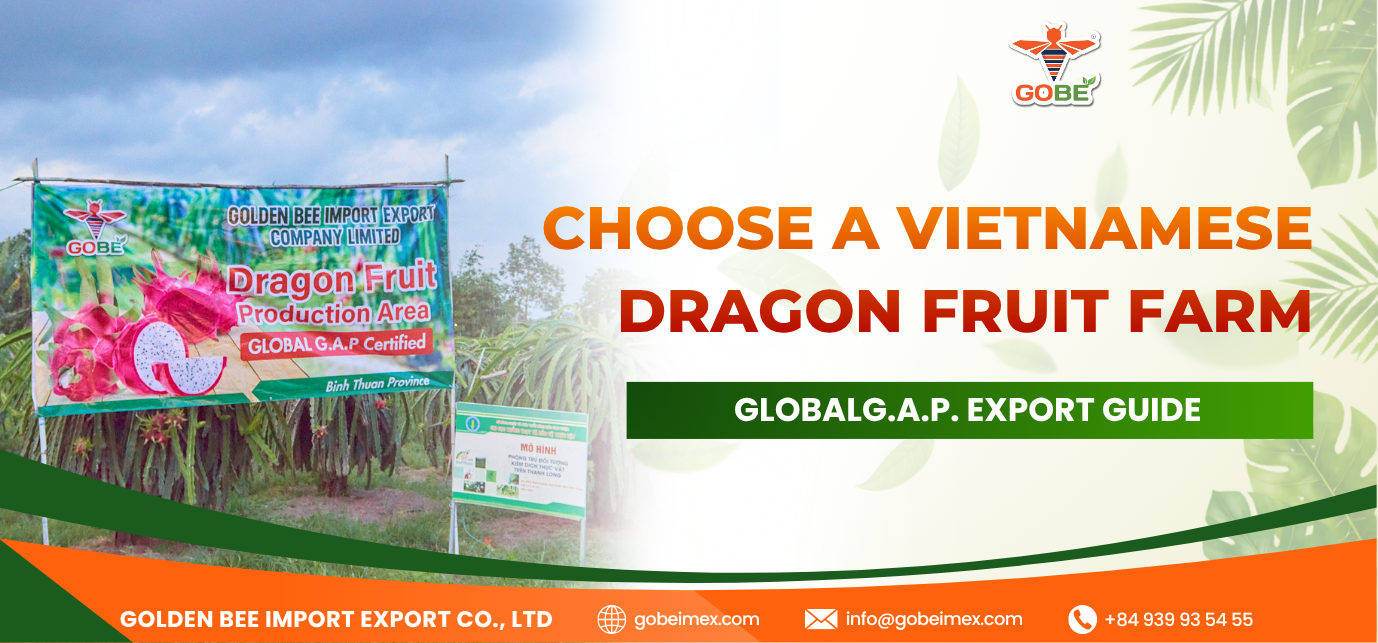
GlobalGAP certification confirms that growing practices meet internationally recognized standards for pesticide residue control, water management, traceability, and worker safety, and it is a non-negotiable entry requirement for EU and Japanese import channels.
FDA registration is mandatory for any exporter shipping to the United States or Canada under FSMA (Food Safety Modernization Act) compliance. ISO certification covers the quality management system within the packing and processing operation, ensuring consistency across batch processing, temperature management, and documentation.
Sedex membership and GRASP assessment address the ethical dimension of supply chain auditing, which European retail buyers now routinely require as part of supplier approval processes.
GOBE IMEX holds all five of these certifications, GlobalGAP, GRASP, ISO, FDA, and Sedex, providing its international partners with a single supplier capable of meeting the full compliance stack required for entry into the world’s most regulated fresh produce markets.