Subtotal $0.00

The most reliable framework to compare top mango exporters in 2026 covers six core criteria: export volume and market share, main mango varieties, quality certifications, price competitiveness, key export destinations, and year-round supply availability. These criteria give international buyers a structured, objective lens to evaluate competing sourcing origins rather than relying on reputation alone. In 2026, climate disruption, tightening phytosanitary regulations, and rising demand across Europe, the Middle East, and North America have made rigorous supplier comparison more critical than ever.
Leading mango exporting countries in 2026 fall into three geographic clusters: Asia (India, Pakistan, Thailand, Philippines, Vietnam), Latin America (Mexico, Brazil, Peru, Ecuador), and Africa plus the Middle East (Egypt, Ivory Coast, Israel). Each cluster brings a distinct combination of variety profiles, price points, and market access that suits different buyer requirements. Understanding how these clusters differ by region is the foundation for any sourcing decision at scale.
For buyers targeting specific markets such as the EU, the UK, the UAE, or Japan, the critical differentiator is not just volume but compliance depth, cold chain continuity, and seasonal flexibility. Countries that combine GlobalGAP, FDA, ISO, GRASP, and Sedex certifications with unbroken cold chain logistics and 52-week supply capacity represent the highest-value sourcing partners for professional importers and distributors in 2026.
A rigorous comparison of mango exporters in 2026 requires buyers to evaluate six root attributes: export volume and market share, main mango varieties, quality and international certifications, price competitiveness, key export destinations, and export season availability. These six dimensions together form a complete sourcing scorecard that protects buyers from supply chain disruptions and quality inconsistencies across shipments. The sections below break down each criterion and its direct impact on buyer outcomes.
Export volume and market share indicate a country’s production stability and its ability to fulfill large or recurring orders without interruption. A supplier nation with high volume backed by diversified growing regions is far less likely to face sudden supply gaps caused by localized weather events or pest outbreaks.
Buyers sourcing for retail chains or supermarket networks need a minimum guaranteed volume per shipment window. Countries with export volumes above 200,000 metric tons annually, such as India and Mexico, demonstrate the agricultural infrastructure to sustain consistent supply. Smaller exporters like Vietnam and the Philippines are gaining ground by targeting premium-grade segments rather than competing purely on volume, which makes them highly relevant for buyers in quality-sensitive markets such as Japan, Germany, and the Netherlands.
According to the Food and Agriculture Organization of the United Nations (FAO, 2024), global mango trade exceeded 2.8 million metric tons, with Asia accounting for over 60% of total export volume. This concentration underscores the importance of understanding regional production cycles when building a sourcing calendar.
Quality and international certifications determine whether mango shipments can legally enter key import markets and meet retailer shelf-life requirements. Without certifications such as GlobalGAP, FDA registration, ISO compliance, GRASP, or Sedex membership, exporters face heightened risks of customs rejection, consumer safety incidents, and reputational damage for the importing buyer.
EU regulations require Maximum Residue Level (MRL) compliance for all fresh produce, and only countries with structured pesticide monitoring programs backed by GlobalGAP or equivalent standards can guarantee consistent compliance shipment after shipment. For buyers sourcing for U.S. markets, FDA registration and FSMA compliance are non-negotiable prerequisites. In 2026, the trend toward ethical sourcing has also elevated GRASP and Sedex as important signals that a supplier manages labor standards responsibly across its farming network.
Price competitiveness in mango exports is determined by a combination of FOB or CIF price per kilogram, logistics cost to the destination port, currency exchange dynamics, and the export duty structure under active trade agreements. The lowest FOB price does not always translate to the lowest total landed cost.
Mexico offers competitive FOB prices for buyers in the United States and Canada because of proximity and USMCA trade benefits, which eliminate tariffs. Vietnam’s FOB prices may be slightly higher than those from Pakistan, but Vietnam’s comprehensive FTA network, including the EVFTA with the European Union and CPTPP with Japan and Canada, reduces total landed costs significantly for buyers in those markets. Buyers who calculate total landed cost rather than FOB price alone consistently identify better sourcing value from compliant, logistics-efficient origins.
There are three primary regional groups of leading mango exporters in 2026: the Asian cluster (India, Pakistan, Thailand, Philippines, Vietnam), the Latin American cluster (Mexico, Brazil, Peru, Ecuador), and the Africa and Middle East cluster (Egypt, Ivory Coast, Israel), each differentiated by variety profile, production scale, and target market alignment. The sections below examine key exporters within each cluster, with direct comparison data for the most commercially significant origins.
India ranks first globally in mango export volume in 2026, Mexico holds the top position for the Americas, and Thailand leads for premium-grade exports in Southeast and East Asia. Pakistan occupies a competitive niche in Middle Eastern and UK markets, driven by its iconic Sindhri and Chaunsa varieties.
The table below summarizes key export metrics for the three largest Asian mango exporters in 2025 and 2026. It allows buyers to compare volume, variety, destinations, certifications, and price in a single view. All figures draw from ITC Trade Map and FAO trade data.
| Country | Export Volume (2025 est.) | Leading Variety | Primary Destinations | Key Certifications | FOB Price (USD/kg) |
|---|---|---|---|---|---|
| India | 65,000 to 70,000 MT | Alphonso, Kesar, Totapuri | UAE, UK, USA, Bangladesh | GlobalGAP (selective), APEDA certified | 1.20 to 3.50 |
| Pakistan | 120,000 to 130,000 MT | Sindhri, Chaunsa, Anwar Ratol | UAE, UK, Germany, Russia | Limited GlobalGAP adoption | 0.80 to 1.80 |
| Thailand | 30,000 to 40,000 MT | Nam Dok Mai, Mahachanok | Japan, China, EU, South Korea | GlobalGAP, Thai FDA, GMP | 1.50 to 3.00 |
India dominates by variety prestige: Alphonso mangoes command premium prices in European and Gulf retail markets, with EU buyers paying up to 5 USD per kilogram at retail. India’s mango export season is tightly concentrated between April and July, however, limiting its capacity to serve buyers seeking year-round supply.
Pakistan supplies the highest raw volume among Asian exporters, primarily through competitive FOB pricing. Inconsistent GlobalGAP certification adoption across Pakistani farms remains a sourcing risk for EU and UK buyers subject to MRL compliance requirements. Thailand differentiates through consistent quality, cold chain maturity, and strong GlobalGAP penetration, making it a reliable premium origin for Japanese and South Korean supermarket chains.
Yes, Vietnam is a competitive mango exporter among the top countries in 2026, particularly for buyers seeking GlobalGAP-certified, year-round supply with strong compliance across EU, Middle Eastern, North American, and Japanese markets. Vietnam’s competitiveness rests on three structural advantages: internationally certified growing areas, an unbroken cold chain from farm to port, and 52-week supply capacity enabled by multiple mango varieties across different growing seasons.
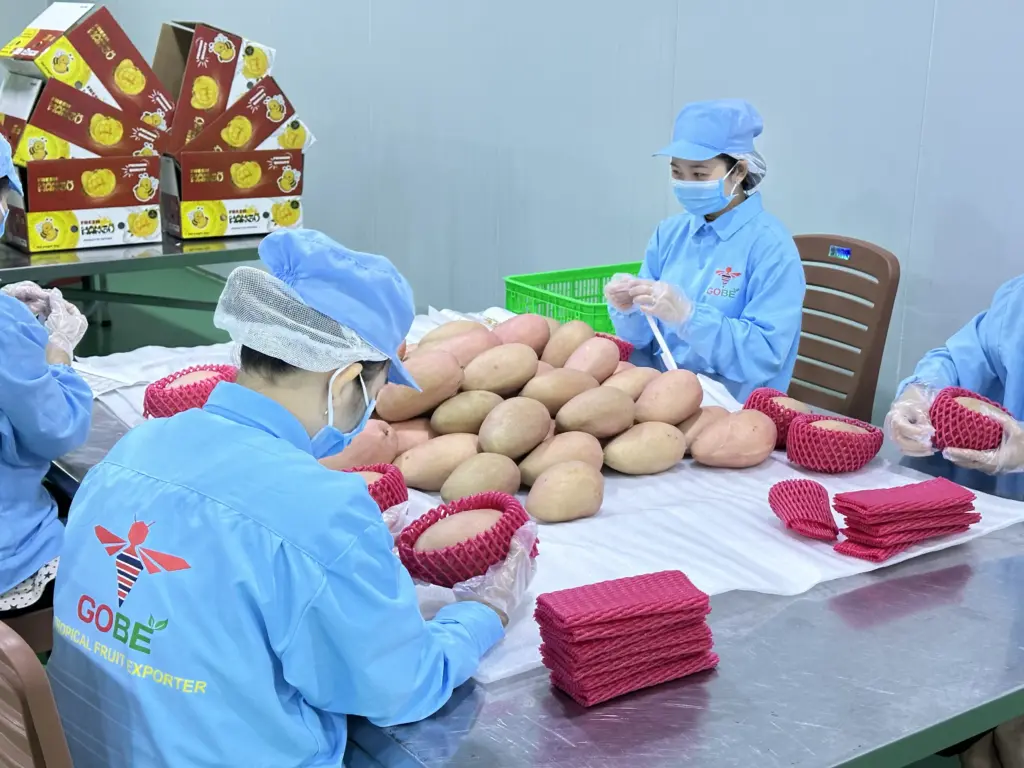
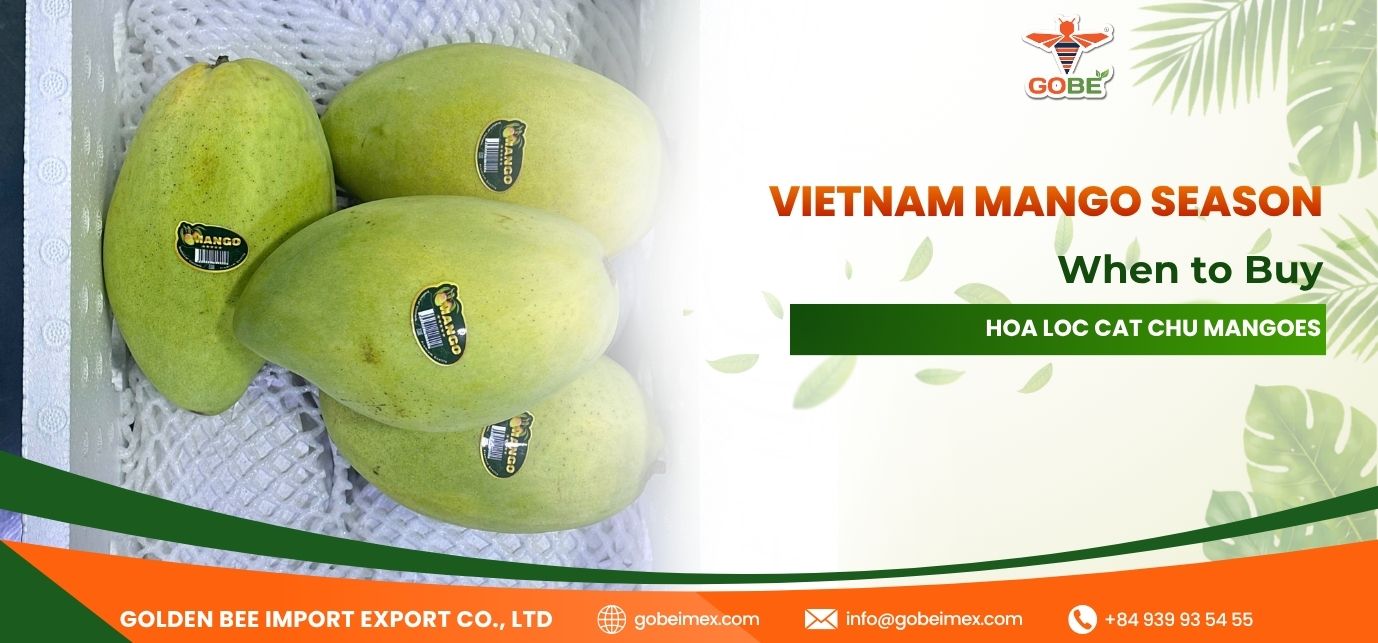
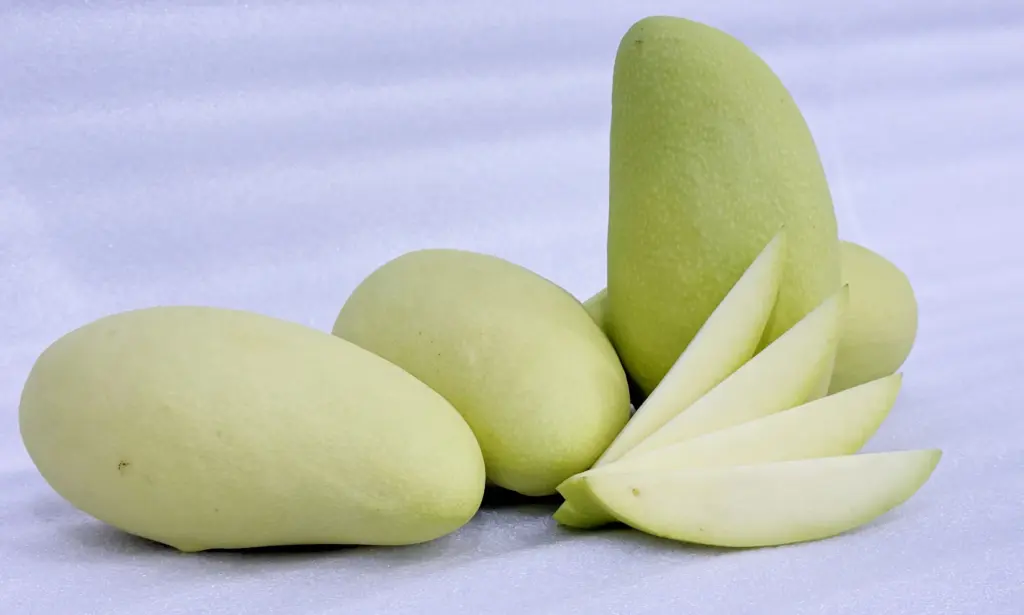
Vietnamese mangoes exported in 2026 primarily include Cat Chu, Cat Hoa Loc, and GL6 varieties, which are prized for their sweetness, fiber-free texture, and long shelf life under proper cold chain conditions. Vietnam’s export footprint covers Canada, the UAE, the United Kingdom, Germany, the Netherlands, Russia, Japan, Kuwait, and the Maldives, demonstrating broad market access across four continents.
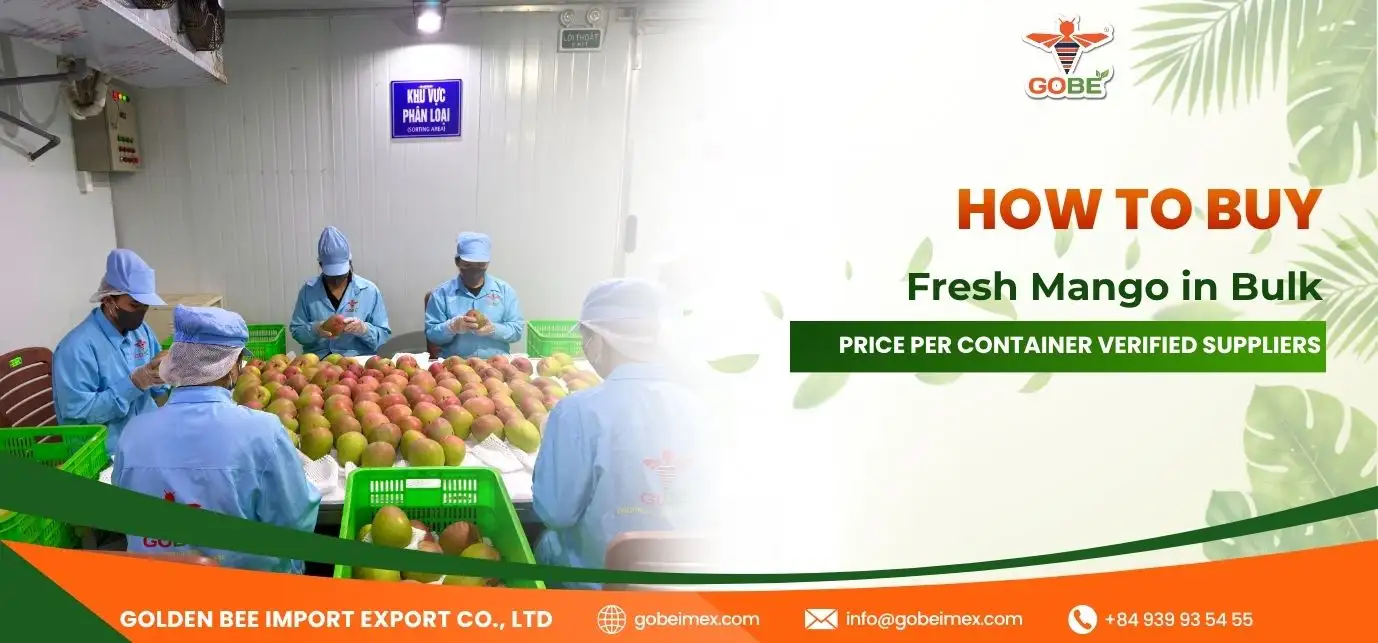
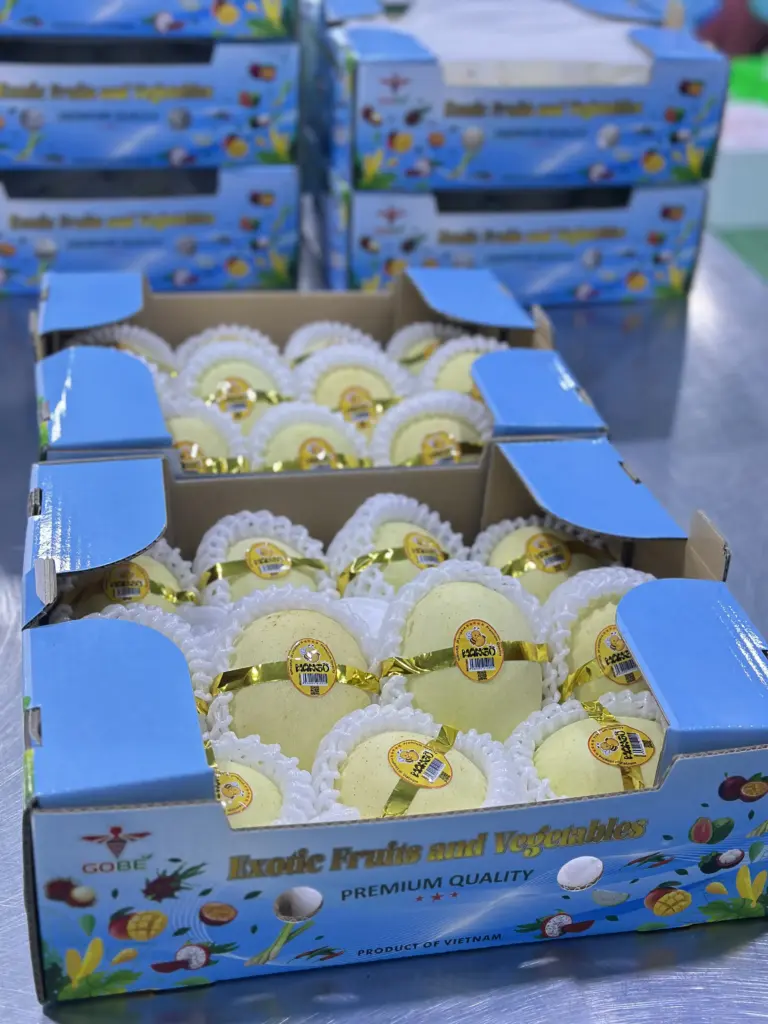
Gobeimex (Golden Bee Import Export Company Limited) exemplifies Vietnam’s export maturity in this category. With over 12 years of industry experience, 30 or more hectares of company-owned GlobalGAP-certified farmland, and cooperative management of 200 or more additional partner hectares, Gobeimex maintains full farm-to-port supply chain control. The company holds five internationally recognized certifications: GlobalGAP, GRASP, ISO, FDA, and Sedex, which collectively satisfy import requirements across the EU, United States, Japan, and Gulf markets simultaneously. Produce moves from farm to packing house within 12 hours of harvest at Gobeimex’s Tien Giang facility, located in the heart of Vietnam’s fruit-growing region, ensuring peak freshness is preserved before cold chain shipping begins.
For international buyers comparing sourcing origins, Vietnam’s combination of certification depth, cold chain infrastructure, and year-round supply positions it as a strong alternative or complementary source alongside India and Thailand for premium market channels.
Top mango exporting countries differ significantly on three core axes: India and Thailand lead on variety prestige and quality certification depth, Mexico dominates on price competitiveness for the Americas, and Vietnam offers the strongest certification portfolio relative to its FOB price point for buyers serving EU and Middle Eastern markets. These differences mean no single country is the universal best choice across all buyer profiles. The two sections below break down quality certifications and price competitiveness independently to give buyers granular comparison data.
Vietnam leads in overall certification portfolio breadth in 2026, holding GlobalGAP, FDA, ISO, GRASP, and Sedex simultaneously, while India and Thailand lead on variety-specific prestige certifications such as GI tags (Alphonso) and Thai FDA approval. Mexico holds strong USDA and FDA compliance for the North American market but has limited GlobalGAP penetration at the farm level compared to Vietnam and Thailand.
The table below compares four leading mango exporting countries across their active international certification portfolio in 2026. Buyers can use this comparison to assess which origin meets the compliance threshold required by their specific import market.
| Certification | India | Mexico | Thailand | Vietnam (Gobeimex) |
|---|---|---|---|---|
| GlobalGAP | Selective (farm-level) | Selective | Broad adoption | Full farm network |
| FDA Registration | Yes | Yes | Yes | Yes |
| ISO (Quality Mgmt) | Yes | Yes | Yes | Yes |
| GRASP | Limited | Limited | Growing | Yes |
| Sedex | Limited | Limited | Limited | Yes |
| Organic / Biologique | Available | Available | Growing | Growing |
For buyers supplying European retailers, GRASP and Sedex are increasingly required by supermarket chains as part of their ethical sourcing audits. Vietnam is currently the only major mango-exporting country in Asia where certified exporters routinely hold both GRASP and Sedex alongside GlobalGAP and FDA, making it the most compliance-complete sourcing origin for professional EU and UK buyers in 2026.
Mexico offers the most competitive FOB prices for buyers in North America because of geographic proximity and USMCA tariff elimination, while Pakistan provides the lowest absolute FOB prices globally. Vietnam and Thailand offer superior price-to-certification ratios for buyers in Europe, the Middle East, and Japan when total landed cost and compliance risk are factored into the comparison.
Several factors directly influence export price across origins in 2026:
According to ITC Trade Map (2024), Vietnam’s share of EU fresh mango imports has grown steadily, reflecting the cumulative impact of EVFTA tariff benefits and improved compliance positioning among Vietnamese exporters.
The best mango exporting country for buyers depends directly on the target import market: Vietnam and Egypt lead for EU and Middle Eastern buyers due to certification compliance and geographic positioning, Mexico and Peru best serve North American buyers, and Thailand and Vietnam lead for Japanese and East Asian premium retail channels. Matching origin to destination market is the single most impactful sourcing decision a buyer can make in 2026. The two sections below address this question by target market region, beginning with Europe and the Middle East, then examining year-round supply capability.
Vietnam, Egypt, and India export mangoes to Europe and the Middle East most reliably in 2026, with Vietnam offering the strongest compliance profile for EU market entry and Egypt providing geographic and logistical advantages for Gulf Cooperation Council markets. Reliability in this context means consistent MRL compliance, GlobalGAP certification, adequate shipment frequency, and documented cold chain continuity from farm to destination port.
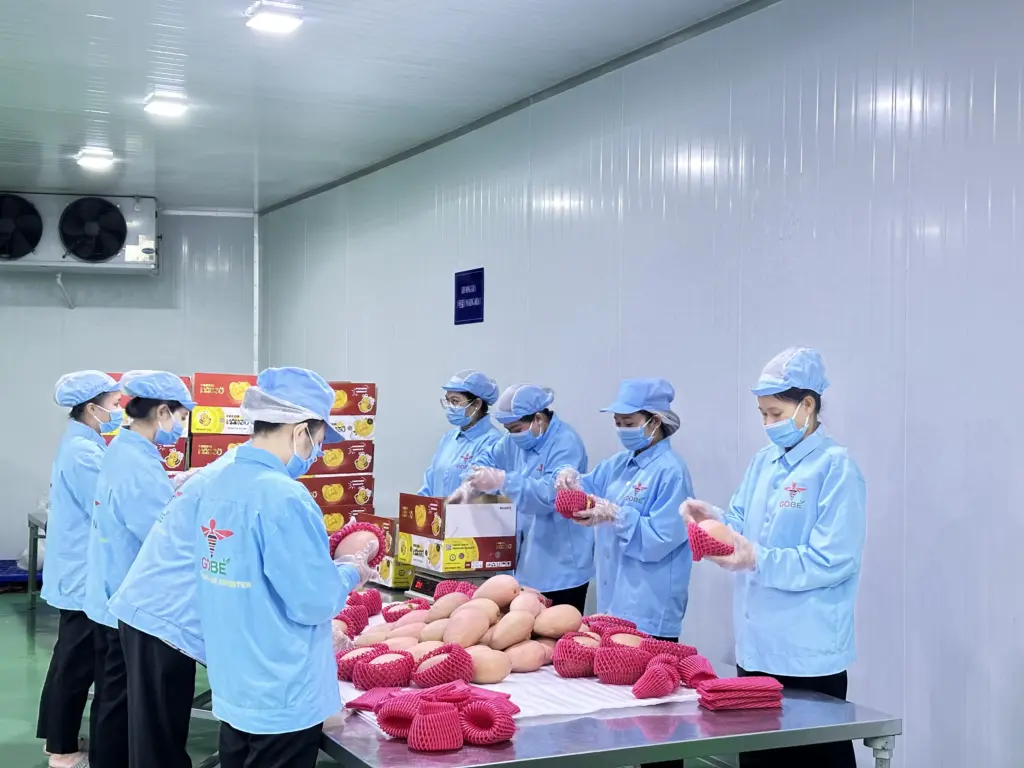
For European buyers, MRL compliance is a threshold requirement. EU regulations set strict maximum residue limits, and any shipment exceeding these limits faces rejection at the border. Vietnam’s structured approach to certified growing areas, mandatory pesticide monitoring, and farm-level GlobalGAP audits gives EU importers a higher degree of shipment-by-shipment confidence compared to origins where GlobalGAP adoption is fragmented.
For Middle Eastern buyers, key criteria include halal handling certification (relevant for UAE and Kuwait), cold chain performance given high ambient temperatures during transit, and frequency of shipping routes. Vietnam, India, and Pakistan all maintain active shipping lanes to Gulf ports including Jebel Ali (Dubai), with shipping times of 12 to 18 days depending on routing. Egypt benefits from significantly shorter transit times to Gulf ports, typically 3 to 5 days, which directly benefits shelf life at destination.
Gobeimex’s active export routes to the UAE, Kuwait, the UK, Germany, and the Netherlands confirm that Vietnam-origin mangoes are commercially viable for European and Middle Eastern retail channels in 2026, particularly when backed by a complete certification portfolio and consistent cold chain management.
Yes, Vietnam and Mexico are the two origins best positioned to support 52-week supply continuity through variety diversification and multi-region sourcing networks. India, Thailand, and Egypt each supply for significant but seasonally limited windows, requiring buyers to plan complementary sourcing strategies.
The table below maps the approximate mango export seasons for five major exporting countries relevant to global buyers. Buyers can use this seasonal calendar to identify sourcing gaps and build multi-origin supply strategies across a 12-month period.
| Country | Jan | Feb | Mar | Apr | May | Jun | Jul | Aug | Sep | Oct | Nov | Dec |
|---|---|---|---|---|---|---|---|---|---|---|---|---|
| India | Peak | Peak | Peak | Peak | ||||||||
| Mexico | Peak | Peak | Peak | Peak | Peak | Peak | ||||||
| Thailand | Peak | Peak | Peak | Peak | ||||||||
| Vietnam | Peak | Peak | Peak | Peak | Peak | Peak | Peak | Peak | Peak | |||
| Egypt | Peak | Peak | Peak |
Vietnam’s variety portfolio is particularly well structured for year-round supply. Early varieties such as GL6 are harvested from January through March, while Cat Hoa Loc and Cat Chu produce from July through November, and irrigated plantings extend availability further. This multi-variety calendar, combined with cooperation across growing zones in the Mekong Delta and the Central Highlands, allows certified Vietnamese exporters like Gobeimex to offer 52-week supply continuity to international buyers without sourcing from a third country.
For buyers who require uninterrupted supply but cannot source exclusively from one country, the optimal strategy in 2026 is to combine Vietnam (January to March and July to November) with Mexico (March to August) as the two primary origins, supplemented by Egypt for June to September Gulf deliveries.
Post-harvest technology and cold chain infrastructure are the two most powerful differentiators between premium mango exporters and commodity suppliers in 2026, directly determining shelf life, fruit condition at destination, and the buyer’s ability to reduce waste and protect retail margins. Countries and exporters that control an unbroken cold chain from field to port systematically outperform those relying on fragmented third-party logistics. The two sections below examine cold chain capability and phytosanitary protocols independently.
Vietnam and Thailand lead among Asian mango exporters in cold chain infrastructure in 2026, particularly among exporters that own refrigerated transport fleets and packing houses located inside key growing zones. Gobeimex’s Tien Giang packing house processes fruit within 12 hours of harvest using dedicated refrigerated container trailers, ensuring an unbroken cold chain from field to export port, which measurably extends shelf life at European and Japanese destination markets.
Mexico ranks highest globally for cold chain coverage, reflecting decades of U.S. market access requirements that pushed infrastructure investment. India’s cold chain remains fragmented outside the Konkan region, where Alphonso packing is concentrated, representing a structural risk for buyers requiring consistent transit quality across multiple shipment windows.
Key cold chain performance indicators buyers should verify before confirming a sourcing origin include:
Phytosanitary protocols differ significantly by exporting country and destination market combination, with India using vapor heat treatment (VHT) for mangoes exported to the United States and Japan, Mexico using VHT and irradiation depending on destination, Thailand using hot water treatment, and Vietnam employing VHT and cold treatment protocols tailored to specific importing country requirements. These differences directly affect shipment transit time, treatment cost, and compliance complexity for buyers.
For buyers sourcing to Japan, VHT certification at the origin packing house is a mandatory requirement, limiting the pool of compliant exporters in each country to those with approved treatment facilities. Buyers must verify that their chosen origin holds an active bilateral phytosanitary agreement with the destination country before confirming a sourcing commitment, as non-compliant shipments face fumigation costs, delays, or outright rejection at the destination border.
The following checklist summarizes what buyers should confirm before finalizing a mango sourcing agreement in 2026:
Gobeimex. Elevating Vietnamese Produce, Connecting Global Markets.