Subtotal $0.00

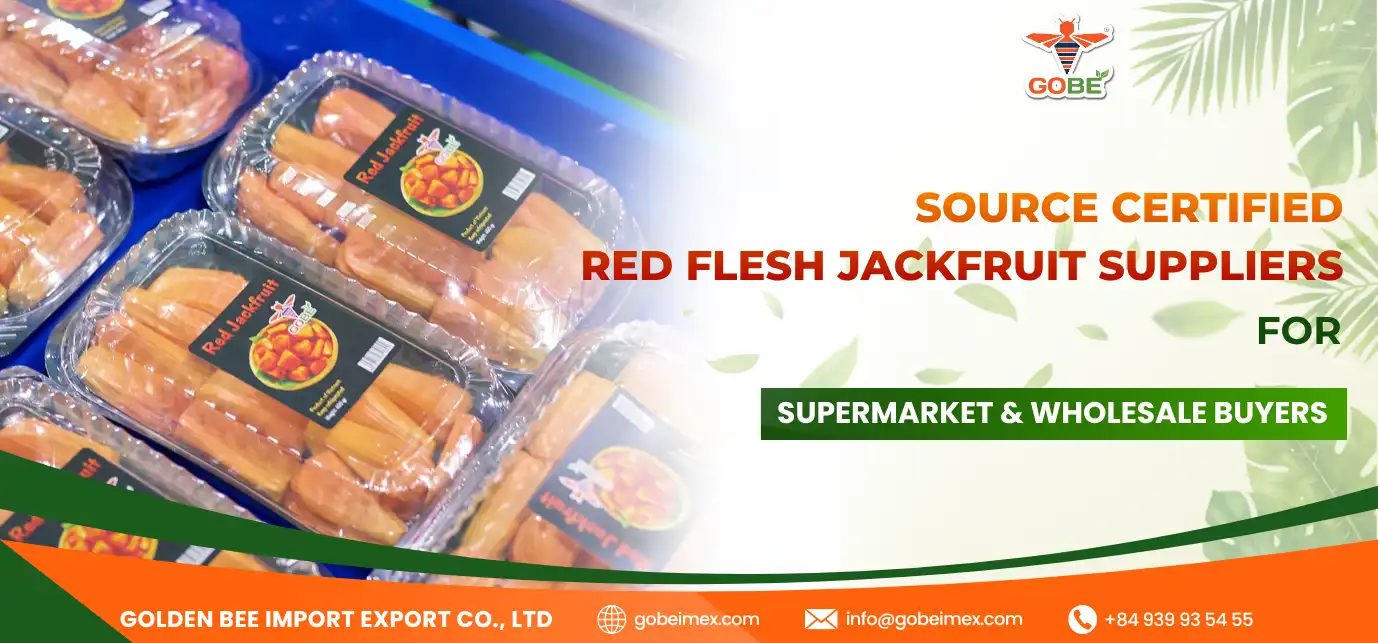
Certified red flesh jackfruit suppliers are specialized exporters holding internationally recognized credentials — including GlobalGAP, FDA, ISO, Sedex, and GRASP — who supply consistent volumes of export-grade red flesh jackfruit to supermarket chains and wholesale distributors worldwide. Vietnam, particularly the Mekong Delta region, stands as the leading origin for this premium variety, combining ideal growing conditions with an established export infrastructure capable of meeting the strict demands of B2B buyers in Europe, North America, the Middle East, and Asia.
Red flesh jackfruit has rapidly gained traction in premium retail channels because of its distinct visual appeal, higher Brix levels, and superior shelf performance compared to standard yellow flesh varieties. Supermarket buyers and wholesale importers specifically seek this variety to differentiate their fresh produce sections, respond to growing consumer demand for exotic tropical fruit, and meet private label quality specifications that require both visual consistency and traceable supply chains.
Finding the right certified supplier requires a structured evaluation process that goes beyond simply comparing prices. Wholesale and supermarket buyers must assess supplier certification portfolios, production capacity, cold chain infrastructure, traceability systems, and year-round availability before committing to a long-term sourcing partnership. The sections below provide a complete sourcing guide covering product definition, supplier evaluation criteria, quality assurance processes, and the step-by-step B2B ordering process.
Related posts:
Red flesh jackfruit is a premium tropical fruit variety distinguished by its deep orange-to-red colored arils, elevated Brix levels, and concentrated sweetness that differentiates it clearly from the common yellow flesh jackfruit available across mass-market channels. This variety originates primarily from select growing regions in Vietnam’s Mekong Delta, where specific soil and microclimate conditions produce the distinctive pigmentation and flavor profile that supermarket buyers across the EU, North America, and the Middle East now actively seek.
More precisely, supermarket buyers source red flesh jackfruit because of its strong commercial differentiation value on the retail shelf, its ability to command a premium price point, and the growing consumer awareness of tropical fruit varieties in developed markets. To better understand why this variety has become a priority sourcing target for B2B buyers, it is important to examine both the technical export specifications that define quality and the certification requirements that govern market access.
Export-grade red flesh jackfruit meets a defined set of technical parameters covering fruit weight, flesh color intensity, Brix level, texture, and shelf life that align with supermarket grading standards. The following table summarizes the core specifications that buyers should confirm with any supplier before placing a commercial order:
| Specification | Export-Grade Standard |
|---|---|
| Fruit weight | 5 kg to 15 kg per whole fruit, depending on variety and buyer specification |
| Flesh color | Deep orange to red-orange arils, consistent across the fruit |
| Brix level | Minimum 18 to 24 Brix, depending on maturity stage at harvest |
| Texture | Firm, non-stringy arils suitable for long-distance transport |
| Shelf life (chilled) | 21 to 28 days under controlled atmosphere conditions |
| Harvest maturity | Physiologically mature, harvested at the correct ripeness index for export |
This table presents the technical thresholds that certified suppliers must consistently achieve across every shipment supplied to supermarket and wholesale buyers.
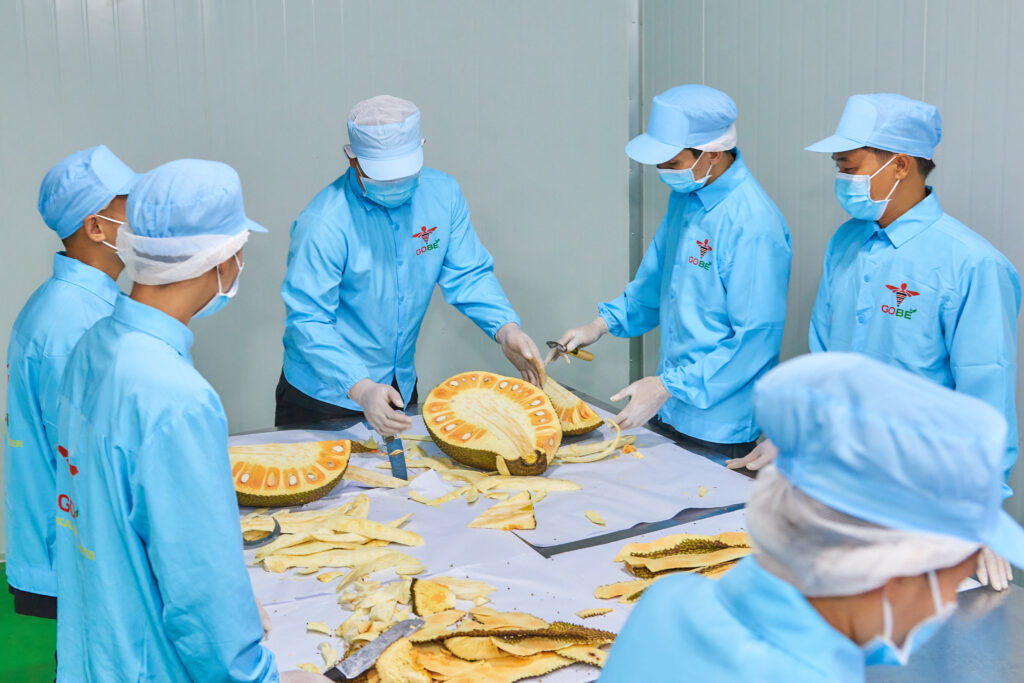
Specifically, the color consistency of the arils is the most critical visual grading criterion for retail channels. Supermarkets require uniform red-orange pigmentation across a minimum percentage of fruit within each carton, and any green or pale-yellow arils are grounds for rejection at quality inspection. Beyond visual standards, the Brix level directly determines consumer eating experience, which is why buyers in premium markets increasingly specify a minimum Brix threshold in their purchase contracts. Furthermore, shelf life performance is essential for sea freight buyers, since jackfruit must maintain quality through a transit period of up to 28 days from Vietnam to European or North American ports. For this reason, harvest timing, post-harvest handling speed, and cold chain continuity are non-negotiable elements of export-grade quality assurance.
A red flesh jackfruit supplier must hold at minimum GlobalGAP certification, and ideally also FDA registration, ISO quality management certification, and social compliance credentials such as Sedex or GRASP, to gain and maintain listing with major supermarket chains and wholesale importers. Each certification addresses a distinct requirement within the buyer’s supplier approval process.
The following breakdown explains what each certification covers and why it is required by B2B buyers:
GlobalGAP is the internationally recognized standard for Good Agricultural Practices. It governs pesticide use, worker safety, water management, and traceability across the entire growing and harvesting process. Supermarket chains in Europe and North America require GlobalGAP certification as a baseline prerequisite before any fresh produce supplier can be approved for listing. Suppliers operating without GlobalGAP cannot access the shelves of major retail groups such as Tesco, Carrefour, or Whole Foods.
FDA registration is a mandatory requirement for any supplier exporting fresh produce to the United States. Under the Food Safety Modernization Act (FSMA), foreign facilities that manufacture, process, pack, or hold food for U.S. consumption must be registered with the FDA and comply with the Foreign Supplier Verification Program (FSVP). Wholesale buyers importing into the U.S. market must confirm that their jackfruit supplier maintains active FDA registration and complies with all FSMA preventive controls.
ISO certification, specifically ISO 9001 for quality management systems, demonstrates that a supplier operates standardized, auditable processes across production, packing, and logistics. For wholesale buyers managing high-volume procurement, ISO-certified suppliers offer a verifiable guarantee of process consistency that reduces the risk of quality variation across shipments.
Sedex and GRASP certifications address social compliance requirements that have become increasingly prominent in supermarket supplier codes of conduct. Sedex membership and SMETA audits verify that a supplier’s labor practices, working conditions, and ethical sourcing standards meet the requirements of major retail groups. GRASP, which is the GlobalGAP Risk Assessment on Social Practice, provides a specific assessment module recognized by EU and North American supermarket buyers as evidence of responsible social performance within the supply chain.
Additionally, buyers importing into specific markets must verify phytosanitary compliance requirements on a country-by-country basis. Japan requires pre-export phytosanitary inspection and fumigation treatment. The EU requires compliance with Regulation (EC) No 396/2005 on maximum residue levels. The United States requires compliance with APHIS import regulations for tropical fruit. Certified suppliers should be able to provide country-specific phytosanitary certificates for every shipment.
Supermarket and wholesale buyers can source certified red flesh jackfruit through three primary channels: international fresh produce trade exhibitions, B2B digital sourcing platforms, and direct engagement with established exporters based in Vietnam, with Vietnam’s Mekong Delta region representing the most reliable and scalable origin for certified supply. These channels each offer different advantages depending on the buyer’s timeline, volume requirements, and supplier verification needs.
Following this overview, the sections below detail the specific evaluation criteria buyers should apply when assessing a supplier, and provide a concrete example of a certified Vietnamese exporter capable of supplying supermarket-grade red flesh jackfruit year-round.
Wholesale buyers should evaluate a red flesh jackfruit supplier across five key dimensions: certification portfolio completeness, total production area and weekly supply capacity, cold chain infrastructure, traceability system depth, and documented export market history. Each of these criteria directly affects the buyer’s ability to maintain a consistent, compliant, and commercially viable supply relationship.
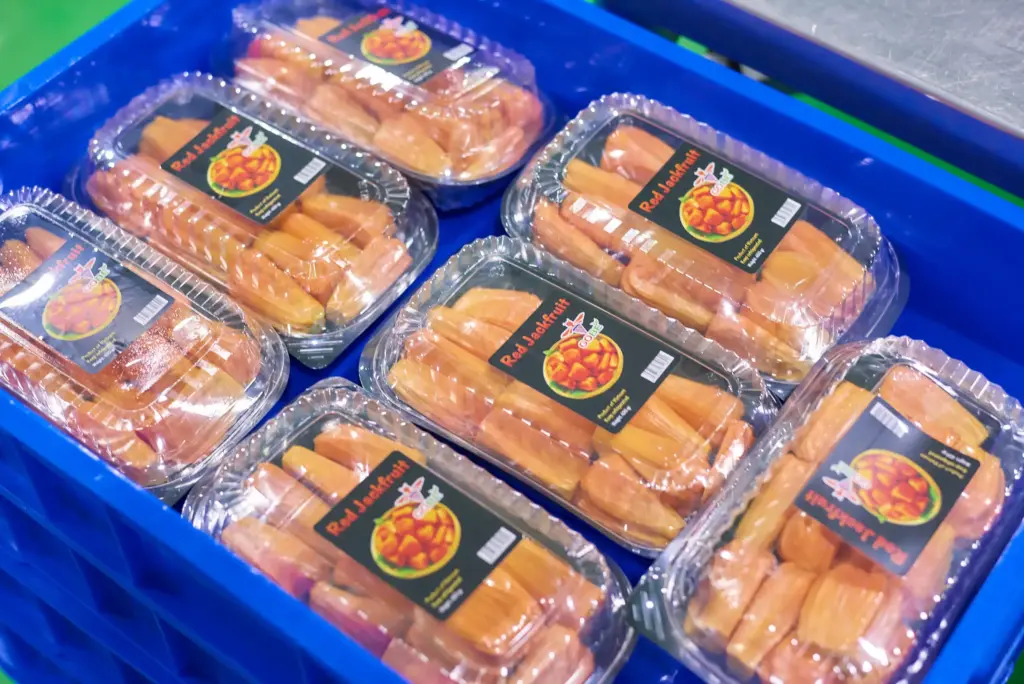
To better understand each evaluation dimension, the following breakdown provides the specific indicators buyers should request from any prospective supplier:
Certification portfolio: Buyers should request copies of GlobalGAP certificates (including the certificate code for online verification), FDA registration confirmation, ISO certificate number and issuing body, and Sedex membership ID or GRASP report. All certificates should be current, with expiry dates extending beyond the planned contract period. Buyers should verify certificates independently through the relevant issuing body’s online registry rather than relying solely on supplier-provided documents.
Production area and supply capacity: A credible certified supplier should be able to specify total hectares under cultivation (both owned and partner farms), weekly packing capacity in metric tons, and harvest scheduling across the calendar year. Suppliers with fewer than 50 total hectares under GlobalGAP-certified management are unlikely to sustain consistent high-volume supply for major supermarket chains. As a reference point, GOBE IMEX operates across more than 230 hectares combining owned (30+ ha) and certified partner farms (200+ ha), which enables reliable weekly shipment volumes throughout the year.
Cold chain infrastructure: Buyers should confirm that the supplier operates a dedicated refrigerated transport fleet for farm-to-packing-house movement, maintains controlled temperature storage at the packing house, and uses reefer containers for all sea freight shipments. The critical indicator is the farm-to-pack timeline: suppliers who can consistently achieve packing within 12 hours of harvest demonstrate a level of logistical integration that directly translates to better shelf life performance at the destination market.
Traceability system: Export-grade suppliers should be able to provide lot-level traceability from the specific farm plot and harvest date through to the export container number and shipping documentation. Buyers should request sample traceability records from previous shipments as part of the supplier evaluation process. Residue testing reports, ideally from accredited third-party laboratories, should accompany each lot.
Export market history: A supplier’s documented track record of successful exports to demanding markets (EU, US, Japan) is one of the most reliable indicators of their ability to meet the compliance and quality consistency requirements of supermarket buyers. Buyers should request references from existing customers in comparable markets.
Yes, GOBE IMEX (Golden Bee Vietnam) can supply certified red flesh jackfruit year-round for supermarket chains, with 52-week availability guaranteed through a combination of more than 30 hectares of company-owned farmland and a network of more than 200 GlobalGAP-certified partner farm hectares across Vietnam’s primary growing regions. This diversified land base allows the company to maintain uninterrupted supply across seasonal variation without gaps in availability that would disrupt a supermarket buyer’s planogram.
Specifically, the year-round supply model at GOBE IMEX is structured around two strategically positioned production facilities. The main packing house in Tien Giang Province is located at the center of the Mekong Delta fruit-growing region, enabling the company to move jackfruit from harvest to packing within 12 hours consistently. A secondary consolidation facility in Ho Chi Minh City draws on produce from additional partner farms in different growing zones, diversifying the raw material base and providing flexibility to manage seasonal yield variation without supply interruption.
GOBE IMEX currently exports to more than 10 countries across four continents, providing concrete evidence of the company’s logistical and compliance capabilities at supermarket-supply scale. Active export markets include Canada, the UAE, the United Kingdom, Germany, the Netherlands, Russia, Japan, and Kuwait. The company’s full certification portfolio, which includes GlobalGAP, GRASP, ISO, FDA, and Sedex, meets the supplier approval requirements of major retail chains in all of these markets. Wholesale and supermarket buyers can initiate a sourcing inquiry directly with GOBE IMEX through the contact details provided in the final section of this guide.
Certified suppliers ensure red flesh jackfruit quality from farm to supermarket shelf through a fully integrated quality control system that encompasses GlobalGAP-compliant cultivation, harvest-to-pack processing within 12 hours, ISO-certified packing house operations, unbroken cold chain logistics, and documented traceability at every stage from farm plot to export container. This end-to-end control structure is what separates certified exporters from non-certified brokers or trading companies, and it is the foundation on which supermarket supplier relationships are built.
More precisely, the quality assurance process operates through a series of sequential checkpoints that mirror the physical journey of the fruit. Each checkpoint involves specific technical controls, personnel trained to international standards, and documentation that contributes to the traceability record delivered to the buyer with every shipment. The two most technically complex elements of this system, packaging and labeling specifications and cold chain management, are examined in detail below.
Supermarkets in Europe and North America require imported jackfruit to be packed in standardized carton formats with clearly printed country of origin labeling, net weight declarations, variety identification, lot number, and supplier certification codes visible on the outer packaging. These requirements are non-negotiable for retail listing, and suppliers who cannot meet them will be unable to pass supermarket quality audits.
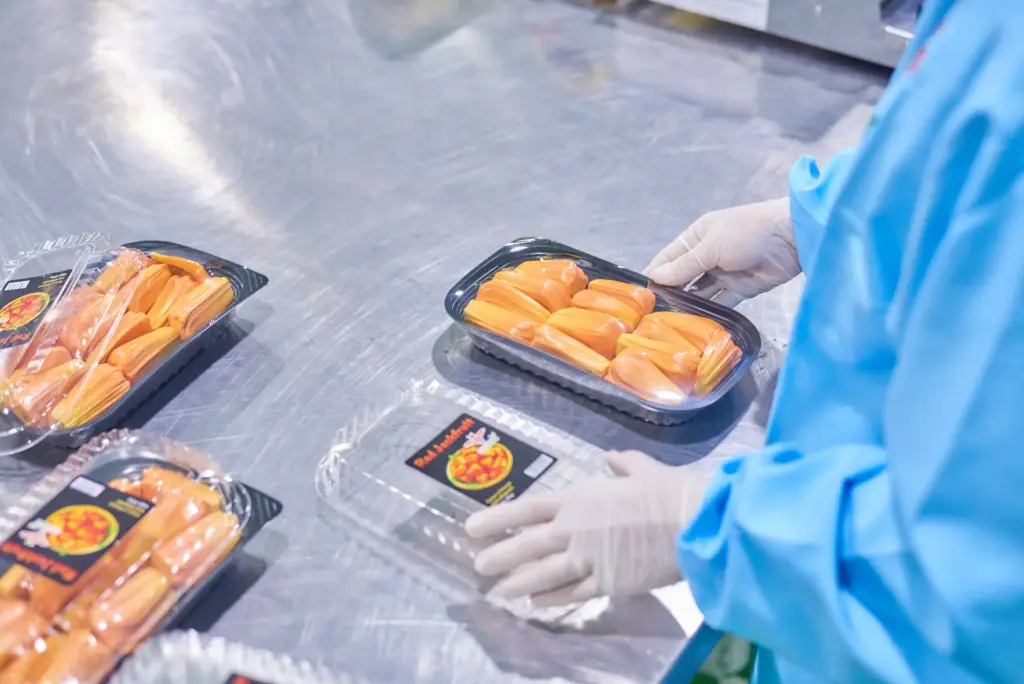
For context, the following packaging specifications represent typical requirements from European and North American supermarket buyers:
Carton format: Most EU supermarkets require retail-ready cartons of 3 kg to 5 kg net weight for whole fresh jackfruit, or pre-cut jackfruit packed in modified atmosphere packaging (MAP) trays with a net weight between 300 g and 500 g per retail unit. North American buyers may specify different net weights depending on category management requirements.
Labeling content: Outer cartons must display the supplier’s name and address, country of origin (Vietnam), product name and variety, net weight, lot number (traceable to farm and harvest date), GlobalGAP certificate number, and Incoterms delivery point. Retail-ready units require additional PLU codes or barcodes compatible with the buyer’s inventory management system.
Private label capability: Major supermarket groups frequently require suppliers to pack under the retailer’s own brand rather than the supplier’s trade name. Certified exporters like GOBE IMEX offer custom packaging and private label production, allowing buyers to specify their own box design, brand identity, and label layout while the supplier manages all production, food safety, and compliance requirements.
EU traceability requirements: Under EU Regulation 178/2002, all food business operators in the supply chain must be able to identify the origin of every product they handle. This requirement is increasingly being implemented through QR codes printed on retail packaging that link consumers and retailers to farm-level origin data, harvest records, and certification documentation. Suppliers exporting to the EU should be prepared to implement QR-based traceability systems as a competitive requirement for supermarket listing from 2025 onward.
Cold chain management protects red flesh jackfruit quality during export by maintaining continuous temperature control within a range of 12 to 14 degrees Celsius from the moment of packing through to arrival at the destination port, preventing the ethylene-driven ripening acceleration that causes flesh softening, color degradation, and shortened shelf life at the point of sale. Any break in this cold chain, even a brief exposure to ambient temperatures during transfer between logistics nodes, can reduce shelf life by several days and result in quality rejection at destination.
Specifically, the cold chain management process for sea-freight jackfruit exports involves the following technical controls:
Packing house temperature management: After harvest, fruit is moved to the packing house and pre-cooled to the target storage temperature within the 12-hour processing window. Packing operations are conducted in temperature-controlled rooms to prevent warming during grading, sorting, and carton packing.
Refrigerated transport fleet: Movement from farm to packing house and from packing house to port is conducted using dedicated refrigerated truck trailers. GOBE IMEX operates its own fleet of reefer trailers to eliminate dependence on third-party cold chain logistics at this critical stage.
Ethylene management: Jackfruit is a climacteric fruit that produces ethylene as it ripens. Exporters use ethylene scrubbers or controlled atmosphere settings in reefer containers to slow the ripening process during transit. Without active ethylene management, jackfruit shipped in standard reefer containers will over-ripen before reaching European or North American destinations via sea freight.
Temperature monitoring: Continuous data loggers are installed in each reefer container at the time of loading. These devices record temperature throughout transit and generate a downloadable temperature log that is provided to the buyer as part of the shipment documentation. Any temperature deviation during transit is recorded and can be used to adjust quality expectations or support insurance claims.
The cumulative effect of effective cold chain management for the buyer is a significant extension of display shelf life at the retail level, reduced in-store shrinkage from premature ripening, and a more consistent consumer eating experience that builds repeat purchase behavior for the buyer’s tropical fruit category.
Supermarket and wholesale buyers can place an order with a certified red flesh jackfruit supplier by following a structured five-stage B2B procurement process: initial inquiry and requirement specification, sample shipment evaluation, commercial terms negotiation, contract confirmation, and first commercial shipment scheduling. This process typically takes between four and eight weeks from initial contact to first delivery, depending on the buyer’s internal approval procedures and the supplier’s current availability.
The following table outlines each stage in the standard B2B ordering process with GOBE IMEX, including the key actions and documentation involved at each step:
| Stage | Buyer Action | Supplier Action | Key Documents |
|---|---|---|---|
| 1. Inquiry | Submit sourcing requirements: product spec, target volume, destination market, delivery timeline | Review requirements, confirm availability, provide company profile and certification portfolio | Supplier profile, certificate copies, product spec sheet |
| 2. Sample evaluation | Confirm sample shipping address, review sample against internal quality standards | Prepare and ship compliant sample lot with full traceability documentation | Sample invoice, phytosanitary certificate, lab test report |
| 3. Commercial terms | Propose volume, pricing basis, Incoterms, and payment terms | Issue commercial proposal with FOB/CIF pricing, MOQ, lead time, and packaging options | Pro forma invoice, commercial proposal |
| 4. Contract confirmation | Sign purchase contract or issue purchase order | Confirm production schedule and packaging specifications | Signed contract or PO, packing specification sheet |
| 5. First shipment | Arrange LC or TT payment per agreed terms, nominate freight forwarder if FOB | Execute production, packing, and export documentation | Commercial invoice, packing list, B/L, phytosanitary cert, COA |
This table outlines the complete order flow from first contact to delivery, providing buyers with a clear reference for planning their internal procurement timelines.
Specifically, regarding minimum order quantities and commercial terms, GOBE IMEX typically works with a minimum order quantity of one full reefer container (approximately 18 to 20 metric tons for whole jackfruit) for sea freight orders, with smaller quantities available for air freight sample shipments. Standard Incoterms offered include FOB Ho Chi Minh City and CIF to destination port, depending on the buyer’s logistics preferences. Payment terms are negotiated individually based on the buyer’s track record and order volume, with options including Letter of Credit (LC) and Telegraphic Transfer (TT) with agreed advance payment percentage.
Buyers can initiate an inquiry with GOBE IMEX through the following direct contact channels:
Managing Director Scarlett Huynh and her team are experienced in managing B2B sourcing relationships with buyers across Europe, North America, the Middle East, and Asia, and can respond to sourcing inquiries with a full documentation package including certificates, product specifications, and commercial pricing within a short lead time.
Red flesh jackfruit leads on premium market positioning and shelf differentiation, while yellow flesh jackfruit performs better on volume availability and price accessibility for mass-market distribution, making the right choice dependent on the buyer’s target consumer segment, margin strategy, and destination market. Both varieties have a legitimate place in a wholesale buyer’s portfolio, but the decision requires a clear understanding of the commercial trade-offs involved.
The following comparison addresses the key dimensions that matter to B2B buyers evaluating which variety to source.
Flavor and visual appeal: Red flesh jackfruit delivers a more concentrated sweetness, a higher Brix range (typically 20 to 24 versus 16 to 20 for yellow flesh), and a visually striking aril color that commands consumer attention on the retail shelf. In premium supermarket contexts, this visual differentiation directly supports higher retail price points and reduced markdown requirements. Yellow flesh jackfruit, while familiar and well-accepted, does not carry the same novelty premium in developed markets where consumer exposure to tropical fruit is increasing.
Shelf life and transport durability: Red flesh varieties from Vietnam’s Mekong Delta, particularly those processed through certified packing houses with 12-hour farm-to-pack capability, demonstrate competitive shelf life performance of 21 to 28 days under controlled cold chain conditions. This makes them fully viable for sea freight distribution to Europe and North America. Yellow flesh varieties are more widely available and have a longer documented history in these supply chains, but the performance gap is narrowing as certified red flesh suppliers invest in cold chain infrastructure.
Pricing and market positioning: Red flesh jackfruit commands a price premium of approximately 15 to 30 percent over comparable yellow flesh product in EU and North American markets, driven by its scarcity positioning and novelty appeal. For wholesale buyers supplying premium supermarket chains or specialty food retailers, this premium is commercially viable and supports stronger category margins. For buyers supplying discount retail or food service channels where price sensitivity is high, yellow flesh may offer a better fit.
Recommendation for buyers: Wholesale buyers targeting EU premium supermarkets, North American specialty retailers, or Middle Eastern gourmet channels should prioritize red flesh sourcing. Buyers supplying mainstream supermarket chains at high volume, food service distributors, or price-sensitive Southeast Asian markets may find yellow flesh a more practical primary product, with red flesh as a premium supplement to their range.
Sourcing jackfruit from non-certified suppliers for retail distribution exposes buyers to three categories of serious commercial and legal risk: import refusal at the port of entry, product recall or delisting by the supermarket, and reputational damage that affects the buyer’s relationship with other certified suppliers and retailers.
Specifically, the EU’s RASFF (Rapid Alert System for Food and Feed) database regularly records notifications of tropical fruit shipments rejected at EU border inspection posts due to excess pesticide residue levels, absence of valid phytosanitary certificates, or undeclared country of origin. A single rejected shipment can result in enhanced border checks on all subsequent shipments from the same buyer for up to 12 months. For wholesale buyers, the financial cost of a single port rejection, including demurrage, destruction or re-export costs, and lost sales, typically exceeds the total cost saving that motivated the choice of a non-certified supplier. A quick pre-contract checklist should include: verification of GlobalGAP certificate code via the GLOBALG.A.P. database, confirmation of FDA registration via the FDA’s online registry, and a request for a recent third-party lab residue report dated within the last six months.
The Mekong Delta’s alluvial soil composition, high humidity levels, and distinct wet-dry seasonal cycle create the specific growing environment that triggers and sustains the red pigmentation in jackfruit arils, making this region the most consistent source of export-quality red flesh jackfruit available in global markets. Provinces such as Tien Giang and Dong Thap, where GOBE IMEX maintains its primary production base, combine ideal soil pH, drainage characteristics, and temperature ranges that support both high Brix development and uniform flesh coloration across the harvest season.
For B2B buyers, this geographic concentration of quality has a practical implication: suppliers whose farms are located within the Mekong Delta’s core growing zones will consistently outperform suppliers sourcing from peripheral or non-traditional jackfruit regions on the metrics that matter most, including Brix consistency, color uniformity, and shelf life. This is the primary reason GOBE IMEX established its main packing house directly in Tien Giang rather than consolidating all operations through Ho Chi Minh City: proximity to the growing area eliminates handling time between harvest and pack, preserving the quality advantage that the microclimate creates at the farm level. Buyers seeking a consistent, season-to-season quality baseline should prioritize suppliers with documented farm locations within these core growing zones as part of their supplier verification process.