Subtotal $0.00

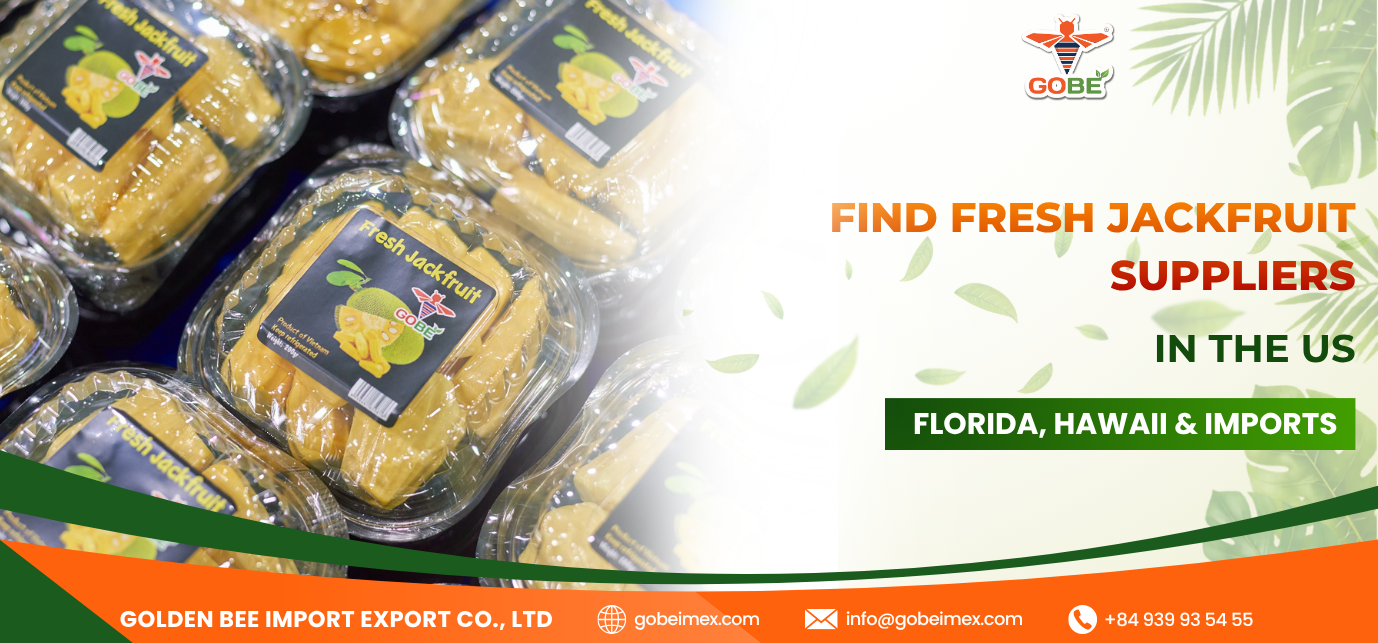
Fresh jackfruit suppliers in the US fall into two main categories: domestic growers concentrated in Florida and Hawaii, and certified importers bringing supply from Southeast Asia and Mexico. For buyers seeking stable, year-round commercial volumes, imported jackfruit from Vietnam, Thailand, and the Philippines represents the most reliable sourcing channel available today.
Understanding how to locate and evaluate fresh jackfruit suppliers requires clarity on where jackfruit can realistically be grown within the United States, which regions have consistent harvest windows, and which import origins offer the certifications and cold chain infrastructure that US importers and distributors require. This guide covers both domestic and import supplier landscapes, giving B2B buyers and retailers the information they need to make confident sourcing decisions.
For buyers at the commercial investigation stage, the practical answer is straightforward: Florida supplies seasonal, small-scale volumes; Hawaii supplies hyper-local volumes for island markets; and imports from Vietnam, Thailand, and other Southeast Asian countries supply the majority of fresh jackfruit consumed across the US mainland today.
Fresh jackfruit suppliers in the US divide into two distinct groups: domestic suppliers in Florida and Hawaii, and international importers from Southeast Asia and Mexico, with each group serving different buyer profiles in terms of volume, seasonality, and certification depth. To identify which supplier type suits your needs, start with the fundamental geography of jackfruit cultivation inside the United States.
Jackfruit is a tropical tree fruit native to South and Southeast Asia requiring year-round warm temperatures, high humidity, and frost-free conditions to thrive commercially. Within the continental United States, only South Florida meets these requirements to a meaningful degree. Hawaii, as a Pacific island state with a tropical climate, also supports jackfruit cultivation, though primarily on a small-scale, locally consumed basis.
This geographic reality limits US domestic supply of fresh jackfruit in both quantity and seasonal window. Most fresh jackfruit entering US distribution channels, particularly in large metropolitan markets such as Los Angeles, New York, Chicago, and Houston, arrives through import channels from Vietnam, Thailand, the Philippines, and Mexico. For retail buyers, importers, distributors, and food service operators evaluating supplier options, the landscape breaks down as follows:
The minimum order quantity (MOQ) considerations differ significantly between these groups. Florida farms may supply individual restaurants or Asian grocery chains with small weekly volumes, while certified import exporters typically operate with container-level or pallet-level MOQs designed for importers and distributors.
Yes, Florida has fresh jackfruit suppliers, and it is the only US state with commercially meaningful domestic jackfruit production, with growing concentrated in South Florida counties including Miami-Dade, Broward, and Palm Beach during a peak harvest window from June through September. Florida’s jackfruit supply ecosystem is characterized by small-scale farms rather than large commercial operations, and buyers should plan sourcing strategies accordingly.
The main jackfruit-growing areas in Florida are concentrated in South Florida, particularly in Miami-Dade County and the Homestead agricultural district, which together represent the largest tropical fruit farming zone in the continental United States. Miami-Dade’s Homestead area sits at approximately 25 degrees north latitude, creating a subtropical to tropical microclimate that supports jackfruit, mango, longan, and lychee cultivation.
Soil composition in this zone, primarily limestone-based with organic topsoil in agricultural parcels, combined with average annual temperatures above 75°F and high humidity, creates conditions marginally suitable for jackfruit production. Buyers looking to source from Florida-based growers can expect to find supply through the following channels:
The varieties grown in Florida include yellow-flesh and green unripe jackfruit, though specific cultivar selection varies widely between farms. Most Florida jackfruit growers do not carry internationally recognized certifications such as GlobalGAP, FDA Food Facility Registration, or ISO, as their operations are primarily domestic-market focused.
The most effective way to find and contact fresh jackfruit suppliers in Florida is through the USDA Agricultural Marketing Service local food directories, the Florida Department of Agriculture and Consumer Services supplier database, and direct outreach to Asian wholesale produce markets in Miami and Hialeah. Buyers considering Florida sourcing should account for several supply-side realities before committing:
For local restaurants, Asian grocery retailers, and specialty food buyers in South Florida, domestic Florida suppliers represent a viable and fresh local option during summer months. For buyers seeking supply continuity across all 52 weeks of the year, complementary import sourcing will be necessary.
Yes, there are fresh jackfruit suppliers in Hawaii, where the state’s year-round tropical climate across multiple islands supports jackfruit cultivation, but supply is predominantly small-scale and consumed locally within Hawaii, making it a limited option for US mainland commercial buyers. Hawaii’s jackfruit landscape functions as a community and specialty produce network rather than a commercial export supply chain.
Jackfruit is grown most extensively on the Big Island (Hawaii County), with smaller production on Maui and Oahu, but commercial-scale output that meaningfully serves mainland US buyers does not currently exist in Hawaii. The Big Island offers the most diverse agricultural terrain, with tropical conditions on its eastern and southern slopes supporting jackfruit alongside rambutan, durian, and breadfruit.
Big Island farms occasionally supply jackfruit to local farmers’ markets, specialty grocers, and restaurants on-island. Maui and Oahu host smaller jackfruit plantings, primarily in backyard-to-small-farm settings, feeding local food culture, farmers’ markets, and community shared agriculture (CSA) programs rather than distribution-scale wholesale channels.
The critical limitation for mainland buyers is that the vast majority of Hawaiian jackfruit is consumed within Hawaii. The economics of shipping fresh, heavy, perishable whole jackfruit from Hawaii to the mainland are challenging given air freight costs and the impact of transit time on shelf life.
Sourcing fresh jackfruit from Hawaii as a mainland US buyer is logistically complex and cost-prohibitive at commercial volumes, because air freight from Hawaii to the continental US adds significant per-pound cost, while ocean freight introduces transit time that reduces usable shelf life upon arrival. For buyers genuinely interested in exploring Hawaiian sourcing, the following channels are the most direct points of contact:
The table below compares key sourcing parameters across three supply channels to help US buyers assess trade-offs between Hawaiian domestic sourcing, Southeast Asian imports, and Mexican supply.
| Sourcing Channel | Freight Cost | Transit Time | Year-Round Supply | Certification Depth |
|---|---|---|---|---|
| Hawaii (air freight to mainland) | High | 1 to 2 days | Limited by small farm scale | Typically none |
| Vietnam / Thailand (ocean freight to LA/Miami) | Moderate at container scale | 18 to 28 days | Yes, 52 weeks | GlobalGAP, FDA, ISO, Sedex |
| Mexico (land/ocean freight) | Low to moderate | 3 to 7 days | Seasonal | Variable |
The recommendation for most continental US buyers is clear: Hawaii is well-suited for buyers operating within the Hawaiian retail and food service market. For buyers on the US mainland seeking consistent weekly volumes, the cost and logistical complexity of Hawaii-origin jackfruit makes it a sub-optimal primary sourcing channel compared to direct import from certified Southeast Asian exporters.
US buyers can import fresh jackfruit from several countries, with Vietnam, Thailand, the Philippines, and Mexico representing the four primary origins, each offering different advantages in terms of volume capacity, certification standards, transit time, and price competitiveness. The import channel accounts for the overwhelming majority of fresh jackfruit in US commercial distribution, supplying supermarket chains, ethnic grocery networks, food service distributors, and specialty produce importers coast to coast.
Fresh jackfruit imports into the United States enter primarily through three ports of entry: the Port of Los Angeles and Long Beach (primary gateway for Asian-origin fruit), the Port of Miami (serving both Latin American and Asian shipments), and JFK and Newark for East Coast distribution. All imported fresh jackfruit must comply with USDA Animal and Plant Health Inspection Service (APHIS) phytosanitary requirements and be shipped from FDA-registered food facilities.
Vietnam, Thailand, the Philippines, and Mexico are the four main countries exporting fresh jackfruit to the US, with Vietnam and Thailand holding the strongest positions in terms of certification depth, year-round supply capacity, and established cold chain infrastructure. Below is a detailed profile of each sourcing origin.
Vietnam
Vietnam is one of the most competitive fresh jackfruit export origins for the US market, combining large production volumes with sophisticated export infrastructure and internationally recognized certifications. Vietnamese exporters offering whole fresh jackfruit and fresh-cut formats typically hold GlobalGAP, FDA Food Facility Registration, ISO, GRASP, and Sedex certifications, meeting the most stringent compliance requirements of US importers.
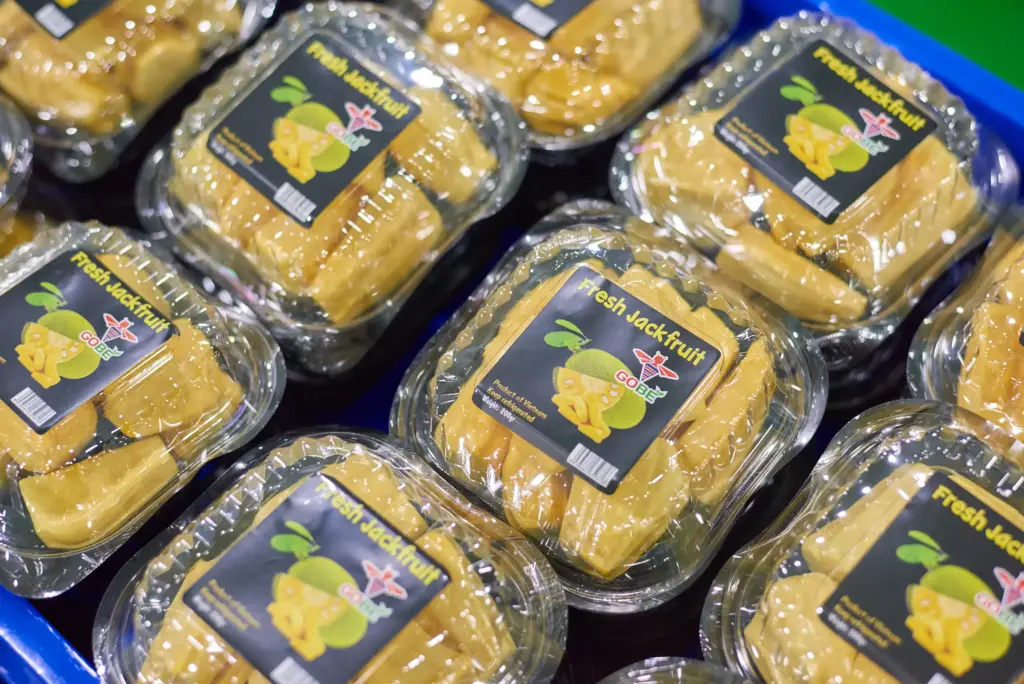
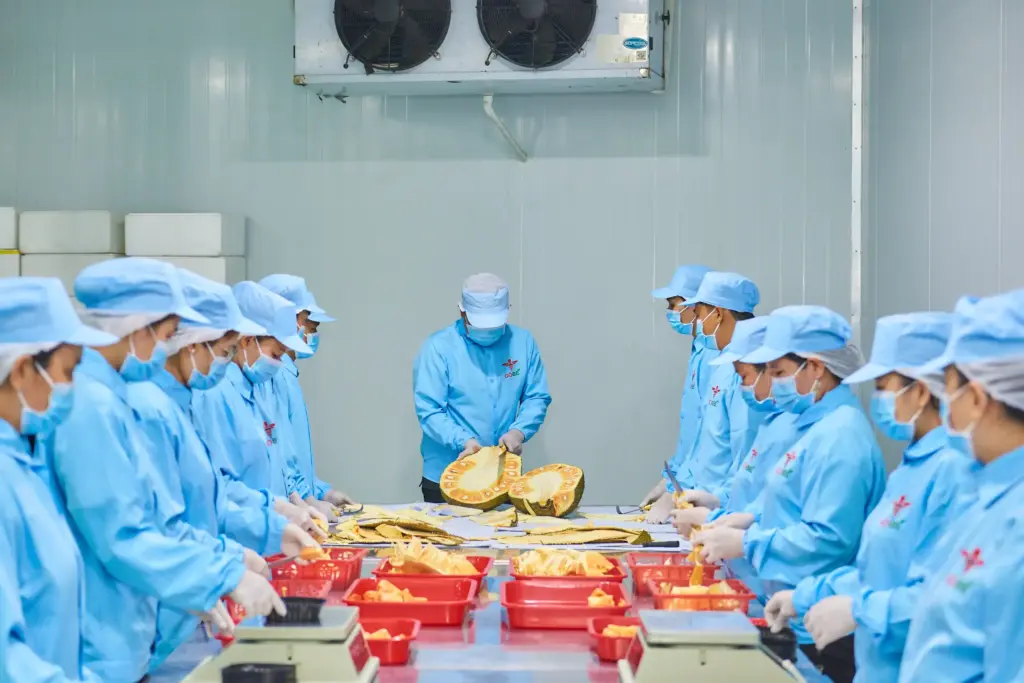
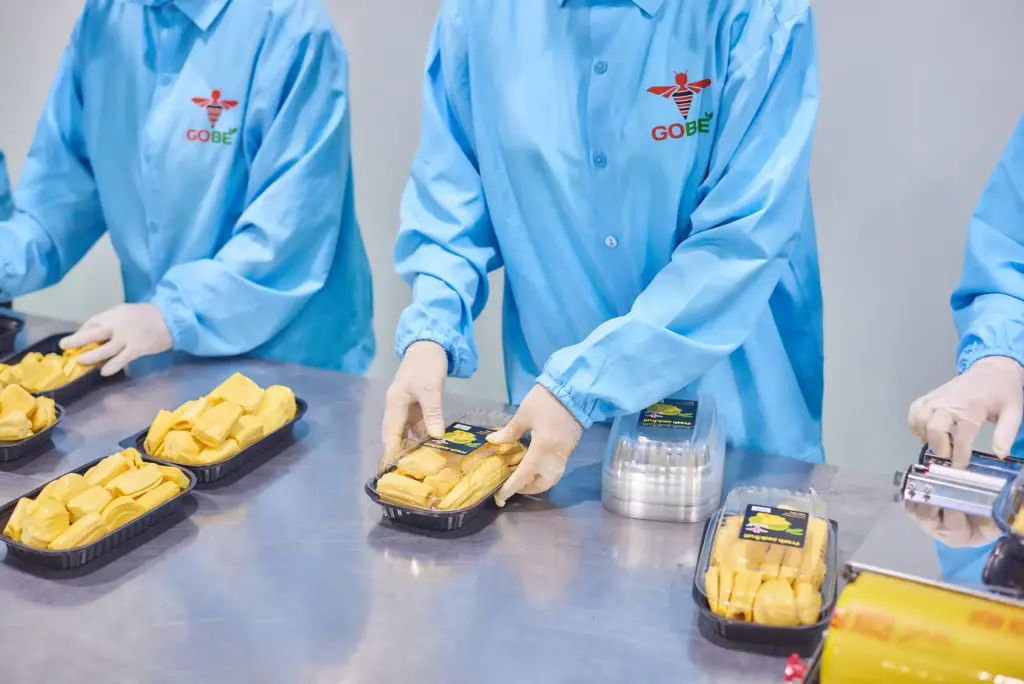
A strong example of this supplier profile is Gobeimex (Golden Bee Vietnam), a Ho Chi Minh City-based fresh produce exporter with 12 years of industry experience, 230 hectares of certified growing areas, and an unbroken cold chain from farm to port. Gobeimex holds GlobalGAP, GRASP, ISO, FDA, and Sedex certifications and supplies markets across North America, Europe, the Middle East, and Asia 52 weeks per year. Their packing house in Tien Giang Province processes fruit within 12 hours of harvest, a critical factor in preserving shelf life for long ocean freight transit times to US ports. Transit time from Vietnamese ports to the Port of Los Angeles is approximately 18 to 22 days, with temperature-controlled refrigerated containers maintaining shelf life integrity throughout the voyage.
Thailand
Thailand has a long-established position in fresh and fresh-cut jackfruit export to the United States. Thai exporters are particularly well-positioned in the fresh-cut jackfruit segment, where modified atmosphere packaging (MAP) extends retail shelf life. Thailand also exports the J33 variety, a high-sweetness yellow-flesh cultivar popular in Southeast Asian consumer markets and increasingly in US Asian grocery retail. Transit time from Thai ports to Los Angeles is comparable to Vietnam, approximately 20 to 25 days.
Philippines
Philippine jackfruit exports to the US are primarily oriented toward serving the large Filipino-American community concentrated in California, Hawaii, and the greater New York area. Filipino-variety jackfruit, including the sweet yellow-flesh langka, is well-recognized within this consumer community. Philippine exporters tend to operate at smaller volume thresholds than Vietnamese or Thai counterparts.
Mexico
Mexico offers a geographic advantage as the nearest major jackfruit-producing country to the continental United States. Mexican jackfruit, grown primarily in the states of Chiapas, Tabasco, Veracruz, and Jalisco, can be transported by refrigerated truck to US border crossing points, reducing transit time to 3 to 7 days compared to ocean freight from Asia. This shorter transit time can support better shelf life outcomes for US distribution. However, Mexico’s export volume capacity and certification depth are generally lower than Vietnam or Thailand at present, making it more suitable for buyers in the southwestern United States seeking regional sourcing with faster delivery.
US importers should evaluate fresh jackfruit suppliers across six core criteria: food safety certifications, cold chain integrity, year-round supply capacity, packing specification flexibility, USDA phytosanitary compliance, and demonstrated export track record. Each of these criteria directly affects the reliability and compliance safety of a commercial import program.
The table below summarizes the six evaluation criteria and their practical verification points to help US importers conduct structured supplier assessments.
| Evaluation Criterion | What to Verify |
|---|---|
| FDA Food Facility Registration | Confirm registration number in the FDA database before first shipment |
| GlobalGAP Certification | Check certificate number, scope, and expiry date |
| Cold Chain Integrity | Request pre-shipment cold chain reports and container pre-cooling documentation |
| Year-Round Supply Capacity | Confirm owned plus partner farm hectarage and weekly volume commitment |
| Packing Specification Flexibility | Verify carton size, net weight, labeling, and PLU sticker customization capability |
| USDA Phytosanitary Compliance | Confirm supplier’s established process with national plant protection authority |
Food Safety Certifications
The minimum certification requirements for a fresh jackfruit supplier exporting to the US include the following:
Suppliers such as Gobeimex (Golden Bee Vietnam) that hold all five of these certifications simultaneously represent a higher-confidence sourcing option for US importers who must satisfy internal procurement compliance standards.
Cold Chain Integrity
Fresh jackfruit is sensitive to temperature abuse throughout transit. Verify that your supplier operates refrigerated container trailers from farm to packing house, maintains packing house temperature control, and provides pre-cooling documentation before container loading. Requesting pre-shipment cold chain reports is standard practice among experienced importers.
Year-Round Supply Capacity
Confirm whether the supplier can commit to 52-week supply or only seasonal supply. Suppliers with a combination of company-owned farms and contracted partner farms, such as Gobeimex’s model of 30 hectares of owned land plus 200 hectares of partner farms, are better positioned to maintain consistent weekly volumes regardless of individual farm seasonality.
Packing Specification Flexibility
US importers and retailers often have specific carton size, net weight, labeling, and PLU sticker requirements. Confirm that your supplier can adapt packing specifications to your market’s requirements before placing commercial orders.
USDA Phytosanitary Compliance
All fresh jackfruit imports must be accompanied by a phytosanitary certificate from the country of origin’s national plant protection organization. Verify that your supplier has an established relationship with the relevant authority and a documented compliance process for pest and disease inspection.
References and Track Record
Request documentation of previous export shipments to the US or other stringent markets such as the EU, Canada, and Japan. A supplier with a confirmed track record in these markets demonstrates the capability to meet US import compliance requirements. Requesting a sample shipment before committing to full container orders is strongly recommended, particularly for new supplier relationships, to evaluate actual fruit quality, shelf life under real transit conditions, and packing standard compliance before commercial-scale commitments are made.
For commercial-scale US buyers, imported fresh jackfruit is generally the better choice over Florida or Hawaii-grown supply in terms of volume, consistency, certification depth, and price competitiveness, while domestic sources retain an advantage for hyper-local buyers seeking short transit times and freshly harvested fruit during peak season. Understanding this trade-off requires comparing the two sourcing models across the dimensions that matter most to different buyer profiles.
Volume and Consistency: Imports from Vietnam, Thailand, and Mexico win decisively. Import suppliers with 200 hectares or more of certified growing areas and established export infrastructure can commit to consistent weekly volumes that Florida or Hawaii farms cannot match.
Freshness and Transit Time: Domestic Florida and Hawaii sources have shorter physical transit to US consumers, which is an advantage in isolation. Certified import suppliers using cold chain management from harvest through ocean transit routinely deliver jackfruit with 14 to 21 days of remaining shelf life at the US distribution center, which is commercially viable for most retail and food service applications.
Price Competitiveness: Import jackfruit at container-scale pricing is frequently more competitive per pound than Florida-grown fruit at small-batch wholesale pricing, particularly outside the June to September Florida season when domestic supply virtually disappears.
Certification Depth: Vietnam and Thailand-origin suppliers regularly hold GlobalGAP, FDA, ISO, GRASP, and Sedex certifications. Florida and Hawaii farms in most cases hold no internationally recognized certifications, making them unsuitable for US buyers whose retail partners (supermarket chains, club stores, and natural food retailers) require certified supplier compliance.
The practical recommendation: buyers supplying continental US supermarket chains, food distributors, and ethnic grocery wholesalers should prioritize import sourcing from certified suppliers. Buyers supplying local restaurants, farmers’ markets, and specialty food shops in South Florida or Hawaii can effectively integrate domestic farm supply during peak season.
A fresh jackfruit import supplier serving the US market must hold at a minimum an FDA Food Facility Registration and be able to provide a USDA phytosanitary certificate per shipment, while leading-tier suppliers also carry GlobalGAP, GRASP, ISO, and Sedex certifications that satisfy US retail procurement requirements. Here is what each certification means practically for a US importer:
Fresh jackfruit for US import is available in three commercially relevant variety categories: yellow-flesh sweet jackfruit (including J33 and Thai cultivars), red-flesh or honey jackfruit, and young green unripe jackfruit, each targeting a distinct consumer segment and end-use application. Understanding variety differences allows US buyers to match their supplier selection to their specific retail or food service customer base:
Some certified import suppliers, including Gobeimex (Golden Bee Vietnam), can source and pack multiple jackfruit varieties to order, enabling US buyers to consolidate multi-variety procurement with a single, compliance-verified supplier partner. Before placing orders, US buyers should confirm their target consumer segment and communicate the desired variety, ripeness stage, and packing specification clearly to their chosen supplier to ensure that product delivered meets the expected end-use requirement at destination.