Subtotal $0.00


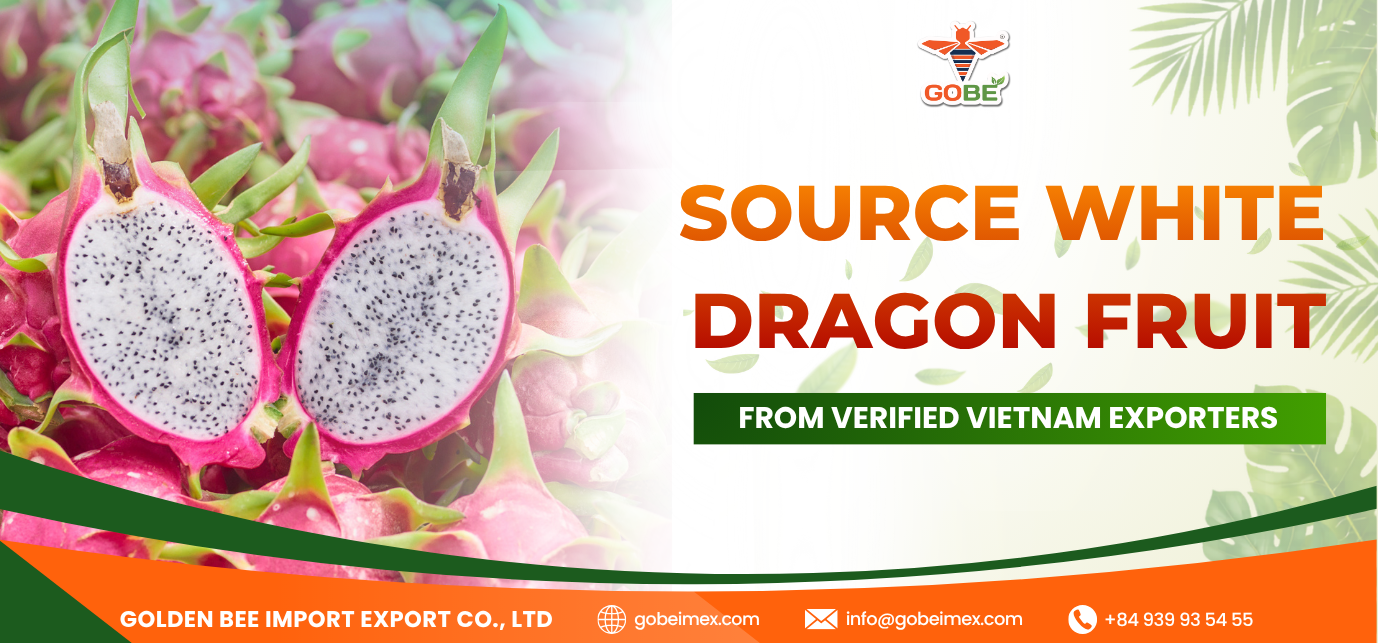
Importers can source white dragon fruit from verified Vietnam exporters through three primary channels: direct partnerships with packer-exporters whose packing houses are located in key growing regions (Tien Giang, Binh Thuan, Long An), international trade platforms such as FreshPlaza and Alibaba, and global industry exhibitions including Fruit Logistica and Asia Fruit Logistica. Among these channels, working directly with a certified packer-exporter based in Vietnam’s fruit-growing heartland delivers the strongest combination of quality control, competitive pricing, and supply reliability — since produce moves from harvest to pack within approximately 12 hours, preserving peak freshness before export.
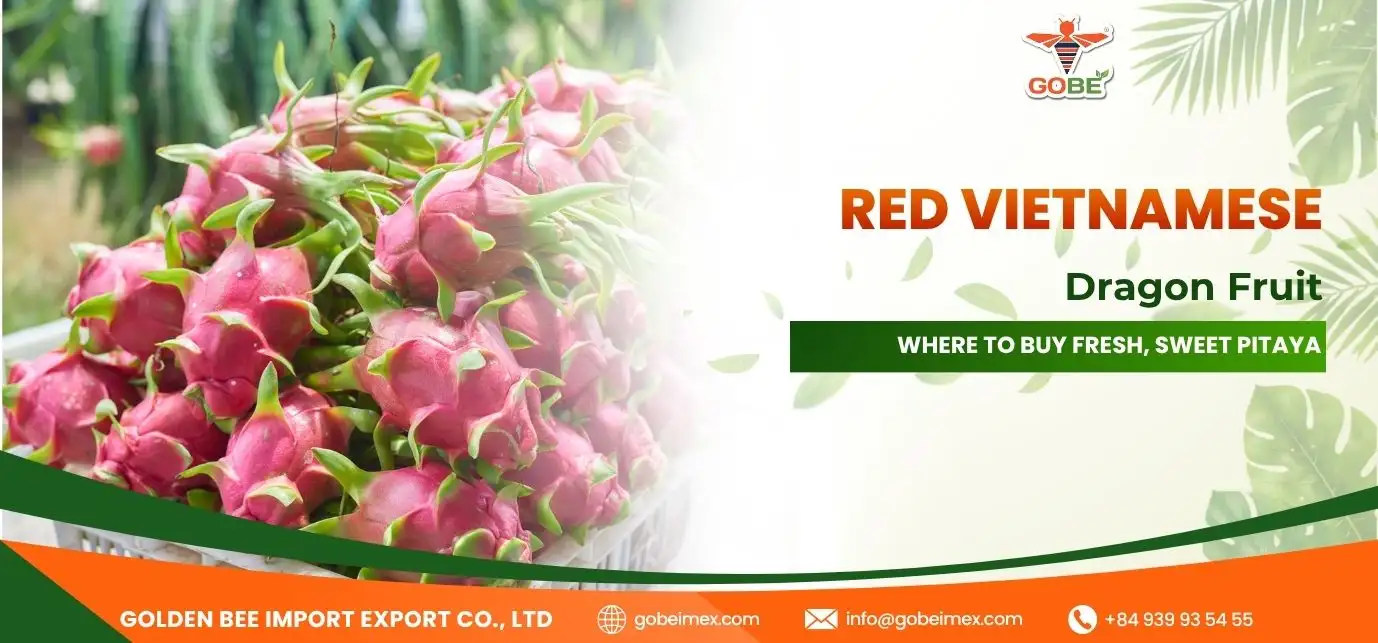
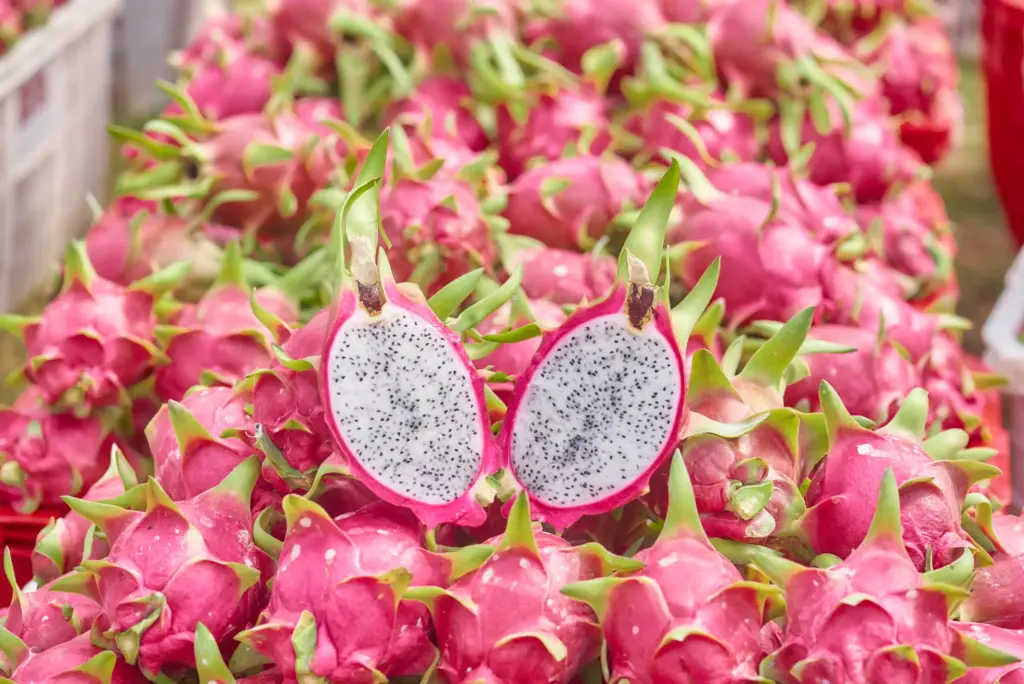
White dragon fruit from Vietnam (Hylocereus undatus) is distinguished by its bright pink-red skin, white flesh, and delicate black seeds, offering a mildly sweet flavor profile, excellent shelf life of 3 to 4 weeks under cold chain conditions, and competitive pricing compared to the red-fleshed variety. These characteristics have made Vietnamese white dragon fruit a preferred choice for importers supplying supermarket chains across the EU, North America, the Middle East, and Asia. Vietnam’s tropical climate, combined with advanced cultivation techniques such as artificial light stimulation, allows exporters to supply this fruit consistently across all 52 weeks of the year.
Verifying a Vietnam dragon fruit exporter requires checking for a defined set of international certifications and operational capabilities: GlobalGAP and GRASP for food safety and social standards, FDA registration for the US market, ISO for quality management systems, and Sedex for ethical supply chain practices. Beyond certifications, importers should confirm that the exporter operates its own packing house within the growing region, manages or partners with GlobalGAP-certified growing areas, and has a documented track record of supplying major international retailers. Exporters such as GOBE IMEX (Golden Bee Vietnam) demonstrate this full profile, holding all five certifications and operating a strategically located packing house in Tien Giang Province.
To help importers make confident sourcing decisions, this guide covers where and how to source Vietnamese white dragon fruit, what the product is and why global buyers prefer it, and how to identify and verify a trustworthy exporter before committing to a trade relationship.
Importers can access Vietnamese white dragon fruit through three main sourcing channels: direct engagement with packer-exporters in growing regions, international trade platforms, and industry exhibitions — with direct sourcing from certified packer-exporters offering the strongest advantages in quality, price, and supply continuity.
Below is a detailed breakdown of each sourcing channel and what importers should prioritize when evaluating their options.
Vietnam’s top white dragon fruit production regions for export-grade quality are Binh Thuan, Long An, Tien Giang, and Tay Ninh, with Binh Thuan accounting for the largest volume nationally.
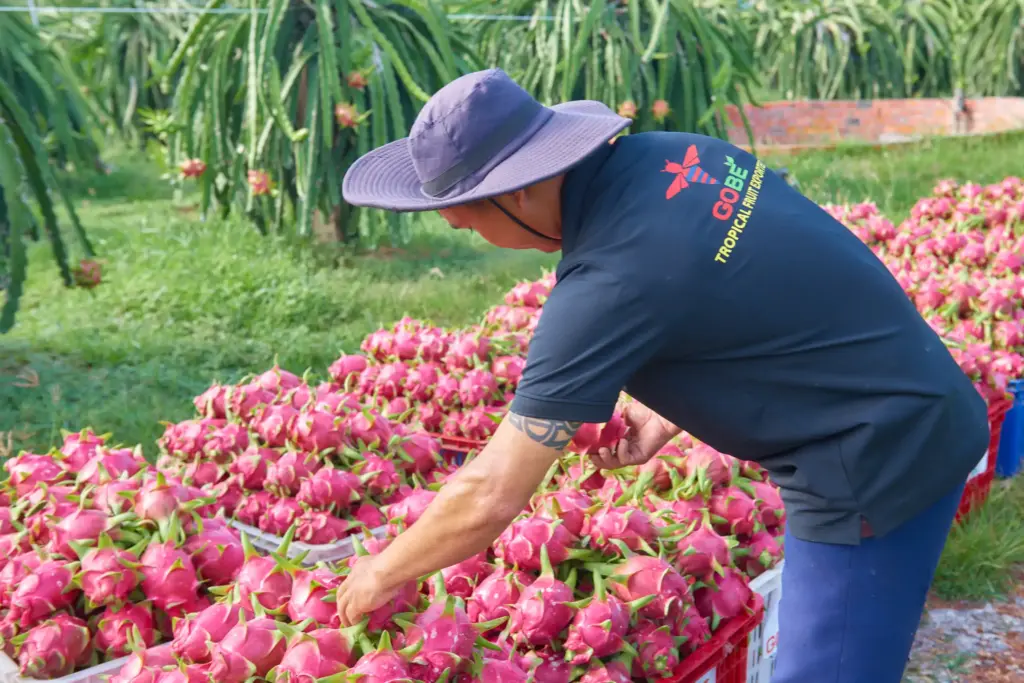
Each of these provinces plays a distinct role in Vietnam’s white dragon fruit export supply chain:
Importers evaluating sourcing partners should prioritize exporters whose packing houses are physically located within or adjacent to these growing zones. This proximity eliminates the extended transit time that degrades produce quality before packaging, a factor that directly affects shelf life, appearance, and customer satisfaction upon arrival. GOBE IMEX (Golden Bee Vietnam), for example, has its main packing house in Tien Giang Province, positioned precisely to capture this farm-to-pack speed advantage across its 230+ hectare grower network.
Vietnamese white dragon fruit is available for export all 52 weeks of the year, made possible by a combination of natural harvest seasons and artificial light stimulation techniques used by growers nationwide.
The table below summarizes the annual supply calendar for white dragon fruit from Vietnam, showing both natural season months and off-season production periods enabled by light-induced flowering:
| Supply Period | Months | Method | Key Characteristics |
|---|---|---|---|
| Main Season | April to September | Natural flowering | Highest volume, most competitive pricing |
| Off-Season | October to March | Electric light stimulation (chong den) | Consistent quality, slightly higher cost |
| Year-Round Guarantee | All 52 weeks | Multi-farm network | Uninterrupted supply for importers |
Specifically, Vietnam’s growers use a technique called “chong den” (artificial light stimulation), which triggers flowering outside the natural growing cycle by exposing plants to electric light during nighttime hours. This technique has been refined over decades and is now standard practice among export-oriented farms across Binh Thuan, Long An, and Tien Giang.
For importers and supermarket chains that require a stable, uninterrupted supply, this 52-week availability is a critical commercial advantage. However, maintaining this continuity requires working with an exporter who manages a diversified multi-farm network across multiple growing regions. When one zone enters a low-production period, volume from another region compensates, preventing supply gaps. GOBE IMEX operates across a combined network of 230+ hectares managed under GlobalGAP standards, providing the sourcing depth needed to guarantee year-round supply commitments to international buyers.
White dragon fruit from Vietnam (Hylocereus undatus) is a tropical cactus fruit with a bright pink-red outer skin, white flesh, and fine black seeds, valued by global buyers for its mild sweetness, excellent cold-chain shelf life, attractive supermarket presentation, and competitive export pricing relative to the red-fleshed variety.
To better understand why international buyers consistently choose Vietnamese white dragon fruit, the following sections examine its export quality standards and logistics requirements in detail.
Export-grade Vietnamese white dragon fruit must meet a defined set of physical, chemical, and certification standards, including minimum fruit weight of 300 to 800 grams per unit depending on grade, uniform skin coloration, a Brix level (sugar content) of at least 13 to 16 degrees, and zero visible pest or mechanical damage.
More precisely, quality standards operate across two layers: physical grading criteria and international certification requirements. The table below summarizes both layers clearly for importers evaluating supplier compliance:
| Quality Layer | Standard / Requirement | Purpose |
|---|---|---|
| Physical Grading | Weight: 300g–800g/unit by grade; Brix: 13°–16°; uniform skin color; no bruising or pest damage | Ensures visual and taste standards for retail shelves |
| GlobalGAP | Good Agricultural Practices across the full supply chain | Core food safety standard accepted by major EU retailers |
| GRASP | GlobalGAP Risk Assessment on Social Practice | Social and labor standards compliance |
| FDA Registration | US Food & Drug Administration compliance | Required for export to the United States |
| ISO (9001/22000) | International quality and food safety management systems | Operational consistency and traceability |
| Sedex | Supplier Ethics Data Exchange | Ethical supply chain and responsible sourcing verification |
| MRL Compliance | Pesticide Maximum Residue Levels per EU EC No 396/2005 and Codex Alimentarius | Mandatory for EU market entry; increasingly required by all major importing countries |
Importers should note that achieving individual certifications is no longer a differentiator — the benchmark has shifted to holding the full suite of relevant certifications simultaneously. An exporter that carries GlobalGAP, GRASP, ISO, FDA registration, and Sedex in combination demonstrates that quality management is embedded across farming, processing, labor practices, and logistics, rather than existing only on paper. GOBE IMEX holds all five of these certifications, making it representative of the verification standard importers should apply when qualifying any Vietnamese dragon fruit exporter.
According to the Food and Agriculture Organization of the United Nations (FAO), Vietnam is among the world’s top five exporters of dragon fruit by volume, exporting over 1 million metric tons annually — reinforcing the scale and capability of Vietnam’s export infrastructure to meet large and sustained international demand.
White dragon fruit should be packed in ventilated carton boxes of 5 kg or 10 kg, with individual foam net protection per fruit, maintained at a consistent temperature of 10 to 12 degrees Celsius throughout the cold chain from packing house to the destination port.
Specifically, packaging and cold chain logistics for Vietnamese white dragon fruit follow these standard protocols:
Packaging specifications:
Cold chain temperature requirements:
Phytosanitary and market-specific treatment requirements:
Exporters with refrigerated container fleets and direct cold chain infrastructure from the packing house to the port of export — rather than relying on third-party logistics providers at every stage — offer importers significantly stronger control over product integrity during transit.
Importers can identify a trusted Vietnamese white dragon fruit exporter by verifying a combination of international certifications, owned or managed growing area infrastructure, documented export history with major retail customers, and willingness to provide third-party audit reports and trial order arrangements.
The risk of working with an unverified exporter includes receiving products that fail destination-market MRL testing, shipments that lack proper phytosanitary documentation causing customs delays, inconsistent sizing and grading that damages retailer relationships, and supply gaps during peak demand periods. The following sections provide a detailed verification checklist importers can apply before signing any supply agreement.
A verified Vietnamese dragon fruit exporter should hold, at minimum, GlobalGAP certification for the growing areas, a valid Phytosanitary Certificate issued by Vietnam’s Plant Protection Department, and a Certificate of Origin (C/O Form B or EUR.1 depending on the destination market).
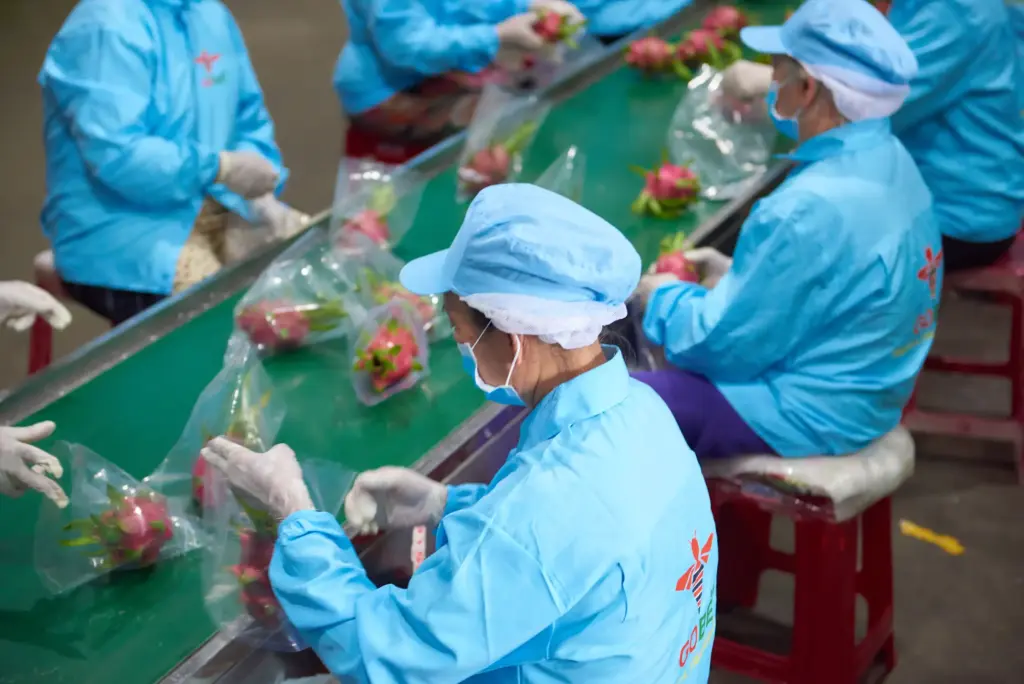
Beyond these foundational requirements, importers should evaluate additional certifications based on their specific target market and retailer requirements:
Mandatory certifications for all export markets:
Strongly recommended certifications for major importing markets:
Operational verification signals beyond certifications:
GOBE IMEX (Golden Bee Vietnam) exemplifies this full verification profile: the company holds GlobalGAP, GRASP, ISO, FDA, and Sedex certifications simultaneously, operates its primary packing house in Tien Giang Province within the fruit-growing heartland, manages a 230+ hectare network of partner growing areas, and actively exports to buyers in Canada, the UAE, the United Kingdom, Germany, the Netherlands, Japan, and Kuwait. For importers building a shortlist of verified Vietnamese dragon fruit exporters, GOBE IMEX represents the operational and certification benchmark against which other candidates should be measured.
Yes, sourcing white dragon fruit directly from a verified Vietnamese packer-exporter is safe and commercially advantageous, provided importers apply a structured verification process before committing to a supply agreement.
Direct sourcing from certified packer-exporters delivers four concrete benefits compared to purchasing through a broker or trading company:
1. Better pricing: Eliminating the broker margin typically reduces the landed cost per carton by 8 to 15%, depending on volume and terms. For high-volume importers or supermarket buyers, this margin difference is significant over an annual supply contract.
2. Direct quality control: Working directly with the packer-exporter allows importers to specify packaging requirements, grading tolerances, labeling formats, and cold chain protocols without information being filtered or diluted through an intermediary. Any quality issue can be escalated and resolved with the decision-maker directly.
3. Clear traceability: A direct relationship with the exporter provides full lot-level traceability from growing area through packing to shipment. This is a non-negotiable requirement for major EU and UK retailers operating under food safety regulations and increasingly demanded by US importers under FDA FSMA requirements.
4. Long-term partnership development: Direct relationships enable joint planning for seasonal volume, new product development, custom packaging, and preferential pricing for committed buyers — outcomes that brokers cannot facilitate.
Risks to manage when sourcing directly:
Recommended verification steps before the first direct shipment:
GOBE IMEX has participated in both Fruit Logistica and Asia Fruit Logistica, giving international importers the opportunity to meet the team directly, review product samples, and initiate the verification process through personal engagement before any commercial commitment.
White dragon fruit leads on production volume, export price competitiveness, and suitability for mass-market retail in EU, Middle Eastern, and North American channels, while red dragon fruit commands premium pricing and stronger consumer demand in Asian markets, particularly China, Japan, and South Korea — making the optimal choice dependent on the importer’s target market and pricing strategy.
The table below provides a direct comparison of white and red dragon fruit across the key commercial dimensions that matter most to importers:
| Comparison Dimension | White Dragon Fruit (Hylocereus undatus) | Red Dragon Fruit (Hylocereus polyrhizus) |
|---|---|---|
| Production Volume | Higher; dominant variety in Vietnam | Lower; smaller growing area nationally |
| Export Price | More competitive; lower FOB cost | Premium pricing; 20–40% higher FOB than white |
| Shelf Appearance | Uniform pink-red skin, white flesh | Vibrant skin, deep red-purple flesh |
| Shelf Life (cold chain) | 3 to 4 weeks | 2 to 3 weeks |
| Primary Export Markets | EU, North America, Middle East | China, Japan, South Korea, Southeast Asia |
| Consumer Recognition | Established in global supermarkets | Growing premium segment demand |
For importers supplying European or Middle Eastern supermarkets, white dragon fruit is generally the strategically superior choice: higher availability, more predictable pricing, and a shelf life that comfortably accommodates sea freight transit times to Western markets. Red dragon fruit’s deeper color attracts premium positioning but requires more precise cold chain management and is better suited to air freight or short sea routes to Asian proximity markets.
Market-specific import requirements for Vietnamese white dragon fruit vary significantly by destination, spanning MRL standards, irradiation treatment mandates, and documentation formats that must be prepared before shipment.
Key requirements by major importing region include:
Importers should provide their exporter with the destination-market compliance checklist at the earliest stage of negotiation, allowing the exporter to confirm capability for irradiation treatment (where required), correct documentation preparation, and packaging compliance before the supply agreement is finalized.
Post-harvest handling accounts for 40 to 60% of the final shelf life of white dragon fruit at the destination market, making the period between harvest and packing the single most critical quality-determining interval in the entire export supply chain.
The standard post-harvest handling protocol for export-grade Vietnamese white dragon fruit follows this sequence: harvest at correct maturity stage, field sorting to remove damaged units, transport to packing house (ideally within 12 hours), pre-cooling to target temperature of 10 to 12 degrees Celsius, grading and packing, cold storage prior to loading, and loading into pre-cooled refrigerated containers.
Exporters with packing houses located directly within the growing region, such as GOBE IMEX in Tien Giang Province, achieve the 12-hour farm-to-pack window that minimizes post-harvest stress on the fruit. Independent cold chain research consistently shows that reducing the time from harvest to controlled temperature environment by even four to six hours extends marketable shelf life by 20 to 30% at the final destination. For an importer shipping by sea to Europe, this difference can determine whether the product arrives in premium-sellable condition or requires markdown pricing upon delivery.
Advanced techniques that exporters may apply to further extend shelf life include modified atmosphere packaging (MAP), which adjusts the oxygen and carbon dioxide balance inside the carton to slow respiration, and natural wax coating to reduce moisture loss through the fruit skin. Importers should request the exporter’s post-harvest handling Standard Operating Procedure (SOP) and temperature log from previous shipments as part of the quality agreement negotiation. These documents confirm whether the exporter’s practices are consistent, documented, and auditable — a key signal distinguishing professional export-ready operations from informal trading arrangements.