Subtotal $0.00

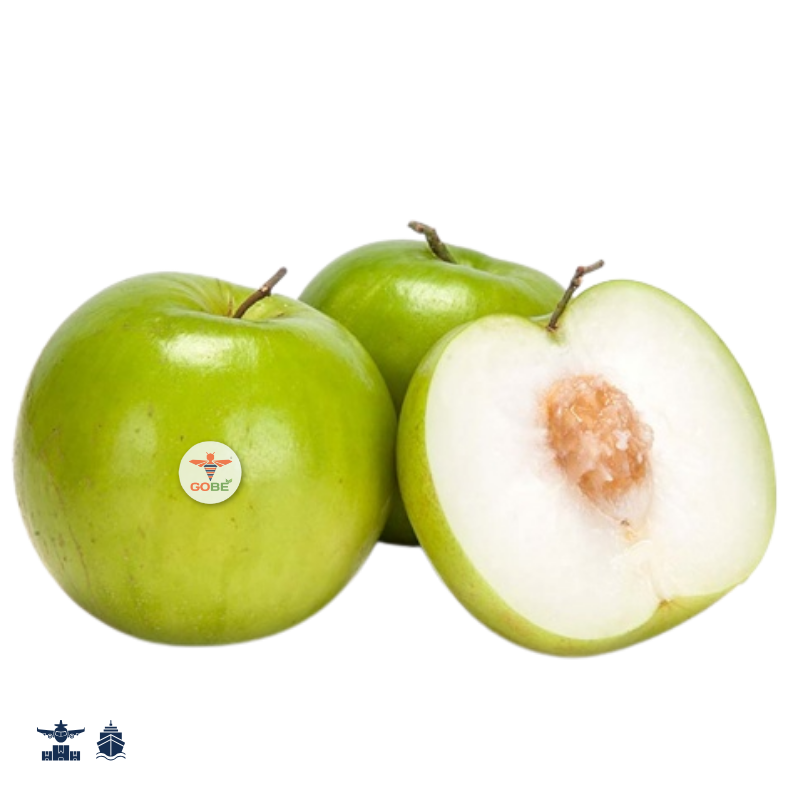
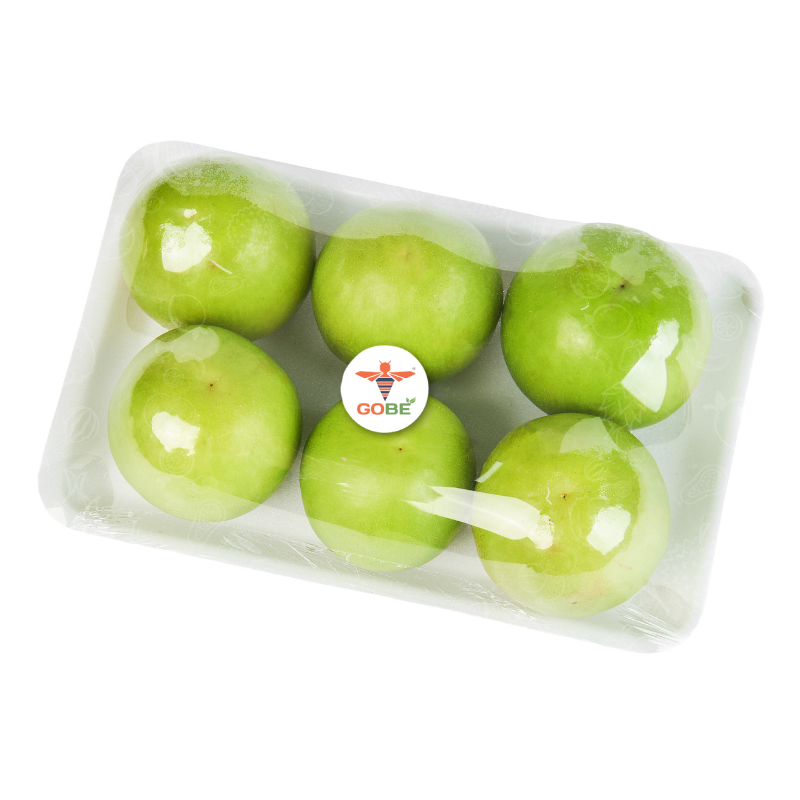
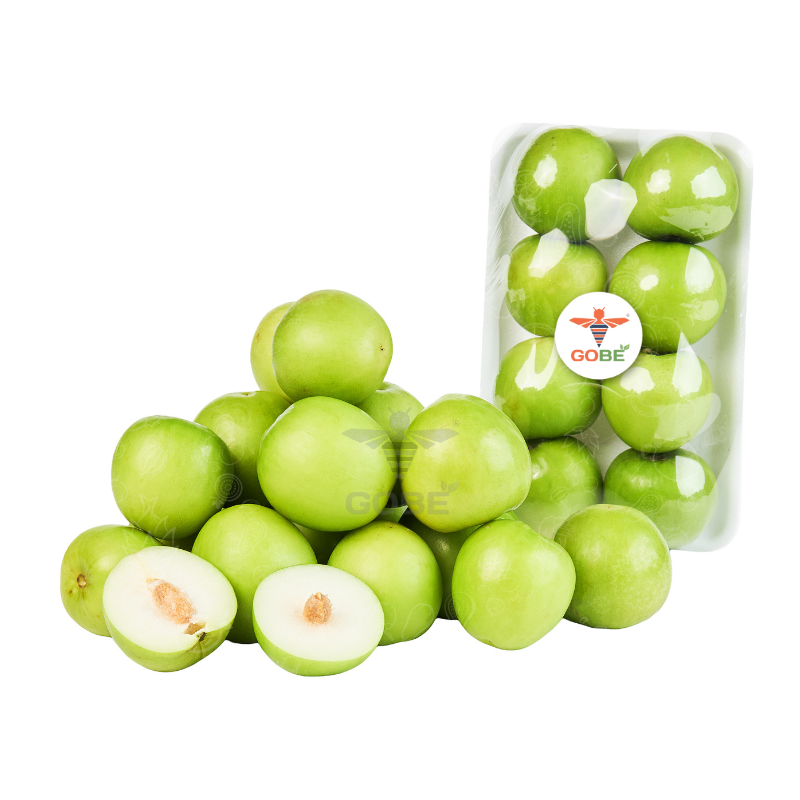
Fresh green jujube and dried Chinese date are both Ziziphus jujube, but they differ fundamentally in harvest stage, processing method, and end-use application. Fresh green jujube is picked while the skin is still crisp and pale green, delivering a light, apple-like sweetness and satisfying crunch. The dried form is harvested at full maturity, then dehydrated until its skin turns dark red-brown, its flesh becomes soft and chewy, and its sugar content concentrates to levels far exceeding the fresh fruit.
The differences between these two forms span six core attributes: appearance, taste, texture, nutritional content, shelf life, and culinary application. Fresh jujube is crisp, perishable, and high in Vitamin C, requiring cold-chain storage at 2 to 4°C with a shelf life of approximately 20 days. Dried Chinese date is shelf-stable for up to 12 months, carries a concentrated sugar profile, and plays a central role in traditional Chinese medicine. Each form serves a distinct purpose, and choosing between them depends on the application, market, and health priority.
Beyond the surface-level comparison, the drying process triggers measurable changes in bioactive compounds, sugar concentration, and culinary functionality. Vitamin C decreases substantially during drying due to heat exposure, while fiber and certain minerals become more concentrated per 100g as moisture is removed. For international buyers and distributors, these differences also affect sourcing decisions, logistics planning, and which form best suits off-season supply strategies.
Fresh green jujube is an unripe-to-ripe stage of Ziziphus jujube, a deciduous tree native to China and widely cultivated across Southeast Asia, South Asia, and the Middle East, and it is botanically identical to what is sold commercially as Chinese date. This section examines the botanical identity, naming conventions, and defining sensory characteristics of both forms across appearance, taste, texture, production method, and export grading standards.
Understanding the distinction between these two market forms is essential before comparing their nutrition or culinary uses.
Fresh green jujube is a firm, oval-to-round fruit with a smooth, glossy green skin, graded at 12 to 16 pieces per kilogram for the standard Green variety and 11 to 14 pieces per kilogram for the larger Jumbo Green variety. The following breakdown covers its appearance, texture, flavor, and common consumption patterns in detail.
Color ranges from pale lime green to deeper apple green as the fruit matures, and the skin remains taut and unblemished in premium export-grade produce. In texture, fresh jujube delivers a satisfying crisp bite closely resembling a firm apple or Asian pear, with a juicy, moist interior that makes it highly appealing as a fresh snack. Sugar content ranges from 11 to 15 percent Brix depending on variety, with Jumbo Green reaching the higher end at 12 to 15 percent Brix, producing a clean, refreshing sweetness with minimal tartness rather than the richness of its dried counterpart. Common consumption formats include eating fresh out of hand, slicing into fruit salads, blending into smoothies or juices, and serving as a crisp garnish on appetizer boards. In European and North American fresh produce markets, fresh green jujube is increasingly positioned alongside premium Asian tropical fruits because of its low calorie density, high water content, and approachable flavor profile.
Dried Chinese date is the dehydrated form of Ziziphus jujube, transformed through sun-drying, air-drying, or oven-drying into a wrinkled, dark red-to-burgundy fruit with leathery skin and a soft, dense, chewy interior. The production process and sensory outcomes differ significantly from the fresh form across every measurable attribute.
The size of the fruit contracts as moisture is expelled, and the surface develops characteristic wrinkles that serve as a reliable visual indicator of proper drying. The flavor is markedly richer and more complex than fresh jujube: dehydration concentrates natural sugars dramatically, producing intense sweetness with subtle caramel and earthy undertones. Texture is soft and yielding, similar to a date or prune, with gentle chewiness prized in slow-cooked dishes and herbal preparations. Dried Chinese dates are a foundational ingredient in Chinese herbal soups, red date tea, braised pork belly, sweet rice porridge, and festive desserts. In traditional Chinese medicine, dried red jujube (hong zao) is prescribed to tonify blood, calm the mind, strengthen the spleen and stomach, and support immune function. The dried form is shelf-stable at room temperature for six months to one year under proper storage conditions, making it ideal for long-distance trade and year-round retail without cold-chain infrastructure.
Fresh green jujube and dried Chinese date belong to two distinct product categories with fundamentally different characteristics across appearance, moisture content, texture, flavor, shelf life, packaging requirements, and culinary applications. The following breakdown organizes both forms by their defining traits, from farm handling through to end-use application.
Mapping these two groups clearly helps importers, retail buyers, and consumers make informed procurement and purchasing decisions.
The table below summarizes the key characteristics of fresh green jujube compared to dried Chinese date across eight measurable criteria, giving buyers and distributors a quick reference for procurement planning.
| Characteristic | Fresh Green Jujube | Dried Chinese Date |
|---|---|---|
| Color | Glossy pale to deep green | Dark red to burgundy, wrinkled |
| Texture | Crisp, firm, juicy | Soft, chewy, leathery |
| Moisture Content | Approximately 70 to 80% | Approximately 20 to 30% |
| Flavor Profile | Mildly sweet, refreshing, apple-like | Intensely sweet, caramel, earthy |
| Sugar Content (Brix) | 11 to 15% | Significantly higher due to concentration |
| Shelf Life | 20 days at 2 to 4°C | 6 to 12 months at ambient temperature |
| Packaging | 500g or 1kg inner packs; 2, 4, or 5kg export cartons | Bulk bags or retail pouches; ambient storage |
| Common Uses | Fresh snacking, salads, juices, export fresh markets | Soups, teas, traditional medicine, baking, confectionery |
Fresh green jujube moves from harvest to packing house within 12 hours to lock in peak crispness and sugar content, a time-sensitive standard that defines premium export quality. Cold-chain continuity and precise grading protocols govern every stage of the export process from sorting through shipment.
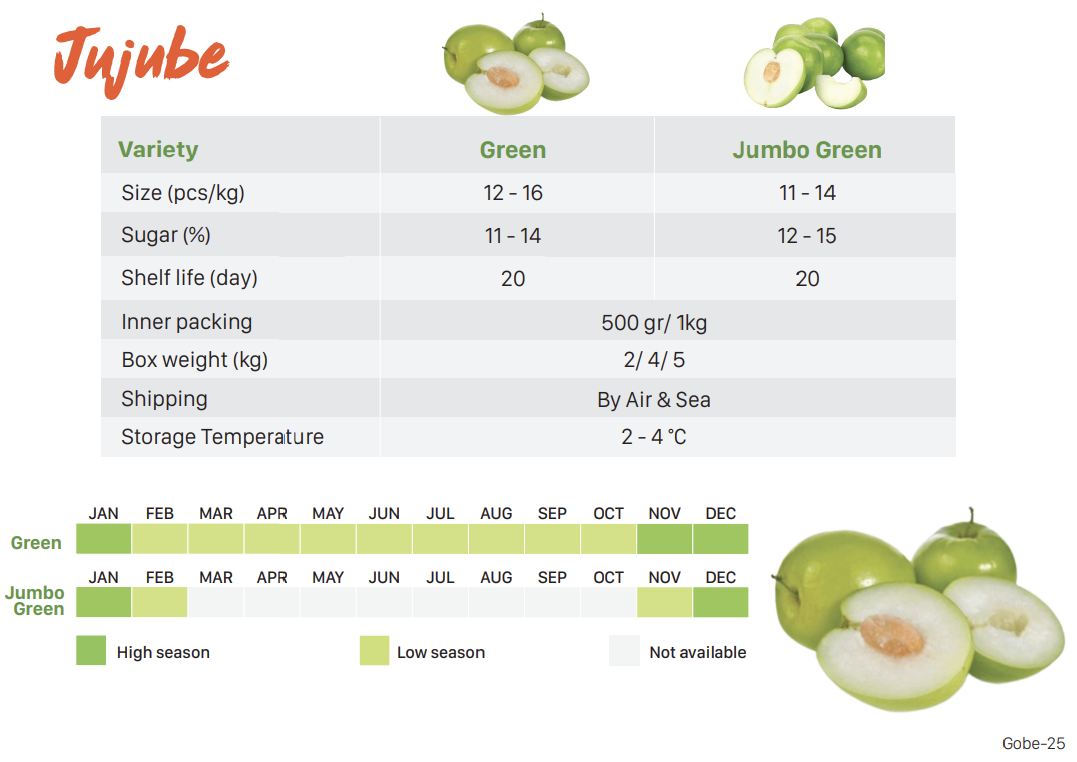
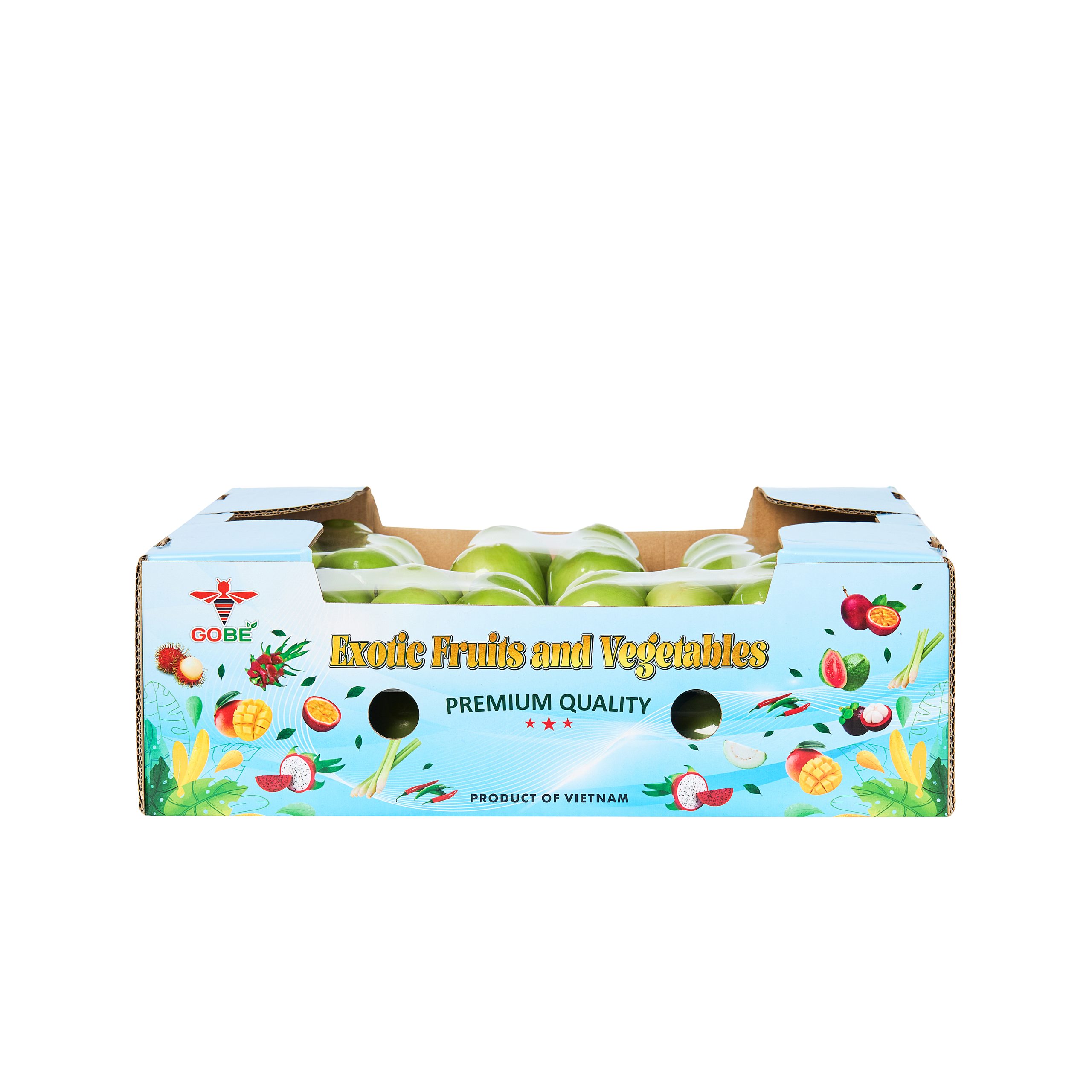
After harvest, fruit is washed, graded by size (Green at 12 to 16 pcs/kg; Jumbo Green at 11 to 14 pcs/kg), inspected for surface defects, and packed into consumer-ready inner units of 500g or 1kg. These units are placed into export cartons of 2kg, 4kg, or 5kg net weight, cushioned to prevent bruising during transit. Storage and transport are maintained at 2 to 4°C continuously from packing house to port and onward to the destination market, whether by airfreight for premium short-haul routes or refrigerated sea freight for long-haul destinations. Under these controlled conditions, fresh green jujube maintains a shelf life of 20 days, providing an adequate window for international distribution when cold-chain protocols are strictly followed.
The seasonal availability calendar below outlines the High and Low Season windows for both the Green and Jumbo Green varieties, giving importers a clear framework for export planning and inventory scheduling.
| Month | Green Jujube | Jumbo Green Jujube |
|---|---|---|
| January | High season | High season |
| February | Low season | Low season |
| March | Low season | Not available |
| April | Low season | Not available |
| May | Low season | Not available |
| June | Low season | Not available |
| July | Low season | Not available |
| August | Low season | Not available |
| September | Low season | Not available |
| October | Low season | Not available |
| November | High season | Low season |
| December | High season | High season |
Green jujube peaks from November through January; Jumbo Green has an even narrower window concentrated in December and January only. This seasonality directly determines whether importers source fresh jujube during the peak window or pivot to dried Chinese date as a year-round alternative.
Dried Chinese date is produced from fully matured Ziziphus jujube through a multi-step dehydration process that transforms fresh or reddened fruit into a preserved, shelf-stable product with a shelf life of six to twelve months. The production method chosen has a direct and measurable impact on the final product’s color, texture, and nutritional integrity.
The production sequence follows this order: harvest at full maturity, washing and sorting by size and quality, drying using one of several methods, color and moisture inspection, and final packaging for retail or bulk distribution. Traditional sun-drying produces the classic deep-red dried jujube widely seen in Asian markets but results in significant Vitamin C degradation due to prolonged heat and UV exposure. Oven-drying at controlled temperatures offers greater consistency and faster processing times. Freeze-drying, at higher cost, best preserves heat-sensitive nutrients including Vitamin C, polyphenols, and flavonoids because moisture is removed through sublimation at very low temperatures rather than through heat. The shelf life of properly dried jujube reaches six to twelve months under cool, dry ambient conditions, eliminating the need for refrigerated logistics and making the dried form significantly easier to distribute across long-haul international trade routes.
Fresh green jujube surpasses dried Chinese date in Vitamin C content and fresh-eating sensory appeal, while dried Chinese date leads in sugar concentration, shelf stability, fiber density per 100g, caloric value, and traditional medicinal applications. This core distinction shapes how each form is valued, traded, and consumed across global markets.
The comparison unfolds across six key dimensions: nutritional content, flavor and texture, preservation and shelf life, common culinary uses, transport logistics, and suitability for different market channels.
The detailed comparison table below presents the most important nutritional and practical differences between fresh green jujube and dried Chinese date across ten criteria, helping importers and end-users determine which form best meets their specific requirements.
| Comparison Criteria | Fresh Green Jujube | Dried Chinese Date |
|---|---|---|
| Color | Green, glossy | Dark red to burgundy, wrinkled |
| Texture | Crisp, firm, juicy | Soft, chewy, dense |
| Flavor | Mildly sweet, refreshing | Intensely sweet, caramel-like |
| Sugar Content | 11 to 15% Brix | Highly concentrated after drying |
| Vitamin C | High per 100g fresh weight | Significantly reduced due to heat processing |
| Dietary Fiber (per 100g) | Moderate | Higher per 100g due to moisture loss |
| Calories (per 100g) | Approximately 79 kcal | Approximately 280 kcal |
| Shelf Life | 20 days at 2 to 4°C | 6 to 12 months at ambient temperature |
| Common Uses | Fresh snacking, salads, juices, export fresh markets | Traditional medicine, soups, teas, baking, confectionery |
| Transport | Air and sea with cold chain required | Ambient sea freight; no cold chain required |
Fresh green jujube is the better choice for Vitamin C intake and hydration-based nutritional goals, while dried Chinese date is preferable for concentrated fiber, iron, potassium, and traditional medicinal applications where bioactive compounds in their accumulated form are therapeutically relevant. Neither form is categorically superior; the answer depends on the specific health objective being pursued.
For Vitamin C specifically, fresh jujube is the clear winner. Raw jujube ranks among the richest plant sources of Vitamin C, with some research indicating levels comparable to or exceeding citrus fruits on a per-gram basis. Drying at high temperatures destroys a substantial proportion of this Vitamin C content through oxidation and thermal degradation, making dried jujube a poor substitute when Vitamin C intake is the primary goal. For concentrated energy, dietary fiber, and mineral content, dried Chinese date holds the advantage. Because water is removed during drying, all macronutrients and micronutrients become more densely packed per 100g, making dried jujube particularly useful as a calorie-dense portable food and a high-fiber recipe ingredient. Consumers managing blood sugar levels should note that dried jujube carries a higher glycemic impact than fresh jujube due to its concentrated simple sugars, and portion control becomes more important when consuming the dried form regularly.
Fresh green jujube cannot be used interchangeably with dried Chinese date in most cooking applications because the two forms differ fundamentally in moisture content, heat tolerance, flavor intensity, and structural behavior when exposed to heat. The answer is no for the majority of cooked preparations, though partial substitution is possible under specific conditions.
Fresh jujube performs best in raw and minimally processed applications. It holds its form well in fruit salads, grain bowls, fresh juices, and smoothies, and it excels as a crisp table fruit. When subjected to high heat such as boiling in soup or braising, fresh jujube loses its defining crispness, releases excess moisture into the dish, and delivers a milder sweetness that does not replicate the rich depth dried Chinese date contributes. Dried Chinese date is built for heat applications: its concentrated sugars caramelize gently during slow cooking, its dense flesh holds shape in long braises and herbal soups, and its deep flavor infuses broths and teas in ways fresh jujube cannot replicate. According to traditional Chinese medicine principles, the drying process concentrates and stabilizes the tonic properties of jujube, which is precisely why the dried form is specified in medicinal formulas rather than the fresh fruit. The one scenario where partial substitution works is rehydration: dried jujubes soaked in warm water for 20 to 30 minutes absorb moisture and become plump enough for use in cold desserts, rice wine drinks, or lightly cooked dishes where intense sweetness is acceptable, but even rehydrated dried jujube cannot replicate the crisp texture and subtle fresh flavor of properly sourced fresh green jujube.
Yes, the drying process meaningfully reconfigures the health benefits of jujube, with some properties strengthened and others diminished depending on the specific drying method, temperature, and duration applied. This section examines which drying methods best preserve nutritional value and how export grading standards for fresh jujube affect the product importers receive.
The nutritional transformation is not simply a loss; it is a reconfiguration that makes dried jujube more suitable for certain health applications while making fresh jujube preferable for others.
Freeze-drying preserves the most nutritional value in Chinese dates, followed by low-temperature oven-drying, then conventional sun-drying. The choice of method has a direct and measurable impact on the final product’s Vitamin C content, polyphenol retention, color, and flavor profile.
Freeze-drying removes moisture through sublimation at very low temperatures, causing minimal thermal degradation of heat-sensitive compounds including Vitamin C, polyphenols, and flavonoids. Low-temperature oven-drying, typically below 60°C, strikes a practical balance between nutrient preservation and processing speed. Sun-drying, while traditional and cost-effective, exposes the fruit to UV radiation and ambient heat for extended periods, resulting in the greatest nutrient loss while also producing the deep-red color and flavor profile that consumers associate with premium dried red dates in Asian and Middle Eastern markets. Buyers sourcing dried Chinese date for functional food or nutraceutical applications should specify the drying method and request supporting test data from the supplier as part of standard procurement due diligence.
Fresh green jujubes are graded into two commercial export classifications: standard Green Jujube at 12 to 16 pieces per kilogram with 11 to 14 percent Brix, and Jumbo Green Jujube at 11 to 14 pieces per kilogram with 12 to 15 percent Brix. Both varieties share the same 20-day shelf life under cold storage at 2 to 4°C and the same inner and outer packaging specifications.
Inner packs are 500g or 1kg; export cartons are available in 2kg, 4kg, and 5kg net weights. Both varieties are cleared for shipment by air and sea, with unbroken cold-chain continuity as a non-negotiable export requirement. From a supply planning perspective, the narrow High Season window for fresh green jujube means importers requiring jujube year-round must develop a dual-sourcing strategy: fresh jujube during peak season from November through January, and dried Chinese date during the Low Season months from February through October. This seasonal structure explains why international markets often carry both forms simultaneously, with fresh green jujube occupying the premium, perishable category and dried Chinese date filling the ambient, year-round shelf position. Exporters operating under internationally recognized certifications including GlobalGAP, FDA, ISO, Sedex, and GRASP ensure that both fresh and dried forms meet the phytosanitary, food safety, and traceability requirements of destination markets including Canada, the UAE, the United Kingdom, Germany, the Netherlands, Japan, and Kuwait. These standards cover pesticide residue limits in fresh produce through to moisture content and microbial thresholds in dried fruit, ensuring buyers in regulated markets receive consistently compliant product regardless of which form they source.
For importers, distributors, and supermarket buyers seeking a reliable, year-round source of premium Vietnamese fresh green jujube with full cold-chain logistics, GlobalGAP-certified growing areas, and export-grade grading standards, Gobeimex (Golden Bee Import Export Company Limited) supplies Green and Jumbo Green jujube 52 weeks per year from its packing houses in Tien Giang and Ho Chi Minh City. Contact the Gobeimex team at Info@gobeimex.com or visit gobeimex.com for product specifications, seasonal calendars, and export partnership inquiries.
Gobeimex — Elevating Vietnamese Produce, Connecting Global Markets.