Subtotal $0.00

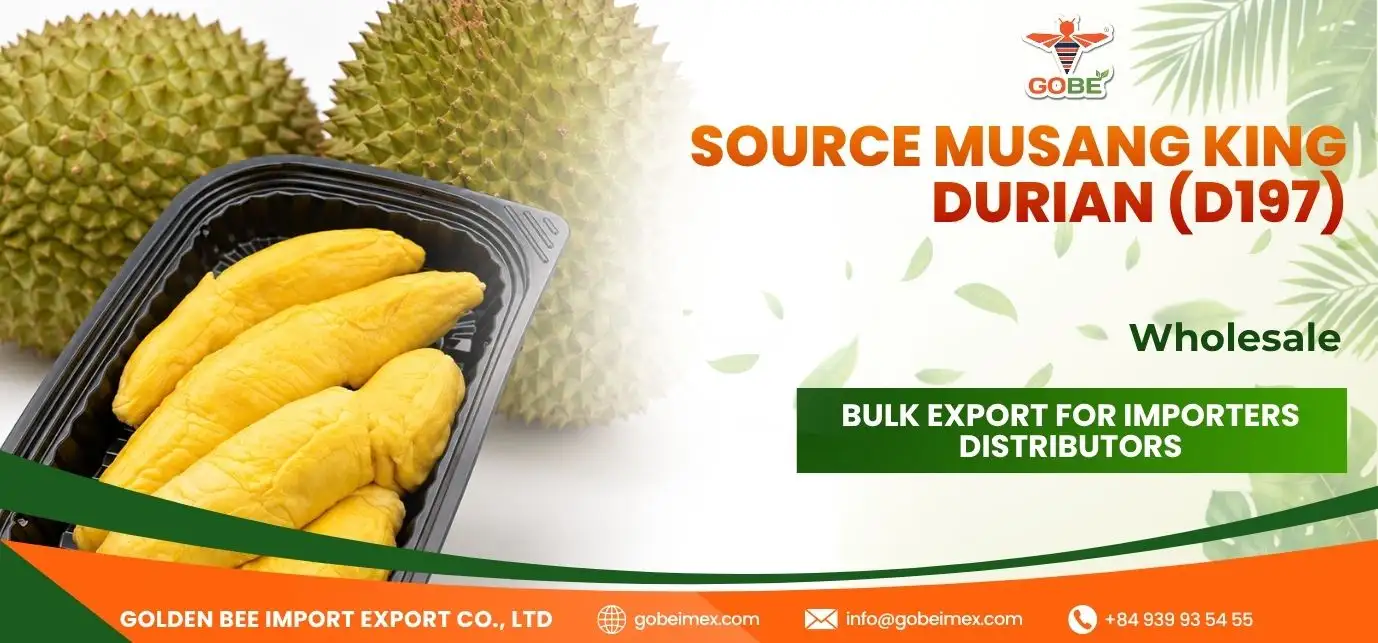
Musang King Durian (D197) is the most commercially valuable durian variety available for wholesale sourcing today, prized for its deep golden flesh, intense cream-forward aroma, and bittersweet flavor balance that commands premium retail pricing across every major import market. For importers and distributors evaluating new supplier relationships, understanding the full scope of D197 product attributes, export certifications, and cold chain capabilities is the critical first step before committing to a bulk order.
Sourcing Musang King Durian (D197) wholesale from Vietnam requires working with a certified exporter who controls the supply chain from farm to port. Vietnam’s key D197 growing regions, including Tay Nguyen, Dong Nai, and Tien Giang, produce export-grade D197 backed by GlobalGAP, FDA, ISO, GRASP, and Sedex certifications. Exporters such as Gobeimex (Golden Bee Import Export Co., Ltd.) operate packing houses in Tien Giang that process fruit within 12 hours of harvest, locking in peak freshness before the cold chain begins.
For importers and distributors managing commercial procurement cycles, D197 wholesale availability spans multiple product forms: whole fresh durian, frozen whole durian, frozen pulp, and segmented durian trays. This range allows flexible sourcing strategies aligned to specific destination markets. Gobeimex supplies Musang King D197 to more than 10 countries across four continents on a 52-week year-round basis, supported by a dedicated cold chain logistics network and full export documentation.
📰 Related posts:
Musang King Durian, registered under clone code D197, is a premium cultivar from Kelantan, Malaysia, defined by intensely golden-yellow flesh, small seed size, and a bittersweet cream flavor profile that positions it at the top of the global durian market. Its combination of sensory excellence and strong brand recognition among Asian consumers makes D197 the most commercially prioritized variety for importers and distributors operating in premium fruit retail. To understand why D197 dominates sourcing conversations, it helps to examine its measurable quality indicators, available product forms, and how these translate into wholesale value for buyers across different markets.
Export-grade Musang King Durian (D197) is assessed against four primary quality indicators: flesh color, Brix level, flesh-to-seed ratio, and texture consistency. These indicators determine wholesale grade classification and, consequently, pricing tiers and market suitability for importers. The following criteria define D197 quality benchmarks in an export wholesale context:
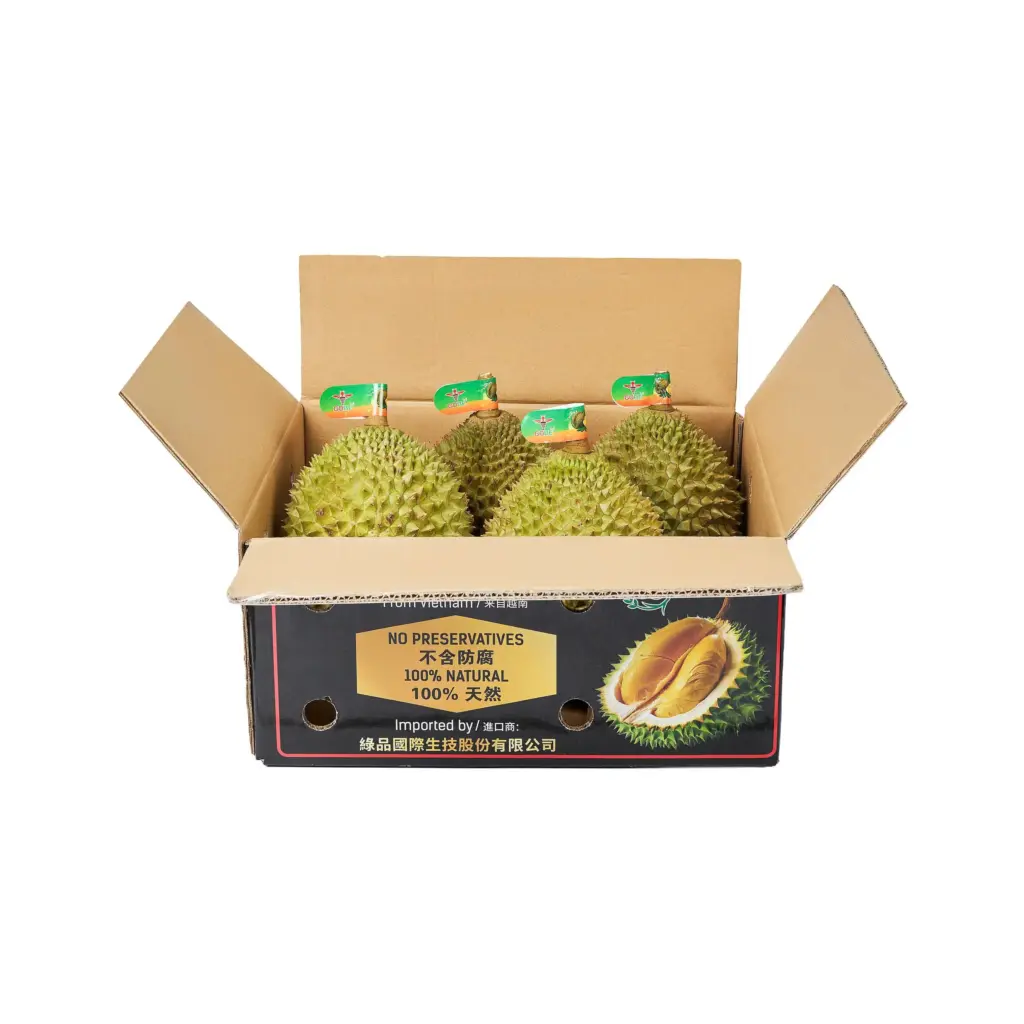
Grade A D197 is directed toward supermarket retail and premium food service channels in markets such as Japan, Germany, and Canada. Grade B D197, while meeting food safety export standards, is channeled into frozen pulp processing or food manufacturing applications, making it accessible to a broader range of wholesale buyers with different pricing requirements.
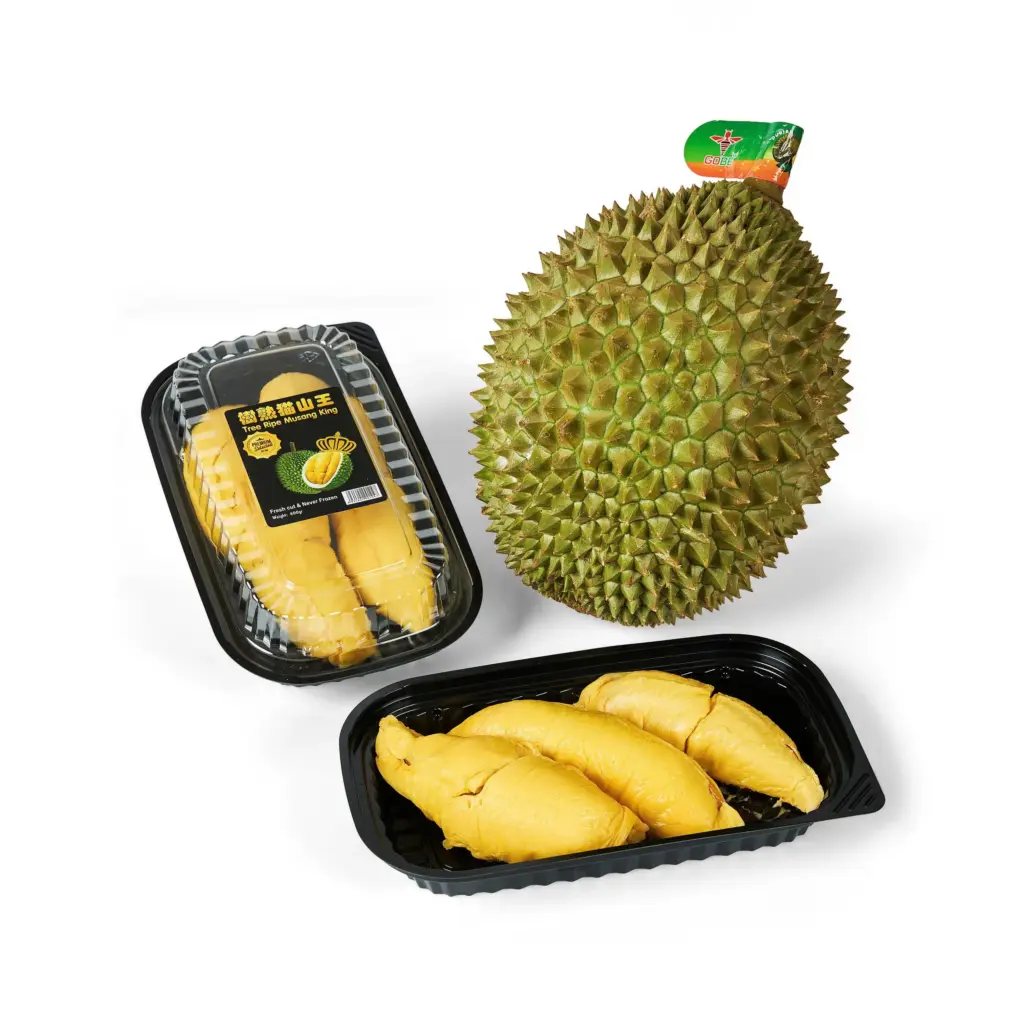
Musang King Durian (D197) is available for wholesale export in four primary product forms, each designed to meet the logistical and regulatory requirements of different import markets. Importers should select the appropriate product form based on destination market conditions, cold chain capabilities, and end-consumer expectations. The table below compares the four D197 wholesale product forms across shelf life, market fit, and key logistics factors, helping importers identify the right format for their supply chain.
| Product Form | Best For | Shelf Life at Destination | Key Logistics Consideration |
|---|---|---|---|
| Whole Fresh Durian | Asia, Middle East, proximity markets | 7 to 14 days post-harvest | Requires continuous cold chain at 12 to 15°C; fastest to market |
| Frozen Whole Durian | Long-haul markets, stockpile buyers | 12 to 18 months at -18°C | Higher freight cost; suited for buyers needing year-round inventory buffer |
| Frozen Pulp or Flesh | Wholesale bulk buyers, food manufacturing | 12 to 24 months at -18°C | Most flexible for container consolidation; lowest cost per kg of usable flesh |
| Durian Segments, Tray-Packed | Supermarkets, retail distributors | 12 to 18 months at -18°C | Highest retail-ready presentation; requires private-label packaging coordination |
The frozen pulp format is the most widely requested product form in wholesale bulk export because it eliminates whole-fruit cold chain complexity, reduces container weight without reducing commercial flesh yield, and allows food manufacturers and distributors to portion precisely without on-site processing. For importers operating in the EU, North America, or the Middle East, frozen D197 pulp sourced from a GlobalGAP and FDA-certified facility offers the most straightforward regulatory pathway and the greatest flexibility in downstream distribution.
Importers can source Musang King Durian (D197) wholesale directly from Vietnam through certified export companies operating in the country’s three primary D197 growing regions: Tay Nguyen (Central Highlands), Dong Nai, and Tien Giang (Mekong Delta). Vietnam has emerged as a direct competitive alternative to Malaysia for D197 wholesale sourcing, offering lower landed costs, a growing certification infrastructure, and a year-round supply model supported by both fresh and frozen product formats. Understanding how to evaluate a Vietnamese D197 exporter requires examining the regional growing landscape, the certification standards that qualify a supplier for major import markets, and the operational capabilities that distinguish reliable wholesale partners.
Vietnam’s rise as a Musang King D197 wholesale origin is driven by three structural advantages. First, significantly lower labor and land costs compared to Malaysia reduce the FOB price for equivalent quality grades. Second, a rapidly expanding certification ecosystem means more Vietnamese D197 exporters can now meet the GlobalGAP, FDA, and ISO requirements that importers in the EU, US, and Japan demand. Third, Vietnam’s geographic positioning enables faster transit times to Middle Eastern and Southeast Asian markets compared to Malaysian supply chains routing through similar logistics corridors.
When evaluating a Vietnamese D197 exporter for bulk sourcing, importers should apply the following selection criteria:
Gobeimex, operating under the brand Golden Bee Import Export Co., Ltd., meets all of the above criteria. The company manages 30+ hectares of company-owned D197 growing areas and coordinates an additional 200+ hectares of GlobalGAP-certified partner farms across Vietnam’s key fruit-producing regions. Its packing house in Tien Giang, positioned at the center of Vietnam’s Mekong Delta fruit belt, enables fruit-to-pack processing within 12 hours of harvest. Gobeimex currently exports to Canada, UAE, UK, Germany, Netherlands, Japan, Kuwait, Russia, and more than 10 countries across four continents.
Yes, Gobeimex offers direct wholesale sourcing of Musang King Durian (D197) backed by a complete portfolio of internationally recognized export certifications: GlobalGAP, GRASP, ISO, FDA, and Sedex. This certification package qualifies Gobeimex-supplied D197 for import into the most regulated and high-value markets globally, including the United States, European Union member states, Japan, Canada, and Gulf Cooperation Council countries. Gobeimex’s active export network currently spans more than 10 countries, meaning the company holds established, operational relationships with customs authorities, logistics providers, and phytosanitary inspection bodies across its key destination markets. This institutional experience reduces documentation risk for new importers entering their first D197 bulk purchase agreement.
Gobeimex’s 52-week year-round supply commitment is a direct competitive advantage for importers who require a consistent, uninterrupted source of D197 across their annual procurement calendar. The combination of company-owned farms (30+ ha), an extensive partner grower network (200+ ha), and a frozen product inventory buffer means that seasonal growing fluctuations do not create supply gaps for wholesale buyers.
Wholesale and bulk export specifications for Musang King Durian (D197) cover four operational dimensions that importers must confirm before placing an order: MOQ (Minimum Order Quantity) by product form, standard packaging specifications, wholesale pricing framework, and applicable Incoterms. Clarity on each dimension is essential for accurately modeling landed cost and building a reliable procurement plan. The following sections address each wholesale specification in detail, including cold chain maintenance protocols and private-label packaging options.
Wholesale pricing for D197 is calculated dynamically based on four primary variables. The table below presents these variables and describes how each shifts the final cost structure for importers evaluating D197 wholesale sourcing from Vietnam.
| Pricing Variable | Impact on Wholesale Price |
|---|---|
| Season (Peak vs. Off-Season) | Peak season (typically June to September in Vietnam) increases fresh whole fruit availability, which may moderate pricing; off-season reliance on frozen formats affects per-kg cost |
| Grade (A vs. B) | Grade A commands a 20 to 40% premium over Grade B in most destination markets |
| Product Form | Frozen pulp is priced per kg of usable flesh; whole fruit is priced per kg including shell weight, creating significant effective cost differences |
| Incoterms | FOB pricing places freight and insurance responsibility on the importer; CIF and CFR include these costs in the seller’s quote, changing the total landed cost calculation |
For Incoterms selection, most D197 bulk transactions between Vietnamese exporters and international importers use FOB (Ho Chi Minh City or Cat Lai Port) as the base pricing term. CIF is available for importers who prefer an all-in delivered price for budgeting purposes, while CFR is commonly used for buyers in Middle Eastern markets with established local insurance arrangements.
Cold chain integrity for bulk D197 export is maintained through a continuous temperature-controlled process beginning at the moment of harvest and ending at the destination port or buyer’s warehouse. For importers purchasing large volumes, any break in this chain is a direct financial risk. Gobeimex operates a proprietary fleet of refrigerated container trailers that transport harvested D197 from farm to packing house without interruption, maintaining storage conditions specific to each product form throughout. The standard cold chain parameters for D197 wholesale export, by product form, are as follows:
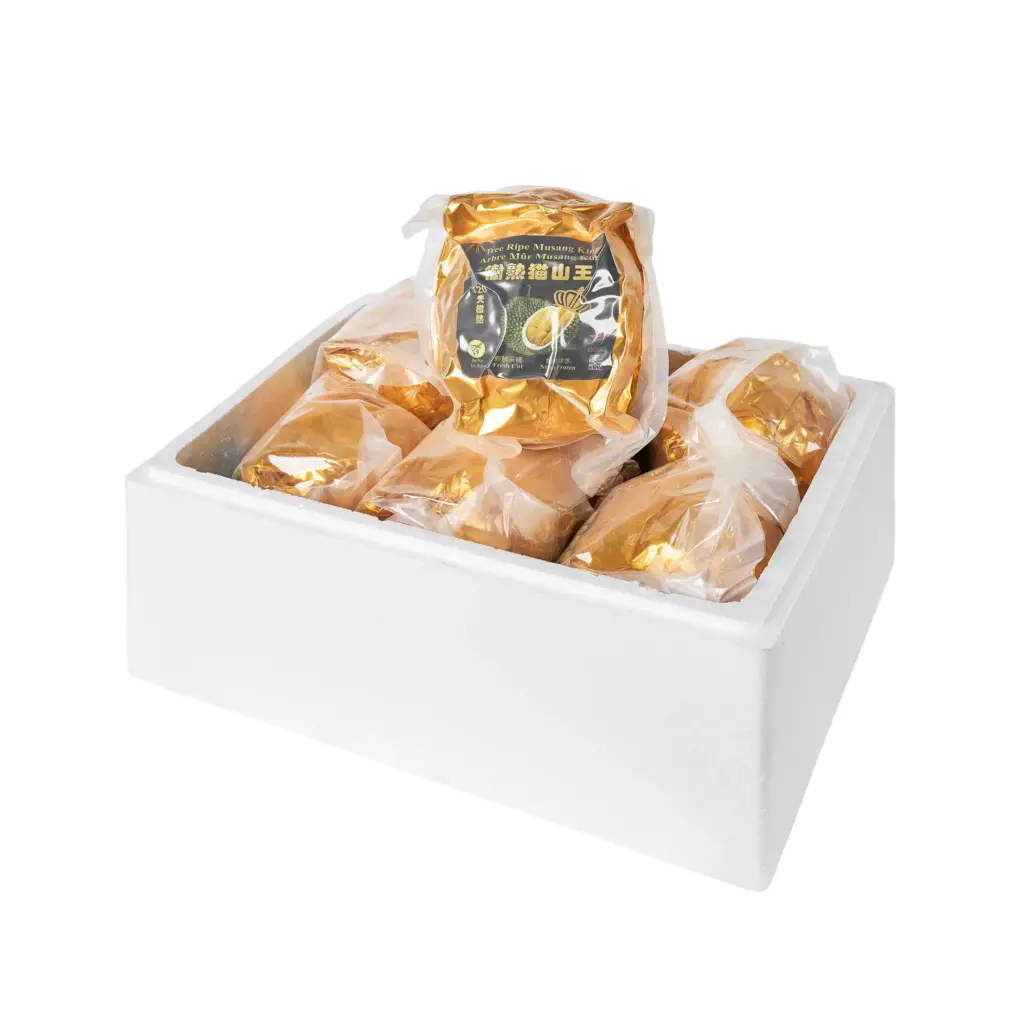
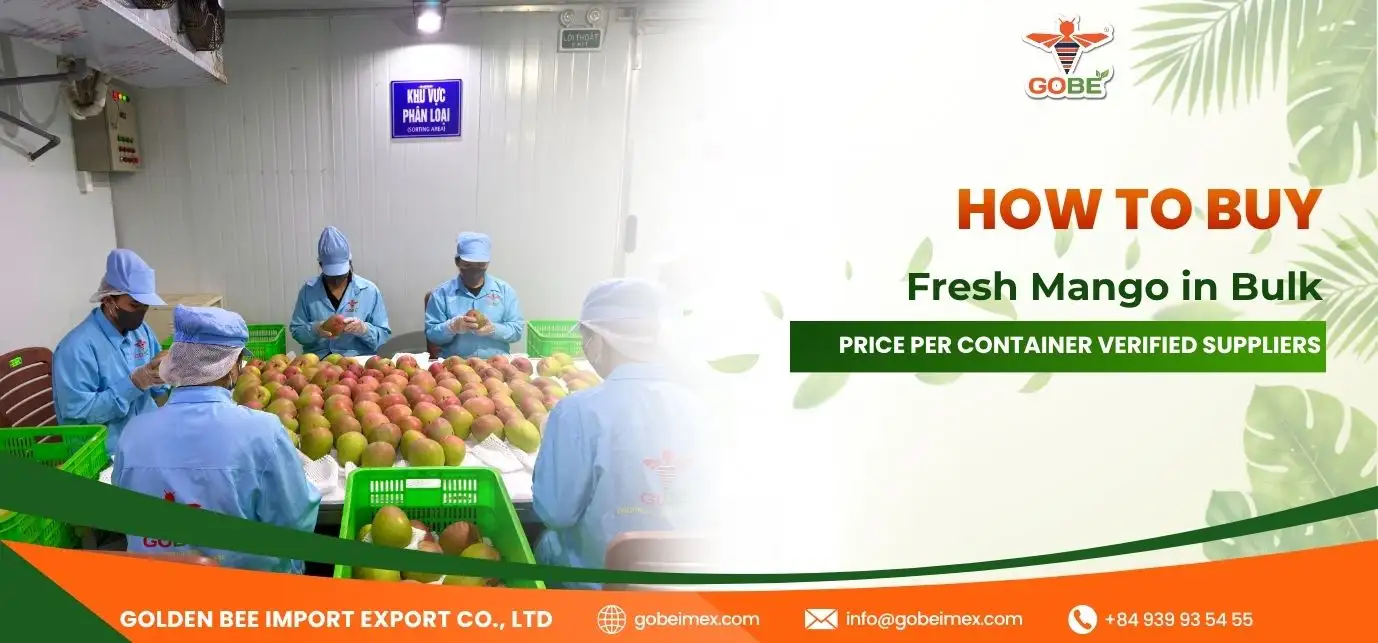
Gobeimex’s packing house in Tien Giang is designed to begin the chilling and packing process within 12 hours of harvest. This 12-hour window is the most critical determinant of final shelf life at destination. By keeping this window as short as possible, Gobeimex ensures importers receive D197 product at maximum freshness, regardless of transit time to their market.
Private-label packaging for D197 durian wholesale orders is available, allowing importers and distributors to brand product with their own label design, custom net weight configurations, and market-specific packaging formats. This option is particularly valuable for retail distributors who stock D197 under a proprietary house brand rather than the exporter’s label. Standard private-label packaging requires the following mandatory label elements per international food export regulations:
Minimum order quantities for custom private-label packaging are higher than standard wholesale orders, as custom printing runs require volume commitments to be cost-effective. Importers interested in private-label D197 orders should contact Gobeimex directly at Info@gobeimex.com to confirm current MOQ thresholds and lead times for label production.
Yes, importers and distributors can rely on a consistent year-round supply of Musang King Durian (D197) from Vietnam, provided they source from an exporter operating a multi-region growing network supported by a frozen product inventory buffer that bridges seasonal gaps in fresh fruit availability. This dual-format supply model (fresh during peak season, frozen during off-season) is the established operational approach for any exporter making a credible 52-week supply commitment. To understand the reliability of Vietnam-origin D197 supply, it is important to examine the seasonal calendar, the inventory management strategy used during off-peak periods, and the specific structural advantages Gobeimex brings to importers requiring an uninterrupted procurement relationship.
Vietnam’s primary D197 harvest season runs from June through September, during which fresh whole fruit is at peak availability and most competitively priced. The secondary harvest window spans approximately February to April, depending on growing region and microclimate. Outside these windows, D197 supply is maintained through frozen pulp and frozen whole durian stockpiled during peak harvest, processed and stored at -18°C to preserve product quality until needed.
Gobeimex’s 52-week supply model is structured as follows:
This combination of owned production, partner network, and frozen inventory infrastructure is what allows Gobeimex to make and honor a year-round, 52-week supply commitment. For importers managing retail supply chains where a gap in D197 availability means empty shelf space or broken distribution contracts, this supply reliability is a core sourcing requirement, not a secondary consideration.
Long-term supply agreements with Gobeimex include documented traceability records from farm to port for every shipment, enabling importers to meet the origin and food safety traceability requirements of retailers and regulatory authorities in their destination markets.
Vietnam-grown D197 offers competitive wholesale pricing and a growing certification infrastructure compared to Malaysian Musang King, while Malaysia retains benchmark status for clone authenticity and the longest-established brand recognition among premium durian consumers globally. For wholesale buyers, the decision between these two origins typically comes down to landed cost, phytosanitary access, and the specific quality expectations of the destination market. This section addresses the supplementary questions that inform sourcing strategy: clone authenticity verification and regulatory requirements by destination market.
Yes, Vietnam-grown D197 is botanically derived from the same clone as Malaysian Musang King. The D197 cultivar was introduced into Vietnam through formal agricultural technology transfer programs, and trees cultivated in Vietnam’s Mekong Delta and Central Highlands carry the same genetic profile as the Malaysian parent clone. Minor phenotypic differences in flavor intensity or flesh color saturation can occur because of terroir effects (differences in soil composition, rainfall patterns, and humidity), but these do not constitute a different variety. Gobeimex ensures D197 clone authenticity through farm-level traceability documentation, grower certification records aligned with GlobalGAP standards, and variety verification processes that importers can request as part of their due diligence package before placing a bulk order.
Importers sourcing D197 durian from Vietnam must obtain a phytosanitary certificate issued by Vietnam’s Plant Protection Department for every shipment, confirming the product meets the pest and disease standards of the destination country. Requirements vary by market and importers should verify current regulations with their national authority before committing to bulk orders. Key market-specific requirements include the following:
Gobeimex provides a full export documentation package with every shipment, covering the GlobalGAP certificate, phytosanitary certificate, Certificate of Analysis (COA), and Certificate of Origin (COO), reducing the administrative burden on the importer side of the transaction. Because import regulations are subject to update, importers are advised to confirm the current requirements for their specific destination market and product form before finalizing any bulk purchase agreement.
Gobeimex, Elevating Vietnamese Produce, Connecting Global Markets.
To request a wholesale quotation for Musang King Durian (D197), discuss MOQ and export specifications, or schedule a product sample review, contact the Gobeimex team directly:
📧 Info@gobeimex.com | 📞 +84 939 93 54 55 | 🌐 gobeimex.com