Subtotal $0.00

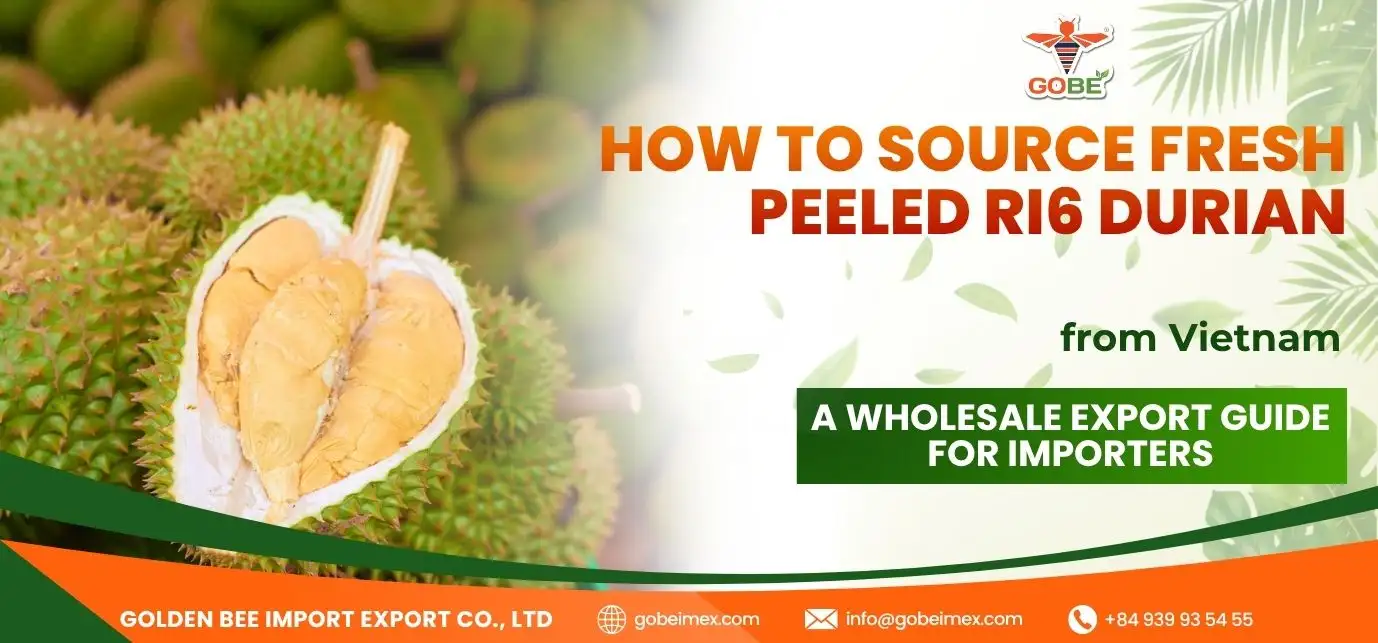
Fresh peeled Ri6 durian from Vietnam is a commercially viable wholesale import product with strong consumer demand across North America, Europe, the Middle East, and Asia, offering importers deep yellow flesh, rich creamy texture, and a sweet-bitter flavor profile that resonates with Southeast Asian diaspora communities and premium fruit buyers globally.
Sourcing fresh peeled Ri6 durian at wholesale scale requires understanding the full export process, from identifying certified packer-exporters in Vietnam’s Mekong Delta to verifying cold chain integrity, export certifications, phytosanitary documentation, and market-specific import compliance requirements.
For importers making commercial decisions, this guide addresses the practical questions that affect profitability directly: which certifications a Vietnamese supplier must hold, how fresh peeled compares to frozen peeled durian for wholesale logistics, which documents are required per market, and how to align import schedules with Vietnam’s Ri6 harvest calendar to secure uninterrupted supply 52 weeks per year.
Fresh peeled Ri6 durian is a ready-to-eat wholesale form of Vietnam’s most commercially exported durian variety, prized for rich yellow flesh, creamy texture, high fat content, and a distinct bittersweet aroma that meets strong international demand in Canada, the UAE, Japan, and EU markets. This section covers Ri6’s key quality characteristics, how it compares to other wholesale durian formats, and why it leads Vietnam’s fresh durian export segment.
Ri6 is a hybrid variety developed in the Mekong Delta (Tien Giang, Ben Tre, and Dak Lak provinces), combining the flavor intensity of Thai Mon Thong with a softer, richer flesh profile adapted to Vietnamese growing conditions. Ri6 is grown in sufficient volume to support consistent wholesale export at competitive price points, making it the variety of choice for importers seeking both product quality and supply reliability.
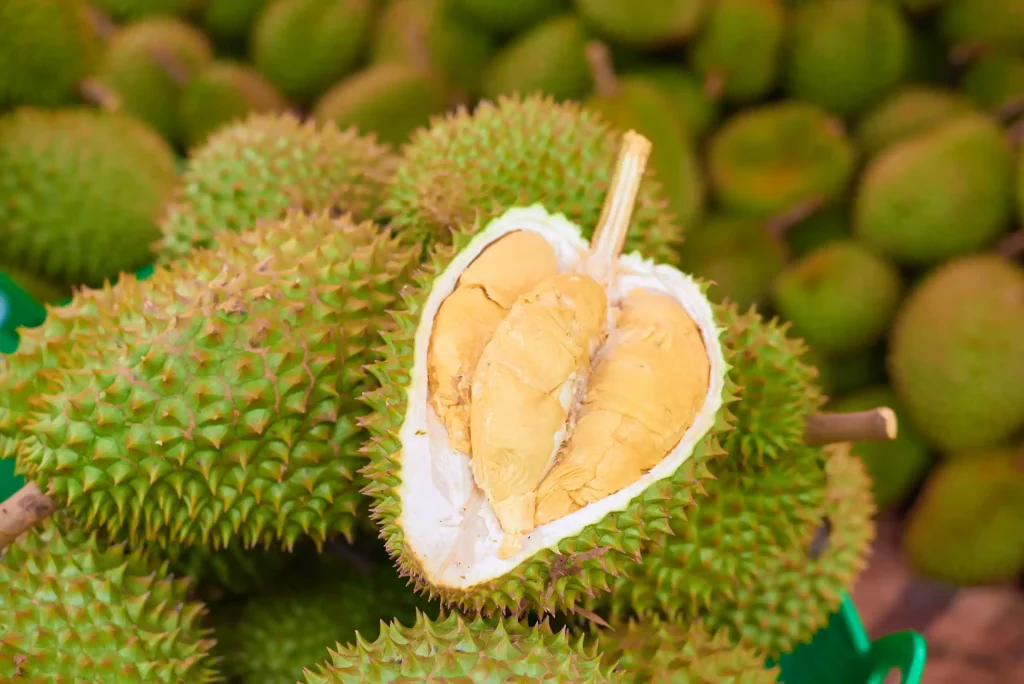
Ri6 durian is graded for wholesale export based on five measurable quality characteristics: flesh color (deep golden yellow), Brix level (28 to 34 degrees for premium Grade A), fat content (above 20%), flesh-to-seed ratio (large plump segments with small or undeveloped seeds), and aroma intensity (strong, persistent, and distinctive). These characteristics define the commercial value of each shipment and are the primary factors importers use when specifying product requirements in purchase orders.
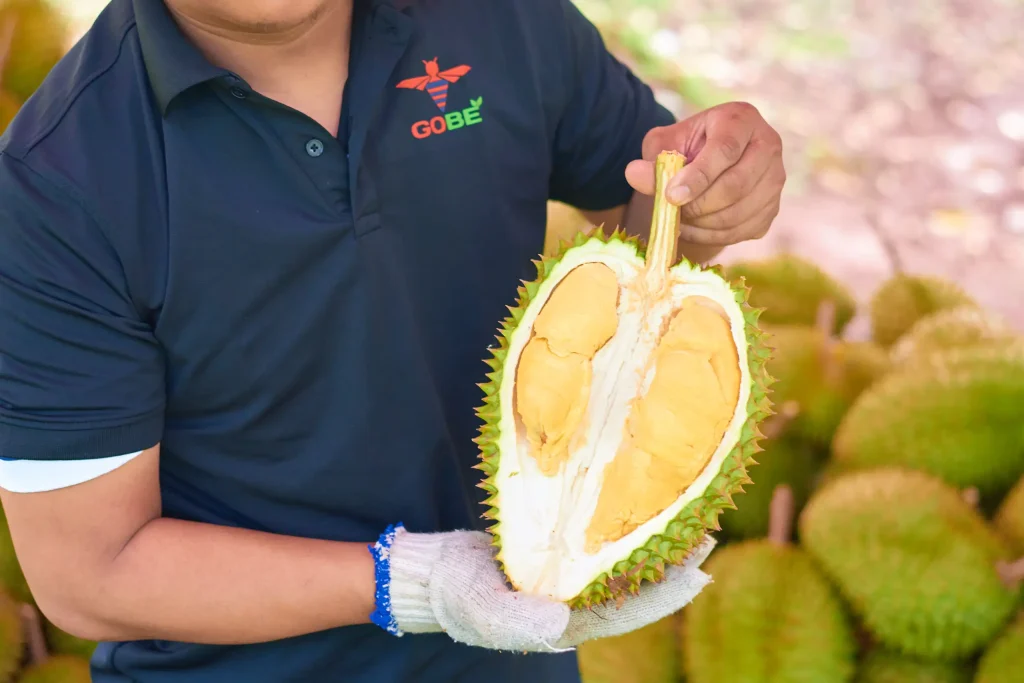
Wholesale Ri6 durian is classified into two commercial grades for export. Grade A consists of large, fully ripe, visually uniform segments with no browning, no fiber, and Brix readings consistently above 30 degrees. Grade B includes segments that are slightly smaller or carry minor surface imperfections but remain within accepted flavor and texture parameters. Grade A is mandatory for premium retail and supermarket supply chains in Europe, Canada, and Japan. Grade B provides a cost-effective alternative for food service, catering, and industrial processing buyers without compromising on flavor. When inspecting incoming shipments, importers should check for uniform deep yellow color with no oxidation or gray discoloration, firm but yielding texture with no waterlogging, aroma consistent with the Ri6 variety profile, and clean vacuum packaging with no punctures or air pockets that could compromise shelf life during transit.
Fresh peeled Ri6 durian has a significantly shorter shelf life (7 to 14 days under strict cold chain at 0 to 4 degrees Celsius) compared to frozen peeled durian (12 to 24 months at minus 18 degrees Celsius), meaning the two formats serve different market segments and require entirely different logistics and MOQ frameworks. Understanding this distinction is essential before building a wholesale sourcing strategy.
Fresh peeled durian targets premium retailers, specialty fruit shops, and high-end food service buyers who demand ready-to-eat freshness and pay a price premium for it. Frozen peeled durian targets mass-market retail, durian-based food manufacturing, and markets where cold chain infrastructure from port to end consumer is less consistent. For wholesale importers, the choice between fresh and frozen has direct implications for air freight versus sea freight routing. Fresh peeled Ri6 durian ships by air freight in refrigerated containers to preserve the 7 to 14-day shelf life window, which increases landed cost per kilogram but also commands a higher retail price. Frozen peeled durian ships by sea freight in blast-frozen containers, enabling larger MOQs per shipment and lower per-unit logistics cost. Fresh peeled wholesale orders are typically smaller and more frequent, structured around flight schedules and short shelf life windows. Frozen durian orders align with 20-foot or 40-foot sea freight containers representing significantly larger volume commitments.
Sourcing fresh peeled Ri6 durian from Vietnam at wholesale scale follows four primary channels: direct engagement with certified packer-exporters who own growing areas in the Mekong Delta, working through Vietnamese trading companies or brokers, connecting at international fresh produce trade shows, and using B2B digital platforms. Each channel carries different risk profiles, pricing structures, and lead times, which this section covers in full.
Working directly with a licensed packer-exporter who controls the full chain from farm to packing house to port of export is the most reliable approach for importers prioritizing product quality, cold chain integrity, and consistent supply. Below is a breakdown of each sourcing channel with the evaluation criteria importers should apply.
There are four main sourcing channels for wholesale Ri6 durian from Vietnam, each with distinct advantages and risk levels: direct packer-exporters, trading companies or brokers, international trade exhibitions, and B2B online marketplaces. Understanding the strengths and limitations of each channel allows importers to build a sourcing strategy that balances price, quality control, and supply security.
Importers should evaluate Vietnamese Ri6 durian exporters against six core criteria: ownership of growing areas, packing house location relative to farms, international certifications held, export experience in the importer’s target market, year-round supply capacity, and cold chain infrastructure ownership. A supplier that scores strongly across all six criteria represents a significantly lower sourcing risk and is more likely to maintain consistent quality across multiple shipment cycles.
Fresh peeled Ri6 durian wholesale export from Vietnam requires compliance with five internationally recognized certification frameworks: GlobalGAP for agricultural practice standards, FDA Registration for the US market, ISO for packing house quality management, GRASP for social and labor standards, and Sedex for supply chain ethics transparency. Each certification addresses a distinct dimension of the export supply chain, and together they form the compliance baseline that regulated import markets in Europe, North America, and Asia expect from verified Vietnamese exporters.
For importers, certifications directly affect two commercial outcomes: the ability to clear customs without delay, and the ability to supply supermarket and retail chains that impose their own supplier compliance requirements as a condition of listing.
A Vietnamese Ri6 durian supplier should hold at minimum GlobalGAP and FDA Registration to access the widest range of international markets, with ISO, GRASP, and Sedex required for EU retail chains, socially responsible procurement programs, and major supermarket supplier audits. Each certification serves a specific gatekeeping function in the import process.
The table below summarizes the five required certifications for Vietnamese Ri6 durian wholesale export, helping importers quickly assess a supplier’s compliance level against each standard.
| Certification | Issuing Body | Primary Market Requirement | Verification Method |
|---|---|---|---|
| GlobalGAP | FoodPLUS GmbH | EU, North America, Japan | globalgap.org database |
| FDA Registration | US FDA | United States | FDA FURLS database |
| ISO | ISO-accredited body | Global | Certificate + audit report |
| GRASP | GlobalGAP | EU retail chains | GRASP assessment report |
| Sedex | Sedex Global | UK, EU supermarkets | Sedex platform audit data |
To verify certification validity before signing a contract, importers should request the actual certificate documents, cross-check certificate numbers against the issuing body’s online registry, and where possible commission a third-party audit through organizations such as SGS, Bureau Veritas, or Control Union.
Fresh peeled Ri6 durian for wholesale import must be vacuum-sealed in food-grade plastic trays or pouches, packed in insulated carton boxes, maintained at 0 to 4 degrees Celsius throughout the cold chain, and transported in refrigerated containers to achieve a functional shelf life of 7 to 14 days from the processing date. Any break in the cold chain, even a temporary excursion above 8 degrees Celsius, accelerates enzymatic browning and fermentation, rendering the product unsaleable.
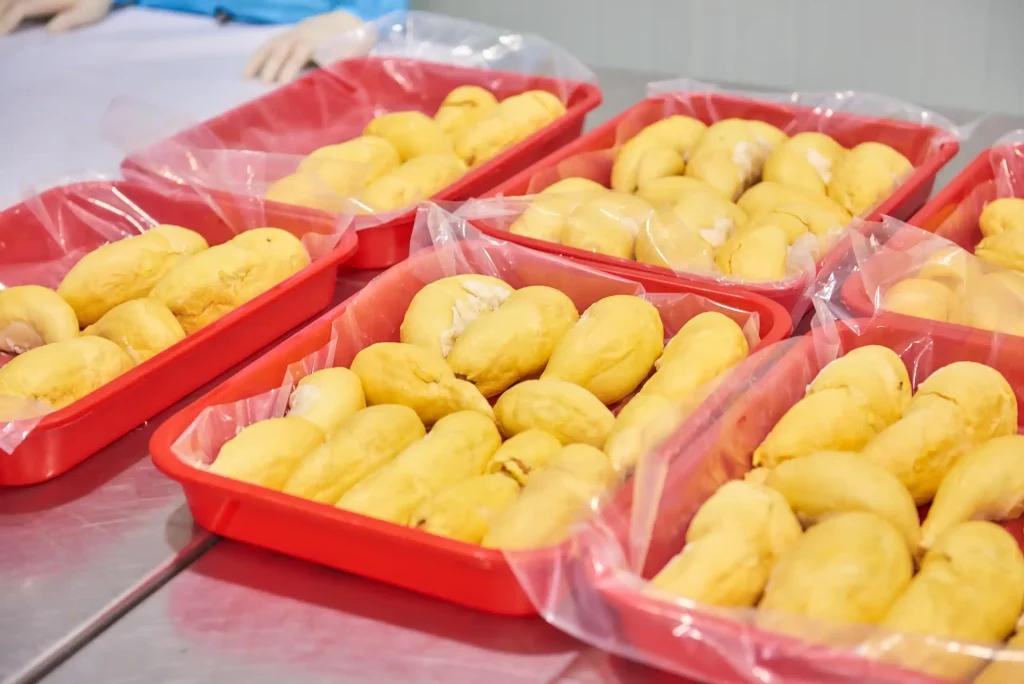
The table below outlines the standard packaging specifications for wholesale fresh peeled Ri6 durian export from Vietnam, providing importers with a reference baseline for specifying requirements in purchase orders and supplier contracts.
| Packaging Component | Specification | Purpose |
|---|---|---|
| Inner unit | Vacuum-sealed tray or bag, 300g to 500g per unit | Prevents oxidation, extends shelf life |
| Outer carton | Double-walled corrugated, moisture-resistant, 2kg to 5kg net | Protects product integrity during transit |
| Labeling | Product name, country of origin, net weight, packing date, best-before date, storage temperature | Regulatory compliance and retail readiness |
| Cold chain setpoint | 0 to 4 degrees Celsius (continuous) | Maintains freshness from pack to delivery |
The cold chain must operate without interruption from the packing house through refrigerated truck transport to the port, into a pre-cooled reefer container, and continuously until the importer takes delivery at the destination port. Exporters who own their own refrigerated container trailers, such as Gobeimex with its dedicated reefer fleet, provide significantly more reliable cold chain control than exporters who outsource all refrigerated transport to third-party logistics providers. Importers should confirm cold chain protocol in writing with the exporter before the first shipment, specifying the required temperature setpoint, temperature logging requirements (one datalogger per shipment), and escalation procedures if temperature excursions are detected during transit.
The key export documentation for fresh peeled Ri6 durian wholesale shipments includes the Phytosanitary Certificate, Certificate of Origin, Health Certificate, Commercial Invoice, Packing List, and Bill of Lading, with additional market-specific documents such as FDA Prior Notice for the US or an Import Permit for Japan required depending on the destination country. The exporter (Vietnamese side) is responsible for obtaining and issuing most of these documents, while the importer is responsible for destination-country import permit requirements, customs clearance, and post-arrival inspection procedures.
Getting the documentation stack right before the first shipment avoids costly delays at customs, potential shipment rejection, or product spoilage while awaiting clearance.
Ri6 durian wholesale shipments require six core documents: Phytosanitary Certificate, Certificate of Origin, Health Certificate, Commercial Invoice, Packing List, and Bill of Lading, with market-specific additions required for the US, Japan, and other regulated markets. Each document plays a specific role in the customs clearance process, and the absence of any single document can result in shipment holds, re-exportation, or destruction of perishable goods.
Fresh peeled Ri6 durian wholesale orders typically follow a minimum order quantity of 100 to 500 kilograms for air freight shipments and 1,000 to 3,000 kilograms for sea freight consolidated loads, with FOB pricing ranging from USD 5 to USD 12 per kilogram depending on season, grade, and volume commitment. Lead times from order confirmation to departure at Ho Chi Minh City or Tien Giang range from 5 to 10 working days for air freight and 15 to 25 days for sea freight, depending on the destination port.
The table below summarizes MOQ, pricing, and lead time structures for wholesale fresh peeled Ri6 durian from Vietnam, giving importers a clear framework for planning purchase volumes and shipment frequency.
| Shipment Mode | MOQ | FOB Price Range (USD/kg) | Lead Time |
|---|---|---|---|
| Air freight | 100 to 500 kg | USD 8 to USD 12 | 5 to 10 working days |
| Sea freight (LCL) | 1,000 kg | USD 5 to USD 8 | 15 to 25 days |
| Sea freight (20-foot FCL) | 8,000 to 10,000 kg | USD 5 to USD 7 | 15 to 25 days |
Yes, fresh peeled Ri6 durian from Vietnam is available for wholesale import 52 weeks per year, provided the exporter maintains growing area partnerships across multiple provinces with overlapping harvest calendars and has the cold chain and packing infrastructure to process product continuously across seasons. This is a critical distinction between different types of Vietnamese exporters: small packers sourcing from a single growing region experience supply gaps of 2 to 4 months per year, while exporters with diversified growing area networks across Tien Giang, Ben Tre, and Dak Lak can bridge seasonal gaps through geographic complementarity.
Ri6 durian harvest in Vietnam’s main growing provinces follows an overlapping calendar that, when managed across multiple locations, eliminates seasonal supply gaps. Tien Giang and Ben Tre in the Mekong Delta produce the main crop between May and August, with a secondary crop between October and December. Central Highlands provinces such as Dak Lak and Lam Dong produce during different windows, providing additional supply during transition months. For wholesale importers, the risk of supply disruption still exists during extreme weather events, drought years, or disease outbreaks affecting specific growing regions. To mitigate this risk, importers should:
For importers working with a vertically integrated exporter such as Gobeimex, which manages over 230 hectares of growing areas across both owned farms and partner networks, year-round supply is built into the sourcing relationship by design rather than requiring the importer to manage geographic diversification independently.
Ri6 durian leads on wholesale cost efficiency and year-round availability, Musang King commands the highest retail price premium in Western markets, and Mon Thong offers the highest volume and broadest consumer acceptance across Asian and Middle Eastern markets. For importers building a wholesale durian portfolio, the three varieties are not mutually exclusive: they serve different price points, consumer segments, and retail positioning strategies.
Ri6 offers the best wholesale value for importers seeking competitive FOB pricing combined with 52-week supply reliability, while Musang King delivers the highest margin per unit in premium retail and Mon Thong serves the largest volume-based market across Southeast Asia and the Middle East. Ri6’s cost advantage stems from its growing concentration in Vietnam’s Mekong Delta, where large certified growing areas and 12-hour farm-to-pack processing keep raw material costs and quality loss to a minimum.
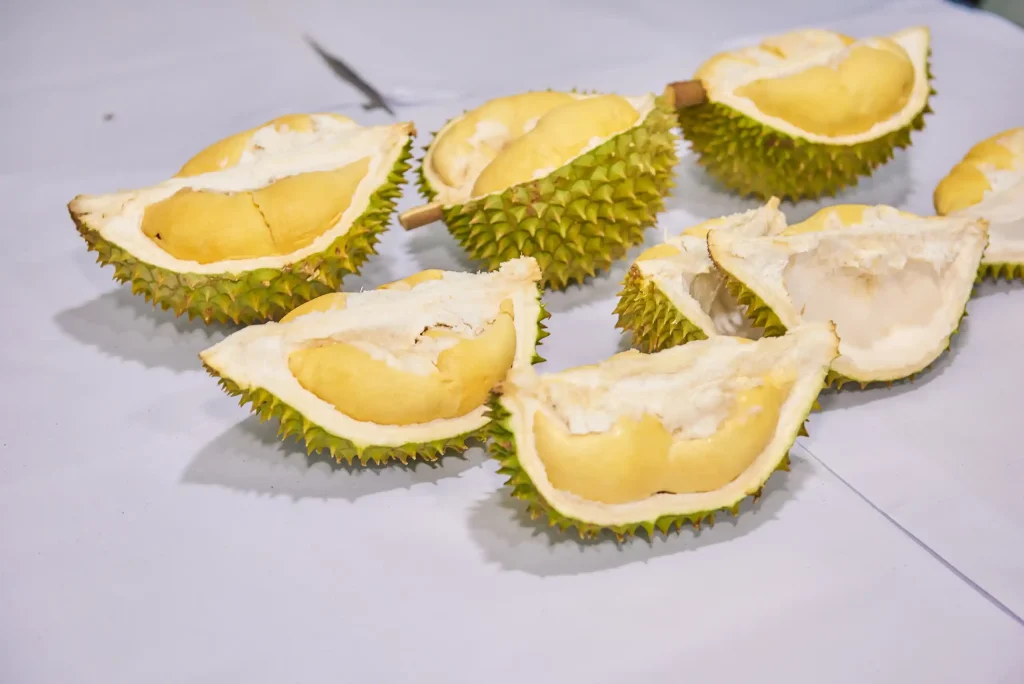
Musang King is primarily a Malaysian product with limited export volume, constrained by geographic growing areas and significantly higher FOB prices. Mon Thong from Thailand is the global volume leader but faces increasing competition from Vietnamese Ri6 in price-sensitive markets. Importers targeting premium Canadian or European supermarket buyers can position Ri6 as a high-quality, sustainably sourced Vietnamese alternative with competitive pricing versus Musang King. According to FreshPlaza (2024), Vietnamese tropical fruit and vegetable exports have gained significant global traction, with Ri6 durian cited as a key driver of export volume growth across EU and North American markets.
Import regulations for fresh peeled Ri6 durian from Vietnam vary significantly by destination market, with the EU requiring GlobalGAP and MRL compliance, the US requiring FDA Registration and FSMA compliance, Japan requiring a strict Import Permit and JAS pesticide residue limits, and the UAE requiring a Health Certificate from Vietnam’s Ministry of Agriculture and Rural Development. Knowing the regulatory requirements for each target market before placing the first order prevents costly shipment rejections, compliance failures, and supply chain disruptions.
Key market-specific considerations for wholesale importers are as follows:
Ready to source fresh peeled Ri6 durian from Vietnam for your wholesale import program?
Gobeimex (Golden Bee Import Export Co., Ltd.) is a certified packer and exporter based in Tien Giang and Ho Chi Minh City, holding GlobalGAP, GRASP, ISO, FDA, and Sedex certifications, with 230+ hectares of growing areas and 52-week supply capacity across 10+ export markets. Contact the Gobeimex team directly at Info@gobeimex.com or visit gobeimex.com to request a product catalog, sampling information, or a wholesale pricing proposal.