Subtotal $0.00

India is the world’s largest mango producer, supplying approximately 40% of global mango output and exporting fresh mangoes to more than 40 countries across the Middle East, Europe, North America, and Southeast Asia. Iconic varieties like Alphonso and Kesar command premium prices in retail channels worldwide, supported by a well-established phytosanitary infrastructure and APEDA, India’s dedicated export regulatory body.
Understanding the step-by-step export process is critical for any business sourcing fresh mangoes from India. The journey from orchard to international port spans post-harvest handling, quality grading, Vapor Heat Treatment for specific markets, APEDA documentation, cold chain logistics, and phytosanitary certification, with each stage governed by destination-specific mandatory standards.
For importers, distributors, and supermarket procurement teams, this guide delivers a practical framework covering how to identify reliable Indian mango exporters, which seasons offer the best availability and pricing, and which documents and certifications to verify before placing an order.
Related posts: Compare Top Mango Exporters 2026: Leading Countries for Buyers
Fresh mango export from India is the commercial trade of harvested mango fruit from Indian growing states to international markets, involving over 1,500 registered exporters, more than 1,000 mango varieties, and annual export volumes exceeding 50,000 metric tons in peak years. This section covers the key varieties driving global demand and the top destination markets absorbing the largest share of Indian mango supply.
India’s dominance in this space stems from its unparalleled varietal richness, established cold chain infrastructure in key producing states, and deep-rooted diaspora demand from Indian communities across the UAE, UK, USA, Canada, and beyond.
India exports five primary mango varieties at scale: Alphonso from Maharashtra, Kesar from Gujarat, Dasheri from Uttar Pradesh, Langra from Bihar, and Totapuri from Andhra Pradesh, each tied to a specific producing state and distinct consumer preference profile. These varieties collectively account for the overwhelming majority of India’s fresh mango export volume, and understanding their individual characteristics helps buyers match supply to their end market’s taste expectations and price tolerance.
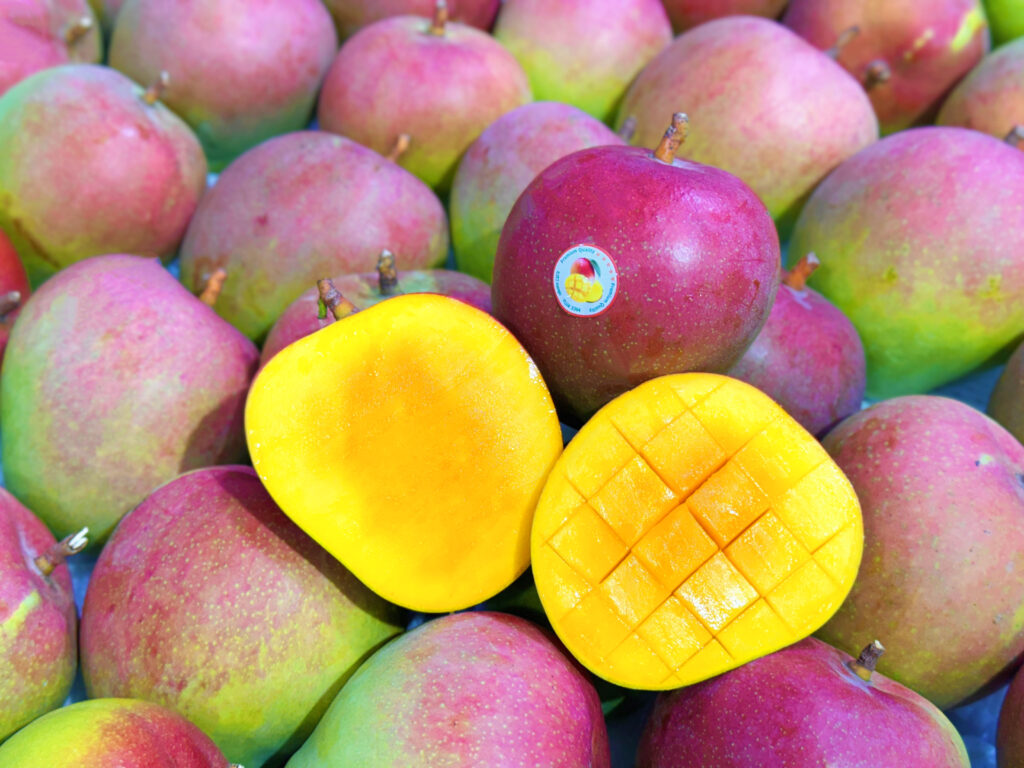
Here is how each variety performs across key export parameters:
Alphonso (Hapus), Maharashtra
Alphonso is widely regarded as the king of mangoes in global premium retail. It features deep saffron-yellow flesh, a rich aroma, low fiber content, and brix levels typically between 14 and 22 degrees. Its GI-tagged origin status from Ratnagiri and Devgad adds provenance value. The harvest window runs from mid-March through May. Primary export markets include the UAE, UK, USA, and Australia, where Indian diaspora communities pay premium prices during the short season.
Kesar, Gujarat
Kesar mango, sourced predominantly from Junagadh and Amreli districts, carries a GI tag and is prized for its intense sweetness, orange flesh color, and thick pulp. Harvest runs from May through June. It is popular in Middle Eastern markets and among South Asian communities in the UK. Its competitive pricing relative to Alphonso makes it attractive for both retail and food service buyers.
Dasheri, Uttar Pradesh
Dasheri is produced in the Malihabad belt of Lucknow district, one of the largest mango-producing clusters in the world. The variety offers a sweet, fiberless flesh with a mild aroma and a harvest window from June through July. It is widely exported to Bangladesh, Nepal, and parts of the Middle East, and serves as a cost-effective option for buyers targeting mass-market retail segments.
Langra, Bihar and Uttar Pradesh
Langra mangoes are identifiable by their greenish-yellow skin even when fully ripe, medium-size fruit, and tangy-sweet flavor profile. Available from June through August, this variety is exported to Gulf markets and parts of Europe. Its longer shelf life compared to Alphonso makes it a practical choice for buyers working with longer sea freight transit times.
Totapuri, Andhra Pradesh and Karnataka
Totapuri is a large, beak-shaped mango used extensively in both fresh and processed export. Its firm flesh and lower sugar content make it suitable for extended shelf life and industrial applications such as mango slices and pickles. The harvest runs from April through June. Export volumes are significant because of its competitive price point and availability in large quantities.
The UAE, UK, USA, Netherlands, Saudi Arabia, Bangladesh, and Singapore are the top importers of fresh mangoes from India, each driven by distinct demand factors ranging from diaspora purchasing power to retail quality standards and bilateral trade agreements. Understanding the demand profile of each market helps buyers position their import strategy and helps exporters prioritize compliance investments.
Here is what drives mango import volumes in each key destination:
United Arab Emirates: The UAE is consistently India’s largest fresh mango export destination by volume. It receives the largest share of Kesar and Alphonso shipments during the core May to June season. Strong Indian and South Asian expat communities, combined with an advanced cold chain infrastructure at Dubai and Abu Dhabi ports, make the UAE a natural hub for redistribution across the GCC.
United Kingdom: The UK market has strong consumer demand for Alphonso mangoes among the British-Indian diaspora, concentrated in London, Leicester, and Birmingham. Post-Brexit phytosanitary regulations have introduced new compliance requirements, but demand remains robust. UK supermarket chains have also shown growing interest in sourcing certified Indian mangoes for mainstream retail.
United States: The USA is the most regulated destination for Indian mango exports. All shipments must undergo Vapor Heat Treatment (VHT) as a USDA-APHIS requirement before entry. Access to the US market expanded significantly after the 2007 bilateral agreement allowing VHT-treated Alphonso and selected varieties into American retail. Indian grocery chains and specialty retailers across New York, New Jersey, California, and Texas drive consistent seasonal demand.
Netherlands: The Netherlands functions as a gateway for Indian mango distribution into the broader European Union market. Importers in Rotterdam receive bulk shipments and redistribute to Germany, Belgium, France, and Scandinavia. EU Maximum Residue Level (MRL) requirements are strict, and India’s export history with the EU has been complicated by phytosanitary rejections in past seasons, making compliance investment critical for exporters targeting this corridor.
Saudi Arabia, Kuwait, and Bahrain: GCC markets collectively absorb a significant share of India’s total mango export volume, driven by large South Asian expat populations and high consumer spending on tropical fruit. Kesar and Banganapalli (also known as Safeda) are popular in these markets.
Bangladesh: Bangladesh is among India’s largest mango trade partners by volume, with cross-border informal and formal trade channels operating simultaneously. Dasheri and Langra varieties dominate this corridor.
The fresh mango export process from India follows a structured eight-stage sequence: orchard harvest, post-harvest sorting and grading, pre-cooling, phytosanitary inspection and treatment (including VHT where required), APEDA documentation, export packaging, cold chain logistics to port, and customs clearance with shipping. Each stage is subject to regulatory oversight, and skipping or rushing any stage can result in shipment rejection at destination ports.
Following this process correctly begins with understanding the quality standards and documentation requirements that govern every export consignment.
Exporting fresh mangoes from India requires compliance with four primary regulatory frameworks: APEDA registration for the exporter, FSSAI certification for food safety, phytosanitary certification from India’s National Plant Protection Organization (NPPO), and destination-specific standards including GlobalGAP, FDA registration for US-bound shipments, and EU MRL compliance for European markets. Shipments destined for the USA, Japan, South Korea, and Australia must also undergo mandatory Vapor Heat Treatment as a condition of market entry.
Here is a breakdown of each requirement:
APEDA Registration
The Agricultural and Processed Food Products Export Development Authority (APEDA) is India’s designated authority for regulating fresh produce exports. All mango exporters must be registered with APEDA before any commercial shipment can legally depart India. Registration is completed online through the APEDA portal and is tied to the exporter’s IEC (Import Export Code). Without APEDA registration, exporters cannot obtain the Phytosanitary Certificate from government authorities, making this the foundational first step.
FSSAI Certification
India’s Food Safety and Standards Authority (FSSAI) governs food safety standards for all agricultural produce including fresh mangoes. Packing houses and processing facilities involved in export-grade mango handling must hold a valid FSSAI license, ensuring that food hygiene and handling protocols meet national standards.
Phytosanitary Certificate
Issued by India’s Ministry of Agriculture through state-level plant protection offices, the Phytosanitary Certificate confirms that the mango consignment is free from pests, diseases, and prohibited organisms. This document is mandatory for every export consignment regardless of destination. Specific pest-free requirements vary by importing country, and inspectors from the NPPO conduct field verification before certification is granted.
GlobalGAP Certification
GlobalGAP is an internationally recognized good agricultural practices standard that many European, Middle Eastern, and Asian importers require as a baseline supplier qualification. It covers soil management, water quality, pesticide application records, worker health and safety, and traceability from farm to packing house. Indian exporters supplying EU supermarkets or large GCC retailers are increasingly expected to hold current GlobalGAP certification.
Vapor Heat Treatment (VHT)
VHT is a non-chemical disinfestation process in which mangoes are exposed to hot humid air at approximately 46.5 degrees Celsius for a sustained period to eliminate the mango seed weevil and other quarantine pests. The USDA-APHIS requires VHT for all Indian mango shipments entering the United States. Japan and Australia impose similar requirements. VHT-approved facilities in India are accredited jointly by APEDA and the respective importing country’s plant protection authority. The treatment must be conducted under official supervision, and each treated carton is tagged with a VHT sticker and seal for traceability.
EU MRL Compliance
The European Union enforces strict Maximum Residue Levels (MRL) for pesticides on imported fresh produce. Past interceptions of Indian mangoes at EU border inspection posts have resulted from MRL exceedances for specific fungicide and insecticide compounds. Exporters targeting the EU must conduct pre-shipment pesticide residue testing at accredited laboratories and maintain spray records throughout the growing season to demonstrate compliance.
Exporting fresh mangoes from India requires six core documents: Certificate of Origin, Phytosanitary Certificate, APEDA Certificate, Commercial Invoice, Bill of Lading (or Airway Bill for air freight), and Packing List. Additional market-specific documents such as FDA Prior Notice for US shipments and the EUR.1 certificate for EU preferential tariff claims may also be required depending on the destination.
The table below lists all required export documents for Indian mango shipments. Buyers and exporters should use it as a consolidated reference to verify documentation completeness before vessel loading.
| Document | Issuing Authority | Purpose |
|---|---|---|
| Certificate of Origin | Export Inspection Council or Chamber of Commerce | Confirms the mango shipment originates from India; required for customs clearance and tariff determination at destination |
| Phytosanitary Certificate | NPPO (Ministry of Agriculture) | Certifies the consignment is free from regulated pests and diseases; mandatory for all destinations |
| APEDA Certificate | APEDA | Confirms the exporter is registered and the shipment meets APEDA export norms |
| Commercial Invoice | Exporter | States the commercial value, quantity, variety, unit price, and payment terms |
| Bill of Lading or Airway Bill | Shipping Line or Airline | Transport document that serves as a receipt of goods and contract of carriage |
| Packing List | Exporter | Details box count, net and gross weight, carton dimensions, and lot numbers for traceability |
| FDA Prior Notice | U.S. FDA (submitted electronically) | Mandatory advance notification for all food shipments entering the United States |
| VHT Treatment Certificate | APEDA-accredited VHT facility | Required for US, Japan, and Australia-bound shipments; confirms treatment completion under official supervision |
Most seasoned Indian mango exporters maintain template files for recurring destination markets, allowing them to prepare the complete documentation package within two to three working days of harvest confirmation.
Regarding APEDA registration specifically: the process is completed entirely online through the APEDA portal (apeda.gov.in). Required inputs include a copy of the IEC, bank certificate, and an application fee. Processing typically takes five to ten working days. Exporters must renew their registration annually and are subject to APEDA-led inspections of their packing facilities.
International buyers can source fresh mangoes from India through four primary channels: the APEDA exporter directory, international trade fairs such as Fruit Logistica in Berlin and Asia Fruit Logistica in Hong Kong, B2B sourcing platforms such as Tridge and FreshPlaza, and direct introductions via freight forwarders and trade chambers with India expertise. Each channel has different vetting depth, lead time expectations, and cost implications.
The two most critical decisions for any buyer entering the Indian mango market are how to evaluate and select the right exporter, and when to place purchase orders relative to the harvest calendar.
Buyers should prioritize Indian mango exporters that hold current APEDA registration, valid GlobalGAP or equivalent farm-level certification, documented cold chain capability from farm to port, and a verifiable track record of successful shipments to regulated markets such as the EU, USA, or Japan. These four criteria form the baseline threshold for export competence and reduce the risk of consignment rejections, quality failures, and documentation gaps.

Here are the specific evaluation criteria buyers should apply:
Certifications and Regulatory Standing
Verify that the exporter holds an active APEDA registration number (searchable in the public APEDA database), a valid FSSAI license, and GlobalGAP certification for farms supplying export-grade fruit. For US-bound buyers, confirm that the exporter has access to a USDA-APHIS-accredited VHT facility and has successfully completed US Customs FDA Prior Notice filings in previous seasons.
Cold Chain Infrastructure
Ask the exporter to provide photographs and capacity specifications of their pre-cooling rooms, refrigerated transport vehicles, and reefer container booking arrangements. An exporter operating without dedicated pre-cooling infrastructure carries high risk for quality degradation during domestic transit from farm to port, particularly for Alphonso and Kesar varieties, which are sensitive to temperature fluctuations.
Shipment History and References
Request a list of at least three international buyers the exporter has supplied in the past two seasons, with country destinations and approximate volumes. Cross-reference against any RASFF (EU Rapid Alert System for Food and Feed) interception notices or USDA FDACS rejection records for the exporter’s name or packing facility code.
Red Flags to Avoid
The following signals indicate an inexperienced or non-compliant exporter:
Key Questions to Ask Before Signing a Contract
The best season to import fresh mangoes from India runs from late April through June, which represents peak availability, highest quality consistency, and the broadest variety selection with Alphonso, Kesar, and Totapuri in simultaneous supply. This window aligns with warm and dry weather conditions in major producing states, optimal brix levels at harvest, and maximum exporter throughput capacity at packing facilities.
The full Indian mango export calendar spans from March through August, with meaningful quality and pricing variations across the season:
Early Season (March to Mid-April)
The early season brings the first Alphonso shipments from coastal Maharashtra. Fruit availability is limited, sizes are smaller, and prices are at their seasonal peak because of novelty demand from diaspora markets. Lead times for booking refrigerated containers are shorter since port schedules are less congested. Buyers targeting premium retail at high margins should consider early-season Alphonso, but must accept higher per-unit cost and more variable maturity uniformity.
Peak Season (Late April to June)
Peak season delivers the highest volume, widest variety selection, and best price-to-quality ratio. Alphonso and Kesar overlap during May, giving buyers flexibility to blend SKUs. Totapuri and Dasheri volumes build through June, providing cost-effective options for food service and processing buyers. Reefer container availability tightens in May and June, so early booking with freight forwarders is strongly advised.
Late Season (July to August)
Late season is dominated by Langra and Dasheri from Uttar Pradesh and Bihar. Prices soften significantly as supply peaks and domestic Indian demand increases. Quality consistency becomes more variable, and the monsoon onset in some regions can affect pest pressure and post-harvest disease incidence. Buyers sourcing for price-sensitive mass-market channels or processing applications may find late-season Indian mangoes cost-effective.
Lead Time Guidance for Buyers
For sea freight shipments (the dominant mode for bulk commercial orders), buyers should place purchase orders at least three to four weeks before the desired vessel loading date. This allows the exporter time to source, grade, pack, and treat the fruit, complete documentation, and book reefer container space. For air freight (used for premium Alphonso to the UK and UAE), a one-to-two-week lead time is generally sufficient, but early-season availability is tight and subject to harvest weather conditions.
India leads in varietal diversity and premium variety recognition, while Mexico and Peru offer volume and off-season supply advantages, Thailand competes strongly in Southeast Asian markets with Tommy Atkins and Nam Dok Mai varieties, and Pakistan provides a cost-competitive alternative for GCC buyers sourcing Chaunsa. Each origin has distinct strengths, and the best source depends on the buyer’s target market, price point, and seasonal timing needs.
GI-tagged Indian mangoes including Alphonso and Kesar are worth the premium price for buyers targeting high-margin retail and diaspora markets where provenance and sensory quality command consumer loyalty. A Geographical Indication (GI) tag is a legal certification that links a product’s quality and reputation to its specific geographic origin. Alphonso from Ratnagiri and Devgad, and Kesar from Junagadh, carry GI protection under India’s Geographical Indications of Goods Act, meaning no other region can legally label its mango as Alphonso or Kesar for export under these protected designations. Retail price premiums for GI-tagged Alphonso can reach 30 to 50 percent above non-GI Indian mango varieties in UK and UAE markets. Buyers targeting general food service or processing should choose non-GI varieties such as Totapuri for cost efficiency.
Organic mango export from India is a viable option for buyers targeting premium EU and North American markets, though it requires additional certification compliance and commands significantly higher pricing. Indian organic mango exporters must hold certification under at least one of three recognized standards: NPOP (India’s National Programme for Organic Production), NOP (USDA National Organic Program for US market entry), or EU Organic Regulation 2018/848 for European market access. Certified organic Indian mango volumes remain small relative to conventional exports, and farm-level certification cycles require at least two to three years of verified chemical-free management before export approval. Buyers sourcing organic should plan for longer supplier qualification timelines and tighter seasonal availability windows compared to conventional supply.
Gobeimex is a leading packer and exporter of premium fresh fruits and vegetables from Vietnam, with over 12 years of expertise in agricultural export, GlobalGAP-certified growing areas, and cold chain logistics serving importers across more than 10 countries on four continents. While this article covers fresh mango export from India, Gobeimex offers international buyers a trusted alternative source for tropical fresh produce from Southeast Asia, including passion fruit, jackfruit, longan, and other premium Vietnamese varieties available year-round.
For sourcing inquiries, partnership discussions, or product catalog requests, contact Gobeimex at Info@gobeimex.com or visit gobeimex.com.