Subtotal $0.00


A trusted passion fruit export supplier is a verified packer-exporter with direct farm ownership or farm partnerships, internationally recognized certifications, and an unbroken cold chain system that guarantees consistent product quality from harvest to the importer’s destination market. For B2B importers evaluating sourcing options in 2026, the supplier landscape has grown significantly more complex: brokers, trading companies, and direct packer-exporters all present themselves as reliable partners, yet only a fraction meet the documentation, traceability, and supply consistency standards demanded by major retail chains and regulated markets such as the EU, the United States, Japan, and the UAE. Identifying the difference between these categories is the first step toward building a low-risk, long-term supply partnership.
Evaluating a passion fruit supplier for B2B import requires more than reviewing a product catalog or comparing FOB prices. It demands a structured due diligence process covering legal verification, certification validation, cold chain capacity assessment, and variety-specific supply planning. Importers sourcing for retail supermarkets in Canada, Germany, or the UAE face a different compliance environment than those purchasing for juice processing facilities in Southeast Asia, and the right supplier must adapt to each market’s phytosanitary regulations, packaging specifications, and labeling standards without requiring the importer to manage those adaptations independently.
In 2026, updated Free Trade Agreement frameworks such as EVFTA and CPTPP continue to reshape cost structures for importers from the EU, Canada, and Japan sourcing from Vietnam. Growing demand for year-round passion fruit supply is simultaneously pushing importers to prioritize suppliers capable of combining multiple fruit varieties with complementary harvest calendars, a supply model that determines whether a long-term contract can be honored without seasonal disruption.
A trusted passion fruit export supplier is a direct packer-exporter with verified farm ownership or farm partnerships, full supply chain traceability, and internationally recognized certifications confirming food safety, agricultural practices, and ethical sourcing compliance. The following sections break down the specific qualities and origin factors that separate a genuinely reliable supplier from a market intermediary.
A reliable passion fruit exporter demonstrates four measurable qualities: consistent fruit quality across shipments, an unbroken cold chain from farm to export port, active certifications accepted by the target import market, and a verified capacity to supply 52 weeks per year without seasonal gaps. These qualities function as a baseline requirement, not a differentiating bonus, for any supplier targeting regulated markets in 2026.
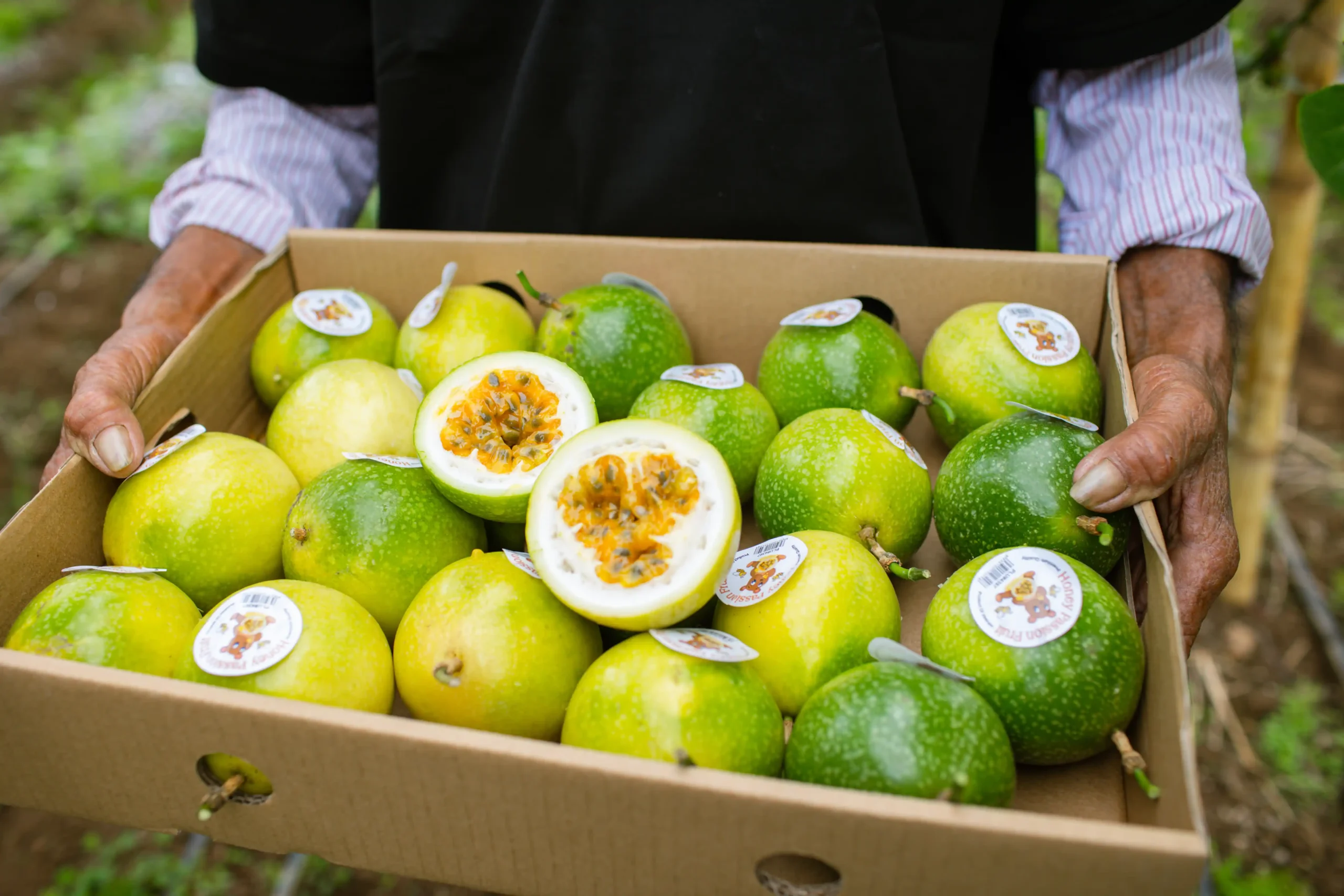
Fruit quality in the fresh passion fruit trade is assessed through two primary metrics: Brix (sugar content, as a percentage) and size uniformity (pieces per kilogram). A supplier that cannot provide consistent Brix readings within a declared range across multiple consignments lacks production control. Beyond fruit metrics, cold chain integrity is non-negotiable: passion fruit is highly perishable, and any temperature break between the farm and the packing house introduces microbial risk and accelerates decay. A reliable exporter maintains refrigerated transport from the growing area to the packing facility, through pre-cooling chambers, and onto refrigerated containers at the port.
Exporters with documented experience supplying strictly regulated markets, including the EU, the United States, Japan, and the UAE, have already demonstrated the capacity to navigate phytosanitary inspections, maximum residue level (MRL) compliance, and import permit requirements. This regulatory track record functions as one of the strongest proxies for reliability available to a B2B importer during initial screening.
Country of origin directly determines passion fruit quality, shelf life after transit, phytosanitary compliance pathways, and import duty rates under active FTA frameworks, and these four variables together can shift total landed cost and destination product quality by a margin large enough to determine commercial viability. The following detail explains why origin selection is a structural sourcing decision rather than a preference.
Tropical climate conditions in the growing region influence sugar accumulation (Brix), aroma intensity, and skin color uniformity. More critically, the geographic proximity of growing areas to packing facilities determines how quickly fruit moves from harvest to controlled storage. In Vietnam’s Mekong Delta, particularly in Tien Giang and Dong Thap provinces, passion fruit farms are positioned directly adjacent to export-grade packing houses. This proximity enables harvest-to-pack processing within 12 hours, a supply chain specification that extends the effective shelf life of the fruit upon arrival at the destination port.
From a regulatory standpoint, country of origin triggers distinct phytosanitary protocols for each importing country, and importers must verify whether the exporting country holds the necessary bilateral plant health agreements with their national authority. Under frameworks such as EVFTA (Vietnam and the EU) and CPTPP (Vietnam, Canada, Japan, and others), Vietnamese-origin passion fruit qualifies for preferential tariff rates, providing a structural cost advantage that sourcing from non-FTA countries cannot replicate.
B2B importers should require at minimum four certifications from any passion fruit export supplier: GlobalGAP for agricultural practice verification, FDA registration for access to North American markets, ISO certification for packing house quality management, and a food safety system certification such as HACCP. The following sections identify which certifications are universally essential and explain why GlobalGAP functions as the most critical benchmark for verifying supplier reliability.
Five international certifications are essential for fresh passion fruit export in 2026: GlobalGAP, FDA registration, ISO, HACCP, and for suppliers targeting EU supermarket chains and institutional buyers, GRASP or Sedex social compliance. Each certification addresses a distinct dimension of supply chain risk, and importers should treat the absence of any applicable certification as a disqualifying factor.
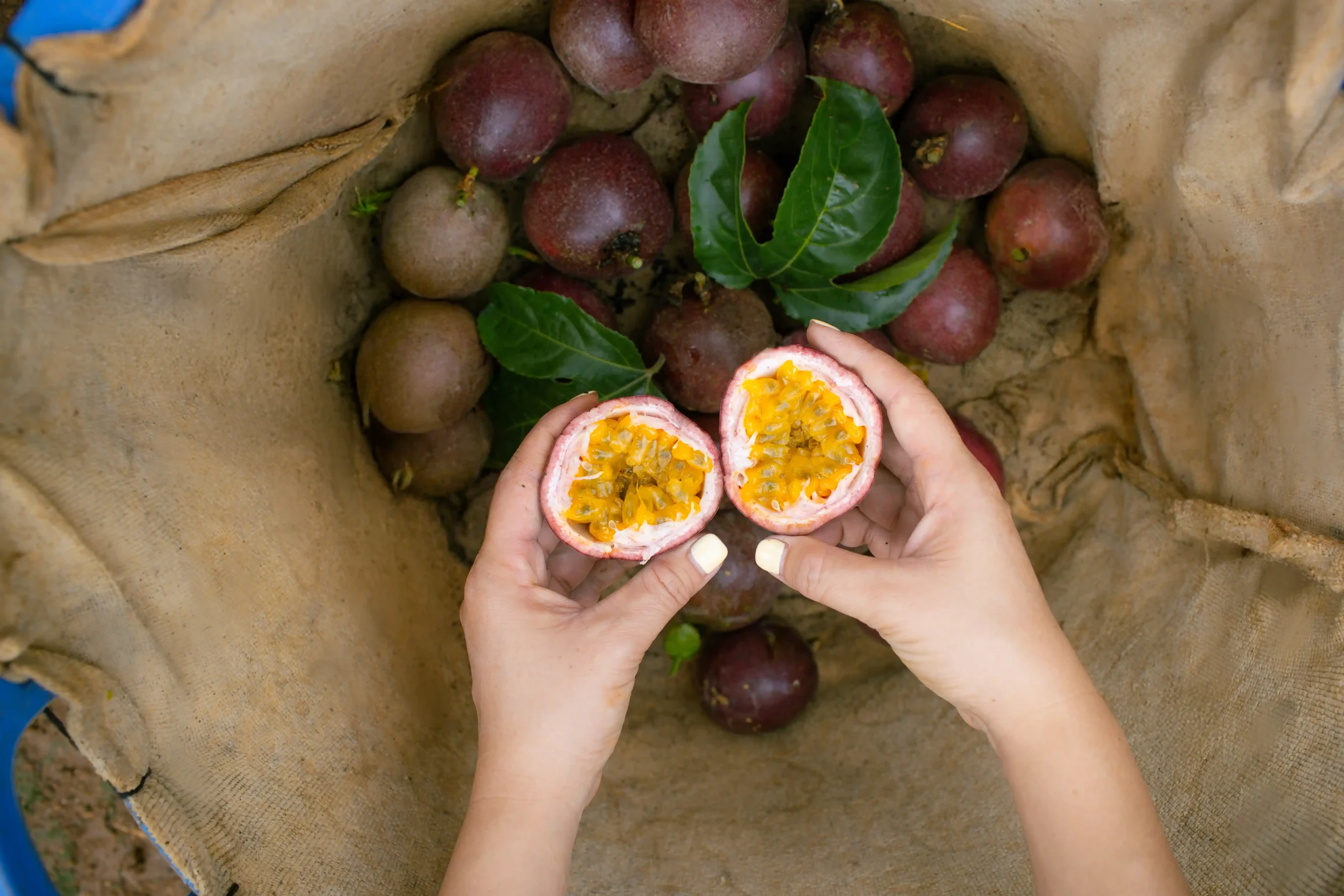
The table below lists the certifications most relevant to passion fruit export, covering what each one verifies and the markets where each is required or strongly preferred. Reviewing this table helps importers confirm supplier compliance against their specific destination market requirements before entering commercial negotiation.
| Certification | What It Covers | Markets Where Required or Preferred |
|---|---|---|
| GlobalGAP | Good Agricultural Practices: pesticide control, traceability, harvest protocols | EU, Japan, UK, major international supermarket chains globally |
| FDA Registration | U.S. Food and Drug Administration facility registration and FSVP compliance | United States, Canada |
| ISO (Quality Management) | Consistent packing house operations, process control, document management | All export markets, required by many institutional buyers |
| HACCP / Food Safety | Hazard analysis and critical control point management throughout processing | EU, Japan, UAE, and all regulated markets |
| GRASP | GlobalGAP Risk Assessment on Social Practice: labor rights, worker conditions | European retail chains, institutional buyers with ESG mandates |
| Sedex / SMETA | Ethical trade audit: labor, health and safety, environment, business integrity | UK, EU, North American grocery retail |
One critical detail importers frequently overlook: certification validity and scope must be verified directly through the issuing body’s online database, not solely through documents provided by the supplier. GlobalGAP certificates are searchable at database.globalgap.org by certificate number. A supplier presenting a certificate that has expired, applies only to a subset of products, or covers a different farm location than the one shipping the goods is not compliant, regardless of what the paper document shows.
Yes, GlobalGAP-certified passion fruit suppliers are demonstrably more reliable than non-certified ones for three commercially significant reasons: they provide lot-level traceability, they document pesticide residue control within internationally permitted MRL limits, and they follow standardized harvest and post-harvest handling protocols that reduce quality variation across shipments. Each of these factors directly reduces the financial and regulatory risk exposure of the importing business.
The practical consequences of importing from a non-GlobalGAP-certified supplier are well documented in fresh produce trade history. Shipments that fail phytosanitary inspection or MRL testing at destination ports are subject to mandatory destruction, re-exportation, or decontamination, generating costs borne by the importer in most contract structures. European port authorities at Rotterdam, Hamburg, and Antwerp routinely test fresh produce for pesticide residues, and a single rejected shipment can result in heightened frequency inspection status for subsequent consignments from the same supplier and origin combination.
As a concrete illustration of the certification standard B2B importers should target, Gobeimex (Golden Bee Import Export Co., Ltd.) holds five concurrent international certifications: GlobalGAP, GRASP, ISO, FDA, and Sedex. This portfolio covers agricultural practices, social compliance, quality management, North American food safety requirements, and ethical supply chain membership, giving importers across EU, North American, Middle Eastern, and Asian markets a single supplier capable of satisfying each region’s compliance requirements without requiring sourcing from multiple vendors.
The most reputable passion fruit export suppliers in 2026 are concentrated in four primary source countries: Vietnam, Colombia, Kenya, and Ecuador. Among these, Vietnam has emerged as the fastest-growing source for importers targeting EU, Middle Eastern, and North American markets, driven by climate advantage, FTA-driven cost benefits, and a rapidly maturing export infrastructure. The following sections examine why Vietnam is rising as a preferred origin and how it compares objectively to the other leading source countries.
Vietnam is emerging as a top passion fruit export source in 2026 for five converging reasons: ideal tropical climate conditions supporting both Purple and Yellow varieties, concentrated growing regions directly adjacent to export-grade packing facilities, strong logistics infrastructure connecting to all major import markets, preferential tariff access through active FTAs, and a demonstrated capacity to supply 52 weeks per year without seasonal disruption. The detail below explains the operational basis for each of these advantages.
Vietnam’s Mekong Delta, particularly Tien Giang and Dong Thap provinces, provides the warm temperatures, high humidity, and long growing seasons required for high-Brix passion fruit production. Tien Giang is home to one of Vietnam’s most strategically positioned packing hubs for fresh fruit export, enabling farm-to-pack transit within 12 hours of harvest. This speed is the primary mechanism by which Vietnamese exporters lock in fruit freshness before cold chain storage begins, extending the shelf life available to importers upon destination arrival.
Ho Chi Minh City’s Tan Son Nhat International Airport and the container port network along Southern Vietnam’s coast provide direct connectivity to Europe (Rotterdam, Hamburg), the Middle East (Dubai, Kuwait), North America (Vancouver, Los Angeles), and Northeast Asia (Tokyo, Osaka). For importers requiring air freight for shorter shelf life varieties, the proximity of packing facilities to Tan Son Nhat Airport reduces pre-flight holding time significantly.
Under EVFTA, passion fruit exported from Vietnam to EU member states qualifies for reduced or zero import duty rates for compliant shipments, creating a structural cost advantage versus non-FTA source countries. CPTPP extends similar benefits for importers in Canada, Japan, and Australia. These tariff differentials, calculated at scale across annual import volumes, represent landed cost savings that competing source countries without equivalent FTA coverage cannot offer.
The combination of Purple passion fruit (peak season October through March) and Yellow passion fruit (peak season April through June) in Vietnam’s production mix creates a natural harvest calendar overlap that allows capable packer-exporters to maintain year-round supply availability. Suppliers managing both varieties across owned and partner farm networks can guarantee monthly supply continuity that single-variety or single-season exporters from other origins cannot match.
Vietnam leads on supply consistency and FTA-driven cost advantage, Colombia leads on volume and air freight connectivity to the United States, Kenya excels in EU proximity for air freight shipments, and Ecuador offers competitive pricing for Yellow variety bulk buyers but with more limited certification infrastructure than Vietnam or Colombia. The right origin choice depends primarily on target market, preferred variety, required certifications, and shipping mode economics.

The table below provides a structured comparison across the five criteria most relevant to B2B importer decision-making. Reviewing these criteria side by side helps importers identify which origin best matches their specific market requirements before investing time in supplier qualification.
| Criteria | Vietnam | Colombia | Kenya | Ecuador |
|---|---|---|---|---|
| Fruit Quality (Brix range) | Purple: 15-18%; Yellow: 18-24% | Purple: 14-17% | Purple: 13-16% | Yellow: 17-23% |
| Year-Round Supply Capacity | Yes (Purple and Yellow combined) | Partial (two seasons, gap periods) | Partial (rainy season disruption) | Partial (single variety focus) |
| Common Certifications | GlobalGAP, FDA, ISO, GRASP, Sedex | GlobalGAP, Rainforest Alliance, FDA | GlobalGAP, Organic | GlobalGAP, FDA |
| FTA Advantage | EU (EVFTA), Canada/Japan (CPTPP) | EU (partial), United States | EU (EBA/EPA) | None (standard tariff) |
| Logistics to EU (Sea Freight) | 25-30 days | 18-22 days | 20-25 days | 22-28 days |
| Logistics to Middle East | 15-18 days | 28-35 days | 10-14 days | 30-38 days |
| Recommended For | EU, Middle East, Canada, Japan importers | US and EU importers needing volume | EU importers needing short transit | Bulk Yellow variety juice buyers |
For importers targeting European retail supermarkets or Middle Eastern distribution networks, Vietnam presents the strongest overall value proposition in 2026: competitive Brix specifications across two varieties, the broadest certification portfolio among the major origin countries, FTA-driven tariff advantages, and a packing infrastructure built to premium export standards.
B2B importers should evaluate passion fruit suppliers through a structured six-step due diligence process covering legal verification, certification validation, capacity assessment, physical sampling, cold chain audit, and commercial term negotiation. Skipping any step introduces a category of supply risk that becomes financially consequential the moment a commercial shipment is dispatched. The following sections detail each evaluation step and identify the warning signs that should immediately disqualify a supplier.
The six due diligence steps a B2B importer must complete before partnering with a passion fruit supplier are: legal verification, certification validation, capacity documentation review, physical sample testing, cold chain capability assessment, and commercial term negotiation with documented fallback clauses. Each step builds on the previous one, and the process should be completed in sequence rather than in parallel to avoid contracting decisions based on unvalidated information.
The following steps outline the specific actions and verification standards relevant to each stage of the evaluation process:
Step 1: Legal Verification
Confirm the supplier’s legal business registration, export license, and, for shipments to the United States or Canada, current FDA facility registration. Request the supplier’s tax identification number and cross-reference it against Vietnam’s Ministry of Planning and Investment business registry or the equivalent national authority for other origins. FDA registration can be verified directly at accessdata.fda.gov using the facility registration number.
Step 2: Certification Validation
Request original certification documents and verify each one independently through the issuing body’s public database. For GlobalGAP, use the database at database.globalgap.org. Confirm that the certificate is current, that the scope covers passion fruit specifically, and that the registered farm or packing house location matches the supplier’s stated production address.
Step 3: Capacity Documentation Review
Request a written summary of the supplier’s production infrastructure: total growing area under management (both owned and partner farms), packing house throughput capacity in metric tons per day, and a list of current export market clients with references where available. A supplier managing fewer than 50 combined hectares of passion fruit area is unlikely to guarantee consistent commercial volumes for a large-scale importer without sourcing from uncontrolled third-party sources.
Step 4: Physical Sample Testing
Request a commercial sample shipment before placing any purchase order. Upon receipt, test for Brix, size uniformity (pieces per kilogram), surface defect rate, and physical condition after simulated transit at the declared temperature for the expected transit duration. A supplier unwilling to provide samples before a commercial order is a significant negative indicator.
Step 5: Cold Chain Capability Assessment
Ask the supplier to document their cold chain management: ownership of refrigerated transport for farm-to-packing-house transit, operational pre-cooling chambers within the packing house, and continuous temperature logging from packing house loading to port departure. For purple passion fruit requiring 25-day shelf life at destination, an unbroken 2-4 degrees Celsius cold chain from the moment of harvest is not optional.
Step 6: Commercial Term Negotiation
Once Steps 1 through 5 are satisfactorily completed, negotiate commercial terms including Minimum Order Quantity, Incoterms (FOB, CFR, or CIF depending on the importer’s logistics model), delivery schedule, quality inspection protocols at origin, and the specific contractual remedies available if a shipment fails to meet agreed specifications upon arrival. A reliable supplier will accept clearly defined quality clauses with documented fallback procedures.
Six red flags should immediately alert a B2B importer to high supply risk: missing or expired certifications, inability to provide verifiable farm and packing house location details, abnormally low pricing, refusal to provide pre-order samples, absence of a dedicated quality control team, and failure to produce standard export documentation. Any single red flag warrants a pause in the evaluation; multiple flags together indicate a supplier that should be removed from the shortlist entirely.
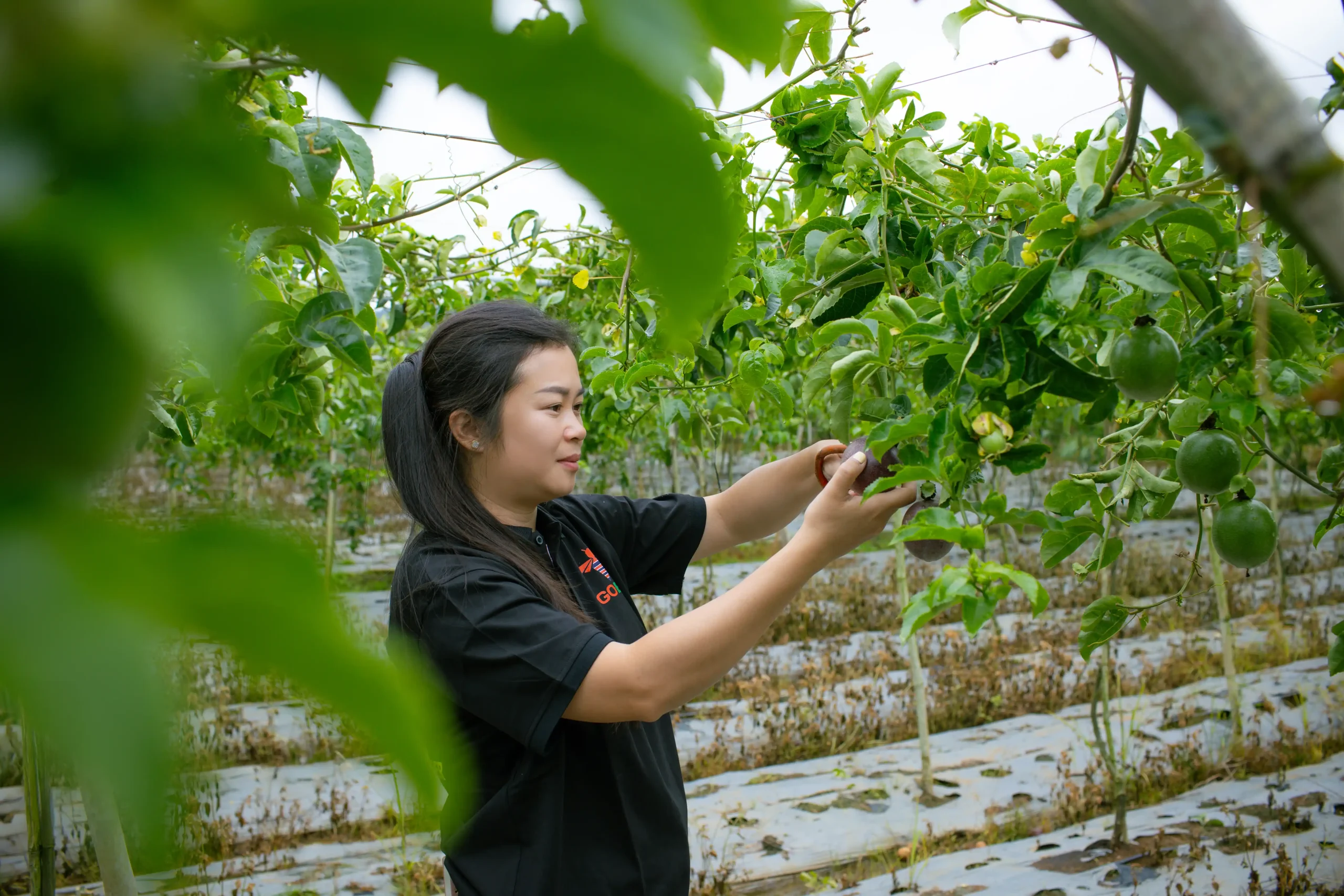
Each red flag signals a specific category of commercial risk:
Yes, B2B importers can rely on Vietnamese passion fruit suppliers for consistent year-round supply, provided the supplier manages both Purple and Yellow variety production across a combined owned and partner farm network of sufficient scale, and demonstrates a documented supply calendar covering all 12 months. A supplier meeting these conditions can genuinely commit to 52-week uninterrupted supply. A supplier offering only a single variety from a geographically concentrated growing area cannot make the same guarantee without accepting seasonal supply gaps.
The mechanism enabling year-round supply from Vietnam operates on a harvest calendar complementarity model. Purple passion fruit reaches peak season from October through March, while Yellow passion fruit peaks from April through June. A supplier managing both varieties in rotation ensures that the transition between peak seasons does not create a supply vacuum. During low-season months for each variety, product availability is reduced but not absent, provided the supplier’s farm network is large enough to sustain commercial volumes during off-peak periods.
The scale of the farm network matters directly. A supplier managing 30 or more hectares of company-owned growing areas plus 200 or more hectares of GlobalGAP-compliant partner farms maintains a raw material buffer that a smaller single-farm operator cannot replicate. The partner farm network functions as a supply reserve: when owned farm volumes dip during low-season transitions, partner farm intake absorbs the gap and maintains packing house throughput at commercially viable levels.
For importers planning to sign long-term supply contracts, the practical recommendation is to request a month-by-month supply calendar from the supplier before finalizing any agreement. This calendar should show expected weekly volume availability in metric tons for both Purple and Yellow varieties across 52 weeks. Any supplier unwilling to provide this level of supply planning detail is signaling that they cannot confidently commit to the year-round volume the importer requires.
Gobeimex, as a concrete operational example, maintains this dual-variety supply model across 230 or more combined hectares, with two strategically located packing houses: one in Tien Giang (Mekong Delta, processing fruit within 12 hours of harvest) and one in Ho Chi Minh City (near the international airport, serving as a logistics gateway for multiple product lines and routes). This dual-facility model allows the company to manage sourcing flexibility from multiple growing regions while maintaining consistent cold chain control, and to commit to 52-week supply availability to importers across more than 10 countries simultaneously.
Purple passion fruit is the better choice for importers targeting EU retail, Japanese premium fresh fruit retail, and Korean consumers, while Yellow passion fruit is the stronger option for Middle Eastern fresh markets, North American juice processing buyers, and high-sugar-content premium retail segments. The decision is a market-specific calculation based on Brix specification, shelf life relative to shipping duration, and end-consumer demand profile in the target geography. The following sections detail how each variety performs across the key B2B selection criteria.
Yellow passion fruit has higher sugar content, with a Brix range of 18-24%, compared to Purple passion fruit at 15-18%, but Purple delivers the more complex aroma and flavor balance that EU, Japanese, and Korean consumers prefer in fresh fruit retail settings. The technical superiority of Yellow for sugar concentration and the sensory superiority of Purple for premium fresh retail are both commercially significant and should be matched to the importer’s end-market rather than treated as a general quality ranking.
Yellow’s higher Brix makes it technically superior for juice extraction and food processing applications, where sugar concentration determines juice yield and product sweetness without additional sweetener input. Middle Eastern markets, particularly the UAE and Kuwait, show strong consumer preference for Yellow’s intense sweetness in fresh consumption contexts. For importers supplying juice manufacturers or food processing facilities in Canada or the Gulf, Yellow passion fruit delivers the Brix specification their buyers require.
Shelf life is the second critical differentiator: Purple passion fruit maintains quality for up to 25 days under continuous 2-4 degrees Celsius cold chain storage, while Yellow passion fruit has a shelf life of approximately 14 days under the same conditions. This 11-day difference has direct implications for shipping mode selection and total landed cost, as detailed in the section below.
Purple passion fruit’s 25-day shelf life enables sea freight to EU, Canadian, and Japanese markets, while Yellow passion fruit’s 14-day shelf life restricts most long-haul shipments to air freight, significantly increasing cost and reducing margin for importers targeting distant markets. This shelf life differential is the single most commercially important technical specification distinguishing the two varieties for B2B supply chain planning.
For importers shipping Purple passion fruit to Rotterdam (approximately 25-28 days from Vietnamese ports), the shelf life window accommodates sea freight transit with sufficient residual shelf life at destination for retail distribution. Sea freight reduces logistics cost per kilogram by 60-75% compared to air freight on equivalent routes, directly improving importer margin.
Yellow passion fruit at 14 days shelf life cannot safely complete a sea freight journey to Northern Europe and still arrive with commercially viable retail shelf life remaining. Air freight is required for Yellow variety export to EU, North American, or Northeast Asian destinations, adding significant per-kilogram cost. This makes Yellow a more financially sustainable import proposition for nearby markets (Southeast Asia, Middle East within 6-10 flight hours from Ho Chi Minh City) or for buyers whose processing-industry customers accept tighter delivery windows in exchange for the superior Brix specification.
Both varieties require unbroken 2-4 degrees Celsius cold chain storage from harvest through export. For importers conducting supplier cold chain audits, the relevant verification questions are: Does the supplier own refrigerated transport for farm-to-packing-house transit? Are packing house pre-cooling chambers operational and temperature-logged? Are reefer container temperatures monitored and logged continuously from packing house loading to port departure? A supplier who cannot answer these three questions with documented evidence does not meet the cold chain standard required to export either variety to regulated international markets.
The practical recommendation for importers building a diversified passion fruit import portfolio: calculate total landed cost per kilogram for each variety on each target shipping route before making a variety selection commitment. Purple passion fruit via sea freight to the EU offers the strongest margin profile for retail-focused importers. Yellow passion fruit via air freight to Middle Eastern premium retail or via any mode to regional juice processing buyers offers the strongest Brix specification value. A supplier offering both varieties with documented specifications, supply calendars, and cold chain capacity allows the importer to optimize variety selection by destination market rather than being constrained to a single-variety sourcing relationship.
For importers ready to begin evaluating Vietnamese passion fruit suppliers against the criteria outlined in this guide, Gobeimex (Golden Bee Import Export Co., Ltd.) is available for direct inquiry at Info@gobeimex.com, by WhatsApp at +84 939 93 54 55, or through the company website at gobeimex.com. With 12 or more years of fresh produce export experience, five active international certifications, 230 or more hectares of managed growing area, and documented 52-week supply capacity across Purple and Yellow varieties, Gobeimex provides the full-profile supplier credentials that a structured B2B due diligence process is designed to identify.


