Subtotal $0.00


Vietnam is one of the most reliable sources of fresh red flesh jackfruit for wholesale and export buyers worldwide, offering year-round supply, internationally certified growing areas, and a supply chain designed to preserve peak freshness from farm to port. For importers, distributors, and supermarket buyers seeking a trusted partner, Vietnam’s tropical growing conditions and established export infrastructure make it the preferred origin for red flesh jackfruit across Europe, North America, the Middle East, and Asia.
Identifying a trustworthy red flesh jackfruit supplier in Vietnam requires evaluating export certifications such as GlobalGAP, ISO, FDA, GRASP, and Sedex; cold chain integrity from harvest to container; packaging flexibility for different destination markets; and a proven track record of supplying international buyers consistently. Suppliers who combine farm ownership with certified partner networks offer the strongest guarantee of both quality and supply continuity.
Understanding the product itself is equally important before placing wholesale or export orders. Fresh red flesh jackfruit differs from the more common yellow-flesh variety in color, aroma, market positioning, and buyer demand profiles. Knowing the key characteristics, commercial specifications, and growing regions helps wholesale buyers make informed sourcing decisions and negotiate more effectively with suppliers.
This guide covers everything export and wholesale buyers need to know: from product characteristics and Vietnam’s growing regions, to supplier certification requirements, cold chain standards, packaging options, and active export markets.
Fresh red flesh jackfruit is a premium tropical fruit variety defined by its reddish-pink flesh, intense sweetness, and strong aromatic profile, making it a high-value product for wholesale buyers targeting specialty retail, ethnic supermarkets, and premium fresh produce segments. Vietnam has become the preferred origin for this variety because of its tropical climate, established Mekong Delta growing regions, and the capacity to supply red flesh jackfruit continuously across 52 weeks of the year.
To better understand why this product attracts consistent import demand, it helps to examine both the fruit’s defining characteristics and the structural advantages Vietnam offers as a production origin.
Red flesh jackfruit is defined by its reddish-pink to deep orange arils, Brix levels ranging from 24 to 32 degrees, an average fruit weight of 5 to 15 kilograms, and a noticeably more intense aroma compared to the standard yellow-flesh variety. These characteristics make it particularly attractive to buyers serving markets where visual appeal and eating experience drive purchasing decisions.
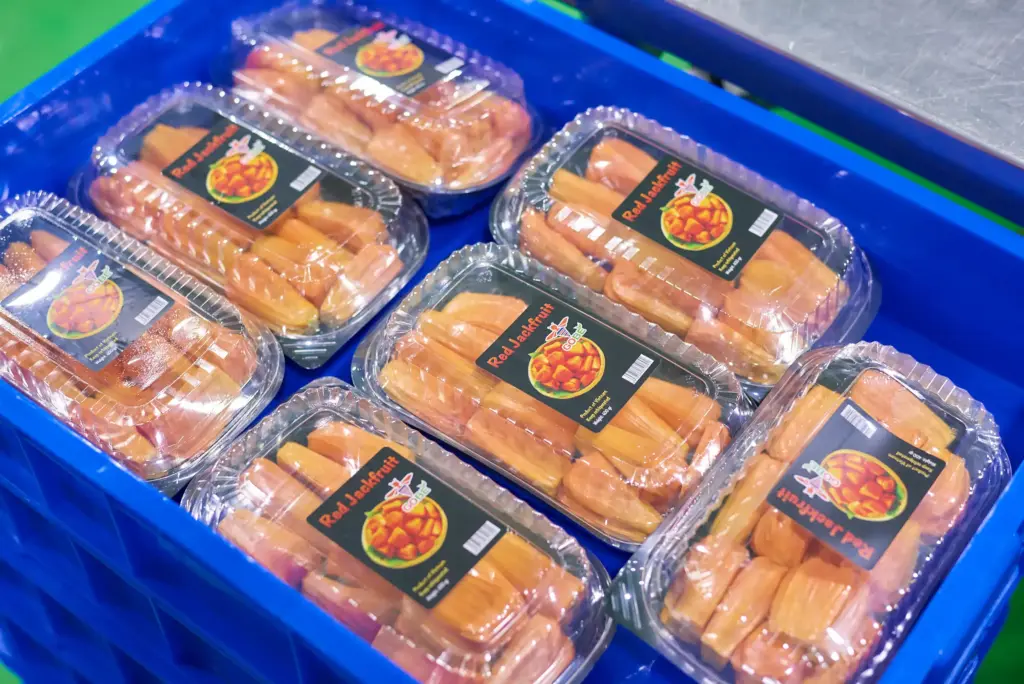
The following export-relevant attributes define the red flesh variety:
For sea freight buyers, the critical factor is consistency in maturity grading. Fruits harvested at the correct stage, packed within 12 hours, and kept in an unbroken cold chain can reach European or Middle Eastern ports in optimal condition for retail display or distribution.
The best red flesh jackfruit in Vietnam is grown primarily in Tien Giang, Dong Nai, Binh Phuoc, and Dong Thap provinces, with the Mekong Delta region widely recognized as the premium production zone because of its alluvial soil, abundant freshwater supply, and consistent tropical climate. These conditions produce fruit with higher sugar content, more vibrant flesh color, and superior aromatic intensity compared to jackfruit grown in less fertile highland areas.
Each region contributes distinct advantages to Vietnam’s overall red flesh jackfruit supply:
For wholesale buyers, sourcing from suppliers with growing areas across multiple provinces provides a meaningful supply security advantage, as regional harvest calendars can be coordinated to eliminate month-by-month shortfalls.
Yes, Vietnam is a reliable source for wholesale red flesh jackfruit supply, with national jackfruit export volumes placing it among Asia’s top producers, certified growing areas spanning hundreds of GlobalGAP-compliant hectares, and supplier networks capable of guaranteeing 52-week availability through diversified multi-region farm management. For bulk buyers seeking consistent supply, Vietnam’s combination of scale, certification, and logistics infrastructure makes it a dependable long-term sourcing origin.
The following sections examine the specific certifications, cold chain standards, and supplier practices that underpin this reliability.
A trusted red flesh jackfruit supplier should hold at minimum GlobalGAP, ISO, and FDA certifications, with GRASP and Sedex certifications increasingly required by European and North American wholesale buyers as proof of social compliance and supply chain transparency. Each certification addresses a distinct dimension of supplier reliability that wholesale buyers must evaluate before committing to a long-term sourcing relationship.
The table below summarizes the five core certifications and what each confirms for wholesale and export buyers evaluating a Vietnamese red flesh jackfruit supplier.
| Certification | What It Confirms for Buyers |
|---|---|
| GlobalGAP | Good agricultural practices across the growing area: pesticide management, soil health, water use, and traceability from farm to packhouse |
| GRASP | Social compliance within the supply chain: labor conditions, worker rights, and ethical farm management at the growing area level |
| ISO | Quality management system for packing operations: process consistency, documentation, and operational efficiency throughout the packhouse |
| FDA | Compliance with United States food safety import requirements, including FSMA registration, enabling direct access to the American wholesale market |
| Sedex | Membership in the Supplier Ethical Data Exchange platform, providing verified supply chain transparency to buyers at major retail and distribution groups |
For wholesale buyers sourcing for EU supermarkets or North American distributors, GlobalGAP and Sedex are non-negotiable minimum requirements. Suppliers who hold all five certifications signal a higher level of institutional readiness for high-volume, long-term export contracts.
GOBE IMEX (Golden Bee Vietnam) holds all five certifications: GlobalGAP, GRASP, ISO, FDA, and Sedex, providing wholesale buyers with full documentation coverage across agricultural practice, social compliance, quality management, and destination market access.
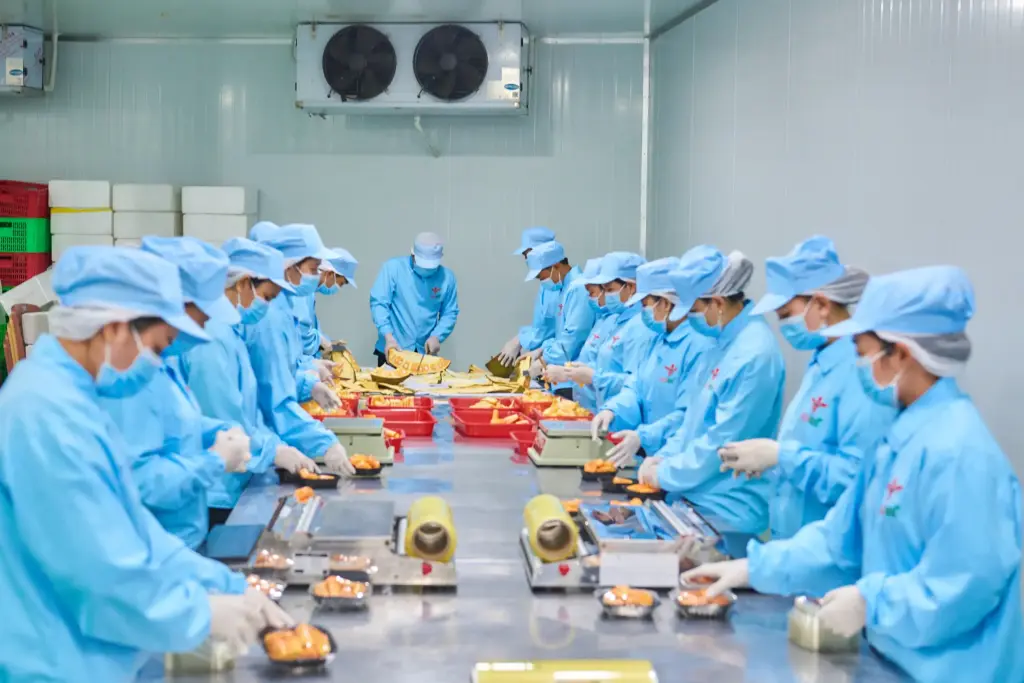
A trusted supplier maintains jackfruit freshness during export by processing fruit within 12 hours of harvest at a packhouse located directly in the growing region, maintaining an unbroken cold chain from farm to refrigerated container, and applying market-specific packaging standards that protect fruit integrity throughout sea or air freight transit. Speed and cold chain continuity are the two non-negotiable factors that determine whether red flesh jackfruit arrives at its destination in retail-ready condition.
A high-standard export workflow for red flesh jackfruit follows these stages in practice.
Stage 1: Harvest and field grading
Fruit is harvested at the correct maturity index (80 to 90 percent for sea freight), field-graded by size, and transported to the packhouse within the shortest possible time window to avoid field heat accumulation.
Stage 2: Packhouse processing within 12 hours
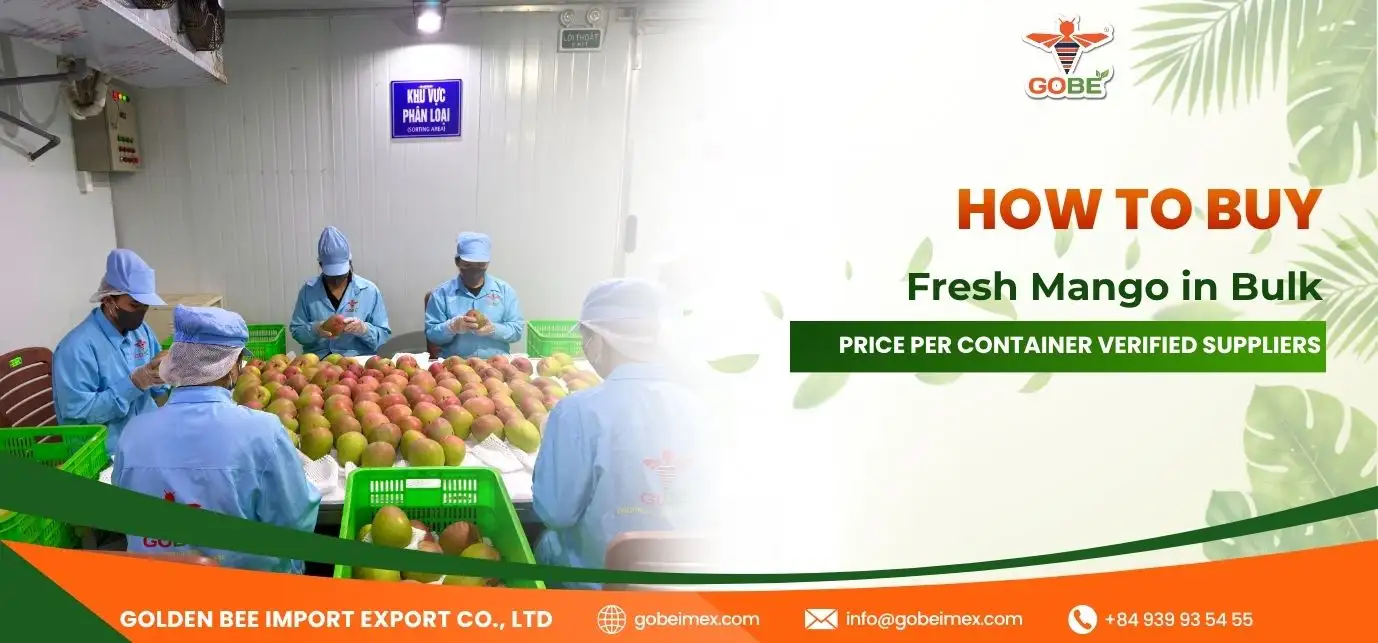
At the packhouse, fruit undergoes cleaning, quality inspection, size grading, and pre-cooling. Packing within 12 hours of harvest is critical for locking in cellular freshness before shelf life degradation begins.
Stage 3: Packaging to market specification
Fruit is packed into ventilated cartons (10 to 15 kg net weight per carton) with foam net protection for individual fruits. Pallet configurations are built to the specific requirements of the destination port (EU, US, or Middle East format).
Stage 4: Cold chain from packhouse to port
Products are transported in dedicated refrigerated container trailers at a consistent temperature of 10 to 13°C for whole jackfruit. Temperature logs are maintained throughout transit to provide buyers with cold chain verification documentation.
Stage 5: Reefer container loading and export
FCL (Full Container Load) or LCL (Less than Container Load) reefer containers are loaded and sealed at controlled temperatures. Buyers receive full shipping documentation including phytosanitary certificates, certificates of origin, and cold chain records.
GOBE IMEX operates its primary packhouse in Tien Giang, positioned at the center of the Mekong Delta growing region, enabling the 12-hour harvest-to-pack standard to be applied consistently across all export orders.
Wholesale and export buyers should evaluate a red flesh jackfruit supplier in Vietnam across four core dimensions: certification and compliance profile, production capacity and supply continuity, packaging flexibility, and demonstrated international market experience. Suppliers who meet all four criteria provide the lowest sourcing risk and the strongest foundation for long-term trade relationships.
The sections below address packaging specifications and active export markets in detail.
Bulk jackfruit orders from Vietnam are available in multiple formats including whole fresh fruit, fresh-cut arils, and individually quick frozen (IQF) arils, with packaging configurations customized to the buyer’s destination market, retail format, and container type. Understanding the available options helps wholesale buyers align their order specifications with their logistics setup and end-use requirements.
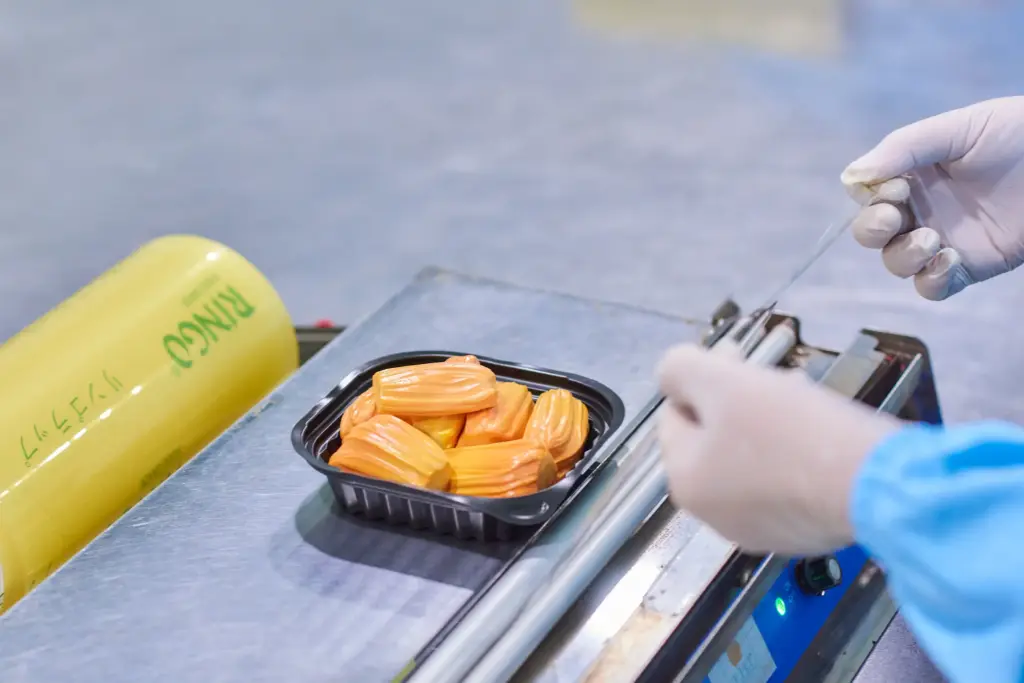
The table below outlines the main packaging and shipping configurations available for export buyers sourcing fresh red flesh jackfruit from Vietnam.
| Product Format | Packaging | Net Weight per Carton | Typical Application |
|---|---|---|---|
| Whole fresh red flesh jackfruit | Ventilated carton with foam net | 10 to 15 kg | Ethnic retail, specialty supermarkets, direct import |
| Fresh-cut arils (vacuum or MAP) | Retail tray or bulk bag in carton | 2 to 5 kg | Supermarket retail, foodservice |
| Frozen arils (IQF) | Poly bag in master carton | 10 kg | Food manufacturing, industrial processing |
| Half-cut jackfruit (fresh) | Wrapped and boxed | 5 to 8 kg | Quick-service retail, food preparation |
Shipping and container options for wholesale buyers include the following:
Buyers are encouraged to contact GOBE IMEX directly to confirm current packaging specifications, pallet configurations, and available shipping windows for their target market.
Red flesh jackfruit from Vietnam is currently exported to active markets including Canada, the UAE, the United Kingdom, Germany, the Netherlands, Japan, and Kuwait, with growing demand also recorded across Southeast Asia and emerging Middle Eastern markets. Each destination market carries specific phytosanitary entry requirements and quality standards that a trusted supplier must be equipped to meet.
The following market-by-market overview highlights key regulatory and logistics considerations for wholesale buyers.
North America (Canada, USA):
Requires FDA registration, FSMA compliance, and phytosanitary certificates issued by Vietnam’s Plant Protection Department. Jackfruit entering the US market must undergo additional irradiation treatment or methyl bromide fumigation depending on port of entry requirements. Sea freight transit time from Vietnam to North America West Coast ports averages 18 to 22 days.
Europe (UK, Germany, Netherlands):
The EU market requires GlobalGAP certification, Maximum Residue Level (MRL) compliance with EU pesticide standards, and a phytosanitary certificate endorsed by Vietnamese authorities. UK post-Brexit import rules require separate UK phytosanitary documentation. Sea freight transit to North European ports averages 25 to 30 days via major carrier routes.
Middle East (UAE, Kuwait):
Requires halal-compatible handling practices, country of origin certificates, and phytosanitary documentation. The UAE and Kuwait markets show strong demand for large-format whole jackfruit through ethnic retail channels. Sea freight transit from Vietnam to the UAE averages 14 to 18 days.
Asia (Japan):
Japan applies strict pesticide MRL standards under the Positive List System, requiring detailed residue testing documentation. Japanese buyers request smaller, more precisely graded fruit sizes for retail presentation. Air freight is commonly used alongside sea freight for this market.
Competitive advantage of Vietnamese jackfruit vs. Thailand and Philippines:
Vietnam’s red flesh jackfruit benefits from a lower cost of production compared to Thailand, larger and more consistent fruit sizes, and a more developed export certification infrastructure for EU and North American markets. Vietnamese suppliers holding GlobalGAP and Sedex certifications can access buyer programs that Thai or Philippine suppliers without these certifications cannot.
GOBE IMEX has an established trading network across all of the markets listed above, with documented export experience and market-specific documentation capabilities. The company has represented Vietnamese fresh produce at Fruit Logistica (Berlin), Asia Fruit Logistica (Hong Kong), and Fruit Attraction (Madrid), providing wholesale buyers with confidence in its international market fluency.
Fresh whole red flesh jackfruit suits retail supermarkets, ethnic grocers, and specialty fresh produce importers who prioritize visual impact and premium eating experience, while processed formats such as frozen arils, canned jackfruit, and dried jackfruit serve foodservice operators, food manufacturers, and industrial buyers who require longer shelf life and consistent portioned supply. The right format depends on the buyer’s end-use channel, logistics capacity, and storage infrastructure.
The table below compares the main product formats to help buyers identify which option aligns with their import business model and target retail or distribution channel.
| Format | Shelf Life | Best Channel | Key Advantage |
|---|---|---|---|
| Fresh whole red flesh jackfruit | 14 to 21 days (refrigerated) | Ethnic retail, premium supermarket | Maximum flavor, visual appeal, premium price point |
| Fresh-cut arils (MAP/vacuum) | 7 to 12 days (refrigerated) | Supermarket retail, quick-service | Convenience, ready-to-eat, retail-ready packaging |
| Frozen IQF arils | 18 to 24 months (frozen) | Foodservice, food manufacturing | Year-round availability, no waste, consistent volume |
| Canned jackfruit | 2 to 3 years (ambient) | Mass retail, industrial processing | Lowest logistics cost, maximum shelf life |
| Dried jackfruit | 12 to 18 months (ambient) | Snack retail, health food channel | Lightweight, value-added, emerging category |
For wholesale buyers new to the Vietnamese red flesh jackfruit category, starting with fresh whole fruit for a pilot market test and expanding into frozen or fresh-cut formats as demand scales is a practical approach that minimizes initial investment risk.
Yes, ethical sourcing matters significantly when choosing a red flesh jackfruit supplier, particularly for buyers supplying European and North American retail chains where Sedex membership, GRASP compliance, and ESG (Environmental, Social, and Governance) reporting are increasingly mandatory supplier qualification requirements. Buyers who overlook social compliance certifications risk losing retail accounts when their own customers conduct supply chain audits.
A Sedex-registered supplier demonstrates verified labor standards at the farm level, transparent wage and working condition practices, and the ability to participate in buyer-led audit programs such as SMETA (Sedex Members Ethical Trade Audit). GRASP adds an additional layer of social risk assessment directly at the GlobalGAP-certified growing area level.
The ESG trend in fresh produce importing is accelerating: major European retail groups now require Sedex registration as a standard supplier onboarding condition, and North American natural and organic food distributors increasingly list social compliance as a primary vendor qualification criterion. Buyers who source from Sedex and GRASP-certified suppliers position themselves ahead of this compliance curve.
GOBE IMEX holds both Sedex and GRASP certifications, providing wholesale buyers with full ethical sourcing documentation for their own supplier audit and compliance reporting requirements.
Yes, a single supplier can provide red flesh jackfruit year-round without seasonal gaps, provided the supplier manages a diversified multi-region growing network that staggers harvest windows across different provinces combined with a farm ownership model that ensures production control during periods of low market supply. Suppliers who rely on a single growing area or a single harvest season cannot reliably guarantee 52-week continuity for wholesale buyers.
GOBE IMEX achieves year-round red flesh jackfruit supply through a combination of over 30 hectares of company-owned farms and more than 200 hectares of GlobalGAP-certified partner farms spread across multiple Vietnamese provinces. This dual-model structure provides supply redundancy: when one region experiences seasonal fluctuation, partner farms in complementary growing zones maintain uninterrupted volume.
For wholesale buyers, the practical benefit of a 52-week supply guarantee is the ability to sign annual framework contracts with consistent pricing tiers, avoiding the spot market volatility that disrupts procurement planning. Combined with the 12-hour harvest-to-pack standard at the Tien Giang packhouse, GOBE IMEX provides wholesale buyers with both supply continuity and freshness consistency across all 52 weeks of the commercial year.
Buyers interested in discussing annual supply agreements, export documentation requirements, or product specifications for specific destination markets are invited to contact GOBE IMEX directly through the channels below.
GOBE IMEX (Golden Bee Vietnam)
Website: www.gobeimex.com
Phone / WhatsApp: +84 939 93 54 55
Email: Info@gobeimex.com
LinkedIn: GOBE IMEX Co., Ltd.