Subtotal $0.00

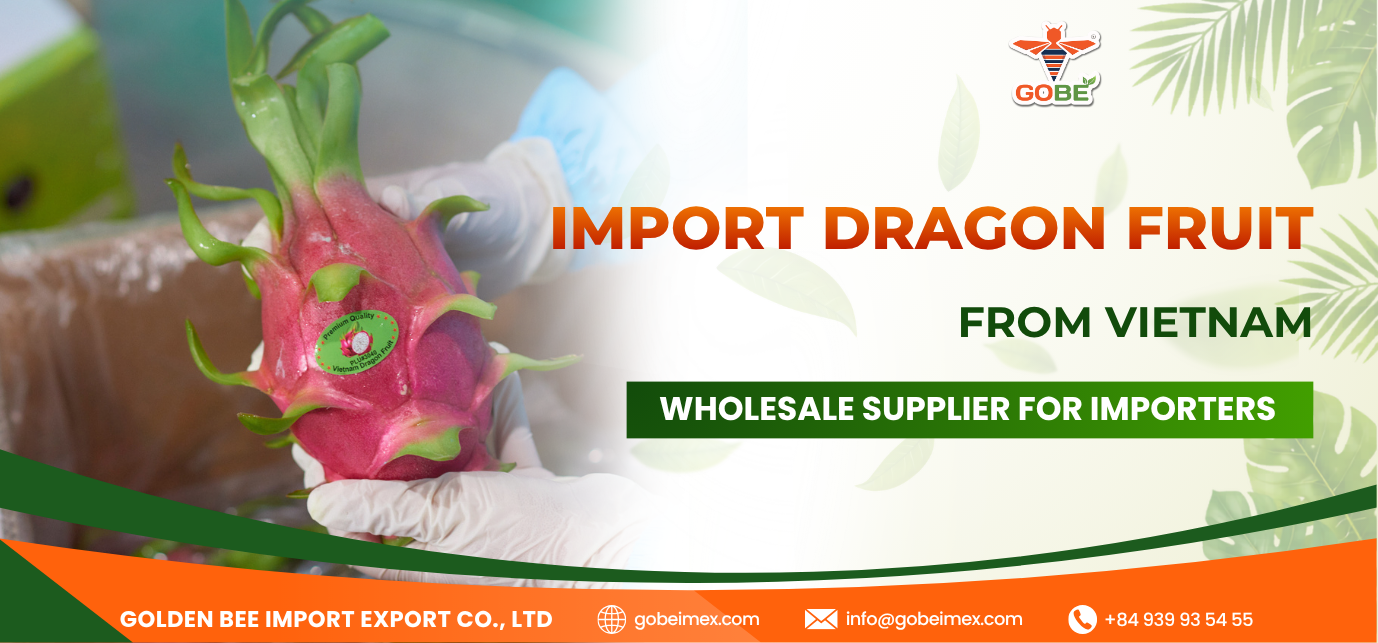
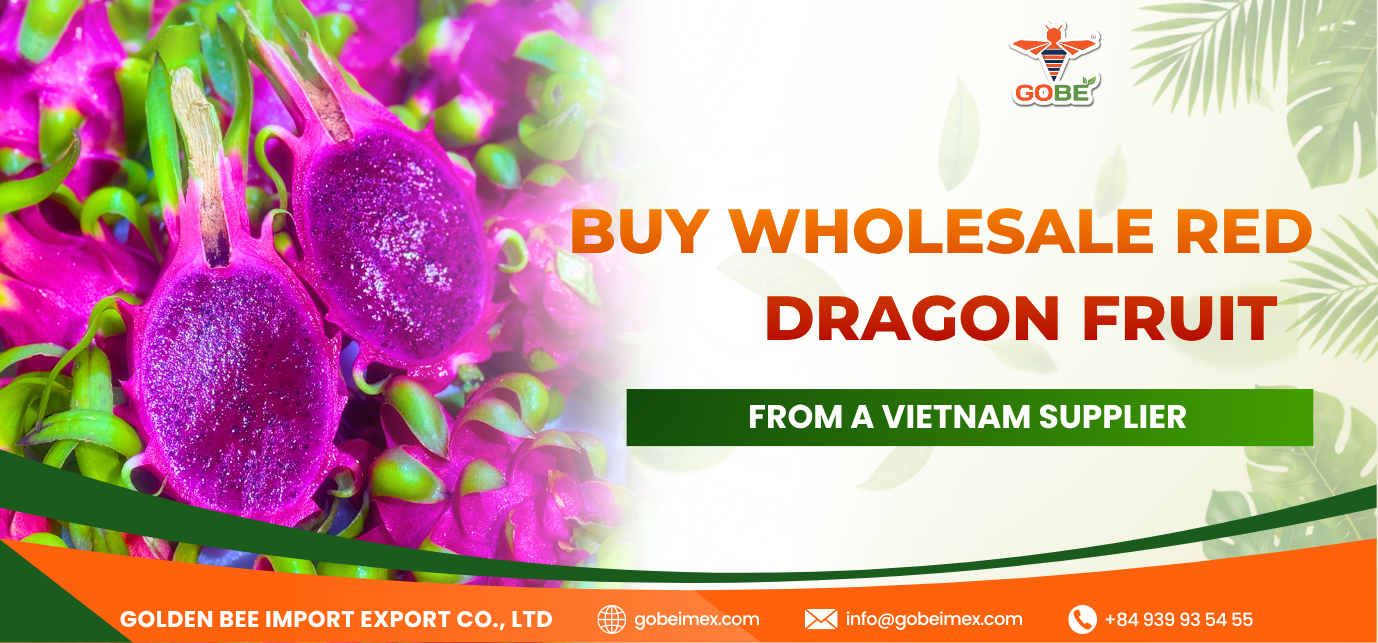
Vietnam is one of the world’s leading dragon fruit exporters, supplying international markets across Europe, North America, the Middle East, and Asia with consistent volumes, internationally certified quality, and year-round availability. For importers, distributors, and supermarket buyers, Vietnam represents a reliable, scalable, and cost-competitive sourcing origin backed by decades of commercial growing experience and a well-developed export infrastructure.
When selecting a wholesale dragon fruit supplier in Vietnam, buyers will encounter three primary product categories: red-flesh dragon fruit, white-flesh dragon fruit, and yellow dragon fruit, each with distinct flavor profiles, visual appeal, and shelf-life characteristics that suit different retail markets and consumer preferences. Understanding these varieties, their quality specifications, and the packaging configurations available for bulk orders is essential for importers placing consistent, high-volume purchase orders.
Beyond the product itself, successful wholesale importation depends on choosing a supplier with the right certifications, a proven cold-chain logistics system, and the operational capacity to deliver uninterrupted supply on commercial timelines. Companies such as GOBE IMEX (Golden Bee Vietnam), with over 12 years of export experience, GlobalGAP and ISO-certified operations, and an active trading network spanning Canada, the UAE, the UK, Germany, the Netherlands, Japan, and Kuwait, exemplify the standard of supplier that international buyers should be seeking when building a reliable sourcing relationship with Vietnam.
The sections below walk through the full picture: from Vietnam’s position as a wholesale origin, to product varieties and specifications, to supplier evaluation criteria, to commercial terms and conditions that govern bulk import transactions.
Yes, Vietnam is a highly reliable source for wholesale dragon fruit import, supported by its status as the world’s largest dragon fruit exporter by volume, a comprehensive framework of internationally recognized food safety certifications, and a commercial export infrastructure capable of meeting the continuous supply demands of importers, distributors, and supermarket chains globally.
To better understand what makes Vietnam a dependable wholesale origin, it helps to examine the specific factors that give buyers confidence when placing large, recurring orders.
Vietnam accounts for the largest share of global dragon fruit trade, with annual export volumes consistently placing the country at the top of worldwide production and export rankings. The country’s Mekong Delta and south-central coastal regions, particularly Binh Thuan, Long An, and Tien Giang provinces, provide the tropical climate, fertile soils, and established farming infrastructure that support high-yield, export-grade cultivation at scale.
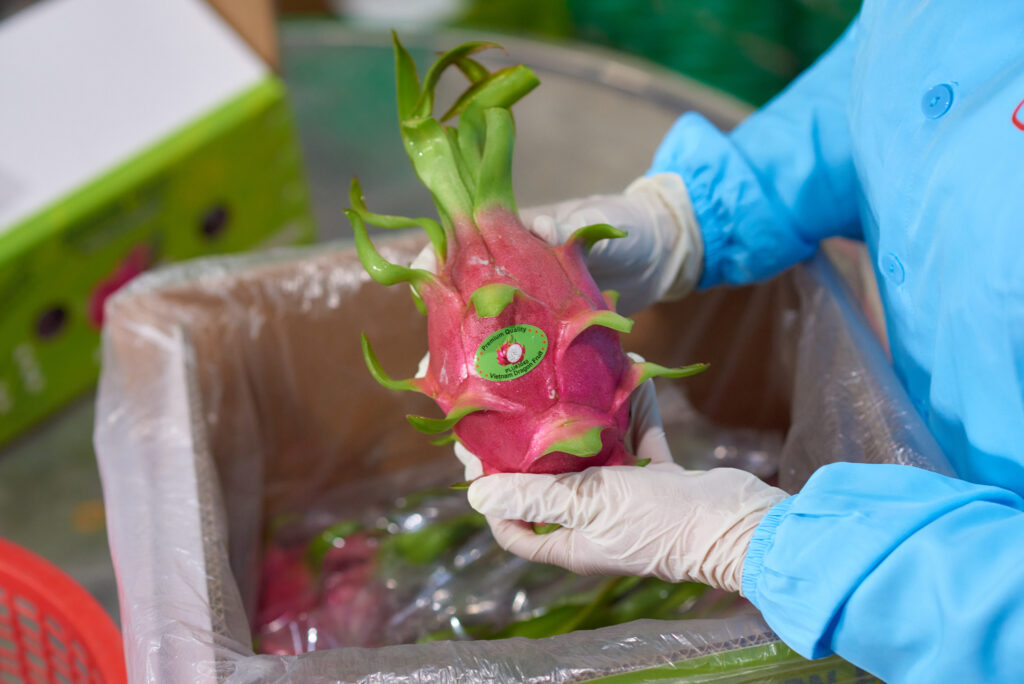
For wholesale importers, this scale matters because it translates directly into supply reliability. Vietnam’s dragon fruit production is not concentrated in a single district or dependent on a single harvest window. Instead, the combination of multiple growing regions, staggered harvest cycles, and year-round tropical conditions means that commercial buyers can source continuously without the seasonal supply gaps that affect producers in other countries.
Suppliers such as GOBE IMEX (Golden Bee Vietnam) source from over 230 hectares of growing areas, including 30+ hectares of company-owned farmland and 200+ hectares managed through partnerships with GlobalGAP-certified growers. This breadth of sourcing capacity, combined with a commitment to 52-week supply, directly addresses one of the most common pain points for supermarket buyers and distributors: supply continuity.
Vietnam dragon fruit suppliers operating at the export level are required to comply with, and are typically certified against, a set of internationally recognized food safety and agricultural standards. These certifications are not optional for importers targeting regulated markets in the EU, US, UK, UAE, or Japan. They are prerequisites for customs clearance, retail listing, and consumer trust.
The certifications that buyers should look for when qualifying a Vietnamese wholesale dragon fruit supplier include:
GOBE IMEX holds all five of these certifications, making the company immediately eligible to supply regulated markets across four continents without requiring buyers to initiate lengthy compliance processes before the first order.
Beyond certification, wholesale buyers need to assess whether a supplier can actually fulfill the volume, frequency, and consistency of orders required for commercial operations. Vietnam’s dragon fruit industry has matured to the point where reputable exporters can offer container-level shipments on a scheduled, recurring basis.
GOBE IMEX illustrates this capacity: dual packing house locations in Tien Giang and Ho Chi Minh City allow the company to process and consolidate produce from different growing regions, manage logistics to multiple destination ports, and maintain the cold-chain integrity required for long-haul reefer shipments to Europe, North America, and the Middle East. The company’s participation in international trade events including Fruit Logistica in Berlin, Asia Fruit Logistica in Hong Kong, and Fruit Attraction in Madrid reflects the company’s commercial seriousness and its established relationships with international buying networks.
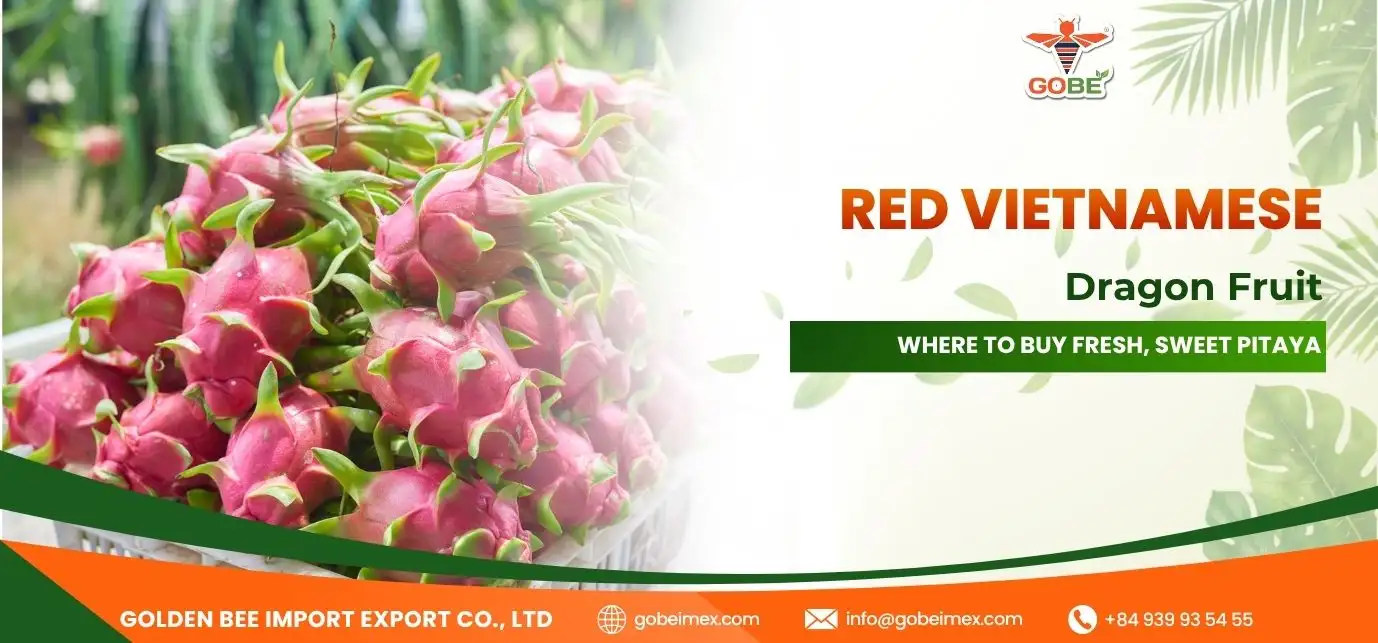
Vietnamese dragon fruit is available in three main varieties for wholesale import: red-flesh dragon fruit (Hylocereus costaricensis), white-flesh dragon fruit (Hylocereus undatus), and yellow dragon fruit (Selenicereus megalanthus), each differentiated by skin color, flesh color, flavor intensity, and market preference. Understanding these differences is essential for importers matching product specifications to the demands of their target retail or distribution market.
The following breakdown covers each variety in detail, along with the quality grading standards and packaging configurations relevant to bulk import orders.
Import-ready Vietnamese dragon fruit is graded primarily by weight, visual appearance, Brix level, and compliance with maximum residue limits (MRL) for pesticides. These specifications determine not only customs clearance eligibility but also retail suitability and shelf performance at the destination market.
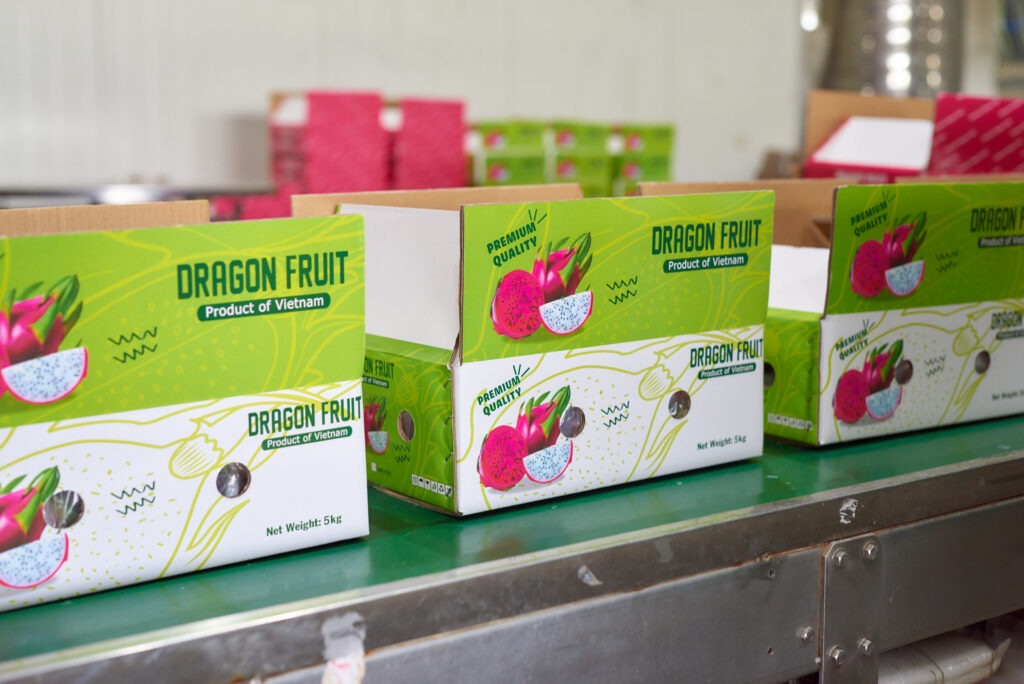
Specifically, the key quality parameters for export-grade dragon fruit from Vietnam include:
Weight grading:
Brix (sugar content):
Color and maturity standards at harvest:
Shelf life under correct cold chain conditions:
Dragon fruit exported from Vietnam typically achieves a shelf life of 10 to 14 days when maintained within the recommended temperature range of 10 to 12 degrees Celsius from pack to destination. This shelf life window is sufficient for sea freight shipments to the Middle East, Europe, and North America when cold-chain integrity is maintained throughout transit.
Pesticide residue control:
All growing areas supplying export-grade dragon fruit are subject to regular residue testing, with results required to fall within MRL limits as defined by the importing market’s regulatory authority. For EU-bound shipments, compliance with Commission Regulation (EC) No 396/2005 on pesticide maximum residue levels is mandatory. For US-bound shipments, compliance with EPA tolerance levels applies.
GOBE IMEX’s 12-hour farm-to-pack process is a critical quality control mechanism at this stage. By locating the primary packing house in Tien Giang, directly within the main growing region, the company ensures that harvested fruit is cooled, inspected, graded, and packed within 12 hours of picking. This compressed post-harvest timeline minimizes the enzymatic activity and moisture loss that degrade fruit quality during handling, directly contributing to the shelf life performance that importers measure upon receipt.
Wholesale dragon fruit from Vietnam is available in multiple packaging configurations, customized to meet the commercial requirements of importers, supermarket chains, and distribution centers in different markets. Packaging is not a single standard; reputable exporters offer flexibility in carton size, inner packaging format, labeling, and pallet configuration to match the specific inbound requirements of each buyer.
The standard wholesale packaging configurations available include:
Carton specifications:
Inner packaging and protection:
Pallet and container configuration:
Private label and custom branding:
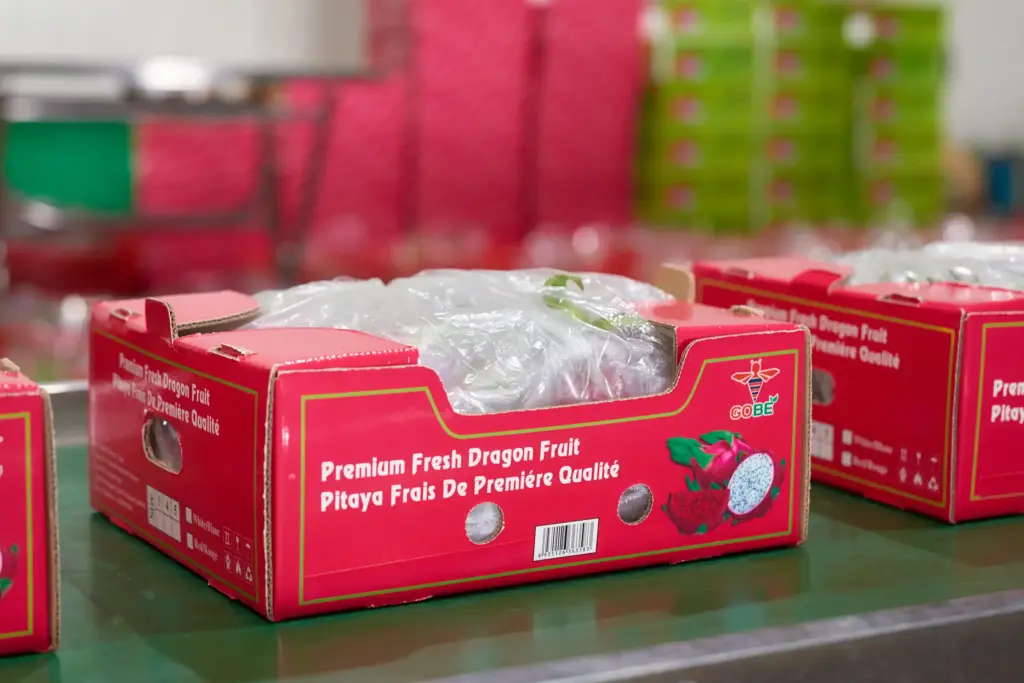
Importers and supermarket chains sourcing consistent volumes from GOBE IMEX can access private label packaging services, including custom carton printing with the buyer’s brand, logo, and retail-specific information. This option is particularly relevant for supermarket chains in Europe and North America that source produce under their own-brand labels.
Labeling compliance:
Export cartons include all mandatory documentation fields required by the destination market: country of origin, packing date, net weight, variety identification, grower code, and packing house registration number. For EU-bound shipments, EUR.1 movement certificates are included. For US-bound shipments, FDA facility registration numbers are referenced on shipping documentation.
A leading wholesale dragon fruit supplier in Vietnam should hold internationally recognized certifications (GlobalGAP, ISO, FDA, GRASP, Sedex), operate certified growing areas spanning at least several hundred hectares, maintain a dual-facility cold-chain processing system, and have a demonstrated export track record across multiple regulated markets. These criteria distinguish commercial-scale exporters capable of supporting recurring wholesale import programs from smaller, less-reliable trading intermediaries.
The following sections outline the specific criteria importers should use to evaluate and verify Vietnamese wholesale dragon fruit suppliers, with GOBE IMEX serving as a reference-point example.
A qualified Vietnam dragon fruit supplier for wholesale import should hold at minimum GlobalGAP, ISO, and a valid Phytosanitary Certificate, with FDA registration for US-bound shipments and GRASP and Sedex for buyers operating under European retailer codes of conduct.
More specifically, each certification serves a distinct function in the import compliance process:
GOBE IMEX holds all five major certifications (GlobalGAP, GRASP, ISO, FDA, and Sedex) and provides Phytosanitary Certificates for all export shipments as a standard document in the shipping file.
Verifying the reliability of a Vietnamese dragon fruit exporter requires checking the company’s official business registration, requesting certified copies of all claimed certifications, evaluating logistics capability, and, where possible, obtaining references from existing international buyers.
The practical due diligence steps for importers include:
Business registration verification:
All legally registered Vietnamese export companies hold a tax code (Mã số thuế) issued by the Vietnamese Ministry of Finance. This code can be cross-referenced against the National Tax Authority database. GOBE IMEX’s tax code is 0317236702, verifiable through official Vietnamese business registry systems. Importers should decline to proceed with any supplier that cannot provide a valid, verifiable tax registration number.
Certification document review:
Request original or notarized copies of all claimed certifications, including GlobalGAP certificate numbers (which can be verified directly on the GLOBALG.A.P. public database), ISO certificate issuing body and scope, and FDA facility registration number (verifiable through the FDA’s online database).
Sample shipment evaluation:
Before committing to a full container order, qualified importers typically request a sample shipment of one to two cartons sent by air freight. This allows the buyer to assess actual fruit quality, packaging condition, labeling compliance, and documentation completeness under real export conditions.
Trade fair participation and buyer references:
Suppliers with an established international trading network will have participated in recognized industry trade events. GOBE IMEX has represented Vietnamese fresh produce at Fruit Logistica (Berlin), Asia Fruit Logistica (Hong Kong), and Fruit Attraction (Madrid). These participations are publicly verifiable and indicate that the supplier is actively engaged in the global fresh produce trade at a commercial level.
Cold chain and logistics capability:
Ask the supplier to provide documentation of their cold-chain protocols: pre-cooling procedures, reefer container temperature settings, cold storage capacity at the packing house, and their track record on container arrival temperatures at destination. GOBE IMEX operates its own refrigerated container transport fleet and maintains an unbroken cold chain from farm through packing house to port of loading.
Bulk dragon fruit import from Vietnam is typically structured around full container loads (20-foot or 40-foot reefer), priced on FOB Ho Chi Minh City or CIF destination port terms, with lead times of two to four weeks from order confirmation to vessel loading and payment terms of T/T in advance or L/C at sight. Understanding these commercial parameters allows importers to plan procurement cycles, cash flow, and logistics scheduling accurately.
The table below summarizes the key commercial terms that govern wholesale dragon fruit import from Vietnam, providing importers with a reference framework for initial supplier negotiations.
| Commercial Parameter | Typical Terms for Vietnam Dragon Fruit Wholesale |
|---|---|
| Minimum Order Quantity (MOQ) | 1 x 20ft reefer container (approximately 12,000 to 14,000 kg net, depending on fruit size and carton configuration) |
| Standard container sizes | 20ft reefer, 40ft reefer (high cube for larger volume orders) |
| Incoterms | FOB Ho Chi Minh City (most common); CIF destination port available; EXW packing house for buyers arranging own freight |
| Lead time (order to vessel loading) | 2 to 4 weeks, depending on season, vessel schedule, and destination port |
| Transit time (sea freight) | Middle East: 12 to 18 days; Europe: 25 to 35 days; North America (West Coast): 18 to 25 days |
| Payment terms | T/T 30% deposit on order confirmation, 70% against copy of Bill of Lading (most common); L/C at sight also accepted |
| Supply frequency | Year-round, 52 weeks per year; scheduling flexibility for weekly, bi-weekly, or monthly container programs |
| Volume discounts | Available for buyers committing to quarterly or annual volume programs; structure negotiated per buyer agreement |
| Price basis | Quoted per kilogram (kg) or per carton, Ex-works or FOB; pricing varies by variety, grade, season, and volume |
Regarding MOQ: Most reputable Vietnamese wholesale exporters set the minimum order quantity at one full reefer container. For importers testing a new supply relationship, some suppliers (including GOBE IMEX) will accommodate LCL (Less than Container Load) shipments for initial trial orders, though per-unit pricing will be higher than FCL rates due to consolidated freight costs.
Regarding Incoterms selection: FOB Ho Chi Minh City is the most straightforward option for importers with established freight forwarding relationships, as it gives the buyer full control over ocean freight and insurance costs. CIF is often preferred by buyers who want a single delivered price inclusive of freight and insurance, particularly for new import programs where the buyer has not yet established preferred carrier relationships on the Vietnam route.
Regarding seasonality and pricing: While GOBE IMEX and other qualified suppliers commit to 52-week supply through a combination of owned and partner farms across multiple growing regions, prices do fluctuate with seasonal production peaks and troughs. Dragon fruit production in Vietnam peaks between May and October, when prices typically soften, and tightens slightly in the November to April period in some varieties. Importers securing annual volume commitments with fixed-price or price-band agreements can manage this variability more effectively than spot buyers.
Regarding payment terms and new buyer relationships: For first-time buyers, suppliers typically require 100% T/T payment in advance or a confirmed irrevocable Letter of Credit. After two to three completed shipments with satisfactory payment history, most suppliers will move to the standard 30%/70% deposit structure. Buyers with strong credit histories or bank-backed L/C facilities can often negotiate more favorable payment terms from the outset.
GOBE IMEX provides a full documentation package with every shipment, including the Commercial Invoice, Packing List, Certificate of Origin, Phytosanitary Certificate, Bill of Lading, and any additional certificates required by the destination market (Health Certificate, Halal Certificate for Gulf markets, or additional laboratory test reports). This completeness of documentation reduces customs clearance delays and rejection risks at the port of destination.
Vietnam holds a clear competitive advantage over other dragon fruit-producing countries in terms of production volume, export price competitiveness, certification infrastructure, and the unique quality characteristics produced by its tropical Mekong Delta growing conditions. Compared to alternative sourcing origins including Ecuador, Colombia, Israel, and China, Vietnam offers importers a combination of scale, consistency, and value that is difficult to match from any single alternative origin.
The following sections provide a deeper examination of the comparative factors and the specific phytosanitary and market-access requirements that importers sourcing from Vietnam need to understand.
Vietnamese dragon fruit faces distinct phytosanitary and market-access requirements in each major import market, with the US and Australia applying the most stringent treatments and the EU focusing primarily on MRL compliance and documentary requirements.
Key requirements by destination market include:
European Union: MRL compliance under Commission Regulation (EC) No 396/2005, import notification through TRACES NT system, and EUR.1 or Form A Certificate of Origin for preferential tariff treatment under the EU-Vietnam Free Trade Agreement (EVFTA). The EVFTA, in force since August 2020, has progressively reduced import duties on Vietnamese fresh produce, improving the price competitiveness of Vietnamese dragon fruit in EU markets.
United States: FDA facility registration mandatory for the exporting packing house. Fresh dragon fruit entering the US is subject to USDA APHIS phytosanitary inspection and, for certain entry pathways, irradiation treatment to control for fruit fly risk. GOBE IMEX holds FDA registration and has supplied the US market, meaning the company’s documentation and treatment compliance protocols are already calibrated to meet US import requirements.
Japan: Compliance with Japan’s Plant Protection Law, including specific pest risk assessments for Vietnamese dragon fruit. Japan requires a valid Phytosanitary Certificate from Vietnam’s Plant Protection Department and reserves the right to conduct border inspections. Japanese import requirements also include compliance with the Food Sanitation Law’s MRL standards, which in some cases differ from EU or Codex Alimentarius benchmarks.
UAE and Gulf Cooperation Council markets: Compliance with ESMA (Emirates Authority for Standardization and Metrology) food safety standards, Halal certification where required by the buyer or retail chain, and valid Health Certificate. The UAE is one of GOBE IMEX’s active export markets, meaning the supplier already operates with GCC import documentation requirements as standard.
Australia: Among the most restrictive markets for fresh dragon fruit import. Australian Biosecurity Import Conditions (BICON) require irradiation treatment for fresh dragon fruit from Vietnam, conducted at an approved irradiation facility before loading. Importers targeting the Australian market should confirm that their Vietnamese supplier has access to an approved irradiation facility and has prior experience completing Australian import documentation packages.
Vietnam’s 12-hour farm-to-pack process, as practiced by suppliers such as GOBE IMEX, directly extends the commercial shelf life of dragon fruit at the destination market by minimizing post-harvest quality degradation during the critical window between picking and cold-chain entry.
The commercial implications for wholesale importers are significant and measurable:
Extended shelf life at destination: Dragon fruit that enters the cold chain within 12 hours of harvest retains more of its initial moisture content, skin turgor, and internal sugar structure than fruit that experiences delays of 24 hours or more before cooling. This translates to a longer usable shelf life window at the importer’s distribution center and, critically, at the retail point of sale.
Lower rejection and claim rates: One of the most significant costs for fresh produce importers is the rejection of substandard shipments at destination. Fruit that has been processed quickly after harvest and maintained on an unbroken cold chain from pack to port arrives in a condition that closely matches the specification agreed at the point of sale. GOBE IMEX’s packing house location in Tien Giang, positioned directly within the primary dragon fruit growing region, makes the 12-hour post-harvest processing window structurally achievable rather than aspirational.
Higher consumer satisfaction and repeat purchase: For supermarket buyers and retail distributors, the end-consumer experience with the product determines reorder frequency and brand trust. Dragon fruit that arrives fresh, visually vibrant, and within its full flavor window drives repeat purchase. Dragon fruit that arrives at or near the end of its shelf life generates consumer complaints and category de-listing risk.
Competitive advantage over more distant sourcing origins: Suppliers sourcing from regions where the packing house is geographically distant from the growing areas face an inherent structural disadvantage in post-harvest timing. The integration of farm and packing house location within the Tien Giang growing belt is a logistics architecture decision that provides GOBE IMEX with a measurable quality advantage that importers can directly leverage in their own market positioning.
For importers evaluating wholesale dragon fruit suppliers in Vietnam, the 12-hour farm-to-pack commitment is one of the most meaningful operational differentiators to assess during supplier qualification, second only to certification status and supply volume capability.
To initiate a wholesale dragon fruit import inquiry with GOBE IMEX (Golden Bee Vietnam), buyers can contact the team directly via the company’s official website at gobeimex.com, by phone and WhatsApp at +84 939 93 54 55, or by email at Info@gobeimex.com. Managing Director Scarlett Huynh leads all international trade relationships and is the primary point of contact for new buyer inquiries, pricing discussions, and sample requests.