Subtotal $0.00

Verified mango suppliers and exporters are producers or packing companies that have undergone third-party audits, hold internationally recognized certifications, and can demonstrate traceable, export-grade operations from farm to port. For importers, working with verified sources is not optional — it directly determines product quality, food safety compliance, and supply chain reliability across every shipment. The difference between a verified exporter and an unverified trader often becomes visible only after a costly rejection at customs or a quality complaint from a retail buyer.
Finding verified mango suppliers requires a multi-channel approach: international trade fairs such as Fruit Logistica and Asia Fruit Logistica, B2B platforms such as FreshPlaza and Alibaba, national trade promotion agencies, and direct industry referrals. Each channel offers a different level of supplier vetting, and experienced importers typically combine at least two or three to cross-reference what suppliers claim against what they can actually demonstrate.
Verifying a mango exporter goes beyond checking a certificate on a website. Importers need to ask the right questions: Does the exporter own growing areas or source entirely from third parties? What is the packing house capacity and location relative to harvest zones? Can the supplier provide full lot traceability? These questions, combined with certification checks and sample requests, form the practical verification process that separates reliable partners from risky ones.
Beyond verification basics, the sourcing landscape for fresh mangoes spans multiple continents, each with distinct seasonal windows, variety profiles, and compliance histories. Understanding which countries export which varieties, and which suppliers within those origins can actually meet your market’s regulatory requirements, allows importers to build a more resilient and diversified mango supply strategy.
Verified mango suppliers and exporters are companies or farm-integrated businesses that have been independently audited against recognized international standards, hold valid food safety and agricultural certifications, and operate documented supply chains that can be traced from the growing area to the export port. They are distinct from traders or brokers who aggregate product from uncontrolled sources without maintaining direct oversight of growing, handling, or packing conditions.
To better understand what sets a verified exporter apart, it helps to look at the specific criteria that define verification in this context.
A verified mango exporter controls or directly audits the key stages of the supply chain, while an unverified trader typically only facilitates transactions without quality oversight. The distinction carries significant consequences for the importer.
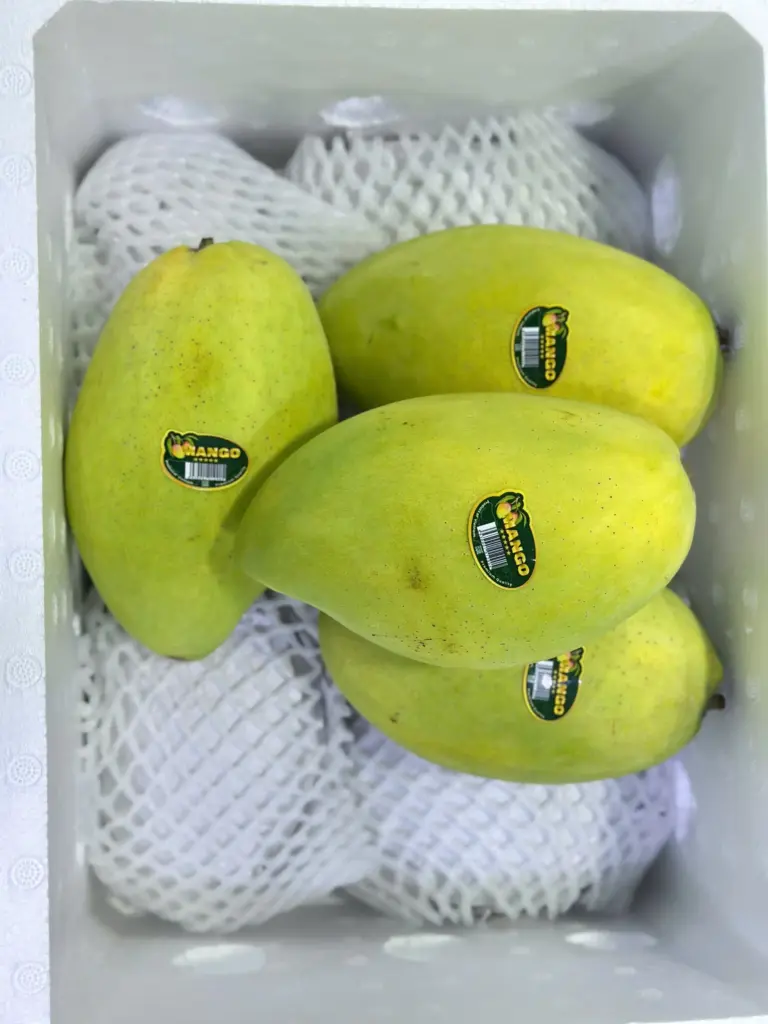
Specifically, a verified exporter can provide documentation at each stage: field-level records from GlobalGAP-certified growing areas, packing house inspection logs, cold chain temperature records, and phytosanitary certificates issued by the exporting country’s plant health authority. An unverified trader, by contrast, often resells product sourced from multiple undisclosed origins, making it impossible to conduct meaningful traceability checks or respond to a recall if a food safety issue arises.
The operational markers that indicate a genuine, verified mango exporter include:
An exporter who cannot demonstrate these elements at a basic level should be treated as unverified, regardless of how professionally their marketing materials are presented.
Importers need to prioritize verified mango suppliers because the risks of working with unverified sources directly threaten product quality, regulatory compliance, and business continuity. Three categories of risk make this a non-negotiable priority.
Food safety and regulatory risk is the most immediate concern. Fresh mangoes entering markets such as the European Union, the United States, Japan, or the Gulf states must meet strict Maximum Residue Limits (MRLs) for pesticides, pass phytosanitary inspection for pests such as fruit flies, and be packed under conditions that meet the importing country’s food safety regulations. A supplier who cannot demonstrate compliance with GlobalGAP or HACCP standards is unlikely to have the controls in place to consistently meet these requirements. A single shipment detained or rejected at port can result in tens of thousands of dollars in losses, plus reputational damage with retail buyers.
Quality consistency risk is equally significant. Verified exporters maintain grading standards, size specifications, and Brix level ranges across shipments because they have documented protocols. Unverified traders, sourcing from variable origins with no quality oversight, routinely produce inconsistent results — fruit that arrives overripe, undersized, or with surface defects that retail buyers reject.
Supply chain continuity risk becomes apparent when disruptions occur. Verified exporters with owned growing areas or long-term partner farm agreements can manage shortfalls, adjust harvest schedules, or substitute from an alternative source within their certified network. An unverified trader who buys on the spot market has no such buffer, leaving importers exposed to sudden unavailability at peak demand periods.
According to the Food and Agriculture Organization of the United Nations, post-harvest losses for fresh mangoes in developing-country supply chains without cold chain infrastructure range from 15% to 40%, underscoring how critical controlled, verified handling is to delivering product that meets commercial specifications at destination.
Importers can find verified mango suppliers through four main channels: international trade fairs, B2B online platforms, national trade promotion agencies, and direct industry referrals. Each channel provides a different type of access and a different baseline level of supplier credibility, and the most effective sourcing strategies use a combination of at least two.
The following sections examine each channel in detail, with practical guidance on how to use them effectively.
International trade fairs are the most reliable channel for connecting importers with verified mango exporters because exhibitors are typically pre-screened and the in-person format allows direct verification of product quality, operational capability, and business legitimacy. The three events most relevant to fresh mango sourcing are Fruit Logistica in Berlin, Asia Fruit Logistica in Hong Kong, and Fruit Attraction in Madrid.
Fruit Logistica (Berlin, Germany), held annually in February, is the world’s largest trade fair for the fresh produce industry. It attracts exporters from every major mango-producing region and draws retail buyers, importers, and distributors from across Europe, North America, and beyond. For importers seeking verified suppliers, Fruit Logistica offers the ability to compare products side by side, review certification documentation in person, and initiate relationships with exporters who have the organizational capacity to exhibit at this level.
Asia Fruit Logistica (Hong Kong), typically held in September, focuses on the Asia-Pacific fresh produce trade and is the primary forum connecting Southeast Asian, South Asian, and East Asian exporters with importers across the region and beyond. For importers sourcing from Mango-producing countries such as Vietnam, Thailand, the Philippines, or India, this event provides direct access to verified regional exporters.
Fruit Attraction (Madrid, Spain), held in October, is one of Europe’s most influential produce trade fairs and is particularly relevant for importers in the EU market who want to assess compliance-ready suppliers face-to-face before committing to a supply contract.
The practical advantages of trade fair engagement go beyond catalogue browsing:
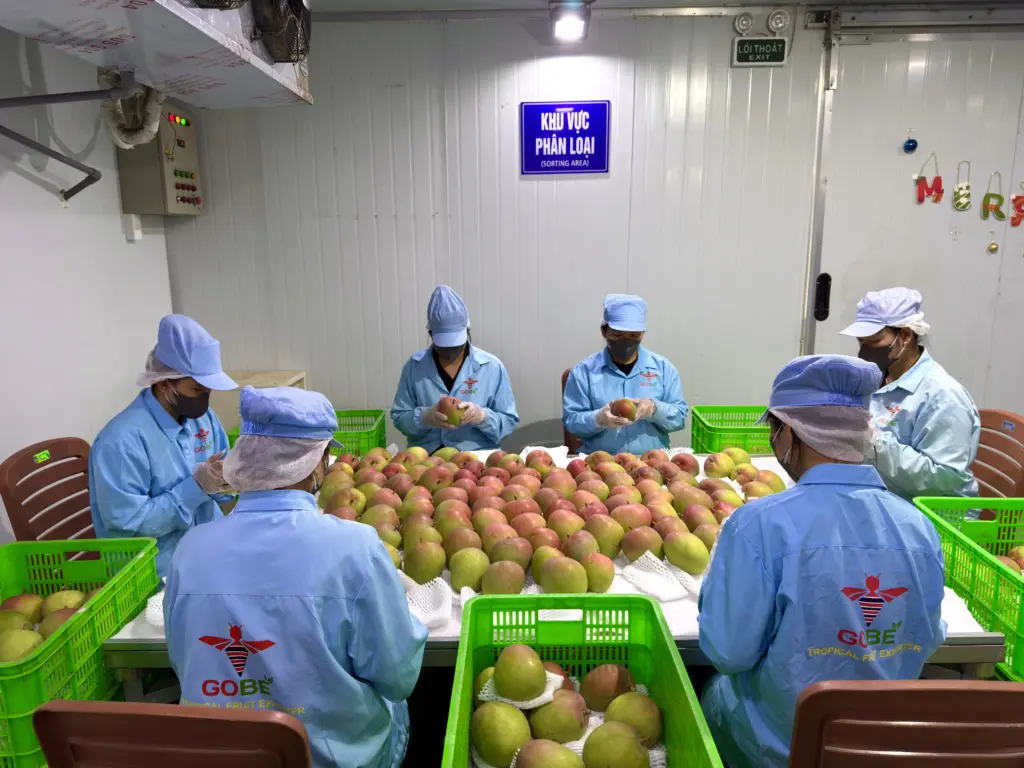
As a practical reference point, GOBE IMEX (Golden Bee Vietnam) is a Vietnamese fresh produce exporter that has exhibited at Fruit Logistica, Asia Fruit Logistica, and Fruit Attraction, demonstrating the level of international engagement that characterizes a verified, export-focused supplier rather than a domestic trader.
Online B2B platforms list mango suppliers across multiple geographies, but the level of supplier verification varies significantly by platform, making it essential for importers to understand what each platform’s verification actually means before relying on it as a sourcing tool.
The table below compares the most commonly used platforms by their supplier verification approach, geographic coverage, and key limitations for mango sourcing specifically:
| Platform | Verification Approach | Geographic Strength | Key Limitation for Mango Buyers |
|---|---|---|---|
| FreshPlaza | Industry-focused, editorial content with company profiles | Global, strong in EU and Asia | Profiles are self-submitted; no audit verification |
| Alibaba / Global Sources | Gold Supplier badges, Trade Assurance, some third-party audits | Global, strong in Asia | Many listings are traders, not direct producers |
| TradeKey | Basic registration verification | Global | Lower verification standard overall |
| VIETRADE (Vietnam) | Government-backed directory of Vietnamese exporters | Vietnam-specific | Limited to one origin country |
| APEDA (India) | Government-accredited exporter registry | India-specific | Requires cross-referencing with certification bodies |
The critical limitation common to all B2B platforms is that a supplier listing does not confirm that the company owns growing areas or operates a packing house. Many listings on Alibaba and similar platforms represent trading companies that source from third parties and have no direct control over product quality or compliance. Importers should use these platforms as a starting list only, then cross-reference every shortlisted supplier against the certification bodies that issued their stated credentials.
Practical steps to reduce risk when sourcing via online platforms include requesting a copy of the exporter’s current GlobalGAP or ISO certificate and verifying its validity directly with the issuing certification body, asking for a minimum of three verifiable client references in the target market, and requesting a video audit or third-party inspection of the packing house before placing a first order.
Year-round supply capacity is a key differentiator to probe during online platform outreach. Verified exporters with owned or long-term partner farms can typically provide documented supply calendars showing the varieties and volumes available by month. Suppliers who cannot provide this information are likely spot-market traders without stable sourcing.
Importers can verify a mango supplier through a structured three-stage process: certification document review and cross-verification with issuing bodies, operational capability assessment through targeted questions, and physical or remote product and facility audit. Completing all three stages before placing a first commercial order is the minimum standard for responsible supplier onboarding.
The following two sections cover the two most actionable elements of this process: which certifications to require and which questions to ask.
A verified mango exporter should hold at minimum GlobalGAP certification for agricultural practices and either HACCP or ISO 22000 for food safety management, with additional certifications required depending on the specific import market being served.
The table below outlines the key certifications, what each covers, and which markets require or strongly prefer them:
| Certification | What It Covers | Markets Where It Is Essential |
|---|---|---|
| GlobalGAP | Good Agricultural Practices: pesticide use, water management, worker safety, traceability to farm level | EU, UK, Japan, UAE, most supermarket supply chains globally |
| HACCP | Hazard Analysis and Critical Control Points: food safety in processing and packing | Required or strongly preferred across all major import markets |
| ISO 22000 | Food safety management system encompassing the entire supply chain | EU, North America, increasingly required by major retail chains |
| FDA Registration | Mandatory registration of food facilities for products entering the United States | USA: legally required for all exporters shipping to the American market |
| GRASP | GlobalGAP Risk Assessment on Social Practice: labor rights, worker welfare | EU retail buyers, ethical sourcing programs |
| Sedex / SMETA | Ethical trading audit covering labor, health and safety, environment, business ethics | UK, EU, North American retail supply chains with corporate sustainability commitments |
Each certification requires a third-party audit by an accredited certification body, and certificates carry expiry dates. Importers should always request the certificate document itself rather than accepting a logo on a company website, and should verify the certificate number directly with the issuing body — for example, via the GlobalGAP database at database.globalgap.org.
The market-specific requirements are important to understand precisely because a supplier certified for one market may not be compliant for another. For example, a Vietnamese mango exporter holding GlobalGAP and ISO 22000 is well positioned for EU and Middle East markets but must additionally hold FDA facility registration to legally export to the United States. Similarly, exporters targeting Japanese retail buyers must be prepared for extremely detailed MRL compliance documentation that goes beyond what GlobalGAP alone covers.
Importers should ask at least seven categories of operational questions when evaluating a mango exporter, covering growing area ownership, packing capacity, harvest-to-pack timeframes, cold chain control, export history, variety availability, and documentation capability.
More precisely, the following checklist provides the questions that separate verifiable operational claims from unsupported marketing assertions:
Growing area ownership and sourcing structure:
Packing house capability:
Cold chain and logistics:
Export history and market experience:
Variety availability and supply continuity:
Documentation and compliance:
Beyond document review, importers should request a physical mango sample before placing a first order, with the sample packed under the same conditions as a commercial shipment. A factory visit or third-party audit — conducted either in person or via a certified inspection agency such as SGS, Bureau Veritas, or Intertek — is strongly recommended before committing to a long-term supply contract.
No, origin from a major mango-producing country does not make an individual exporter reliable. Country-level reputation reflects aggregate production scale and variety availability, but individual supplier quality, compliance capability, and operational standards vary enormously within every exporting country, including India, Vietnam, Mexico, the Philippines, and Pakistan.
This distinction matters because importers who assume that sourcing from a country known for mango production automatically provides a safety guarantee are routinely disappointed. The correct approach is to treat every supplier as unverified until they have been independently assessed, regardless of national origin.
The leading exporters of fresh mangoes globally are India, Mexico, Thailand, Vietnam, Pakistan, the Philippines, and Peru, each offering distinct variety profiles, seasonal windows, and primary destination markets.
The table below provides a structured comparison of the major mango-exporting countries relevant to international importers:
| Country | Key Export Varieties | Primary Season | Main Destination Markets | Strengths |
|---|---|---|---|---|
| India | Alphonso, Kesar, Dashehari, Totapuri | April to July | UAE, UK, Europe, North America | Premium variety reputation, strong Alphonso demand in ethnic markets |
| Mexico | Tommy Atkins, Kent, Ataulfo, Keitt, Manila | March to October | USA, Canada, Europe | Proximity to USA, large volumes, extended season |
| Thailand | Nam Dok Mai, R2E2, Mahachanok | March to June | Japan, China, EU, Southeast Asia | High-quality, export-ready varieties for Asian premium markets |
| Vietnam | Cat Hoa Loc, Cat Chu, GL4, Keitt | March to August | China, EU, USA, Middle East | Growing export infrastructure, competitive pricing, tropical flavor profile |
| Pakistan | Chaunsa, Sindhri, Langra | May to August | UAE, EU, UK | Strong Middle East presence, high sugar content varieties |
| Philippines | Carabao, Pahutan | March to June | Japan, South Korea, Middle East | Carabao considered among world’s finest-tasting mangoes |
| Peru | Kent, Tommy Atkins, Keitt | November to February | EU, USA, UK | Counter-season supplier to northern hemisphere winter demand |
For importers, this diversity means it is possible to source fresh mangoes across nearly the entire calendar year by combining supply from different origins. Peru and the southern hemisphere fill the November-to-February window when Asian and Mexican supplies are limited, while India and Southeast Asia cover spring and summer demand.
The mango varieties most commonly available from verified international exporters are Tommy Atkins, Kent, Keitt, Alphonso, Nam Dok Mai, Cat Hoa Loc, and Ataulfo, with market preference varying significantly by destination.
Specifically, each variety carries distinct commercial characteristics that make it more or less suitable for different import markets:
Tommy Atkins is the highest-volume variety in international trade, particularly from Mexico and South America to North America and Europe. It has excellent shelf life and physical resilience during transport, but flavor is considered average by premium market buyers.
Kent is preferred by European and North American buyers who prioritize flavor as well as appearance. It has a rich, sweet taste, low fiber content, and performs well under cold chain conditions. Kent is available from Mexico, Peru, and increasingly from West Africa.
Keitt is a late-season variety with green skin even when ripe, which can cause consumer confusion in markets unfamiliar with the variety. It offers a very sweet, fiber-free flesh and good shelf life. Keitt is available from Mexico, Vietnam, and Israel.
Alphonso (from India, primarily Maharashtra) is considered a premium, flavor-first variety commanding significantly higher prices in ethnic markets in the UK, UAE, and North America. Supply is highly seasonal (April to June) and volumes are limited relative to demand.
Nam Dok Mai from Thailand is a premium export variety for Asian markets, particularly Japan and South Korea, valued for its thin skin, minimal fiber, and delicate flavor.
Cat Hoa Loc and Cat Chu from Vietnam’s Mekong Delta are tropical varieties increasingly appearing in EU and Middle East markets, prized for their intense sweetness and aroma. Cat Hoa Loc in particular has developed a reputation as a high-quality specialty variety.
Ataulfo (also called Honey or Champagne mango), primarily from Mexico, is a small, kidney-shaped variety with creamy, fiber-free flesh and very high sweetness. It commands premium pricing in North American specialty retail.
For importers selecting varieties, the key considerations are: shelf life and tolerance of the shipping duration to destination, consumer familiarity in the target market, availability from suppliers who hold the certifications required by that market, and price point relative to category positioning.
Ethical mango exporters who follow sustainable sourcing practices are increasingly distinguishable from conventional suppliers by their certification portfolio, documented farming methods, and supply chain transparency, and these differences are becoming commercially significant as EU regulations and retailer sourcing policies tighten.
For importers, sustainable sourcing is no longer only an ethical preference. It is becoming a market access requirement, particularly in the EU where the Corporate Sustainability Due Diligence Directive (CSDDD) and the EU Deforestation Regulation are creating legal obligations around supply chain transparency that flow through to fresh produce importers.
Verified mango exporters committed to sustainable sourcing should follow GlobalGAP standards as a minimum baseline, with leading exporters going further to implement integrated pest management, water conservation protocols, soil health monitoring, and traceable input records down to individual farm plot level.
Specifically, the sustainable farming practices that importers should look for and be prepared to audit include:
Farm-to-port traceability is the enabling infrastructure that makes these practices verifiable. An exporter with genuine farm-level traceability can link any exported carton back to the specific plot, harvest date, input records, and worker team responsible for its production. This is what allows importers to respond to a customs query, a retail recall, or a consumer complaint with documented evidence rather than approximations.
GOBE IMEX (Golden Bee Vietnam) operates a model that illustrates this approach in practice: more than 30 hectares of company-owned growing area managed entirely under GlobalGAP standards, combined with over 200 hectares of partner farms subject to regular inspection and certification monitoring. This structure allows traceable, auditable supply that meets the requirements of retail buyers across Europe, the Middle East, and North America.
Farm-to-port traceability reduces risk for mango importers by creating a documented evidence chain that allows the source of any quality or compliance issue to be identified quickly, contained at origin, and communicated to regulators or retail buyers with precision, rather than triggering a broad recall or a complete shipment rejection.
Traceability in this context means the ability to follow a unit of product from the specific growing area, through harvest, packing house processing, cold chain handling, and container loading, all the way to the port of export and the corresponding shipping documentation. Each stage generates records: harvest logs, packing house entry and exit records, cold chain temperature logs, pre-shipment inspection reports, and phytosanitary certificates.
The cold chain component is particularly critical for fresh mangoes because the fruit’s shelf life is highly sensitive to temperature management. An unbroken cold chain from harvest to destination maintains the optimal range of 10 to 13 degrees Celsius for most commercial mango varieties, extending shelf life by up to 50% compared with shipments that experience temperature excursions. Exporters with their own refrigerated transport fleets and documented temperature monitoring systems provide importers with the evidence needed to defend product quality in case of a buyer dispute.
Importer-specific compliance is an advanced capability that distinguishes the most sophisticated verified exporters from those who meet only baseline standards. This refers to the ability of an exporter to customize their documentation package, labeling, and quality parameters to the specific requirements of an individual importing market or retail buyer. For example, a Japanese retail buyer may require documentation in a specific format, with Brix readings logged per pallet, variety-specific maturity index records, and cold chain data transmitted electronically before container arrival. An exporter capable of meeting these requirements has invested in systems and staff training that represent a genuine competitive advantage in the verified supplier category.
For importers building long-term, reliable mango supply chains, prioritizing exporters who combine GlobalGAP-certified growing areas, unbroken cold chain infrastructure, and market-specific documentation capability is the most effective risk reduction strategy available, regardless of the sourcing origin country.