Subtotal $0.00

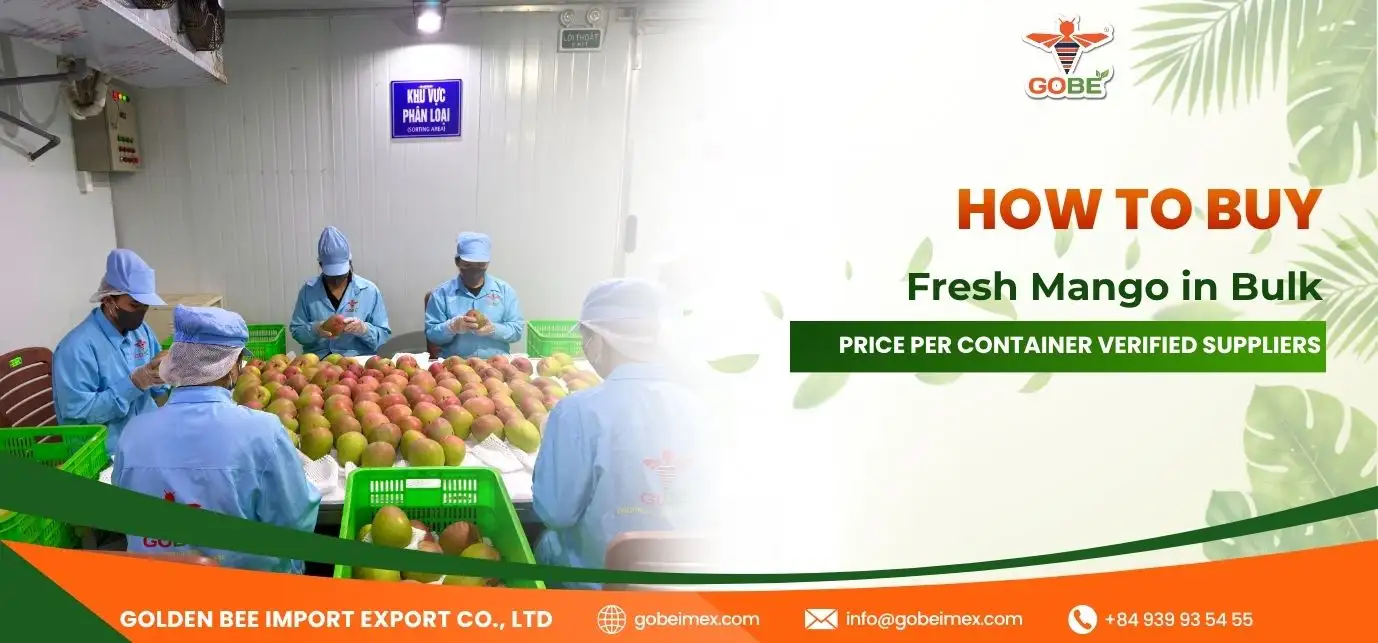
Buying fresh mango in bulk means sourcing via FCL or LCL container shipments directly from exporters, with MOQs typically starting at one 20ft FCL (around 18 to 20 metric tons), priced under FOB, CIF, or EXW terms depending on how much logistics responsibility the buyer absorbs. This model suits importers, distributors, supermarket chains, and wholesalers who need consistent, high-volume supply rather than spot purchases. Understanding how bulk procurement works before contacting any supplier saves both time and costly mistakes at the negotiation stage.
Fresh mango price per container varies significantly based on variety, origin, season, and Incoterm. A 20ft FCL of FOB Vietnam mangoes, for example, can range from roughly USD 8,000 to USD 18,000 depending on the variety and harvest window, while a 40ft FCL offers a lower cost-per-kilogram that makes large-volume orders considerably more efficient. Freight, insurance, and destination port charges add further layers to the landed cost calculation every importer must run before committing.
Finding verified fresh mango suppliers requires more than a search on B2B platforms. Certifications such as GlobalGAP, GRASP, FDA registration, ISO, and Sedex indicate that a supplier operates a traceable, auditable supply chain. Trade events such as Fruit Logistica in Berlin, Asia Fruit Logistica in Hong Kong, and Fruit Attraction in Madrid remain the most reliable venues for meeting and vetting exporters face to face before any significant order is placed.
Related posts:
Buying fresh mango in bulk means committing to container-load quantities sourced directly from a packer-exporter, with trade terms, packaging specifications, and cold-chain logistics agreed in advance. This procurement model applies to importers, distributors, supermarket chains, and wholesalers operating in international fresh produce markets.
Specifically, bulk purchasing sits at the intersection of volume, verification, and logistics planning. To better understand how this model works in practice, it helps to break it down across four dimensions: container types and MOQs, the buyer profiles this model serves, the trade terms most commonly used, and the origin countries currently dominating global mango export volume.
There are six mango varieties most commonly traded in international bulk shipments: Tommy Atkins, Kent, Keitt, Ataulfo (Honey), Carabao, and Cat Chu / Cat Hoa Loc, each serving different markets and shipping windows. A seventh variety, Alphonso from India, holds a premium niche position but is subject to strict seasonal and regulatory constraints.
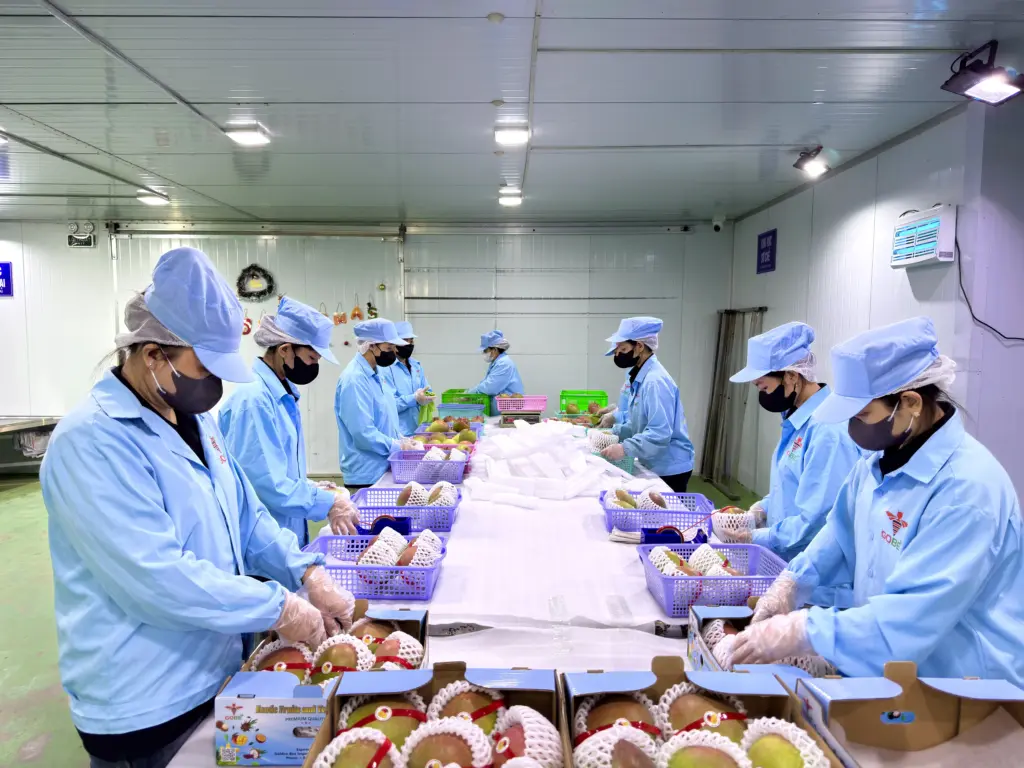
More precisely, each variety carries distinct characteristics that determine its suitability for long sea voyages and specific buyer markets:
| Variety | Primary Export Origin | Peak Harvest Season | Key Markets | Shelf Life (Sea Freight) |
|---|---|---|---|---|
| Tommy Atkins | Mexico, Brazil, Peru | March to August | North America, Europe | 28 to 35 days |
| Kent | Mexico, Peru, Ecuador | October to March | Europe, North America | 25 to 32 days |
| Keitt | Mexico, USA (Florida) | July to October | Europe, Middle East | 24 to 30 days |
| Ataulfo / Honey | Mexico | March to July | North America, Japan | 20 to 26 days |
| Carabao | Philippines | April to June | Japan, Middle East, Southeast Asia | 18 to 24 days |
| Cat Chu / Cat Hoa Loc | Vietnam | March to June | China, UAE, EU, Canada | 20 to 28 days |
| Alphonso | India | April to June | UK, UAE, premium EU | 18 to 22 days |
The table above shows variety names alongside origin country, harvest timing, target markets, and realistic shelf life under refrigerated sea freight conditions, allowing buyers to match supply windows with their import calendar.
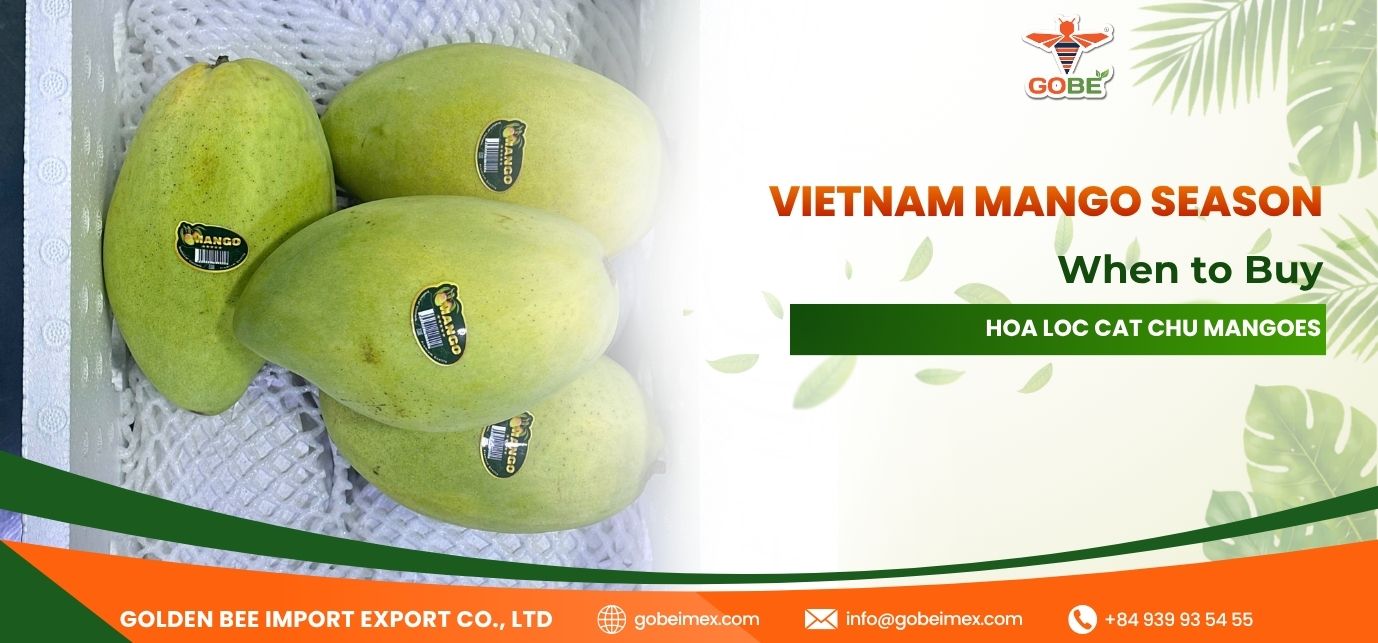
Tommy Atkins dominates global bulk volume due to its firm flesh, resistance to bruising during transit, and extended shelf life under cold chain. Kent and Keitt appeal to European supermarkets seeking less fibrous, sweeter flesh profiles. Vietnamese Cat Chu and Cat Hoa Loc have gained significant traction with importers in Canada, the UAE, Germany, and the Netherlands, partly because Vietnam’s Mekong Delta harvest season (March to June) fills a supply gap when Latin American volumes are declining.
Notably, varieties with firmer flesh profiles, such as Tommy Atkins and Kent, handle the 25 to 35-day sea freight journey to Europe or North America better than softer varieties like Alphonso, which are often airfreighted or shipped to closer markets to preserve quality.
Standard bulk mango shipments use 4 kg, 5 kg, or 10 kg cartons stacked on pallets, maintained at 10 to 13 degrees Celsius throughout the cold chain from packinghouse to destination port. Getting these specifications right is non-negotiable: a single cold-chain break can accelerate ripening and make an entire container commercially unacceptable upon arrival.
Following this, here are the key packaging and cold-chain parameters buyers should confirm with any supplier before signing a purchase agreement:
Carton specifications:
Temperature requirements by variety:
| Variety Group | Optimal Storage Temperature | Relative Humidity |
|---|---|---|
| Tommy Atkins, Kent, Keitt | 10 to 13°C | 85 to 90% |
| Ataulfo, Carabao | 10 to 12°C | 85 to 90% |
| Cat Chu / Cat Hoa Loc | 10 to 12°C | 85 to 90% |
| Alphonso | 8 to 10°C | 85 to 90% |
This temperature table enables buyers to specify container settings precisely in their purchase order, reducing the risk of disputes over quality on arrival.
Pre-cooling and farm-to-pack timing are equally critical. Produce that reaches the packinghouse more than 24 hours after harvest without pre-cooling will have accumulated significant field heat, accelerating ripening inside the container. Suppliers with packinghouses located directly in growing regions, such as those operating in Vietnam’s Tien Giang province, can move fruit from farm to pack within 12 hours, giving the produce a measurably longer commercial shelf life at destination.
Realistic shelf life from packing to buyer receipt, under unbroken cold chain, ranges from 14 days for softer varieties to 28 days for firm-fleshed cultivars like Tommy Atkins. Buyers shipping to distant markets (Europe, Canada, UAE) should verify that the variety selected can tolerate the 25 to 35-day total transit time while still arriving with adequate shelf life for retail or further distribution.
Fresh mango bulk pricing is structured around FOB (Free on Board) price per kilogram or metric ton at the origin port, with CIF (Cost, Insurance, Freight) adding ocean freight and insurance on top. For reference, FOB Vietnam prices for mainstream varieties ranged from approximately USD 0.80 to USD 1.80 per kg during the 2023 to 2024 export season, translating to roughly USD 14,400 to USD 36,000 per 40ft FCL before freight.
To better understand total landed cost, buyers need to layer freight rates, insurance, and destination handling fees over the FOB base. The sections below break down price-influencing factors and compare container sizes, giving a practical framework for budgeting a first or recurring bulk order.
Five main factors drive fresh mango bulk pricing: variety and grade, harvest origin and seasonality, certification status, Incoterm selected, and ocean freight rates at the time of booking. Understanding how these interact allows buyers to anticipate price movement rather than reacting to it.
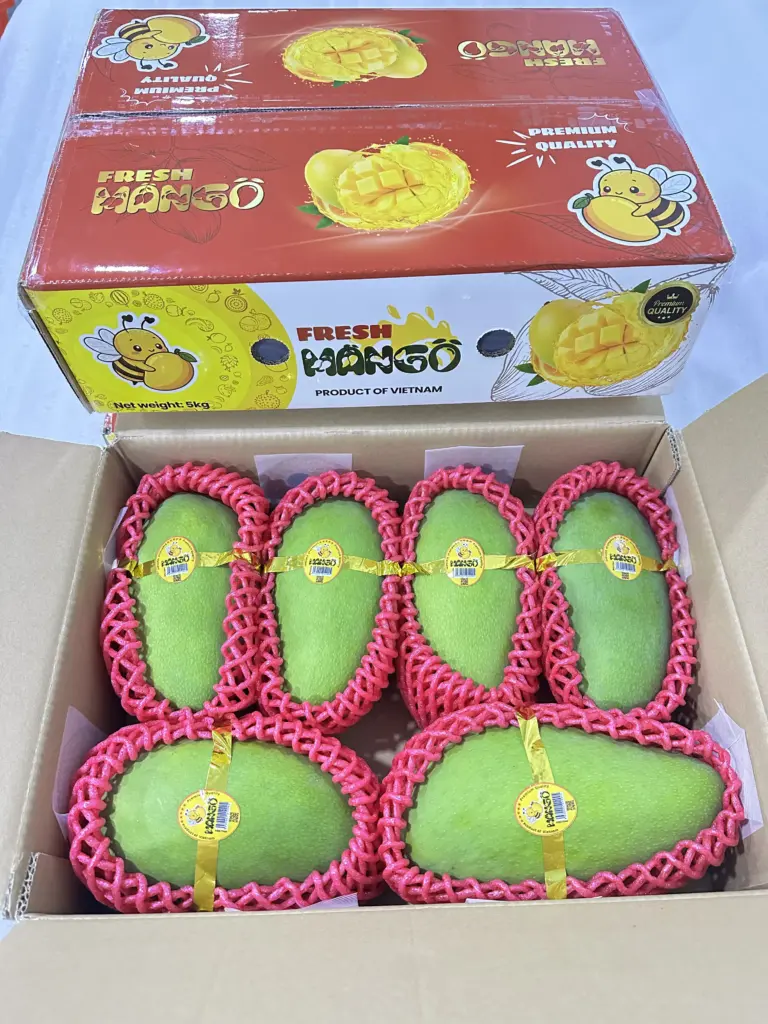
More precisely, each factor contributes differently to the final per-container cost:
1. Variety and grade:
Premium varieties such as Alphonso and Ataulfo command FOB prices 40 to 80% higher than commercial-grade Tommy Atkins. Within the same variety, Grade A (uniform size, no surface defects) sells at a 10 to 20% premium over Grade B, which may still meet import standards but requires more sorting at destination.
2. Harvest origin and seasonality:
Price fluctuates significantly with harvest timing. Vietnam’s peak export window (March to June) typically offers the most competitive FOB prices for Southeast Asian varieties. As the season ends and inventory tightens, spot prices for the same variety from the same origin can increase 20 to 35%. Buyers who plan forward and sign seasonal contracts with suppliers lock in pricing before harvest-period competition drives costs up.
3. Certification status:
GlobalGAP-certified produce consistently trades at a 5 to 15% premium over non-certified produce from the same origin. This premium reflects the additional compliance cost borne by the supplier and the reduced risk to the buyer: certified produce is far less likely to be held at the border of EU, UK, or North American markets for pesticide residue issues.
4. Incoterm selected:
The pricing hierarchy is consistent across origins: EXW (lowest buyer protection, lowest stated price) is followed by FOB (supplier delivers to origin port; most common B2B term), then CIF (supplier covers freight and insurance to destination port; higher stated price but buyer has less control over logistics). Most experienced importers prefer FOB to retain control over freight booking and insurance while keeping origin-port pricing transparent.
5. Ocean freight rates:
Freight from Vietnam to major destination ports ranged from approximately USD 1,200 to USD 2,800 per 20ft reefer container (USD 1,800 to USD 4,200 per 40ft) during 2023 to 2024, depending on the destination and booking season. Peak logistics periods (pre-Lunar New Year, Q4 global retail season) push reefer rates higher, which directly affects landed cost per kilogram.
According to data published by Drewry Shipping Consultants (2024), reefer container spot rates on Asia-to-Europe lanes showed volatility of up to 40% between low and peak booking seasons, confirming that freight timing is a material variable in bulk produce cost calculations.
A 20ft FCL carries approximately 18 to 20 metric tons of fresh mango net weight, while a 40ft FCL holds 24 to 26 metric tons and a 40ft High Cube reefer can reach 26 to 28 metric tons, making the 40ft format the more cost-efficient choice per kilogram for buyers with sufficient volume. The choice between them depends on order size, risk tolerance, and whether the buyer is testing a new supplier.
The table below compares the two primary container formats across the metrics most relevant to bulk mango buyers:
| Parameter | 20ft FCL | 40ft FCL | 40ft HC Reefer |
|---|---|---|---|
| Net cargo capacity | 18 to 20 MT | 24 to 26 MT | 26 to 28 MT |
| Typical reefer freight (Vietnam to Europe) | USD 1,200 to USD 1,800 | USD 1,800 to USD 2,800 | USD 1,900 to USD 3,000 |
| Cost per MT freight (approx.) | USD 67 to USD 90 | USD 69 to USD 108 | USD 68 to USD 107 |
| Best suited for | First orders, smaller buyers, product testing | Established importers, regular volume | High-volume buyers, premium product lines |
| Quality control advantage | Easier to manage single-variety fills | Higher volume per inspection event | Highest efficiency for high-value loads |
This comparison table presents container types alongside capacity, freight ranges, per-MT freight cost, and the buyer profile each format suits best.
When LCL (Less than Container Load) makes sense:
LCL consolidation is appropriate for buyers placing a first trial order with a new supplier, importers testing a new variety in a new market, or distributors sourcing multiple SKUs from different suppliers in the same origin country. LCL costs more per kilogram than FCL and introduces more handling touchpoints, which increases the risk of cold-chain disruption, so it is recommended primarily as a verification tool rather than a recurring procurement method.
When FCL is the right choice:
Once a supplier relationship is established and quality has been verified through a trial shipment, moving to FCL (preferably 40ft) reduces landed cost per kilogram, gives the buyer dedicated container control (critical for cold-chain integrity), and signals to the supplier that the buyer is a serious, recurring account, which often translates to better pricing, priority allocation during peak season, and more responsive service.
Verified fresh mango suppliers for bulk orders are found through international trade exhibitions, B2B sourcing platforms with trade assurance programs, industry associations, and direct referrals from other importers. The word “verified” matters more than “cheapest” in fresh produce trade: a supplier who fails a border inspection or delivers substandard fruit costs the buyer far more than any price differential would have saved.
Specifically, the four most reliable sourcing channels each serve a different stage of the supplier discovery and verification process. Understanding how to use each channel strategically reduces the risk of landing with an unqualified exporter.
1. International trade exhibitions:
Fruit Logistica (Berlin, February) and Asia Fruit Logistica (Hong Kong, September) are the two most important annual gatherings for the global fresh produce trade. Fruit Attraction (Madrid, October) is equally significant for buyers sourcing from or targeting European markets. These events allow buyers to meet suppliers in person, review certification portfolios, examine product samples, and begin the due-diligence process in a compressed timeframe. Suppliers who exhibit at these events have typically made a meaningful commercial investment to do so, which is itself a basic signal of operational seriousness.
2. B2B platforms with verification layers:
Alibaba Trade Assurance, Global Sources, and HKTDC provide supplier listings with varying levels of verification. Trade Assurance offers payment protection and dispute resolution but does not substitute for direct certification checks. These platforms are best used for initial identification and shortlisting, not as the sole verification mechanism.
3. Industry associations and export councils:
Vietnam’s VINAFRUIT, India’s APEDA, Mexico’s ANEBERRIES, and national agricultural export councils often maintain directories of certified exporters and can provide references or introductions. These bodies have a reputational interest in directing buyers toward compliant suppliers.
4. Direct referrals:
Other importers in non-competing markets are often willing to share supplier references for varieties or origins outside their own territory. Freight forwarders and cold-chain logistics providers who handle fresh produce regularly also accumulate knowledge of which exporters maintain consistent quality standards.
A verified mango supplier should hold at minimum GlobalGAP certification and a valid Phytosanitary Certificate for each shipment, with FDA registration added for US-bound exports and ISO food safety certification confirming consistent packinghouse management. Additional certifications, specifically GRASP and Sedex or SMETA audit status, are increasingly required by European and North American retail chains.
Following this, here is what each certification actually confirms and which markets require it:
GlobalGAP: Verifies that the supplier’s farms follow Good Agricultural Practices covering pesticide management, water use, worker health and safety, and environmental impact. Required or strongly preferred by most EU, UK, and major retail chain buyers globally. Buyers can verify GlobalGAP certificate numbers directly at the GlobalGAP database (database.globalgap.org).
GRASP (GlobalGAP Risk Assessment on Social Practice): An add-on module to GlobalGAP that assesses social and labor conditions at farm level. Increasingly mandated by European supermarket chains as part of their ethical sourcing policy. A supplier who holds GRASP alongside GlobalGAP signals a higher level of transparency about working conditions.
FDA Registration: Mandatory for any supplier exporting fresh produce to the United States. FDA registration is verifiable through the FDA’s online database. Unregistered facilities cannot legally ship food products to US buyers.
ISO 22000 or equivalent (Food Safety Management System): Confirms that the packinghouse operates a documented, auditable food safety management system. ISO certification at the packinghouse level demonstrates that quality control is systematic rather than ad hoc.
Sedex / SMETA Audit: The Supplier Ethical Data Exchange (Sedex) platform and its associated SMETA audit provide a structured framework for supply chain transparency covering labor rights, health and safety, environment, and business ethics. This is increasingly a non-negotiable requirement for supplying major European and North American retail chains.
Phytosanitary Certificate: Issued by the national plant protection authority of the exporting country for every individual shipment. This document confirms that the consignment has been inspected and is free from regulated pests and diseases. No fresh mango shipment can legally enter any international market without it.
Verifying a bulk mango supplier before a large order requires five concrete steps: checking certifications independently, ordering a sample shipment, reviewing the supplier’s existing customer and market references, auditing the packinghouse directly or via a third party, and assessing the supplier’s logistics infrastructure. Skipping any of these steps significantly increases the risk of receiving a container that fails border inspection, arrives with unacceptable quality, or comes from a supplier who cannot sustain delivery volumes over time.
Step 1: Verify certificates independently.
Do not accept scanned certificates alone. GlobalGAP certificates can be cross-checked in the GlobalGAP database using the certificate number. FDA registration can be verified on the FDA website. ISO certificates should identify the issuing certification body, which should itself be accredited. Any discrepancy between the document presented and the online record is an immediate red flag.
Step 2: Request a sample or trial LCL shipment.
Before committing to a full FCL order, request a small LCL shipment of 1 to 2 metric tons. This allows the buyer to assess actual fruit quality, packaging execution, documentation accuracy, and the supplier’s responsiveness to any issues, at a fraction of the financial risk of a full container.
Step 3: Request customer and market references.
A credible supplier should be able to name current customers and the markets they export to without hesitation. Ask specifically about markets with strict import requirements (EU, US, Japan) because successfully supplying those markets confirms that the supplier can manage complex phytosanitary and food safety compliance.
Step 4: Conduct a packinghouse and farm audit.
An on-site visit, or a third-party audit commissioned from an internationally recognized inspection company such as SGS, Bureau Veritas, or Intertek, provides ground-truth confirmation of what the supplier’s certificates claim. Key things to look for: cleanliness and temperature control at the packinghouse, pre-cooling infrastructure, cold-room capacity, and how quickly fruit moves from farm gate to pack line.
Step 5: Assess logistics infrastructure.
Ask whether the supplier owns refrigerated transport vehicles or depends entirely on third-party trucking for farm-to-packinghouse movement. The shorter and more controlled this journey, the better the product quality on arrival. Suppliers with their own cold-chain fleet and packinghouses located within the growing region can consistently deliver fruit that has been packed within 12 hours of harvest, a benchmark that translates directly into longer shelf life at destination.
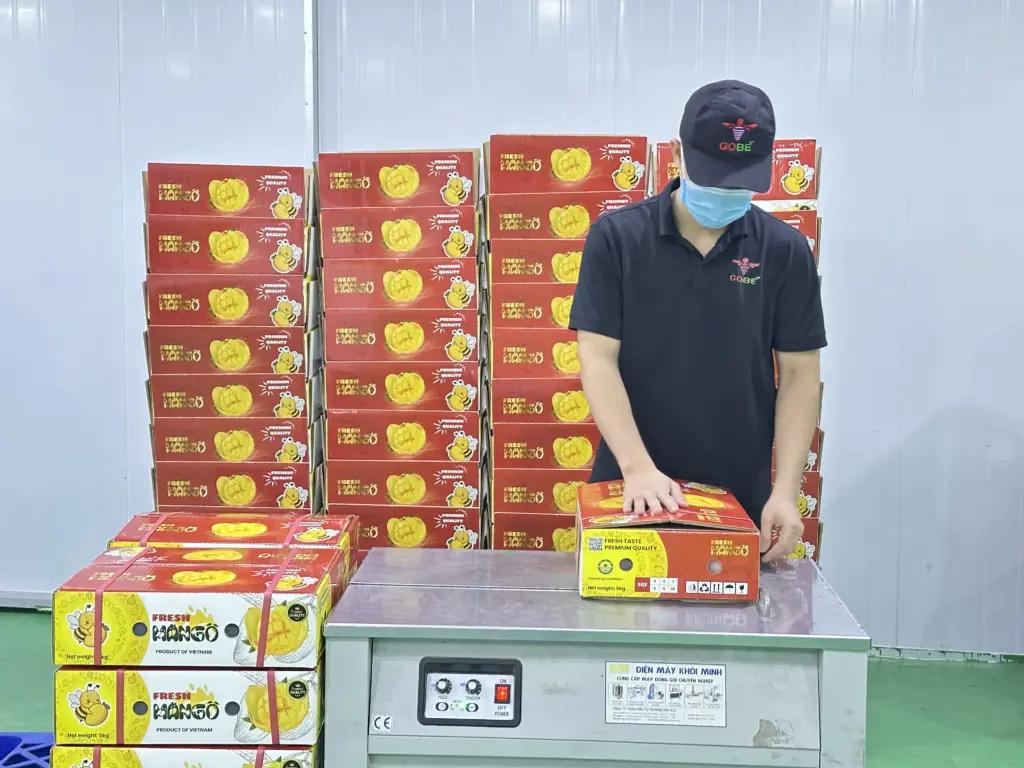
GOBE IMEX (Golden Bee Vietnam) provides a concrete example of what a verified supplier profile looks like in practice. The company holds GlobalGAP, GRASP, ISO, FDA, and Sedex certifications, operates a main packinghouse in Tien Giang (the heart of Vietnam’s Mekong Delta fruit-growing region) with a farm-to-pack time of approximately 12 hours, and exports to buyers in Canada, the UAE, the UK, Germany, the Netherlands, Japan, and Kuwait. The company’s Managing Director, Scarlett Huynh, has represented GOBE IMEX at Fruit Logistica (Berlin), Asia Fruit Logistica (Hong Kong), and Fruit Attraction (Madrid), which provides buyers with an additional channel for direct face-to-face verification. Contact: +84 939 93 54 55 or Info@gobeimex.com.
Yes, every fresh mango shipment crossing an international border requires a Phytosanitary Certificate issued by the national plant protection authority of the exporting country, and many destination markets additionally require specific pest treatment (irradiation, vapor heat treatment, or fumigation) before the shipment is permitted entry. This is not optional: shipments arriving without valid phytosanitary documentation are detained or destroyed at the destination border.
Furthermore, the specific treatment requirements differ significantly by destination market, and a supplier who is experienced in exporting to your target market should be able to manage the full compliance process. The sections below specify requirements for the three most demanding import markets: the United States, the European Union and United Kingdom, and Japan.
Phytosanitary requirements differ substantially across the three major regulated markets: the US requires USDA-approved irradiation or vapor heat treatment plus FDA Prior Notice; the EU and UK require a Phytosanitary Certificate and strict Maximum Residue Level compliance at Border Inspection Posts; and Japan requires vapor heat treatment for mangoes from several producing countries, including the Philippines and Vietnam.
Here is a concise breakdown:
United States (USDA-APHIS / FDA): Fresh mangoes from most origins require irradiation treatment or USDA-approved vapor heat treatment (VHT) before entry. The treatment facility must be USDA-approved. Additionally, the exporting facility must be FDA-registered, and the buyer (importer of record) must file FDA Prior Notice before each shipment arrives at the US port of entry.
European Union and United Kingdom: A valid Phytosanitary Certificate from the exporting country’s national plant protection organization is mandatory. The EU additionally enforces strict MRL (Maximum Residue Level) limits under EU Regulation 396/2005. Non-compliant shipments are flagged through the RASFF (Rapid Alert System for Food and Feed) system and can result in enhanced border checks on subsequent shipments from the same exporter. UK Border Inspection Post clearance applies separately post-Brexit.
Japan (MAFF, Ministry of Agriculture, Forestry and Fisheries): Japan requires vapor heat treatment for mangoes originating from countries where mango fruit flies (Bactrocera spp.) are regulated pests. The treatment must be carried out at an approved facility in the exporting country under the supervision of Japanese inspectors. Mangoes from Vietnam, the Philippines, Thailand, and several other Asian origins are subject to this requirement.
A supplier with genuine export experience across multiple regulated markets will handle all of these compliance requirements as a standard part of their export process. Buyers should ask directly: “Which treatment facilities do you use, and are they currently approved for the US, EU, and Japan markets?” The answer reveals both the supplier’s experience level and their current operational readiness.
Mango bulk prices per container can shift 15 to 30% within a single season depending on El Nino or La Nina conditions, because these climate patterns directly affect flowering timing, fruit set rates, and total harvest volume across the major growing regions. During a strong El Nino year, an extended dry season triggers earlier and more concentrated flowering in the Mekong Delta and Mexico, which can produce a supply glut that temporarily depresses FOB prices. Conversely, unseasonal rainfall during the dry season disrupts pollination and increases post-harvest disease pressure, reducing total exportable volume and pushing prices upward.
Buyers who source annually from the same origin benefit from tracking seasonal climate forecasts for that region. The ENSO forecast issued by NOAA (National Oceanic and Atmospheric Administration) typically provides a 3 to 6-month outlook that experienced produce traders use to anticipate supply-side pressure. Signing a forward contract (seasonal price-lock agreement) with a verified supplier before the harvest window opens is the most reliable way to insulate landed cost from mid-season price volatility. Suppliers with stable, multi-farm sourcing networks are better positioned to honor forward contracts even when climate affects individual farms, because they can draw on a broader pool of compliant raw material.