Subtotal $0.00


Ri6 delivers rich, intensely sweet flavor with a light fermented undertone; Monthong offers mild sweetness and firm, easy-to-handle flesh; Musang King stands apart with its complex bittersweet taste and buttery creaminess. These three cultivars represent the most widely traded durian varieties on the international export market today, each originating from a distinct growing region and carrying a flavor profile shaped by its terroir. Understanding how they compare in taste and texture is essential for buyers, importers, and durian enthusiasts making an informed sourcing or purchasing decision.
Texture differences are equally significant. Ri6 flesh is soft, moist, and smooth on the palate; Monthong flesh is firmer and drier, making it the most structurally stable variety for long-haul sea freight and industrial processing; Musang King flesh is custard-thick and cream-rich, dissolving on the tongue with a buttery density no other cultivar fully replicates. Each texture profile serves a different end use, from fresh consumption to frozen export to culinary applications.
Selecting the right durian variety also depends on your specific purpose, whether that is fresh eating, gifting, large-volume importing, or entering a new consumer market. This guide examines each variety in detail, then builds a side-by-side comparison to help you identify which durian best fits your needs.
Ri6, Monthong, and Musang King are the three most internationally recognized durian cultivars, originating respectively from southern Vietnam, Thailand, and Malaysia, and each carrying distinct root attributes in flesh color, seed size, and harvest season that form the foundation of any meaningful taste and texture comparison.
To fully understand how these three varieties differ on the palate and in the hand, it helps to first understand where each comes from and what makes it botanically and commercially distinct. The growing environment, cultivation practices, and genetic traits of each variety directly shape the flavor compounds and structural properties that consumers experience.
Ri6 is Vietnam’s most exported durian cultivar, characterized by deep yellow flesh, small and often flat seeds, intensely sweet flavor with a light alcoholic undertone, and a fruit weight of 1.8 to 4.5 kg per piece. This combination of traits places Ri6 in a distinct commercial category among Vietnamese cultivars.
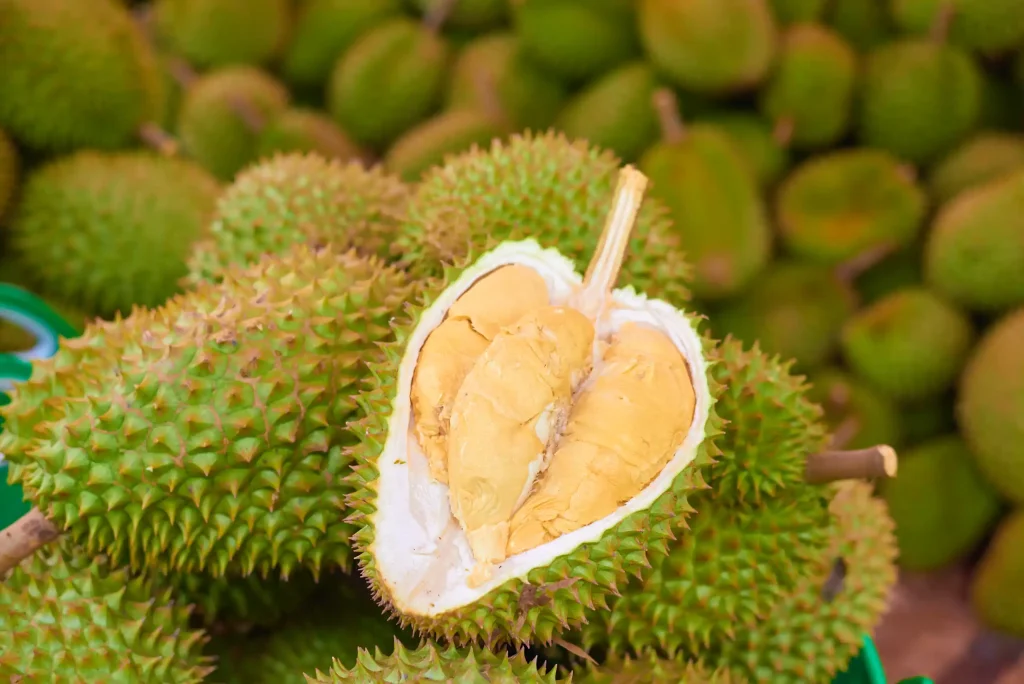
Ri6 is grown primarily across the Mekong Delta and Central Highlands of Vietnam, with Tien Giang and Dak Lak as the two most prominent production zones. Its flesh achieves a sugar content of 30 to 40 percent at peak ripeness, placing it among the sweetest naturally occurring durian varieties on the market. Compared to other Vietnamese cultivars such as Dona or Chuong Bo, Ri6 produces consistently smaller seeds and higher flesh-to-seed ratios, translating directly to better commercial yield per kilogram. Ri6 reaches peak supply between April and July, with limited but ongoing availability from January through March and again from August through December. This extended production window makes Ri6 a reliable option for importers seeking year-round supply continuity from a single origin country.
Monthong is Thailand’s dominant export variety, known for pale yellow flesh, very mild bitterness, a fruit size of 1.8 to 5.5 kg, and a peak season running from May through September; Musang King is Malaysia’s flagship premium cultivar, recognized globally for its vivid golden-yellow flesh, pronounced bittersweet complexity, thick creamy texture, and small seed size.
The two varieties occupy very different commercial positions in the global durian trade. Monthong leads globally by export volume because its firm flesh structure tolerates sea freight well and its mild flavor profile appeals broadly to first-time durian consumers across Europe, the Middle East, and North America. Musang King commands the highest price per kilogram in virtually every international market it enters, from Japan and Hong Kong to Singapore and the UAE, because of its distinctive bitterness profile and buttery creaminess that experienced durian buyers actively seek. Both varieties are available in whole fruit and peeled meat formats for export, though cold chain management requirements differ significantly between them, a point that becomes critical when comparing post-harvest texture performance.
Ri6 leads in raw sweetness intensity and carries a signature fermented undertone; Monthong delivers the cleanest and mildest sweetness with virtually no bitterness; Musang King produces the most complex bittersweet flavor profile of the three, with layered aroma and the longest finish on the palate. These distinctions arise from measurable differences in sugar content, aromatic compound concentration, and the presence or absence of bitter alkaloids specific to each cultivar.
To better understand how each variety performs on taste, the following three sub-sections examine Ri6, Monthong, and Musang King individually before drawing direct comparisons.
Ri6 durian tastes intensely sweet with a sugar content of 30 to 40 percent, a strong and pungent aroma characteristic of traditional Vietnamese durian, and a distinctive light fermented or alcoholic undertone that lingers pleasantly as an aftertaste. This sensory profile is what longtime durian enthusiasts in Vietnamese and overseas Vietnamese communities actively seek out.
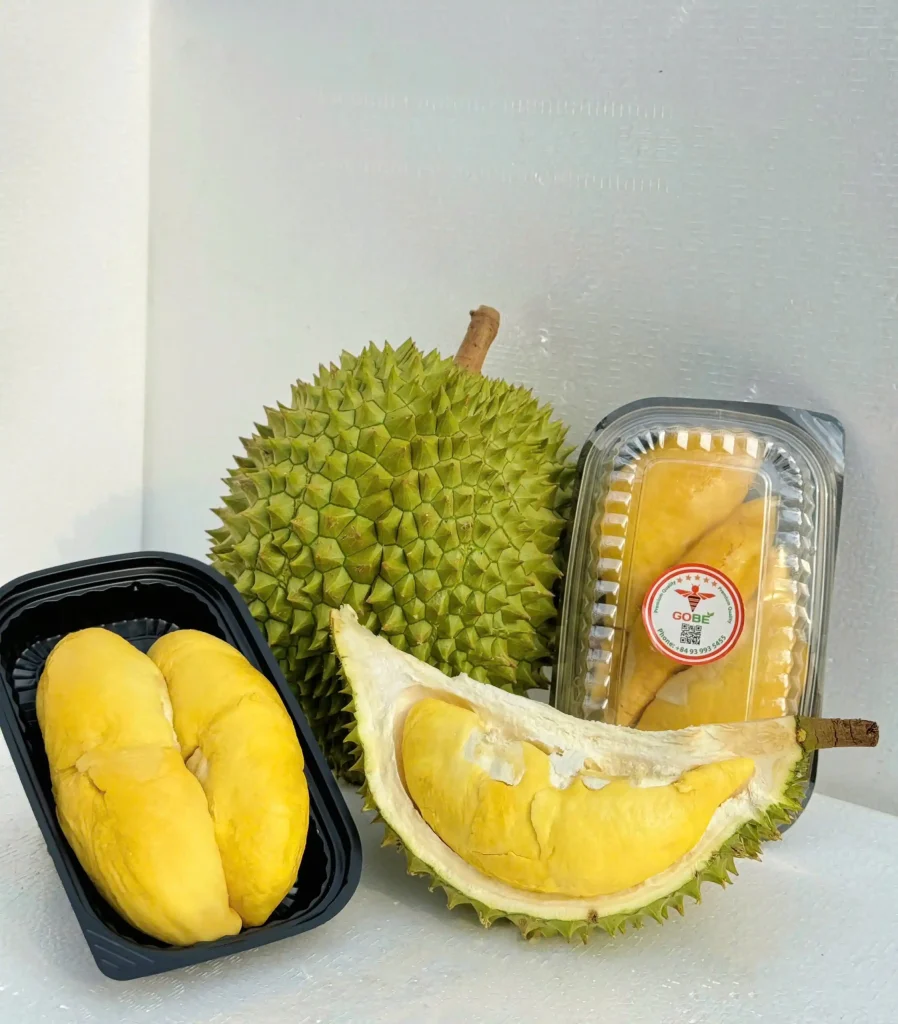
The fermented note in Ri6 is not a defect; it is a defining sensory characteristic. This undertone emerges from natural fermentation activity within the seed cavity as the fruit reaches full ripeness, and it intensifies when the fruit is harvested at peak maturity. Compared to Monthong, Ri6 is noticeably sweeter and more pungent in aroma. Compared to Musang King, Ri6 carries far less bitterness but delivers a higher aroma intensity that some consumers find more assertively “durian-forward.” For buyers targeting consumers who prefer bold, traditional durian flavor with deep sweetness and a memorable finish, Ri6 is the most appropriate cultivar to source.
Monthong durian tastes mildly sweet with a sugar content of 30 to 38 percent, a light and approachable aroma, and virtually no bitterness, making it the most accessible of the three varieties for consumers who are new to durian or who prefer a softer flavor experience.
In contrast to Ri6 and Musang King, Monthong presents the least complex flavor profile of the three. Its sweetness is real but not aggressive, its aroma is present but subdued, and the complete absence of bitterness removes the one sensory element that most deters first-time durian eaters. This approachability is a deliberate market advantage, not a weakness. Monthong has captured the majority share of the global durian import market because its flavor presents minimal risk of consumer rejection in new or developing markets. For importers entering European supermarkets, Middle Eastern retail chains, or North American Asian grocery networks, Monthong’s mild flavor profile reduces the barrier to trial and supports repeat purchase among a wider demographic. For experienced durian buyers seeking depth and complexity, however, Monthong’s profile may feel one-dimensional when placed alongside Musang King.
Musang King durian delivers a distinctive bittersweet flavor complexity that no other cultivar replicates, combining rich natural sweetness with a pronounced bitter note, multi-layered aromatic depth, and a long, evolving finish that experienced durian consumers consistently rank as the most sophisticated of any commercially available variety.
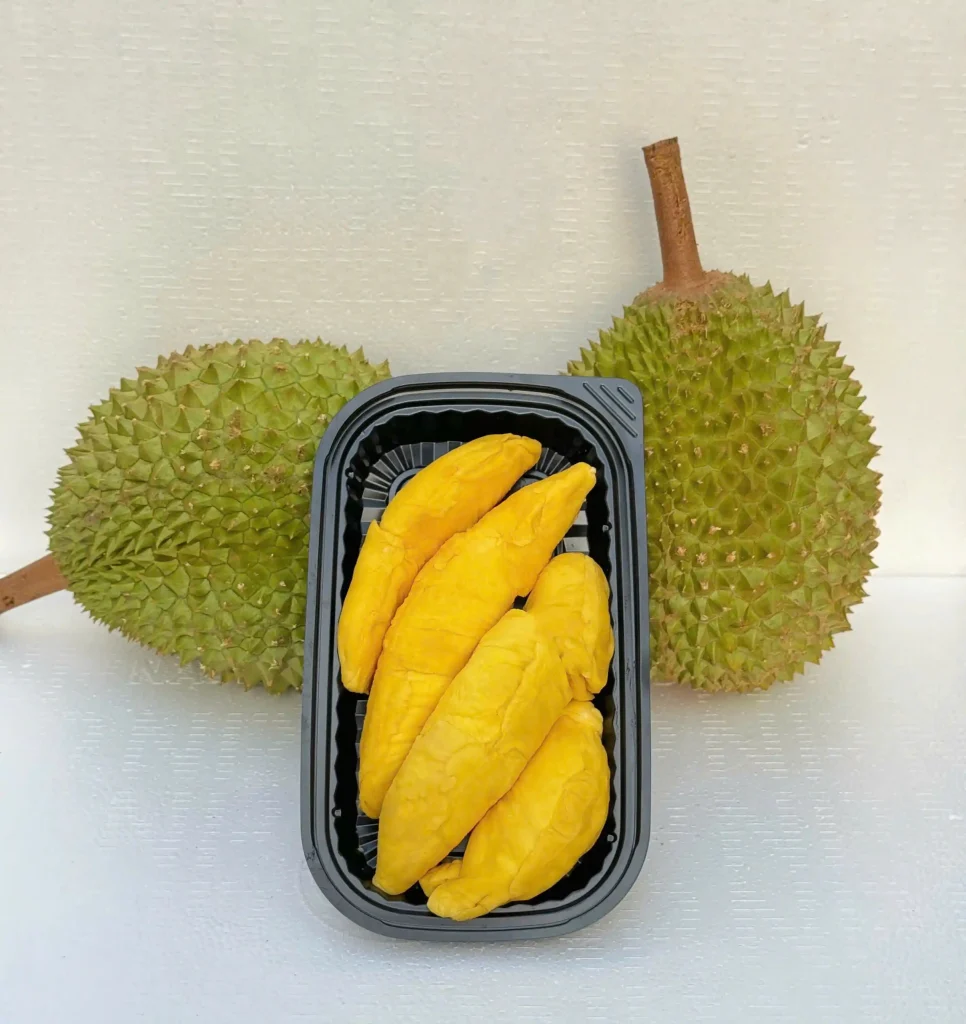
The bitterness in Musang King is not sharp or unpleasant; it is refined and integrated into the overall flavor architecture in a way that adds contrast and depth rather than competing with the sweetness. This bittersweet balance is the cultivar’s defining commercial identity and the primary reason Musang King commands premium pricing globally. Its aroma is strong but perceived as elevated and “luxurious” rather than merely pungent, which sets it apart psychologically from Ri6 in markets where sensory sophistication drives purchasing decisions. For buyers supplying high-end fresh produce retailers, specialty Asian grocery chains, or premium food service accounts, Musang King represents the highest value proposition in the durian category, provided that cold chain integrity is maintained from harvest to delivery.
Monthong flesh is the firmest and driest of the three; Ri6 flesh is soft, moist, and smooth; Musang King flesh is the creamiest and most custard-like, with a buttery richness that places it in a separate textural category from both Ri6 and Monthong. Texture directly affects the eating experience, the suitability of each variety for different processing applications, and the practical requirements of export logistics.
Following the taste comparison above, examining texture differences provides the second essential dimension needed to fully compare these three cultivars side by side.
Ri6 durian flesh is soft, smooth, and high in moisture content, with minimal fiber, a melt-in-the-mouth quality, and a texture that holds up well both when eaten fresh and when preserved under proper cold storage conditions of 13 to 18 degrees Celsius for whole fruit. This softness is one of Ri6’s most valued sensory attributes among fresh-eating consumers.
The softness of Ri6 flesh means it compresses gently under slight pressure and separates cleanly from the seed without resistance. This makes fresh consumption particularly pleasurable and means that Ri6 performs well when processed into frozen peeled segments, provided the cold chain is maintained without interruption. Compared to Monthong, Ri6 flesh is noticeably more delicate and wetter to the touch, making it less suitable for long sea freight journeys unless packing and temperature management are precise. Compared to Musang King, Ri6 lacks the dense, custard-thick creaminess but delivers a lighter, more refreshing mouthfeel that some consumers prefer for extended eating sessions. Its shelf life of 14 days under recommended storage conditions supports air freight to most international destinations, including Canada, the UAE, Japan, and European markets.
Monthong durian flesh is firmer and noticeably drier than Ri6, with lower surface moisture, a dense and even cell structure, less fiber than Ri6, and a clean, non-sticky quality that makes it significantly easier to handle during processing, packing, and industrial-scale food manufacturing. This structural firmness is the single most important factor in Monthong’s dominance of global sea freight export routes.
Monthong flesh holds its shape under physical stress and temperature fluctuation better than either Ri6 or Musang King, arriving at destination ports in consistently better physical condition when transported by sea container. This makes Monthong the preferred cultivar for ice cream manufacturers, confectionery producers, and bakery ingredient suppliers who require durian flesh that maintains structural integrity through mixing, freezing, and thawing cycles. Among the three varieties, Monthong ranks as the firmest in texture, the most mechanically stable for industrial use, and the most forgiving under less-than-perfect cold chain conditions, though optimal storage still requires continuous temperature management.
Musang King durian flesh is thick, dense, and creamy, with a custard-like consistency, the highest fat content and creaminess ratio of the three varieties, virtually no fiber, and a smooth, butter-like texture that coats the palate and dissolves slowly with each bite. This buttery creaminess defines Musang King’s premium positioning and justifies its higher price point in every market it enters.
The flesh does not merely feel soft; it behaves more like a rich, aerated cream than a conventional fruit pulp, creating a sensory experience that is qualitatively different from either Ri6 or Monthong. When Musang King is consumed at the correct temperature and freshness level, tasters frequently describe its texture as closer to a high-quality custard dessert than a raw tropical fruit. This unique attribute makes Musang King ideal for premium fresh eating, high-end gifting, and specialty dessert applications where the textural experience is as important as the flavor. This same creaminess also makes it the most sensitive of the three varieties to cold chain disruption; any significant temperature inconsistency during transit risks breaking down the emulsion-like fat structure and permanently altering the texture consumers expect.
No single variety wins absolutely across all criteria; Ri6 leads in sweetness intensity and traditional aroma, Monthong wins on structural firmness and broad market accessibility, and Musang King surpasses both in flavor complexity and textural creaminess, with the best choice depending entirely on the consumer profile and use case being served.
The table below compares Ri6, Monthong, and Musang King across the six most commercially relevant attributes. This side-by-side comparison covers sweetness level, bitterness profile, aroma strength, flesh firmness, creaminess rating, seed size, and primary recommended use for each variety, allowing importers, retailers, and consumers to identify the best match for their specific requirements at a glance.
| Attribute | Ri6 | Monthong | Musang King |
|---|---|---|---|
| Sweetness Level | Very High (30 to 40% sugar) | High (30 to 38% sugar) | High with complexity |
| Bitterness | Very Low | Virtually None | Pronounced and Distinctive |
| Aroma Strength | Very Strong / Pungent | Mild to Moderate | Strong but Layered |
| Flesh Firmness | Soft | Firm | Medium-Soft |
| Creaminess | Moderate | Low | Very High |
| Seed Size | Small to Flat | Medium | Small |
| Best For | Sweet lovers, fresh eating, traditional markets | New durian eaters, industrial processing, sea freight | Connoisseurs, premium retail, gifting |
To apply this comparison in practice, buyers can use the following framework to match variety to consumer profile:
None of these three varieties is objectively superior across all dimensions. The best durian is always the one that most precisely matches the palate and purpose of the person or market it is being sourced for.
Ri6 offers the best price-to-flavor ratio for sweet-forward durian buyers; Monthong delivers the most cost-efficient option for large-volume importers and processors; Musang King commands the highest price per kilogram but delivers an eating experience that premium market segments are willing to pay for.
Understanding how freezing and international shipping affect each variety, and knowing which markets currently favor which cultivar, will help buyers make a sourcing decision that protects both product quality and commercial return.
Yes, freezing affects the taste and texture of all three durian varieties, but the degree of impact varies significantly; Ri6 and Monthong maintain their core sensory properties better under standard frozen conditions than Musang King, which is more vulnerable to creaminess loss if cold chain continuity is broken.
Whole fruit Ri6 and Monthong are both recommended for storage between 13 and 18 degrees Celsius with a shelf life of 14 days, while peeled durian meat should be stored at 3 to 5 degrees Celsius with a shelf life of 7 days. Musang King’s high-fat-content flesh is sensitive to freeze-thaw cycles; even a brief temperature deviation can begin to break down the emulsified structure that creates its signature buttery mouthfeel. For this reason, buyers sourcing Musang King for international markets should prioritize suppliers who operate a verified, unbroken cold chain from the orchard through the packing house to the port of export.

The table below presents Gobeimex’s full durian product specifications for Ri6 whole fruit, Ri6 peeled meat, and Monthong whole fruit. This data helps importers quickly assess which product format and storage requirement best fits their logistics setup and target market.
| Specification | Ri6 Whole Fruit | Ri6 Peeled Meat | Monthong Whole Fruit |
|---|---|---|---|
| Sugar Content (%) | 30 to 40 | 32 to 40 | 30 to 38 |
| Type | Whole fruit | Peeled meat | Whole fruit |
| Size | 1.8 to 4.5 kg/piece | 500 g | 1.8 to 5.5 kg/piece |
| Shelf Life | 14 days | 7 days | 14 days |
| Box Weight | 10 / 12 kg | 4 / 8 kg | 10 / 12 / 18 kg |
| Shipping Method | By air and sea | By air | By air and sea |
| Storage Temperature | 13 to 18°C | 3 to 5°C | 13 to 18°C |
Monthong holds the largest share of international durian export volume overall; Musang King dominates premium and high-income markets in Japan, Hong Kong, and Singapore; Ri6 is gaining significant traction in Canada, the UAE, and markets with established Vietnamese diaspora communities.
The shipping method chosen for each variety directly reflects its textural properties. Ri6 and Monthong are both exported by air and by sea, giving importers flexibility in lead time and cost. Musang King is most reliably exported by air freight for fresh consumption because of its fragile creaminess, though frozen Musang King meat is increasingly available for sea freight to reduce logistics cost at the expense of some texture quality.
For importers seeking a stable, year-round supply of Ri6 and Monthong from a single certified origin, the following key sourcing advantages make Vietnam a compelling choice:
Buyers interested in a reliable supply of premium Vietnamese durian for their import programs are welcome to contact Gobeimex at Info@gobeimex.com or visit gobeimex.com to request product specifications and current availability schedules.


