Subtotal $0.00

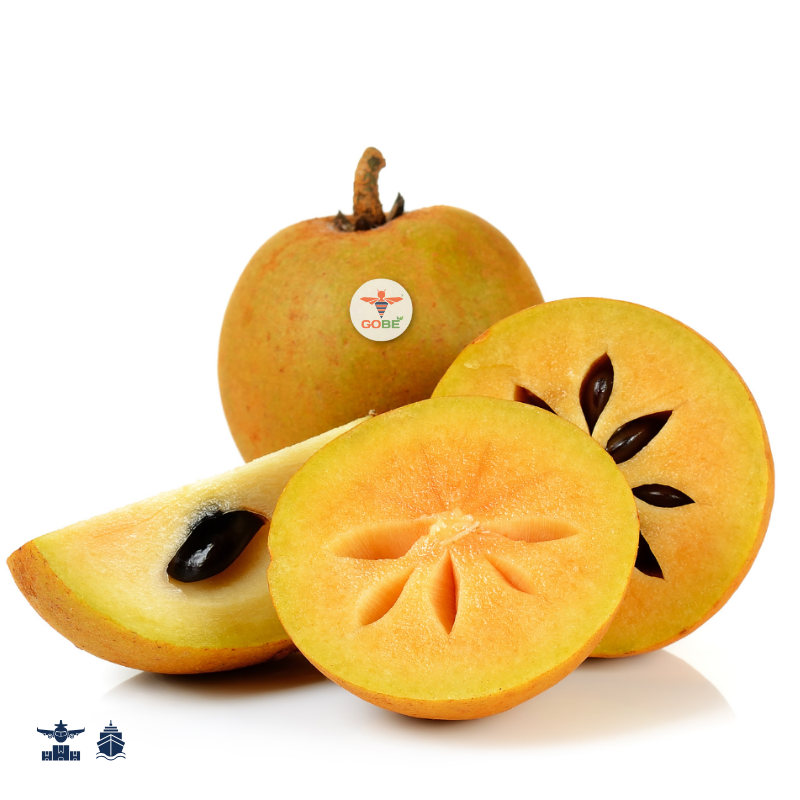
Reliable Sapodilla (Chikoo) suppliers for commercial importers are certified direct packers and exporters from Vietnam, India, and Thailand, with Vietnam increasingly preferred for its high-sugar varieties (19–24% Brix), unbroken cold chain infrastructure, and complete international certification portfolio covering GlobalGAP, FDA, ISO, GRASP, and Sedex. Sourcing from a verified direct exporter rather than a trading intermediary gives buyers greater control over product consistency, regulatory documentation, and landed cost.
Fresh Sapodilla wholesale pricing is quoted on FOB or CIF terms, with indicative FOB Vietnam prices ranging from USD 2.50 to USD 5.50 per kg depending on fruit grade (160–180 g/pc small, 190–220 g/pc large), seasonality, and shipping mode. Because Sapodilla carries a shelf life of only 7 days at 5–8°C, the majority of commercial export volume moves by air freight, a cost that materially affects landed price and must be calculated before any wholesale negotiation begins.
The correct HS Code for fresh Sapodilla in international trade is 0810.90, covering other fresh tropical fruits not elsewhere specified, with country-level digit extensions and duty rates varying across the EU, the United States, Japan, and the Gulf. Importers must also satisfy MRL compliance, phytosanitary certification, and cold chain continuity requirements before any commercial shipment can clear customs at destination.
The most reliable Sapodilla suppliers for commercial importers fall into three distinct categories: certified direct packers and exporters, regional trading intermediaries, and B2B sourcing platforms, each varying significantly in price transparency, certification depth, and supply consistency. Understanding which supplier type fits your procurement model is the first step before requesting any quotation. The sections below break down the leading exporting countries and the specific verification steps buyers must complete before signing any supply agreement.
Vietnam, India, and Thailand are the three dominant exporters of fresh Sapodilla globally, each with distinct competitive advantages in flavor profile, supply volume, and destination market access. The origin choice directly determines the certification options, shelf life performance, and regulatory documentation available to the importer.
Vietnam produces Sapodilla primarily in the Mekong Delta region, specifically in Tien Giang and Ben Tre provinces, where tropical growing conditions yield fruit with a Brix level of 19–24%, placing Vietnamese Sapodilla among the sweetest commercially exported varieties worldwide. Vietnam’s export certification infrastructure, including GlobalGAP, FDA registration, and ISO-certified packing houses, has opened access to demanding markets in North America and Europe. Active buying markets include Canada, the UAE, the United Kingdom, Germany, the Netherlands, Japan, and Kuwait.
India is the largest Sapodilla producer by volume globally, with Gujarat, Maharashtra, and Karnataka accounting for the bulk of output. Most production is consumed domestically, and export cold chain continuity and residue control remain inconsistent across Indian suppliers. Indian Sapodilla, locally called Chikoo, holds established positions in Middle Eastern and South Asian diaspora markets.
Thailand exports Sapodilla in smaller quantities but benefits from strong logistics connectivity across Southeast Asia and established relationships with Japanese buyers. Thai varieties tend to be firmer at harvest, providing slightly longer post-harvest handling windows before retail.
The table below compares the export profiles of the three primary origins for fresh Sapodilla. Importers can use it to shortlist origins that align with their destination market and certification requirements.
| Origin | Primary Markets | Brix (Sugar %) | Key Certifications Available | Supply Consistency |
|---|---|---|---|---|
| Vietnam | Canada, UAE, UK, Germany, Japan | 19–24% | GlobalGAP, FDA, ISO, GRASP, Sedex | High (52 weeks/year via multi-farm network) |
| India | UAE, UK, USA, South Asian diaspora | 16–22% | Variable by supplier | Moderate (seasonal concentration) |
| Thailand | Japan, Southeast Asia | 17–21% | GlobalGAP (select exporters) | Moderate |
While India leads in raw production volume, Vietnam offers the most consistent export-grade supply backed by internationally recognized food safety certifications, making it the preferred origin for supermarket-grade import programs in Europe, North America, and the Gulf.
Importers must complete a structured verification process before committing to any Sapodilla supplier, covering certification validity, cold chain capability, export documentation history, and minimum order quantity alignment. This verification process is standard practice among professional fresh produce buyers in Europe, North America, and the Gulf.
The checklist below reflects the due diligence standard used by commercial importers across these key market regions:
Certification Verification:
Cold Chain Capability:
Export Documentation History:
MOQ and Commercial Terms:
Gobeimex (Golden Bee Import Export Co., Ltd.) from Vietnam operates 30+ hectares of company-owned GlobalGAP-certified farmland and 200+ hectares through partner farms, holds all five major international certifications (GlobalGAP, GRASP, ISO, FDA, Sedex), and supplies Sapodilla 52 weeks per year to markets across four continents. Importers can request the complete certification package directly from Info@gobeimex.com before placing any initial order.
The wholesale price of fresh Sapodilla for commercial importers currently ranges from approximately USD 2.50 to USD 5.50 per kg on FOB Vietnam terms, depending on fruit grade, seasonality, packaging specification, and shipping mode. CIF prices to major destination markets add USD 1.50 to USD 4.00 per kg on top of FOB, with air freight to Europe and the Gulf accounting for the largest share of landed cost given Sapodilla’s 7-day shelf life constraint. The sections below break down the specific variables driving price fluctuation and the negotiation strategies buyers can use to improve their purchasing position.
Sapodilla wholesale prices are driven by four primary variables: seasonal availability, fruit size and sugar content, cold chain logistics costs, and volume commitment from the buyer. Each variable operates independently and must be addressed separately in any supply negotiation.
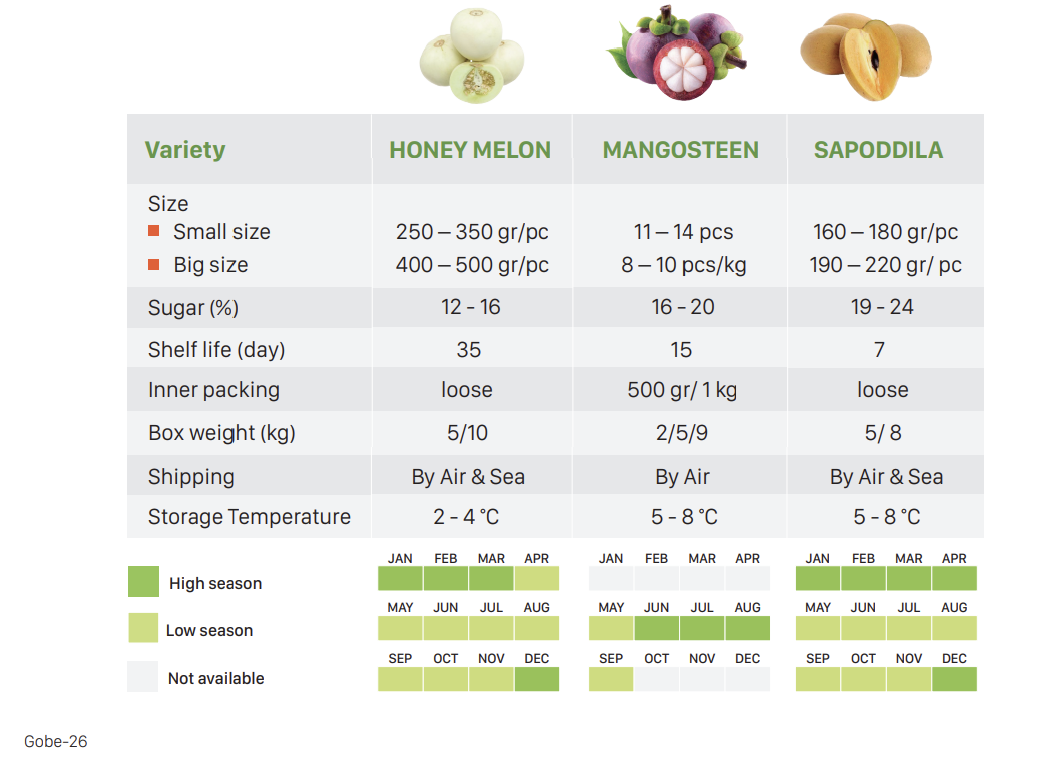
Seasonality: Based on Gobeimex’s supply calendar for Vietnamese Sapodilla, two distinct high-season windows exist: January through April and December. During these months, farm-gate prices are lower and supply volume is highest, creating the most favorable conditions for importers to secure competitive FOB pricing. From May through November (low season), prices increase by 15–30% due to reduced harvest volumes and higher procurement competition.
The table below provides a seasonal pricing reference for export-grade Vietnamese Sapodilla. Importers can use it to time annual purchase commitments and plan logistics calendars.
| Season | Months | Relative Price vs. Annual Average | Supply Volume |
|---|---|---|---|
| High Season | January, February, March, April, December | 10–20% below average | High |
| Low Season | May through November | 15–30% above average | Moderate |
Fruit Size and Sugar Content: Large-grade Sapodilla (190–220 g/pc) commands a price premium of approximately 20–35% over small grade (160–180 g/pc) because of stronger retail presentation and higher pack weight efficiency. Fruit reaching the upper end of the 19–24% Brix range is further differentiated in quality-conscious retail markets such as Japan and the UAE, where sugar consistency is a primary buying criterion.
Logistics and Cold Chain Costs: Sapodilla’s shelf life is limited to 7 days at 5–8°C, so the vast majority of commercial export volume travels by air freight. Air freight from Vietnam to Europe typically costs USD 2.50–4.00 per kg, substantially compressing importer margins on lower-grade fruit. Exporters with dedicated refrigerated vehicle fleets for farm-to-airport transit, such as Gobeimex, reduce product loss rates and improve net margin for buyers on a per-shipment basis.
Shipping Mode: Both air and sea shipping are technically available for Sapodilla from Vietnam, though sea freight is viable only for geographically proximate markets or buyers accepting a shorter remaining shelf life at destination. For importers in Canada, Germany, the UAE, and Japan, air freight is the standard commercial shipping mode for fresh Sapodilla.
Importers can negotiate significantly better wholesale prices for Sapodilla by committing to seasonal purchase timing, entering long-term supply contracts, and consolidating order volumes to meet higher MOQ thresholds. These three strategies, applied in combination, typically yield the most meaningful reductions in effective landed cost.
The most effective negotiation approaches, in order of impact, are:
The correct HS Code for fresh Sapodilla (Chikoo) in international trade is HS 0810.90, which covers “Other fresh tropical fruits not elsewhere specified or included,” with individual importing countries adding further digits to create national tariff classifications. Importers must understand how this 6-digit base code extends in their specific destination market, and what duty rates or Free Trade Agreement preferences apply to imports from Vietnam or other key origins. The sections below cover customs clearance usage and the distinctions that apply to different product forms.
HS Code 0810.90 appears across the full set of commercial trade documents required for Sapodilla clearance, including the Commercial Invoice, Packing List, Bill of Lading or Air Waybill, Certificate of Origin, and Phytosanitary Certificate. Consistent use of the correct HS Code across all documents is a mandatory compliance requirement and any mismatch triggers customs delays or penalty assessments.
The HS Code performs three critical functions during the customs clearance process:
Tariff Determination: Customs authorities use the HS Code to apply the correct import duty rate. For Vietnamese Sapodilla exported to EU markets under the EU-Vietnam Free Trade Agreement (EVFTA), preferential tariff rates apply and may reduce duty to 0% depending on the specific CN code extension used. Importers should confirm the applicable preferential rate with their customs broker before finalizing landed cost calculations.
Phytosanitary Linkage: The HS Code directly determines which phytosanitary inspection protocols apply at the port of entry. Fresh tropical fruit under HS 0810.90 requires a valid Phytosanitary Certificate issued by the exporting country’s national plant protection authority. In Vietnam, this is the Plant Protection Department under the Ministry of Agriculture and Rural Development. Without this document correctly linked to the declared HS Code, customs clearance will be delayed or refused.
Documentary Risk Management: Declaring an incorrect HS Code can trigger customs audits, penalty assessments, and shipment holds. Importers should work with exporters who have direct experience clearing Sapodilla into their specific destination market and can provide copies of successful prior clearance documents as reference before any new trade lane is opened.
Yes, different HS Codes apply to Sapodilla depending on its form, with fresh Sapodilla classified under HS 0810.90, dried Sapodilla under HS 0813, and processed Sapodilla products such as purees or juices under Chapter 20. This distinction carries significant implications for import duty rates and regulatory requirements at destination.
The table below maps each Sapodilla product form to its applicable HS Code classification and the core import requirements that follow from that classification. Importers sourcing multiple product forms simultaneously should review this table before finalizing any customs documentation package.
| Product Form | HS Code (6-digit base) | Typical Duty Implication | Key Import Requirements |
|---|---|---|---|
| Fresh Sapodilla | 0810.90 | Variable; FTA preferences may apply | Phytosanitary Certificate, MRL compliance, cold chain |
| Dried Sapodilla | 0813.XX | Generally lower than fresh; verify country code | Certificate of Origin, food safety declaration |
| Sapodilla Puree or Juice | 20XX.XX | Higher processing-level tariff may apply | Food labeling compliance, FSMA or EU food law |
Importers sourcing multiple Sapodilla product forms simultaneously must declare each under its separate HS Code and prepare distinct documentation packages, because combining different product forms under a single code creates customs compliance risk and can result in consignment holds at port of entry.
Importers working with established direct exporters benefit from suppliers who maintain a dedicated export compliance team familiar with classification nuances across multiple destination markets.
Fresh Sapodilla for commercial import must meet a combination of internationally recognized certification standards, minimum product specifications, and market-specific import requirements, with the core benchmarks being GlobalGAP compliance, MRL adherence, and cold chain integrity from farm to port. Understanding these requirements in full enables importers to draft technically accurate purchase specifications and reduces the risk of rejection at the port of entry.
The five most important international certifications for Sapodilla exporters serving global markets are GlobalGAP, GRASP, ISO, FDA, and Sedex, each addressing a distinct dimension of quality assurance, labor standards, and supply chain ethics. Each certification serves a specific function for importers and their downstream retail or distribution partners.
GlobalGAP (Global Good Agricultural Practices): This is the baseline certification required by virtually all European supermarket chains and increasingly demanded by North American and Gulf buyers. GlobalGAP certification confirms that the farm and packing house follow internationally recognized standards for pesticide management, water use, worker safety, and product traceability. Importers should verify the active certificate number directly on the GlobalGAP database before approving any new supplier.
GRASP (GlobalGAP Risk Assessment on Social Practice): GRASP is an add-on module to GlobalGAP that audits social and labor conditions on the farm. It has become increasingly required by European importers under supply chain due diligence legislation, including the EU Corporate Sustainability Due Diligence Directive (CSDDD). Suppliers holding GRASP certification demonstrate a documented commitment to ethical labor practices that satisfies European retail compliance teams.
ISO (International Organization for Standardization): ISO certification, typically ISO 9001 for quality management systems, confirms that the exporter’s processing and packing operations follow documented and auditable procedures. This is particularly important for importers managing consistent pack specifications across multiple shipment cycles and multiple seasons.
FDA (U.S. Food and Drug Administration): FDA registration and compliance is mandatory for all fresh produce exported to the United States. Under the Food Safety Modernization Act (FSMA), exporters must meet Produce Safety Rule requirements and maintain active FDA facility registration. For Vietnamese exporters such as Gobeimex, holding FDA certification also signals readiness to serve the growing Vietnamese diaspora communities in Canada who purchase through U.S.-adjacent distribution networks.
Sedex (Supplier Ethical Data Exchange): Sedex membership requires exporters to complete regular SMETA (Sedex Members Ethical Trade Audit) audits covering labor rights, health and safety, environment, and business ethics. This certification is increasingly mandatory for suppliers to major UK and European supermarket chains operating under enhanced supplier accountability policies.
Gobeimex (Golden Bee Import Export Co., Ltd.) holds all five certifications simultaneously, making it one of the most comprehensively certified fresh Sapodilla exporters operating from Southeast Asia. Importers can request copies of all five certificates directly through Info@gobeimex.com before signing any supply agreement.
Importers typically specify Sapodilla packaging in carton boxes of 5 kg or 8 kg with loose inner packing, stored and transported at 5–8°C, with a maximum shelf life of 7 days from the date of pack, making air freight the only commercially viable shipping mode for most international routes. These specifications must appear verbatim in purchase orders to prevent grade, weight, or cold chain disputes at destination.
The table below documents the full export specifications for Vietnamese Sapodilla by grade. Importers should include these figures directly in purchase order templates to standardize expectations with the exporting packing house.
| Specification | Small Grade | Large Grade |
|---|---|---|
| Fruit Weight | 160–180 g/pc | 190–220 g/pc |
| Sugar Content (Brix) | 19–24% | 19–24% |
| Inner Packing | Loose | Loose |
| Box Weight Options | 5 kg / 8 kg | 5 kg / 8 kg |
| Storage Temperature | 5–8°C | 5–8°C |
| Shelf Life | 7 days | 7 days |
| Shipping Mode | Air and Sea | Air and Sea |
Beyond physical specifications, importers should require the following on all outer carton labeling: country of origin, packing house registration number, GlobalGAP producer number, net weight, production date, and best-before date. These labeling requirements are mandatory for customs clearance in EU, UK, and Japanese markets, and increasingly enforced at UAE and Canadian ports of entry.
The 7-day shelf life constraint means any cold chain failure during transit, whether at the farm, packing house, or during air freight staging, can result in rejection of the entire consignment. Importers should require temperature data loggers in every shipment and establish a written protocol with their supplier covering temperature excursion claims before the first shipment departs.
Vietnamese Sapodilla outperforms competing origins on three critical dimensions for wholesale importers: sugar content consistency at 19–24% Brix, year-round supply reliability through a multi-farm sourcing network, and the highest density of internationally recognized certifications among Sapodilla-exporting countries. Vietnam’s geographic concentration of Sapodilla production in the Mekong Delta, combined with packing houses located within 12 hours of growing areas, gives Vietnamese exporters a structural freshness advantage that translates directly into longer remaining shelf life at destination compared to fruit sourced from more fragmented or geographically distant production regions in India.
Yes, Vietnam is a dependable year-round Sapodilla source for global importers, supported by a 52-week supply capacity built on company-owned certified farms and an extensive partner farmer network across the Mekong Delta. Gobeimex’s supply model illustrates how this year-round reliability is operationally achieved at scale.
Specifically, the following operational elements underpin Vietnam’s year-round Sapodilla supply reliability:
For importers with year-round retail commitments, particularly supermarket chains in Canada, Germany, the UAE, or Japan, this supply model offers the operational predictability that seasonal or single-farm suppliers cannot match.
Sapodilla importers should request a documented post-harvest handling protocol covering size grading, cleaning, pesticide residue testing, cold storage, and where the destination market requires it, an ethylene ripening protocol for fruit sold at retail in a ready-to-eat condition. Each stage of this protocol carries documentation rights that the importer should enforce in writing before the first shipment.
The key post-harvest handling steps and the importer’s documentation rights at each stage are:
Grading and Sorting: Fruit is mechanically or manually sorted by weight, with small grade at 160–180 g/pc and large grade at 190–220 g/pc, and visually damaged, bruised, or under-ripe units excluded from the export pack. Importers should request a written quality control report for each packing run, including the percentage of rejects and the reasons for exclusion from export grade.
Cleaning and Residue Testing: All fruit must be cleaned of field soil and surface contaminants before packing. Residue testing against MRL standards of the destination market should be conducted by an accredited third-party laboratory, and importers should request a Certificate of Analysis (COA) with each commercial shipment confirming that all tested active ingredients are below MRL thresholds for the relevant country.
Ethylene Ripening Protocol: Sapodilla is harvested at a mature-but-firm stage to withstand transit. In destination markets with controlled-atmosphere ripening rooms, suppliers may apply ethylene gas treatment post-harvest to accelerate and standardize ripening for retail presentation. Importers should confirm with their retail customers whether pre-ripened or firm fruit is preferred at arrival and communicate this specification to the exporter in writing before packing begins.
Phytosanitary Certificate Preparation: A Phytosanitary Certificate issued by Vietnam’s Plant Protection Department must accompany every export shipment. Reputable exporters such as Gobeimex maintain direct working relationships with the inspecting authority and prepare the certificate concurrently with packing to minimize any delay between packing completion and document issuance. Importers should confirm that the certificate covers their specific destination country’s import requirements, including any declared treatments such as fumigation or cold treatment, as requirements vary significantly between the EU, the United States, Japan, and the UAE.
For importers seeking to establish a reliable Sapodilla supply relationship with a fully certified Vietnamese exporter, Gobeimex (Golden Bee Import Export Co., Ltd.) is available to discuss supply terms, product specifications, and certification documentation.
Contact Gobeimex:
Email: Info@gobeimex.com
WhatsApp: +84 939 93 54 55
Website: gobeimex.com
Head Office: PH49, No. 23, Street No. 2, Phuong Viet Residential Area, Binh Dong Ward, Ho Chi Minh City, Vietnam