Subtotal $0.00

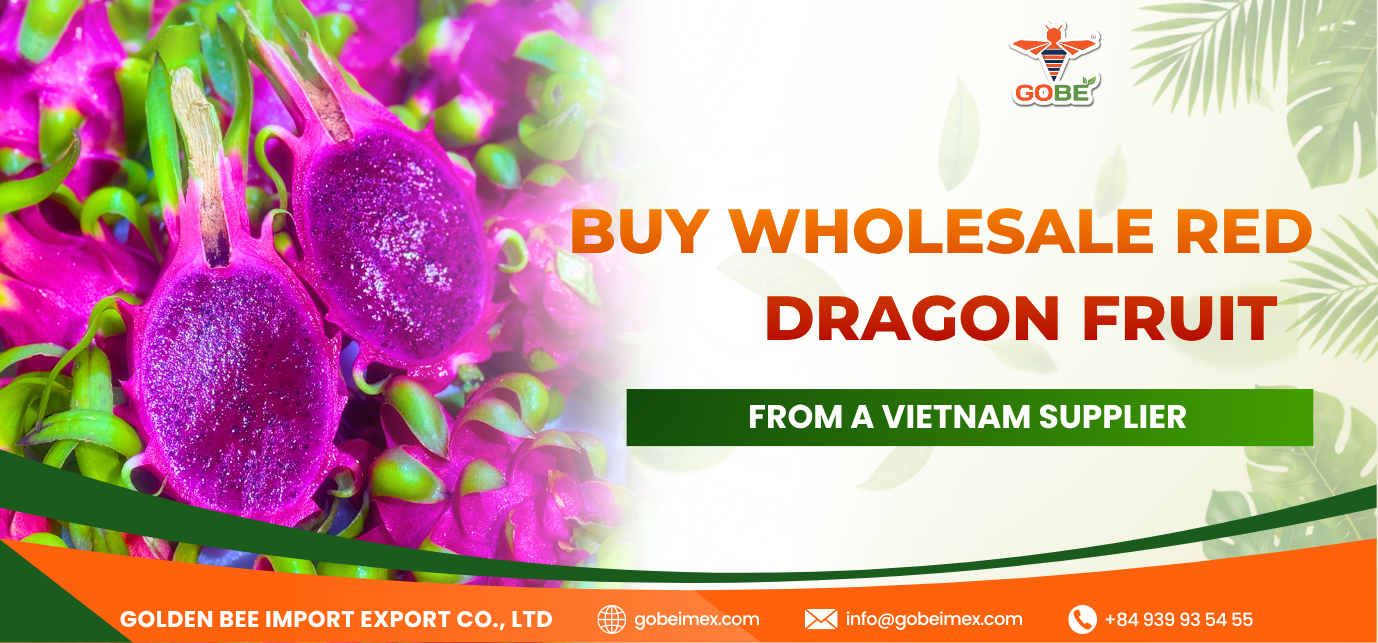
Yes, you can buy red dragon fruit at wholesale prices directly from Vietnam exporters, bypassing intermediaries to access farm-gate pricing, full traceability, and consistent 52-week supply. Vietnam is one of the world’s leading red dragon fruit exporters, with packing houses located in the Mekong Delta region processing fruit within 12 hours of harvest to lock in peak freshness for international shipments.
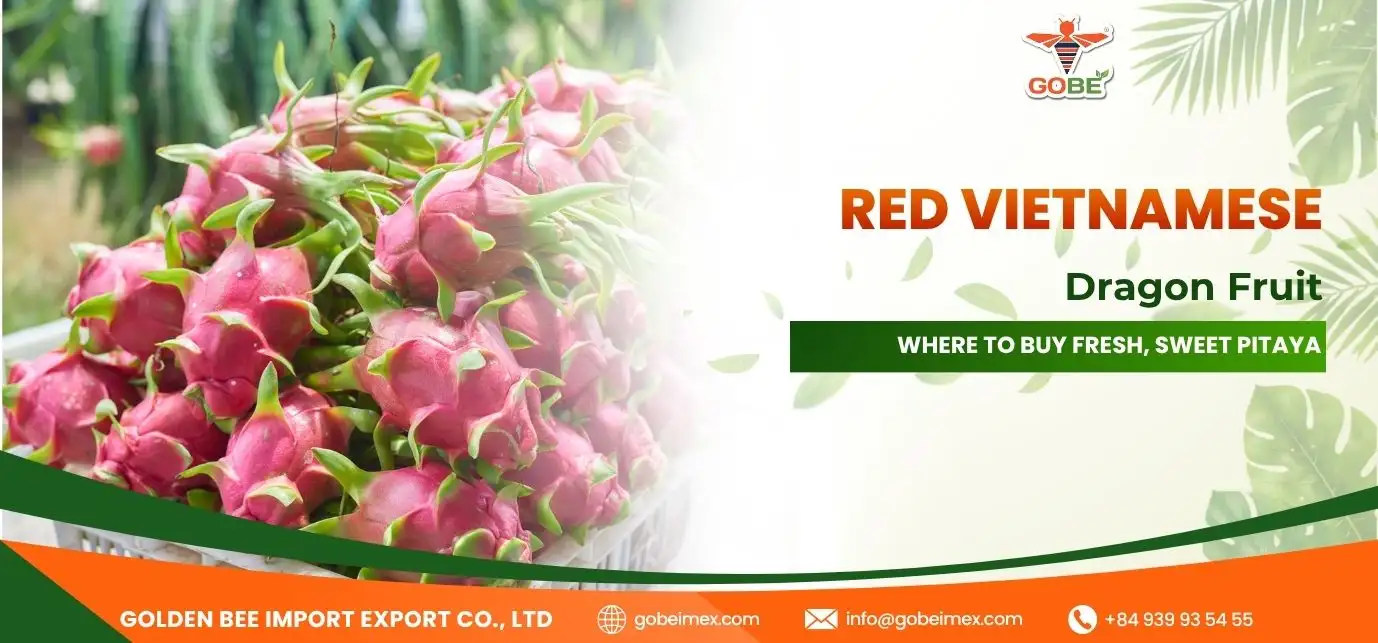
Red dragon fruit from Vietnam is characterized by its vibrant red skin, intensely colored red or white flesh depending on variety, natural sweetness with Brix levels typically ranging from 13 to 18 degrees, and high antioxidant content. Vietnam’s tropical climate across Binh Thuan, Long An, and Tien Giang provinces produces fruit that meets the quality benchmarks demanded by premium retailers in Europe, North America, the Middle East, and Asia.
Identifying a reliable Vietnam supplier requires evaluating certifications, farming infrastructure, cold chain capabilities, and export track record across multiple markets. Suppliers like GOBE IMEX (Golden Bee Vietnam), a packer and direct exporter with GlobalGAP, GRASP, ISO, FDA, and Sedex certifications, 230+ hectares of growing areas, and 12+ years of export experience, represent the type of traceable, compliant supply chain that international importers, distributors, and supermarket buyers require for long-term wholesale partnerships.
Yes, you can buy red dragon fruit at wholesale prices directly from Vietnam, with key advantages including farm-direct pricing that eliminates trader margins, full supply chain traceability from certified growing areas, flexible container options (FCL and LCL), and guaranteed uninterrupted availability across 52 weeks per year.
Purchasing directly from a Vietnamese packer and exporter removes at least one layer of intermediary markup that typically adds 15 to 30 percent to the cost of fresh produce in conventional import chains. More importantly, direct sourcing gives wholesale buyers control over quality specifications, packaging requirements, and delivery scheduling from the point of harvest rather than receiving produce that has already transited through a trading company’s warehouse. Vietnam’s red dragon fruit production is concentrated in provinces with year-round growing capacity, making it one of the few tropical fruits capable of supporting continuous weekly supply commitments to international retail chains and distributors.
GOBE IMEX (Golden Bee Vietnam) operates as a direct packer and exporter with its main packing house in Tien Giang Province, positioned within the heart of Vietnam’s fruit-growing region. This setup allows fruit to move from field to packing line within approximately 12 hours of harvest, a critical window for preserving shelf life on long-haul export routes to Canada, the UAE, the UK, Germany, the Netherlands, Japan, and Kuwait.
The minimum order quantity (MOQ) for wholesale red dragon fruit from Vietnam is typically structured around container loads: a Full Container Load (FCL) of a 20-foot reefer container holds approximately 18 to 20 metric tons, while a 40-foot reefer container accommodates 24 to 26 metric tons of packed fresh dragon fruit. For buyers who cannot commit to a full container in initial orders, Less than Container Load (LCL) shipments are available through consolidation, typically starting from 1 to 5 metric tons depending on the exporter’s consolidation schedule.
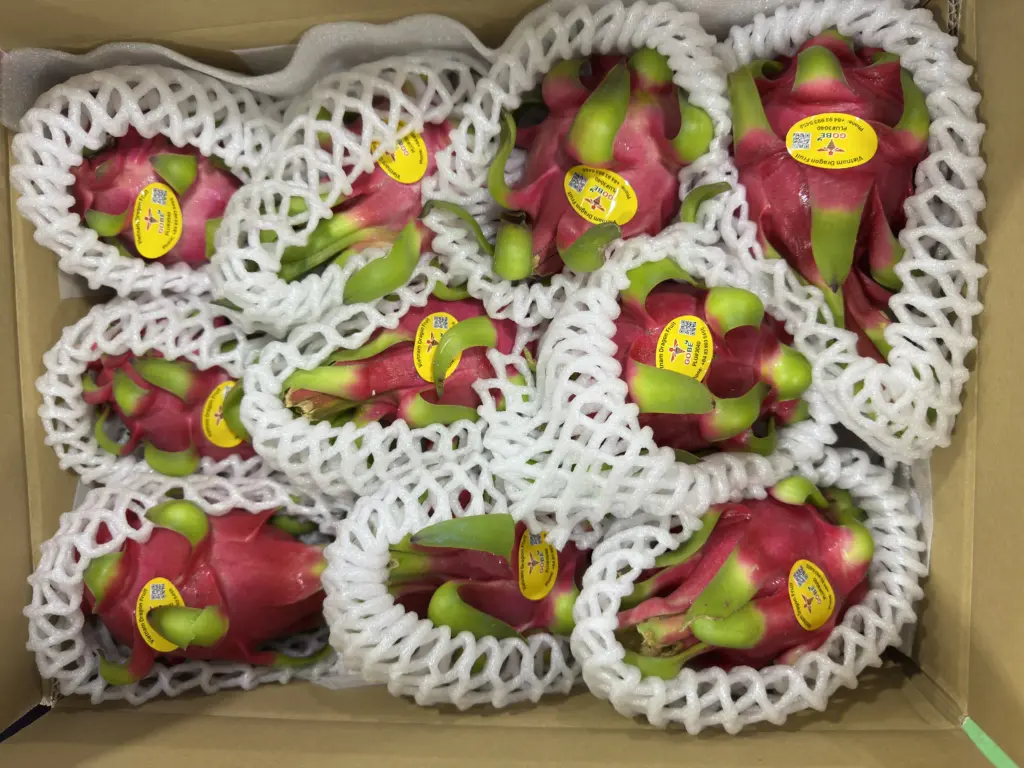
MOQ flexibility varies considerably depending on the target market and buyer profile. European Union importers working with supermarket chains typically commit to FCL orders on a weekly or biweekly basis during peak season, while buyers in the Middle East and Southeast Asia often start with LCL trial shipments before scaling to container-level commitments. North American importers, particularly those purchasing for distribution to Asian grocery chains in Canada, frequently operate on FCL schedules given port and customs consolidation efficiencies.
GOBE IMEX accommodates a range of order sizes and works with buyers to structure initial trial shipments that allow quality verification before full wholesale commitments are made. The company’s 52-week supply guarantee is particularly relevant for importers who need to lock in forward contracts with their retail customers, as it provides the supply continuity assurance that spot-market purchasing from smaller growers cannot offer.
Wholesale pricing for red dragon fruit from Vietnam is determined by five primary variables: fruit grade and size specification, packaging format, delivery incoterms (FOB, CIF, or CFR), seasonal harvest volume, and the buyer’s order frequency and volume commitment. Prices quoted on an FOB (Free on Board) basis from Ho Chi Minh City or Cat Lai Port reflect the cost of fruit, packing, inland transport, and export clearance, but exclude ocean freight and destination charges.
Purchasing directly from a packer-exporter like GOBE IMEX removes the trader markup that applies when buying through commodity brokers or intermediary trading companies. This price differential is especially significant for Grade A red dragon fruit with red flesh, which commands premium pricing in European and North American health food retail channels. Seasonal price fluctuation is a factor buyers should plan for: Vietnam’s main dragon fruit harvest seasons typically produce lower per-kilogram pricing, while off-season months, when output from some growing regions decreases, may push prices slightly higher for consistent grade specifications.
Standard international payment terms for wholesale fresh produce from Vietnam include Telegraphic Transfer (TT) with a deposit before shipment and balance against shipping documents, Documentary Letter of Credit (LC) for larger volume contracts, and Documents against Payment (DP) for established long-term buyers. Buyers new to sourcing from Vietnamese exporters are advised to begin with TT payment structures and move to LC arrangements as the trading relationship matures. Conditions and flexibility vary by exporter, and GOBE IMEX’s trade team can advise on the most suitable structure for each market and buyer profile.
Red dragon fruit (Hylocereus costaricensis and Hylocereus polyrhizus) is a tropical cactus fruit native to Central America, now commercially cultivated at scale in Vietnam, with a distinctive bright red or magenta exterior, scale-like bracts, and flesh that ranges from deep red to purple-red depending on the variety. Vietnam’s red dragon fruit has achieved premium global recognition due to the country’s tropical climate, the fertile alluvial soils of the Mekong Delta, and decades of varietal development that have produced fruit with superior Brix levels, vibrant color consistency, and shelf life suited to long-haul export.
The key distinction that matters for wholesale buyers is the difference between red-skin/red-flesh varieties (the true premium product for health food and specialty retail markets) and red-skin/white-flesh varieties (which are more widely produced and broadly exported). Both are grown commercially in Vietnam, and both meet international export standards, but they serve different market segments and command different price points in destination markets. Vietnam’s advantage lies in its ability to supply both varieties at export grade consistently across all 52 weeks of the year, supported by growing regions in Binh Thuan (the largest producing province), Long An, Tien Giang, and Dong Thap.
GOBE IMEX sources red dragon fruit from its own 30+ hectare growing areas and from a network of partner farms spanning 200+ GlobalGAP-certified hectares, providing the volume consistency and quality uniformity that wholesale buyers require when committing to regular shipment schedules.
There are three primary red dragon fruit varieties exported commercially from Vietnam: LĐ1 (red flesh, standard export variety), LĐ5 (red flesh, improved Brix and larger fruit size), and Đài Đỏ (red-skin/white-flesh, widely exported to European markets). Each variety differs in flesh color intensity, sweetness, fruit weight, and suitability for different destination markets, making variety selection an important part of the wholesale sourcing decision.
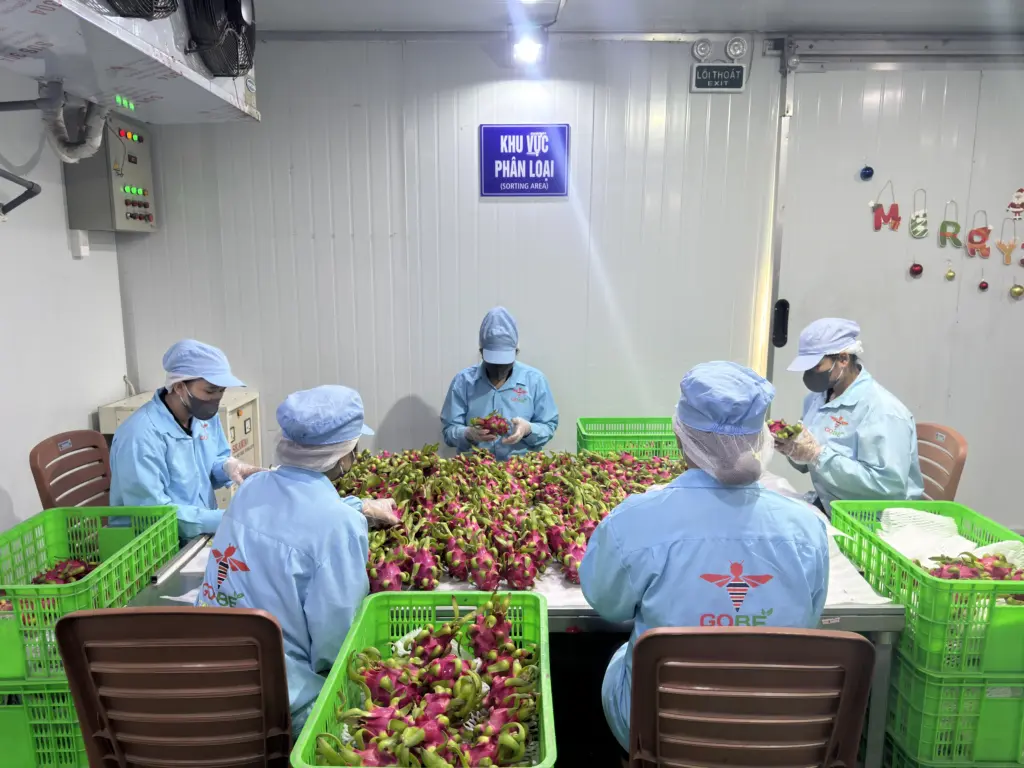
The table below summarizes the key export attributes of Vietnam’s main red dragon fruit varieties to help wholesale buyers match variety selection to their market requirements:
| Variety | Flesh Color | Avg. Brix | Avg. Fruit Weight | Primary Export Markets |
|---|---|---|---|---|
| LĐ1 | Deep red | 13-15° | 300-500g | Middle East, Asia, specialty EU |
| LĐ5 | Deep red/purple | 15-18° | 400-700g | Premium EU, North America, Japan |
| Đài Đỏ | White | 12-15° | 350-600g | EU mainstream, UK, Australia |
Market preferences follow a clear pattern: Middle Eastern and Asian buyers, including importers in Japan, Kuwait, and UAE, strongly prefer red-flesh varieties for their visual impact and perceived health value, while European mainstream supermarket buyers have historically imported larger volumes of red-skin/white-flesh fruit due to earlier familiarity and established phytosanitary approval pathways. However, EU demand for red-flesh varieties has grown steadily as consumer awareness of betacyanin-rich superfruits has increased across German, Dutch, and UK retail channels.
Shelf life across varieties ranges from 14 to 21 days under continuous refrigeration at 8 to 12 degrees Celsius, with LĐ5 generally demonstrating slightly superior post-harvest firmness during extended sea freight to North American and European destinations.
Export-grade red dragon fruit from Vietnam is classified into Grade A and Grade B according to international fresh produce standards, with Grade A representing fruit that meets the strictest specifications for premium retail markets and Grade B covering fruit suitable for food service, processing, or value-channel retail. Grade classification is based on a combination of visual, physical, and chemical parameters measured at the packing house before loading.
The following table outlines the standard quality specifications applied to wholesale red dragon fruit for export from Vietnam, covering the parameters that wholesale buyers and importers should specify in their purchase contracts:
| Parameter | Grade A | Grade B |
|---|---|---|
| Fruit weight | 400-800g | 300-399g or 801g+ |
| Brix (sweetness) | Minimum 13° | 11-12.9° |
| Skin color uniformity | 90%+ surface coverage | 70-89% |
| Blemish/defect tolerance | Max 2% of batch | Max 5% of batch |
| Carton weight options | 5kg, 10kg, 18kg net | 10kg, 18kg net |
| Packaging | Individual foam net, carton | Carton (no foam net) |
Each export consignment from Vietnam is required to carry a phytosanitary certificate issued by the Vietnamese Plant Protection Department, confirming that the shipment meets the phytosanitary requirements of the importing country. Different destination markets impose specific quarantine and residue requirements: the European Union applies maximum residue limits (MRLs) under EU Regulation 396/2005, the United States requires FDA registration and compliance with FSMA import controls, and Australia and Japan impose strict pre-export inspection protocols for tropical fruits.
GOBE IMEX’s packing operation processes fruit within 12 hours of harvest at the Tien Giang facility, followed by pre-cooling and immediate placement into cold chain storage. The company’s owned fleet of refrigerated container trailers maintains unbroken temperature control from packing house to export port, a critical factor in preserving Grade A specifications for long-haul routes of 20 to 35 days to European or North American ports.
A reliable Vietnam red dragon fruit supplier for wholesale export must meet five core criteria: direct ownership or long-term control of certified growing areas, a full suite of internationally recognized certifications (GlobalGAP, FDA, ISO, Sedex, GRASP), an owned or purpose-built packing house with integrated cold chain, a verifiable track record of successful exports to multiple international markets, and the operational capacity to maintain supply continuity across 52 weeks annually without seasonal gaps.
The distinction between a packer-exporter and a trader-exporter is the most critical evaluation point for wholesale buyers. Trader-exporters purchase from multiple uncontrolled sources and have limited visibility into farm-level practices, making quality consistency and certification compliance more difficult to guarantee. Packer-exporters who own growing areas and operate their own packing houses can provide full traceability documentation, consistent grade specifications across shipments, and direct accountability when quality issues arise.
GOBE IMEX (Golden Bee Vietnam) meets all five criteria for reliable wholesale sourcing. The company brings 12+ years of export experience, manages 230+ hectares of growing areas (30+ hectares company-owned, 200+ hectares through certified partner farms), holds five international certifications (GlobalGAP, GRASP, ISO, FDA, Sedex), and exports to buyers in Canada, UAE, UK, Germany, the Netherlands, Russia, Japan, and Kuwait. Scarlett Huynh, GOBE IMEX’s Founder and Managing Director, has represented the company at Fruit Logistica in Berlin, Asia Fruit Logistica in Hong Kong, and Fruit Attraction in Madrid, building direct relationships with importers and distributors across the company’s key export markets.
A Vietnam red dragon fruit supplier serving international wholesale buyers should hold at minimum five internationally recognized certifications: GlobalGAP, GRASP, ISO, FDA, and Sedex. Each certification serves a distinct function in reducing import risk, satisfying retailer compliance requirements, and demonstrating supply chain accountability to wholesale buyers.
The following table explains what each certification covers and which markets or buyer types require it, giving wholesale importers a clear framework for evaluating supplier compliance before entering into contracts:
| Certification | What It Covers | Required/Expected By |
|---|---|---|
| GlobalGAP | Good Agricultural Practices: pesticide use, water quality, worker safety, traceability at farm level | EU, UK, Australia, Japan retailers and importers |
| GRASP | Social compliance: labor rights, worker welfare, health and safety on farms | European supermarket chains with ESG procurement policies |
| ISO | Quality management systems: process consistency, documentation, operational standards at packing house | Broad B2B buyers requiring documented quality systems |
| FDA | U.S. Food and Drug Administration food safety compliance, including FSMA facility registration | U.S. and Canadian importers and distributors |
| Sedex | Ethical trade platform: supply chain transparency, audited social and environmental performance | Ethical retailers, UK supermarkets, corporate buyers with sustainability mandates |
A practical warning for wholesale buyers: purchasing from a Vietnamese supplier that lacks GlobalGAP certification for EU-bound shipments, or FDA registration for U.S.-bound shipments, creates a direct risk of consignment rejection at the port of import, phytosanitary hold, or return shipment at the importer’s expense. Verifying certificate numbers, issuing bodies, and validity dates before signing a supply contract is an essential due diligence step that experienced importers treat as non-negotiable.
Suppliers without Sedex membership may still be fully compliant with food safety standards but will be unable to provide the supply chain audit reports that UK supermarkets (Tesco, Sainsbury’s, Marks and Spencer) and major European retailers increasingly require as a condition of supplier approval. For wholesale buyers planning to supply these retail channels, GRASP and Sedex certification from their Vietnamese supplier is a procurement prerequisite, not a preference.
Evaluating a Vietnam red dragon fruit supplier for wholesale involves a five-step process covering document verification, sample assessment, commercial term negotiation, facility audit, and supply continuity confirmation, with the goal of establishing a compliant, traceable, and commercially reliable supply relationship before the first full-volume order is placed.
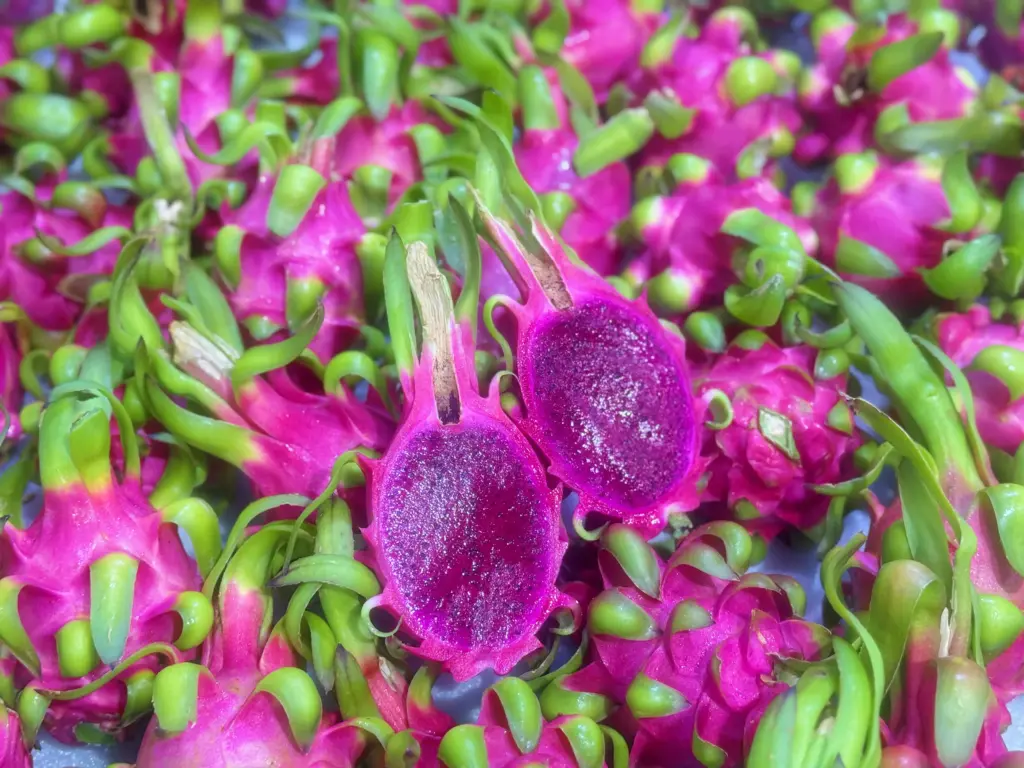
Below is the recommended step-by-step supplier evaluation process for wholesale buyers approaching the Vietnamese fresh dragon fruit export market for the first time:
Step 1: Verify certifications with issuing bodies. Request the certificate numbers, issuing organizations, and expiry dates for GlobalGAP, FDA, ISO, GRASP, and Sedex. Cross-check GlobalGAP certificate status directly via the GlobalGAP database (database.globalgap.org) using the supplied GGN (GlobalGAP Number) to confirm the certificate is active and covers the relevant growing areas and product categories.
Step 2: Request a sample shipment. Ask for a sample box (5kg or 10kg) of the specific grade and variety you intend to purchase before committing to a container order. Evaluate fruit weight consistency, Brix levels, skin color uniformity, packaging condition after transit, and residual shelf life on arrival. A reliable exporter will facilitate sample shipments promptly and provide accompanying laboratory test reports.
Step 3: Clarify commercial terms. Confirm MOQ per shipment, price basis (FOB/CIF/CFR), payment terms (TT, LC, or DP), and lead time from order placement to vessel loading. Establish clarity on how grade disputes are handled and what documentation accompanies each shipment (phytosanitary certificate, packing list, certificate of origin, commercial invoice, bill of lading).
Step 4: Audit the packing house and growing areas. For buyers committing to regular container orders, a virtual video audit or in-person farm and packing house visit is strongly recommended. Assess cold chain infrastructure, packing line hygiene, worker practices, and the supplier’s record-keeping system for lot traceability. Many professional exporters now offer video audits with live Q&A for buyers who cannot travel to Vietnam before initial shipment.
Step 5: Confirm 52-week supply capacity. Ask the supplier to provide a harvest and shipment calendar showing anticipated weekly availability by variety and grade across all 12 months. A supplier with owned growing areas and certified partner farms across multiple provinces will be able to demonstrate continuity; a trader who relies entirely on spot market purchasing will not.
To initiate a wholesale inquiry with GOBE IMEX (Golden Bee Vietnam), buyers can contact the company through the following channels:
Buyers attending Fruit Logistica (Berlin, Germany) or Asia Fruit Logistica (Hong Kong) can also meet the GOBE IMEX team in person at these events, where Scarlett Huynh and her team regularly participate to build direct relationships with importers and distributors from across the company’s target markets.
Red dragon fruit outperforms white dragon fruit on shelf appeal, nutritional positioning, and premium retail pricing, while white dragon fruit holds advantages in production volume, wider phytosanitary approval, and broader market familiarity in certain European channels. For wholesale buyers targeting health food retail, specialty grocery, and premium supermarket segments, red dragon fruit consistently commands stronger retail margins and superior category differentiation.
The comparison between the two varieties matters significantly for wholesale buyers because the sourcing decision at the supplier level determines the retail positioning strategy available at the destination market level. A buyer importing red-flesh dragon fruit can position the product within the functional food and superfruit category, achieving per-unit retail prices 20 to 40 percent higher than standard white-flesh dragon fruit in markets like Germany, the Netherlands, the UK, and Canada. White dragon fruit competes on volume and price in mainstream channels, while red dragon fruit competes on value and category differentiation in premium and health-oriented channels.
GOBE IMEX supplies both varieties and can structure mixed container loads or dedicated shipments of either variety depending on the buyer’s market positioning strategy. The company’s 52-week supply guarantee and owned cold chain fleet apply equally to red-flesh and white-flesh varieties, ensuring that buyers who start with red dragon fruit for premium channel testing can scale to full container volumes without supply interruption.
Red dragon fruit is nutritionally distinguished from white dragon fruit primarily by its betacyanin content, a class of powerful antioxidant pigments responsible for the fruit’s deep red color and increasingly recognized in functional food research for anti-inflammatory and cardiovascular health benefits. This nutritional differentiation is the foundation of the premium pricing red dragon fruit commands in health-oriented retail channels across Europe, North America, and Japan.
The core nutritional profile of red dragon fruit relevant to health food market positioning includes the following components: vitamin C (supporting immune function), dietary fiber (digestive health), betacyanin and betaxanthin (antioxidant activity), lycopene (linked to cardiovascular health in emerging research), iron, and magnesium. For wholesale buyers supplying organic stores, health food chains, or premium supermarket categories in the EU or North America, these nutritional attributes translate directly into marketing claims and shelf labeling that support higher consumer price points.
The “superfruit” and “functional food” trends that have driven consumer demand for acai, pomegranate, and blueberry in Western markets have created a direct commercial opportunity for red dragon fruit importers who can position the product within the same health-conscious consumer segment. Retail data from European organic and specialty grocery channels shows growing year-on-year sales velocity for red-flesh dragon fruit, particularly in the 500g to 1kg ready-to-eat formats preferred by health-focused shoppers. GOBE IMEX provides phytosanitary certificates and can supply accompanying nutritional analysis documentation for each shipment, giving wholesale buyers the technical paperwork needed for import clearance and retail category management submissions.
GRASP (GlobalGAP Risk Assessment on Social Practice) certification from a Vietnam red dragon fruit supplier demonstrates that the supplier’s farms have been independently assessed and found compliant with responsible labor practices, worker welfare standards, health and safety conditions, and social accountability requirements, directly reducing the ethical sourcing risk for wholesale buyers supplying major European retailers.
The practical benefit for wholesale buyers is straightforward: European supermarket chains including Albert Heijn, Sainsbury’s, Waitrose, Tesco, and premium U.S. retailers such as Whole Foods Market require suppliers to demonstrate social compliance through recognized frameworks. GRASP, as the GlobalGAP-endorsed social practice module, is one of the most widely accepted mechanisms for meeting these requirements. A wholesale buyer whose Vietnamese supplier holds GRASP certification can submit supplier audit reports to their retail customers’ compliance teams without commissioning separate social audits, reducing both cost and procurement lead time.
For buyers pitching Vietnamese red dragon fruit to supermarket chains with formal ESG (Environmental, Social, and Governance) supplier policies, a supplier holding both GlobalGAP and GRASP certifications represents a significantly lower onboarding risk than one holding GlobalGAP alone. GOBE IMEX holds GRASP certification alongside its full portfolio of GlobalGAP, ISO, FDA, and Sedex credentials, making the company a compliant sourcing partner for wholesale buyers whose end retail customers operate under formal ethical procurement frameworks. This certification combination positions GOBE IMEX as suitable for supply chain approval submissions to Whole Foods Market, Sainsbury’s, Albert Heijn, and similarly ESG-aligned international retail chains.