Subtotal $0.00

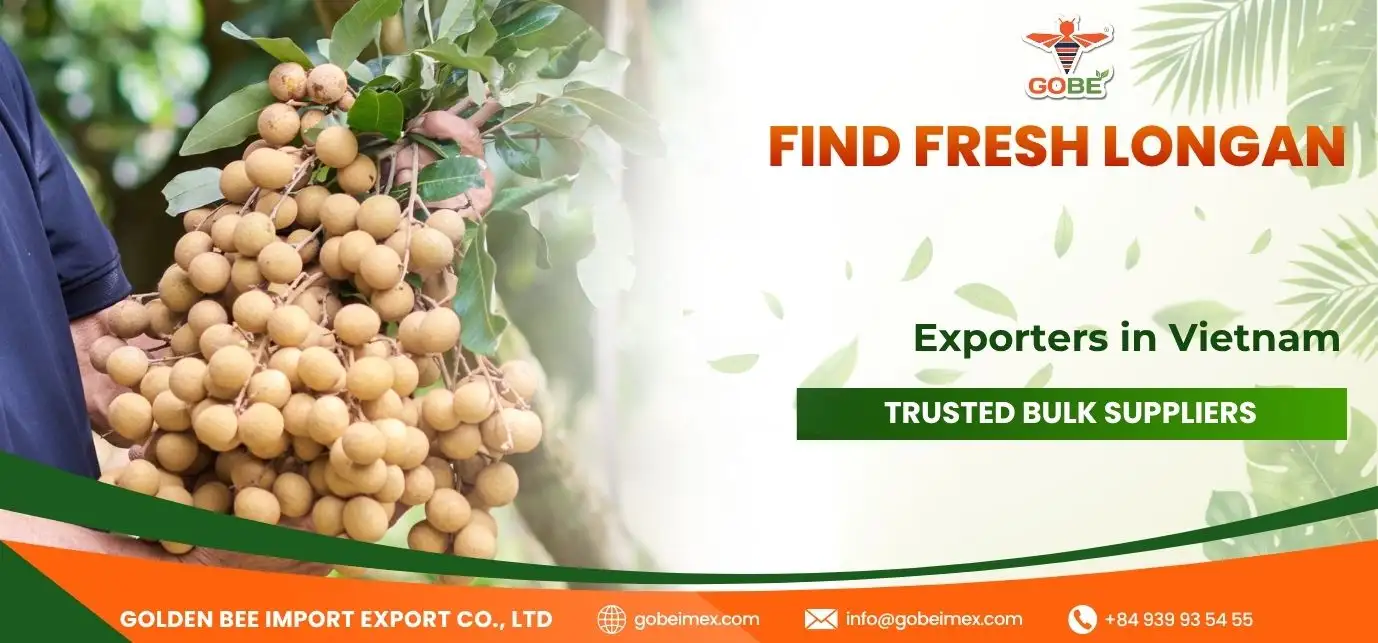
Fresh longan exporters in Vietnam are concentrated across key growing provinces including Hung Yen, Son La, Tien Giang, and Dong Thap, with the most reliable bulk suppliers holding internationally recognized certifications such as GlobalGAP, ISO, FDA, GRASP, and Sedex. Vietnam ranks among the world’s top longan-producing nations, making it a primary sourcing destination for importers across North America, Europe, the Middle East, and Asia. For buyers seeking volume, consistency, and verified quality, connecting with a certified Vietnamese packer-exporter is the most direct route to securing a dependable supply.
Identifying a trusted bulk longan supplier in Vietnam requires evaluating more than price alone. Reliable exporters demonstrate transparency across the entire supply chain, from sourcing region and farm certification through cold chain management and phytosanitary compliance. Companies such as GOBE IMEX (Golden Bee Vietnam), with over 12 years of export experience, 230+ hectares of certified growing areas, and an active presence at global trade events like Fruit Logistica and Asia Fruit Logistica, represent the standard that serious bulk buyers should benchmark against.
For international importers placing large orders, the distinction between a verified packer-exporter and an unverified trading intermediary is significant. Buyers who engage directly with a Vietnamese longan exporter operating its own packing house gain better price control, cleaner traceability, and stronger accountability at every stage of the shipment. The sections below walk through exactly where to find these exporters, how to verify their credentials, and what to ask before committing to a bulk purchase agreement.
Related posts:
Fresh longan exporters in Vietnam can be found through four primary channels: international produce trade exhibitions, industry-specific online portals, Vietnamese agricultural export associations, and direct outreach to certified packer-exporters operating in the key growing regions. Each channel serves a different stage of the sourcing process, from initial discovery through final supplier verification.
Below is a breakdown of the most effective channels for locating Vietnamese fresh longan exporters, along with the strengths and appropriate use cases for each.
Vietnam’s most export-quality longan comes from two distinct geographic clusters: the northern provinces of Hung Yen and Son La, and the southern Mekong Delta provinces of Tien Giang, Dong Thap, and Ben Tre. Each cluster produces longan with distinct characteristics shaped by climate, soil, and variety, and buyers need to understand both to make informed sourcing decisions.
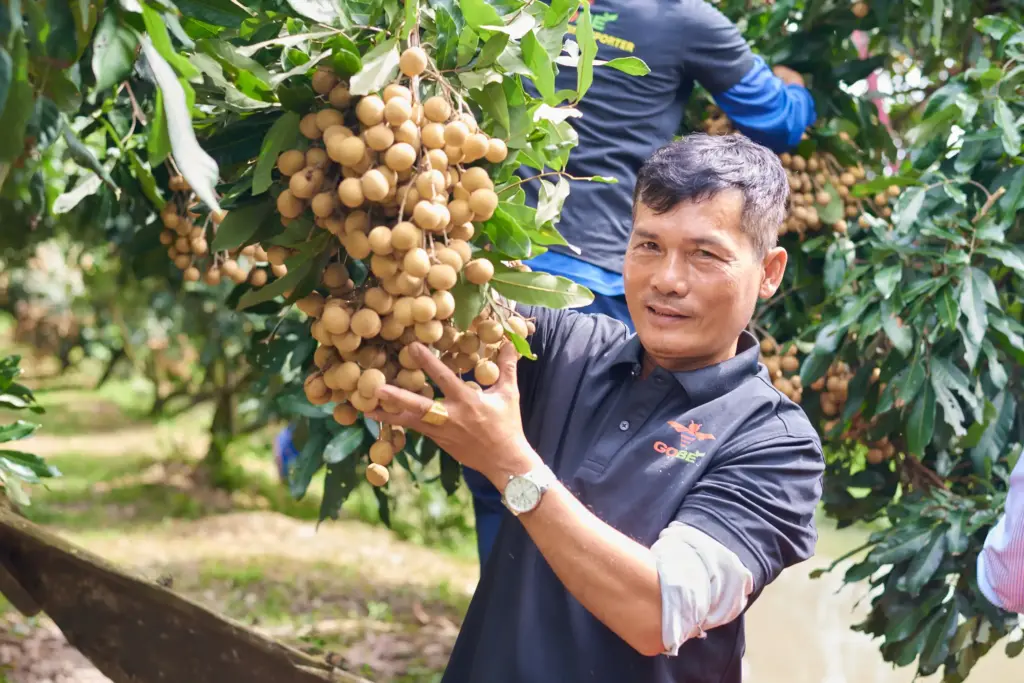
More specifically, here is how the two main production zones differ in terms of export relevance:
Northern Vietnam (Hung Yen and Son La):
Southern Vietnam (Tien Giang, Dong Thap, Ben Tre):
Understanding the sourcing region matters because quality, timing, and shipping cost all vary by origin. For example, GOBE IMEX operates its main packing house in Tien Giang, enabling fresh longan to move from orchard to packing facility within 12 hours of harvest, directly protecting shelf life for long-haul buyers.
The three most important international trade events for connecting with Vietnamese longan exporters are Fruit Logistica in Berlin, Asia Fruit Logistica in Hong Kong, and Fruit Attraction in Madrid. These exhibitions bring together verified exporters, importers, distributors, and logistics partners under one roof, providing buyers with the rare opportunity to assess a supplier’s capabilities in person before committing to an order.
The table below summarizes the key details of each event relevant to longan buyers:
| Event | Location | Relevance to Longan Buyers |
|---|---|---|
| Fruit Logistica | Berlin, Germany | World’s largest fresh produce trade fair; major European buyer attendance |
| Asia Fruit Logistica | Hong Kong | Premier Asia-Pacific sourcing event; strong Southeast Asian exporter presence |
| Fruit Attraction | Madrid, Spain | Leading European trade fair connecting producers, exporters, and retailers |
GOBE IMEX and its Managing Director Scarlett Huynh have participated in all three of these events, representing Vietnamese tropical fresh produce to international buyers and building long-term B2B relationships with importers across Europe, the Middle East, and Asia.
Furthermore, the comparative advantage of meeting exporters at trade exhibitions versus sourcing online is significant for bulk buyers. At trade events, buyers can physically inspect product samples, review certification documents, discuss cold chain logistics directly with the export team, and build the interpersonal trust that underpins reliable long-term supply agreements. Online portals such as FreshPlaza and Alibaba are useful for initial discovery, but they lack the verification depth that face-to-face engagement provides.
For buyers who cannot attend trade events, direct contact with certified Vietnamese exporters through their official websites, LinkedIn profiles, or industry directories such as FreshPlaza remains a practical alternative. GOBE IMEX, for instance, is listed on FreshPlaza and maintains active trade profiles across multiple international channels.
Trusted fresh longan exporters in Vietnam are companies that combine verified farm sourcing, internationally recognized food safety certifications, cold chain infrastructure, and a documented track record of bulk exports to regulated markets. The combination of these factors, rather than any single credential, is what separates a reliable export partner from an unverified intermediary.
As a reference point, GOBE IMEX (Golden Bee Vietnam) meets each of these criteria with 12+ years of agricultural export experience, 230+ hectares of GlobalGAP-certified growing areas, five international certifications, and active supply relationships across more than 10 countries including Canada, the UAE, the UK, Germany, the Netherlands, Japan, and Kuwait.
A reliable Vietnamese longan exporter should hold at minimum five internationally recognized certifications: GlobalGAP, GRASP, ISO, FDA registration, and Sedex membership. Each certification addresses a different dimension of supply chain credibility, and together they provide a buyer with a comprehensive quality assurance framework.
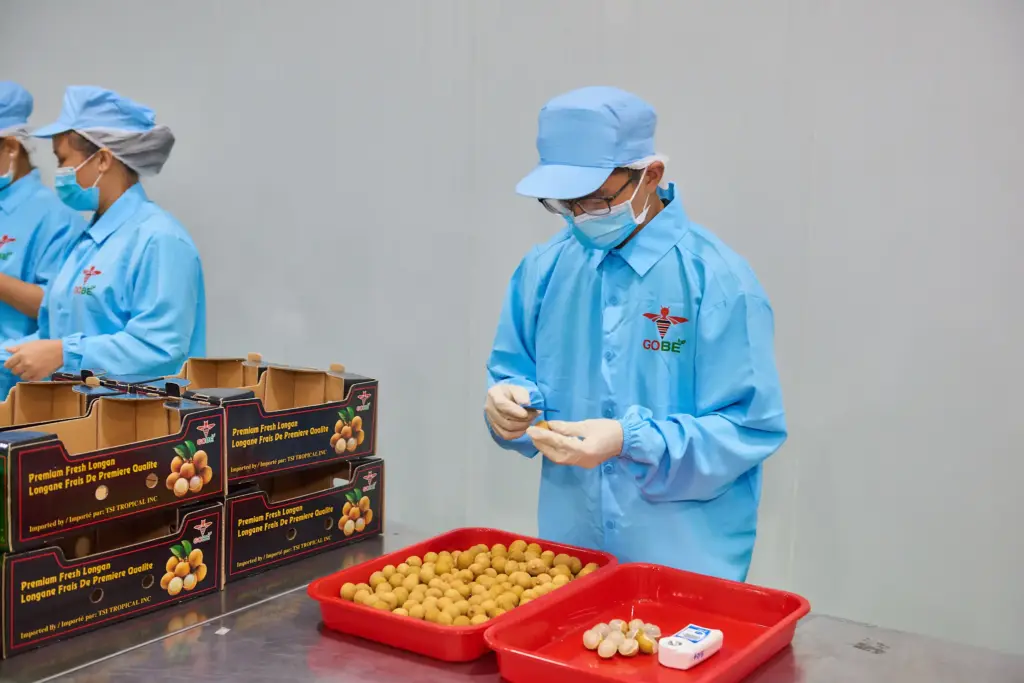
Specifically, here is what each certification means for an international longan buyer:
GlobalGAP (Global Good Agricultural Practices):
GlobalGAP certification confirms that the growing practices used on the exporter’s farms or partner farms meet internationally recognized standards for food safety, environmental impact, and worker welfare. For longan specifically, this covers pesticide residue management, irrigation water safety, and harvest hygiene. Buyers importing to the EU, UK, and major Asian markets typically require GlobalGAP as a baseline.
GRASP (GlobalGAP Risk Assessment on Social Practice):
GRASP is an add-on to GlobalGAP that assesses social and labor conditions across the farming operation. Importers supplying to European retailers in particular are increasingly required to demonstrate that their supply chains comply with ethical labor standards, making GRASP an important differentiator for suppliers targeting this market.
ISO (International Organization for Standardization):
ISO certification, typically ISO 9001 for quality management systems, confirms that the exporter’s packing operations follow documented, auditable quality control processes. This means that the consistency a buyer experiences in one shipment can be expected in all subsequent shipments.
FDA (U.S. Food and Drug Administration) Registration:
FDA registration is a mandatory requirement for any food product exported to the United States. A Vietnamese longan exporter holding FDA registration has undergone facility registration and compliance verification with U.S. food safety requirements. This is a non-negotiable credential for buyers sourcing for the North American market.
Sedex (Supplier Ethics Data Exchange):
Sedex membership indicates that the exporter shares supply chain ethics data through a verified international platform. This is increasingly required by global supermarket chains as part of their supplier due diligence process.
GOBE IMEX holds all five of these certifications, making it one of the fully certified fresh produce exporters in Vietnam.
Export-grade fresh longan from Vietnam meets defined standards across five key quality dimensions: fruit size, Brix (sugar content), shell color and integrity, flesh-to-seed ratio, and pesticide residue levels within internationally permitted limits. Each dimension is assessed at multiple points along the supply chain, from field sorting through packing house grading to pre-shipment inspection.
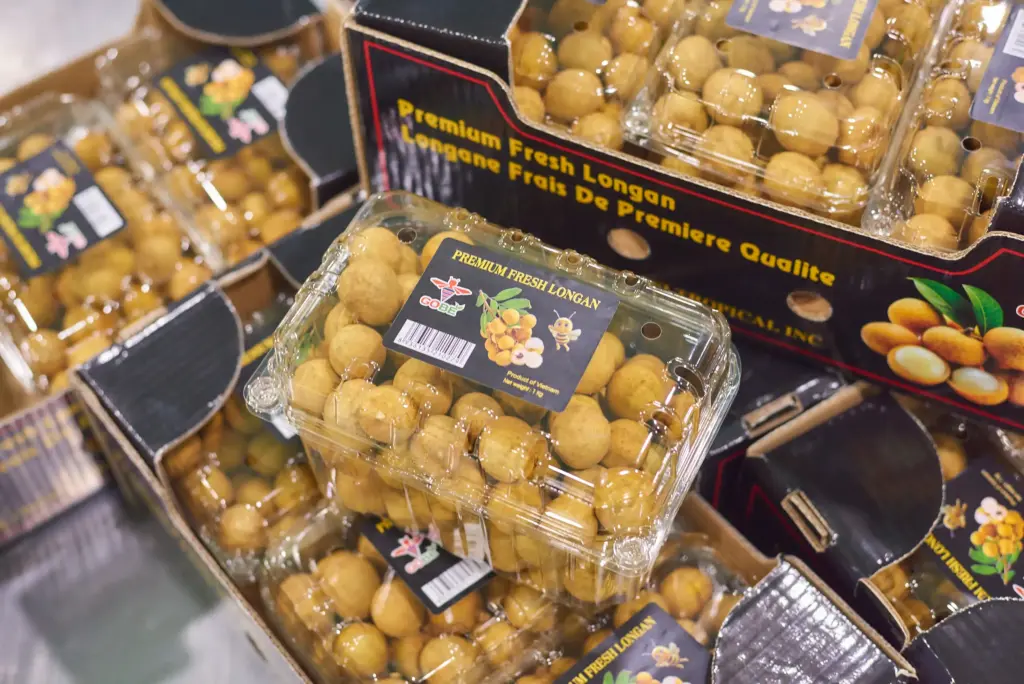
The quality control journey for export-grade Vietnamese longan follows this sequence:
Moreover, the 12-hour farm-to-pack standard is not a marketing claim but a logistical reality enabled by the geographic positioning of packing houses within growing regions. When a packing house is located in the same province as the orchards, as is the case with GOBE IMEX’s Tien Giang facility, the window for quality loss between harvest and cold storage is minimized in a way that is simply not possible for exporters who consolidate fruit from distant regions.
Yes, Vietnamese fresh longan suppliers are fully capable of handling bulk orders year-round, supported by a dual-season production model across northern and southern growing regions, combined with modern cold chain infrastructure and diversified farm sourcing networks. The combination of northern harvests (June to August) and southern harvests (May to October), supplemented by cold storage capacity, enables continuous supply across 52 weeks of the year for committed export partners.
Specifically, Vietnam’s longan supply continuity for bulk buyers rests on three structural advantages. First, the geographic spread of production zones creates overlapping harvest windows that extend the fresh supply season beyond what any single region could sustain. Second, major exporters such as GOBE IMEX maintain both owned farmland (30+ hectares) and a managed partner farm network (200+ hectares), giving them the flexibility to draw from multiple sources when a particular region experiences weather-related yield variation. Third, advances in controlled atmosphere storage and sulfur dioxide fumigation treatment allow fresh longan to maintain marketable quality over extended periods when immediate export is not possible.
Vietnamese longan exporters offer bulk shipment packaging in carton boxes (ranging from 5 kg to 10 kg per unit), wooden crates, and pallet configurations customized to the importing country’s retail or wholesale specifications. Cold chain options include full refrigerated container (reefer) shipments for sea freight and temperature-controlled airfreight for premium or time-sensitive orders.
The table below outlines the key cold chain and packaging options available to bulk buyers sourcing Vietnamese fresh longan:
| Shipping Mode | Temperature Range | Typical Transit Time | Best For |
|---|---|---|---|
| Sea freight (reefer container) | 2 to 4°C | 15 to 35 days depending on destination | Large bulk orders to Europe, Middle East, North America |
| Airfreight (temperature-controlled) | 2 to 4°C | 1 to 3 days | Premium or small-volume urgent orders |
| Cold storage buffer | 0 to 2°C | Pre-shipment holding up to 14 days | Supply continuity bridging between harvest windows |
Notably, GOBE IMEX operates its own fleet of refrigerated container trailers, ensuring that the cold chain is uninterrupted from the Tien Giang packing house to the port of export. This in-house logistics capability eliminates the temperature variance risk that arises when third-party transport providers handle the farm-to-port leg of the journey.
For packaging customization, bulk buyers can specify carton dimensions, label requirements, and palletization formats in line with their importing country’s standards. This is particularly important for buyers supplying directly to supermarket chains with strict packaging compliance requirements.
Choosing a trusted bulk longan supplier in Vietnam requires evaluating four core criteria: certification status, supply chain transparency and traceability, demonstrated bulk export capacity, and verifiable references from existing international buyers. Buyers who skip any of these evaluation steps risk partnering with a supplier that cannot sustain quality or delivery consistency across multiple shipments.
The risks of engaging an unverified supplier are concrete and costly. These include receiving product that fails destination-market phytosanitary inspections, experiencing unexpected shortfalls in supply volume during peak demand periods, and losing access to shipment documentation required for customs clearance. For importers supplying retail chains or food service networks, a single failed shipment can trigger supply chain disruptions that exceed the value of the original order.
Importers should ask Vietnamese longan exporters a minimum of eight specific questions before placing a bulk order, covering MOQ, lead time, phytosanitary documentation, payment terms, packaging customization, quality guarantee policy, cold chain infrastructure, and the exporter’s experience with the buyer’s specific destination market. These questions establish the operational parameters of the supply relationship and reveal whether the exporter has the systems required to meet international import standards.
The following checklist provides a practical reference for importers evaluating Vietnamese longan suppliers:
GOBE IMEX addresses all of these questions through transparent pre-shipment documentation and a B2B support process designed for international buyers, including provision of GlobalGAP certificates, phytosanitary certificates, packing lists, and certificate of origin for each shipment.
Sourcing directly from a Vietnamese longan exporter is superior to using a trading intermediary for bulk orders in three critical ways: better pricing, stronger quality control, and cleaner traceability. Trading intermediaries may offer convenience for small or occasional orders, but for sustained bulk supply relationships, direct engagement with a certified packer-exporter is the more cost-effective and risk-managed approach.
The table below compares the two sourcing channels across the dimensions most relevant to bulk longan buyers:
| Evaluation Criterion | Direct from Packer-Exporter | Through Trading Intermediary |
|---|---|---|
| Price competitiveness | Higher, no intermediary margin | Lower, intermediary margin added |
| Supply chain traceability | Full, from farm to port | Partial, intermediary may consolidate from multiple sources |
| Quality control access | Direct access to packing house and QC team | Indirect, dependent on intermediary’s oversight |
| Minimum order flexibility | Negotiated directly with producer | May offer smaller MOQs |
| Documentation reliability | First-hand certification and phytosanitary documents | May rely on forwarded documents |
| Suitability for bulk orders | Strongly recommended | Less suitable for large sustained volumes |
For buyers placing bulk orders with the intention of building a long-term supply relationship, working directly with a packer-exporter such as GOBE IMEX, which controls its own growing areas, packing house, and cold chain logistics, provides the supply chain visibility and accountability that intermediary-based sourcing cannot replicate.
Fresh longan offers superior flavor profile and retail positioning compared to frozen or dried alternatives, but requires unbroken cold chain management and has a shorter shelf life, making it the most demanding format for bulk import logistics. Frozen longan trades flavor intensity for extended shelf life and reduced cold chain complexity, while dried longan offers the longest shelf life with minimal logistics requirements but serves a different end-market segment entirely.
Vietnam’s three longan varieties best suited for long-haul export are Xuong Com Vang, Edor, and nhan long Hung Yen, selected for their high Brix content, firm flesh texture, and shell durability during refrigerated transport. Xuong Com Vang from the Mekong Delta has a Brix level typically above 18 degrees and thick flesh-to-seed ratio, making it the preferred choice for European and Middle Eastern supermarket buyers. Edor, a hybrid variety cultivated in Tien Giang and Dong Thap, offers extended shelf life under cold chain conditions. Nhan long Hung Yen, the northern heritage variety, commands premium positioning in Asian markets due to its distinctive aroma and cultural recognition.
Vietnamese longan exporters must meet distinct phytosanitary requirements for each major destination market, with treatment protocols varying significantly between the United States, Japan, Australia, and the European Union. The U.S. and Japanese markets require vapor heat treatment (VHT) to eliminate fruit fly risk, a process that must be conducted at an approved facility with documented temperature and time records. Australia requires methyl bromide fumigation or an approved alternative treatment.
The EU requires compliance with GlobalGAP residue standards and phytosanitary certificates issued by Vietnam’s Plant Protection Department. Failure to meet the specific requirements of the destination market results in shipment rejection at the port of entry, a risk that makes exporter selection on phytosanitary competence a non-negotiable criterion for serious bulk buyers.
GOBE IMEX’s FDA registration, GlobalGAP certification, and established export relationships with the United States, EU countries, and Japan confirm that the company operates within the phytosanitary compliance frameworks required by the world’s most regulated import markets.