Subtotal $0.00

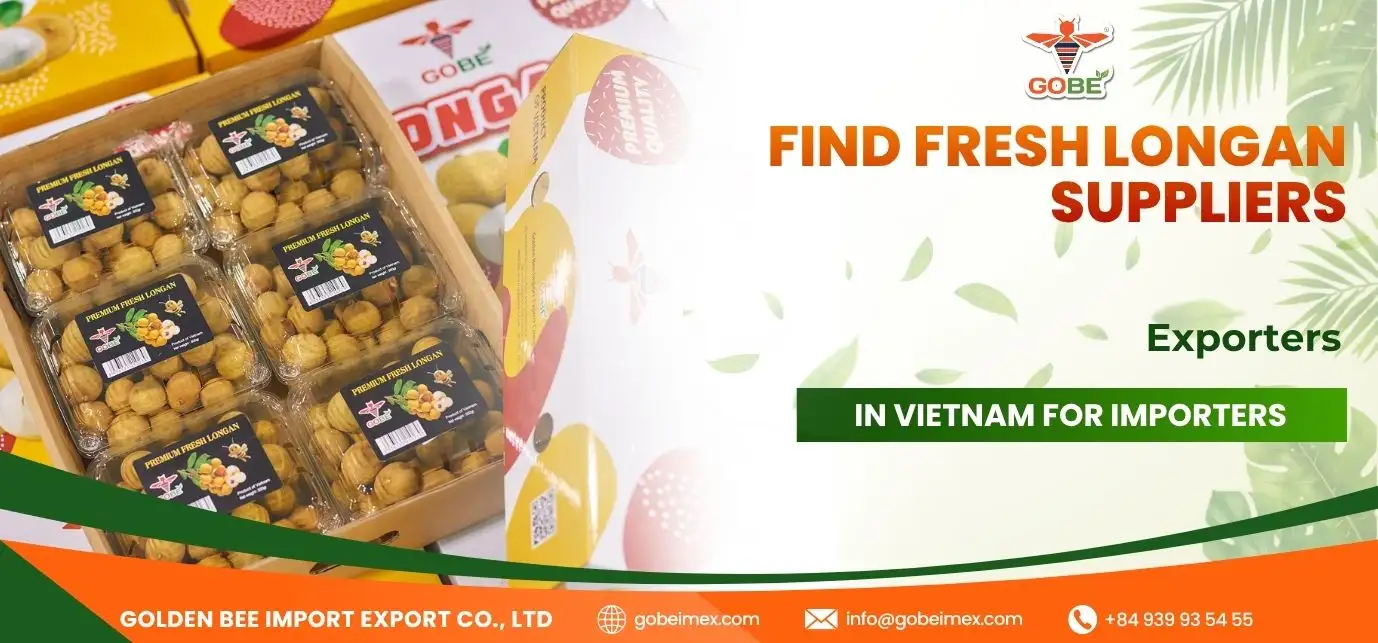
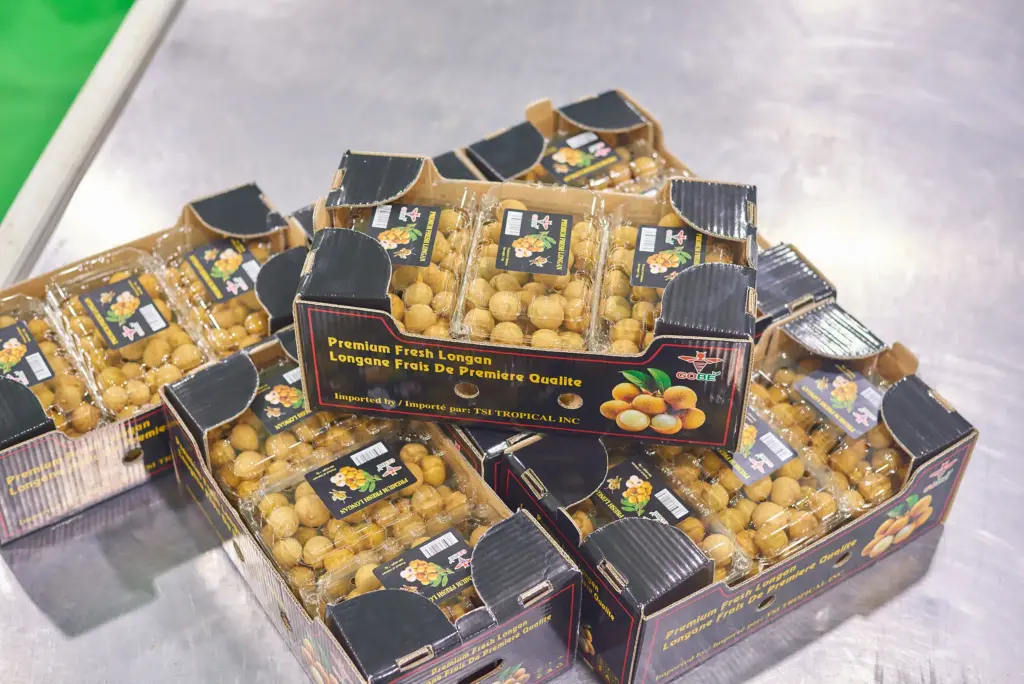
Fresh longan from Vietnam is a premium tropical export fruit with thin skin, thick translucent flesh, and a clean sweet flavor, grown across four major producing regions: Hung Yen, Son La, Tien Giang, and Ben Tre. Vietnam’s longan industry operates year-round, with multi-region sourcing enabling 52-week supply continuity that makes it one of the most reliable origins for importers seeking consistent fresh produce.
Leading fresh longan exporters and suppliers in Vietnam are identifiable by a core set of internationally recognized certifications: GlobalGAP, FDA, ISO, GRASP, and Sedex, combined with integrated farm-to-port infrastructure and a documented track record of serving regulated markets such as the EU, North America, and the Middle East.
For importers looking to source fresh longan from Vietnam, the process involves three critical stages: identifying certified exporters through trade channels such as Fruit Logistica and Asia Fruit Logistica, conducting structured vetting using a standardized checklist, and confirming market-specific compliance for EU, US, and Middle East destinations. This guide covers all three stages in full detail.
Fresh longan from Vietnam is a tropical fruit belonging to the Sapindaceae family, recognized internationally for its thin edible shell, dense white-translucent aril, and mildly sweet flavor profile that distinguishes it from frozen or dried longan products. Vietnam currently exports four primary longan varieties, each with distinct taste characteristics and growing origins, to markets across four continents.
To understand why fresh longan from Vietnam commands strong demand among importers, it is important to examine its defining export attributes, the varieties available, the growing conditions that produce them, and the quality standards governing export-grade shipments.
Vietnam exports four principal longan varieties, each targeting different import market segments based on flavor intensity, size, and shelf life performance. These varieties are Longan Ido, Xuong Com Vang, Hung Yen Longan, and Tieu Da Bo.
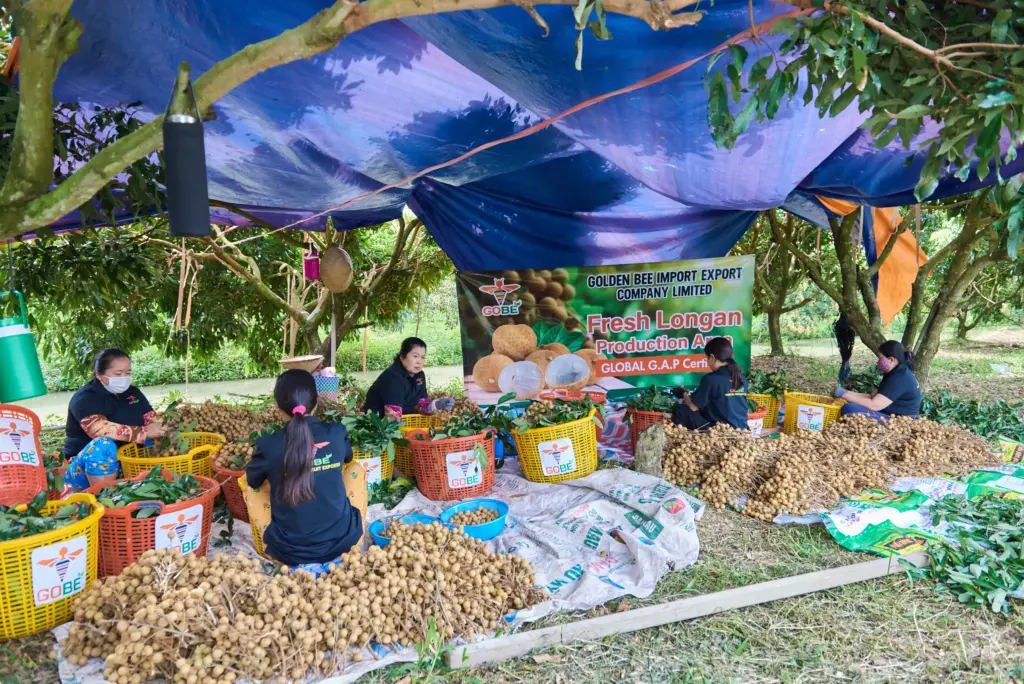
Each variety carries distinct characteristics that affect purchasing decisions for importers:
According to Vietnam’s Ministry of Agriculture and Rural Development (MARD), longan consistently ranks among the top five fresh fruits exported from Vietnam by volume and value, with export output exceeding 400,000 metric tons annually across all processing forms.
Vietnam’s best export-grade fresh longan is produced across four geographically distinct regions, each contributing different seasonal windows and quality profiles to a combined year-round supply. These regions are Hung Yen in the Red River Delta, Son La in the Northern Highlands, and Tien Giang combined with Ben Tre in the Mekong Delta.
Each producing region delivers specific characteristics relevant to import planning:
For importers, understanding this regional map directly informs order scheduling. Shipments from the Mekong Delta are typically available from May onward, while Northern regions peak from July to September, creating a combined harvest calendar that supports nearly continuous sourcing when managed through a multi-region supplier.
Vietnam’s fresh longan export season runs from May through October as the primary annual window, with off-season production from managed orchards in Tien Giang and Ben Tre extending supply availability across the full calendar year. The table below maps harvest windows by region so importers can align order timelines with peak availability and plan long-term supply agreements accordingly.
| Region | Primary Harvest Period | Key Variety | Supply Stability |
|---|---|---|---|
| Tien Giang (Mekong Delta) | May to July | Longan Ido | High, year-round with off-season |
| Ben Tre (Mekong Delta) | June to August | Ido, Xuong Com Vang | High |
| Hung Yen (Red River Delta) | July to August | Hung Yen Longan | Seasonal, limited volume |
| Son La (Northern Highlands) | August to September | Longan Ido | High volume, seasonal |
The capacity to supply fresh longan for 52 weeks per year is achieved through staggered regional harvests combined with an unbroken cold chain infrastructure maintained by integrated exporters. Gobeimex coordinates sourcing across more than 230 hectares of growing areas (30 or more hectares company-owned, 200 or more hectares through partner farms) to maintain continuous export-ready inventory regardless of seasonal fluctuations in any single region.
The most critical lead time consideration for importers is placing advance orders 4 to 6 weeks before the desired shipment window, with long-term annual contracts typically negotiated during the January to March pre-season planning period.
Vietnam’s leading fresh longan exporters combine GlobalGAP-certified growing areas, in-house cold chain infrastructure, ISO-compliant packing houses, and a verifiable export record to regulated markets including the EU, North America, and the Middle East. Identifying these exporters requires evaluating five core attributes: international certifications held, farm ownership and sourcing model, cold chain capability, export market portfolio, and years of active operation.
The following sections examine each of these attributes in structured detail to help importers screen and shortlist qualified suppliers efficiently.
A legitimate Vietnam longan exporter must hold at minimum GlobalGAP and ISO certifications, with FDA registration required for the US market and Sedex membership recommended for European supermarket buyers. The full certification set held by an integrated exporter such as Gobeimex (GlobalGAP, GRASP, ISO, FDA, and Sedex) represents the benchmark standard for importers operating in regulated markets.
Each certification carries specific practical significance for import compliance:
Sourcing from an exporter without internationally recognized certifications creates measurable risk. Shipments from non-certified suppliers are subject to heightened inspection, potential rejection at the port of entry, and restricted access to premium retail channels in the EU and North America. Requesting valid certificate numbers and verifying them directly through the issuing body’s public database is a recommended step in any initial supplier vetting process.
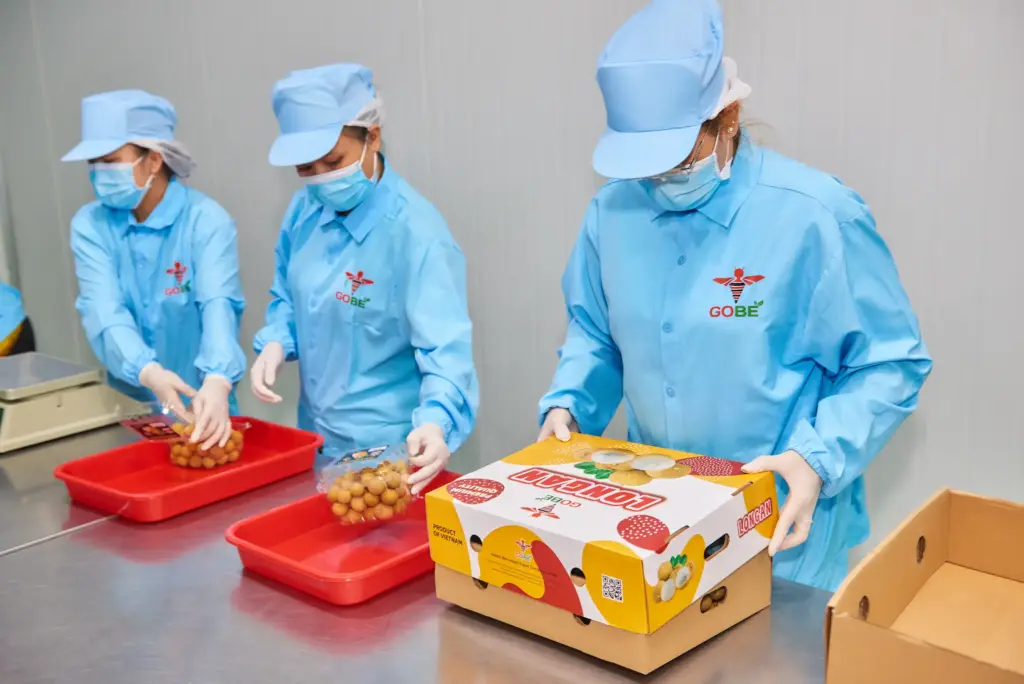
Vietnam’s integrated longan exporters maintain freshness through an unbroken cold chain that begins within 12 hours of harvest and extends continuously through sorting, packing, refrigerated transport, and container loading at the port. This time-to-pack standard is a critical operational benchmark that separates professional exporters from brokers or aggregators who handle longan after intermediate transit at ambient temperature.
The cold chain process for export-grade fresh longan follows this structured sequence:
Under optimal cold chain management, fresh longan from Vietnam achieves a commercial shelf life of 28 to 35 days from harvest to retail, sufficient for air freight shipments to Europe or sea freight to the Middle East and East Asia.
Importers can find and verify reliable fresh longan suppliers in Vietnam through three primary channels: international fresh produce trade shows, specialized B2B trade platforms, and direct contact with exporters via their verified digital presence. The verification process then proceeds through structured due diligence covering certifications, supply capacity, traceability, and sample shipment evaluation.
Below is a practical framework for importers to move efficiently from initial discovery through to a confirmed long-term supply relationship.
Step 1: Discovery through credible trade channels
The highest-confidence discovery channel for fresh longan exporters from Vietnam is participation in international fresh produce trade exhibitions. The three events most relevant to Vietnam longan sourcing are:
Beyond trade shows, secondary discovery channels include FreshPlaza (international fresh produce news and supplier directory), global B2B platforms such as Alibaba’s verified supplier section, and the official websites of Vietnamese exporters with published certification documentation, export market portfolios, and direct inquiry contacts.
Step 2: Structured vetting before placing an order
Use the vetting checklist in the section below to evaluate each shortlisted supplier against six core criteria before proceeding to a sample shipment request.
Step 3: Sample shipment evaluation
Request a sample shipment of at least one commercial carton before committing to a full order. Evaluate the sample against agreed specifications for Brix, size, shell condition, and shelf life performance upon arrival.
Step 4: Long-term contract negotiation
Once a supplier passes vetting and sample evaluation, negotiate a rolling annual contract that specifies weekly or monthly volume commitments, pricing adjustment mechanisms tied to seasonal supply fluctuations, and quality rejection protocols.
Importers should ask a Vietnam longan exporter six structured questions before placing an initial order, covering certifications, supply capacity, sourcing model, quality assurance, claims management, and sampling availability. These six questions form a practical vetting checklist that distinguishes professional integrated exporters from brokers or unverified intermediaries.
The recommended vetting checklist is as follows:
Transparency and supply chain traceability are the two most reliable indicators of a professional longan exporter in Vietnam. Exporters who can provide farm-level documentation, packing house inspection records, and pre-shipment phytosanitary certificates without delay demonstrate the operational maturity that importers in regulated markets require.
Yes, Vietnam longan exporters with the full set of required certifications are capable of meeting the specific import compliance requirements of the EU, the United States, and the Middle East, provided the exporter’s documentation, residue management, and phytosanitary processes are correctly aligned to each destination market.
The specific compliance requirements by market are:
Experienced exporters operating at international standards will prepare all required documentation, including phytosanitary certificates, commercial invoices, packing lists, Certificates of Origin, and market-specific labeling, as part of their standard export processing workflow. Importers should confirm this capability during the vetting process by requesting copies of previously issued export documentation for their target destination market.
Vietnamese fresh longan offers a price-quality positioning that is increasingly competitive with Thai longan in premium market segments, while outperforming Chinese longan in terms of international certification credibility and regulatory acceptance in the EU and North America. For importers evaluating origin diversification, Vietnam represents a strategic sourcing option that combines tropical quality, multi-region supply stability, and a growing compliance infrastructure.
Vietnamese fresh longan is more competitive than Thai longan on price, with FOB costs typically 15 to 25 percent lower for comparable Ido-grade fruit, while achieving equivalent GlobalGAP certification status and progressively closing the brand recognition gap in EU and North American retail channels.
Thai longan, particularly the Daw variety, has historically occupied the premium-positioned fresh longan segment in European and Japanese supermarkets due to early market entry and strong branding investment. Vietnamese Longan Ido from certified exporters such as Gobeimex now meets equivalent GlobalGAP and food safety standards at a more accessible FOB price point, making Vietnam an attractive origin for importers seeking premium-quality supply at a more competitive cost structure. Importers sourcing from both origins also achieve supply diversification, reducing concentration risk in any single producing country.
Fresh, frozen (IQF), and dried longan from Vietnam serve entirely different end-use markets, require different logistics and cold chain specifications, and are typically handled by distinct categories of specialized exporters. Importers should confirm that their selected supplier’s production infrastructure matches the specific product form they require.
The table below compares the three longan product forms across shelf life, logistics requirements, and primary buyer categories so importers can confirm alignment with their supply chain needs before contacting a supplier.
| Product Form | Shelf Life | Logistics Requirement | Primary Buyer Category |
|---|---|---|---|
| Fresh longan | 28 to 35 days | Refrigerated sea or air freight, unbroken cold chain | Premium supermarkets in EU, North America, Middle East |
| Frozen longan (IQF) | 12 to 24 months at minus 18 degrees Celsius | Frozen container, no cold chain continuity after freezing | Food processors, restaurant chains, bubble tea industry |
| Dried longan | 12 to 24 months at ambient temperature | No cold chain required | China, Hong Kong, Singapore, Vietnamese diaspora communities |
Not all Vietnamese exporters operate production lines for all three product forms. Gobeimex specializes in fresh longan export with an unbroken cold chain infrastructure, which is structurally different from the processing requirements for IQF freezing or industrial drying. Confirming the exporter’s specific production capability before order placement avoids specification mismatches that delay delivery timelines.
Gobeimex — Elevating Vietnamese Produce, Connecting Global Markets.
Golden Bee Import Export Company Limited | Info@gobeimex.com | +84 939 93 54 55 | gobeimex.com