Shopping cart

Subtotal $0.00

View cartCheckout

Longan export

Vietnam is home to a growing number of longan exporters capable of supplying premium fresh produce to international buyers across four continents. The top Vietnam longan exporters include GOBE IMEX (Golden Bee Vietnam), Hoang Phat Fruit, Vina T&T Group, Rong Do Corporation, and several regional packers concentrated in Tien Giang, Hung Yen, and Soc Trang, each offering distinct capabilities in terms of certifications, growing regions, and target markets.

Vietnam longan export standards are defined by a combination of international food safety certifications and destination-specific phytosanitary requirements. Leading exporters must hold certifications such as GlobalGAP, FDA registration, ISO quality management, GRASP, and Sedex to access regulated markets in North America, Europe, and the Middle East. These standards govern everything from pesticide residue limits (MRL) to cold chain management and fumigation protocols before shipment.

The global markets importing the most longan from Vietnam span China, the United States, Canada, the European Union (Germany, Netherlands, UK), the Middle East (UAE, Kuwait), and Japan. Each market carries distinct entry requirements, from FDA prior notice for the US to phytosanitary certification for the EU, making market-specific knowledge a critical factor when selecting a reliable Vietnamese longan supplier.

Beyond the major markets, a growing number of importers are asking how Vietnam longan stacks up against Thai longan in price, quality, and year-round availability. The supplementary section of this guide covers those competitive comparisons, along with product-form export suitability (fresh vs. frozen vs. dried) and destination-specific phytosanitary and fumigation requirements for buyers who need granular technical detail.

Which Companies Are the Top Vietnam Longan Exporters?

The top Vietnam longan exporters are GOBE IMEX (Golden Bee Vietnam), Hoang Phat Fruit, Vina T&T Group, Rong Do Corporation, and several certified regional packers operating in Tien Giang, Hung Yen, and Soc Trang, differentiated by their certifications, sourcing models, and target market reach.

To help importers evaluate options efficiently, the table below summarizes the key attributes of each leading exporter, covering supplier type, primary growing regions, certifications held, and the international markets they actively serve.

Exporter Supplier Type Primary Region Key Certifications Main Markets
GOBE IMEX (Golden Bee Vietnam) Packer + Farm-to-Export Tien Giang, Ho Chi Minh City GlobalGAP, GRASP, ISO, FDA, Sedex North America, EU, Middle East, Asia
Hoang Phat Fruit Packer + Trader Tien Giang, Ben Tre GlobalGAP, VietGAP China, USA, Australia
Vina T&T Group Trader + Packer Tien Giang, Binh Thuan GlobalGAP, FDA USA, Canada, Australia
Rong Do Corporation Packer + Processor Hung Yen, Soc Trang GlobalGAP, VietGAP China, EU, Southeast Asia
Regional certified packers Farm Cooperative Exporters Soc Trang, Hung Yen VietGAP, ISO China, Southeast Asia

Specifically, the differences between these exporters go beyond geography. The key variables that separate top-tier suppliers from commodity traders include the depth of their certification portfolio, whether they own farmland directly, and their capacity to guarantee year-round supply through a multi-region sourcing network.

More importantly, exporters who operate their own packing houses within the growing regions can process longan within hours of harvest, which directly protects shelf life and fruit quality during long-haul shipment. This farm-to-pack speed is a measurable competitive advantage that importers should treat as a qualifying criterion, not a bonus.

What Should Importers Look for When Choosing a Vietnam Longan Supplier?

Importers choosing a Vietnam longan supplier should evaluate six core criteria: international certifications held, supply chain traceability, year-round availability (52-week supply), farm ownership versus brokerage model, cold chain capability, and minimum order quantity (MOQ) flexibility.

To better understand how each criterion affects sourcing decisions, the following breakdown explains what each factor means in practice and why it matters for different import markets.

International Certifications

The certification portfolio a supplier holds directly determines which markets they can legally and commercially supply. For the US market, FDA registration is non-negotiable. For European buyers, GlobalGAP certification and compliance with EU Maximum Residue Limits (MRL) are required entry points. GRASP and Sedex certifications signal responsible labor and social practices, which are increasingly mandatory for supermarket and retail supply chains in Germany, the Netherlands, and the UK.

A supplier holding only VietGAP is generally limited to regional or Asian markets and cannot reliably supply regulated Western markets.

Supply Chain Traceability

Importers should ask whether the exporter owns its own growing areas or sources exclusively through third-party brokers. Farm ownership, or at minimum direct partnership agreements with GlobalGAP-certified farms, allows for traceable lot numbers, documented pesticide application records, and consistent quality control from the field level. Brokers without direct farm relationships cannot guarantee this level of traceability and expose importers to product recall risk.

Year-Round Supply Capability

Vietnam’s longan harvest is seasonal, with peak production in Hung Yen (northern) typically from July to August and Tien Giang (southern) from June to August. Exporters who maintain sourcing networks across multiple regions, including different variety types with staggered harvest windows, can extend supply availability significantly. Buyers who need continuity beyond peak season should specifically ask suppliers about their off-season sourcing model and verify whether frozen or other processed longan forms are available to bridge supply gaps.

Cold Chain Integrity

The cold chain begins at the packing house, not at the port. Importers should confirm that the exporter operates refrigerated transport between farm and packing facility, maintains packing house temperature control, and uses refrigerated containers (reefers) for sea freight. Breakdowns in any of these stages accelerate spoilage and reduce shelf life on arrival.

MOQ and Price Competitiveness

Standard export MOQs for fresh longan from Vietnam typically start at one full container load (FCL), approximately 18 to 20 metric tons for refrigerated containers. Some packers accommodate less-than-container load (LCL) for trial orders. Importers evaluating multiple suppliers should request FOB pricing from Ho Chi Minh City port or Tien Giang as the baseline for comparison.

Key Questions to Ask When Vetting a Vietnamese Longan Exporter:

  • Can you provide copies of your current GlobalGAP and FDA certificates?
  • What is the traceable lot number system from farm to shipment?
  • Do you own or lease growing areas, or do you source through intermediaries?
  • What is your harvest-to-pack timeline, and where is your packing house located?
  • Can you supply longan 52 weeks per year, and if so, how do you source during off-peak periods?
  • What is your standard MOQ, and do you accommodate trial shipments?

Does GOBE IMEX Export Fresh Longan from Vietnam?

Yes, GOBE IMEX (Golden Bee Vietnam) exports fresh longan from Vietnam, operating a certified packing house in Tien Giang Province that processes fruit within 12 hours of harvest for shipment to buyers in North America, Europe, the Middle East, and Asia.

GOBE IMEX is the trading name of Golden Bee Import Export Co., Ltd., led by Managing Director Scarlett Huynh (Huynh Thanh Truc). The company positions itself as a farm-to-export packer, sourcing from its own growing areas and from a network of partner farms across Vietnam that meet GlobalGAP certification requirements.

Supply Chain Capabilities:

  • Packing house located in Tien Giang, the heart of Vietnam’s fruit-growing region, ensuring a maximum 12-hour window from harvest to pack
  • Second consolidation facility in Ho Chi Minh City to aggregate produce from multiple regions and diversify the product range
  • Own fleet of refrigerated container trailers for unbroken cold chain transport from farm to port
  • 230 hectares of growing area (30 hectares company-owned plus 200 hectares managed through certified partner farms)
  • Year-round supply capability: 52 weeks per year

Certifications Held by GOBE IMEX:

  • GlobalGAP (Good Agricultural Practices)
  • GRASP (GlobalGAP Risk Assessment on Social Practice)
  • ISO (International Quality Management System)
  • FDA (U.S. Food and Drug Administration food safety compliance)
  • Sedex (Supplier Ethics Data Exchange)

Markets Served: Canada, UAE, UK, Germany, Netherlands, Russia, Japan, Kuwait, and additional markets across North America, Europe, the Middle East, and Southeast Asia.

Contact GOBE IMEX:

Website: gobeimex.com | Phone/WhatsApp: +84 939 93 54 55 | Email: Info@gobeimex.com

What Are the Export Standards for Vietnam Longan?

Vietnam longan export standards encompass international food safety certifications, phytosanitary certificates, pesticide residue controls, and cold chain requirements, applied at the farm, packing house, and port levels before shipment to importing countries.

These standards are not uniform across all export markets. The specific combination of certifications, fumigation treatments, and documentation a Vietnamese longan exporter must provide depends on the destination country’s food import regulations. Below is a structured breakdown of the applicable standards, organized by the stage of the supply chain where they are applied.

Standards Applied at the Farm Level:

  • GlobalGAP certification: covers safe and sustainable growing practices, input use, and worker health and safety
  • VietGAP: Vietnam’s national Good Agricultural Practices standard, required for domestic sales and recognized as a baseline by some Asian import markets
  • MRL compliance: pesticide residue levels must remain within limits set by the importing country (EU MRLs are among the strictest globally)

Standards Applied at the Packing House Level:

  • ISO quality management certification: ensures consistent processing procedures, documentation, and traceability
  • FDA registration (for US-bound shipments): packing facilities must be registered with the U.S. Food and Drug Administration under the Bioterrorism Act and comply with FSMA (Food Safety Modernization Act) requirements
  • Sedex/SMETA audit: covers ethical sourcing, labor conditions, health and safety, and environmental practices at the facility level
  • GRASP: social practice assessment aligned with GlobalGAP standards

Standards Applied at the Export Stage:

  • Phytosanitary Certificate: issued by Vietnam’s National Agro-Forestry-Fisheries Quality Assurance Department (NAFIQPM) under the Ministry of Agriculture and Rural Development (MARD), declaring the shipment free from pests and diseases
  • Fumigation Certificate: required by many importing countries, confirming that the longan has been treated to eliminate quarantine pests
  • Certificate of Origin (CO Form D for ASEAN markets, CO Form E for China under ACFTA, CO Form EUR.1 for EU under the Vietnam-EU Free Trade Agreement/EVFTA)

According to data from Vietnam’s Ministry of Agriculture and Rural Development, Vietnam exported approximately 110,000 to 150,000 metric tons of longan annually in recent years, with fresh longan accounting for the majority of volume destined for China, while certified-grade longan enters Western and Middle Eastern markets.

Does Vietnam Longan Meet International Food Safety Certifications?

Yes, Vietnam longan from certified exporters meets international food safety certifications, with leading suppliers holding GlobalGAP, GRASP, ISO, FDA, and Sedex, covering the regulatory entry requirements for markets in the US, EU, Canada, the Middle East, Japan, and Australia.

Understanding what each certification covers helps importers match suppliers to their specific market compliance requirements. The table below explains the purpose of each certification and the markets where it is most critical.

Certification What It Covers Most Critical For
GlobalGAP Farm-level food safety, input traceability, worker safety, environmental standards EU, UK, Germany, Netherlands, Australia, Canada
GRASP Social and labor practices on farms (working conditions, wages, rights) EU supermarket supply chains, UK retailers
ISO (ISO 9001 / 22000) Quality management and food safety management at the processing facility All regulated markets, EU, North America
FDA Registration + FSMA US food import compliance, facility registration, preventive controls USA, Canada (SFCA-aligned)
Sedex / SMETA Ethical business conduct, supply chain transparency, factory social audit UK, German, and Netherlands retailers, ESG-focused buyers

Notably, the combination of all five certifications (GlobalGAP + GRASP + ISO + FDA + Sedex) in a single exporter is uncommon among small and medium-sized Vietnamese fresh produce companies. Most commodity-level exporters hold only VietGAP or GlobalGAP at most, limiting their access to regulated Western retail channels.

GOBE IMEX is one of the few exporters in Vietnam’s fresh produce sector that holds all five international certifications simultaneously, making it a qualified supplier for buyers in the US, EU, Canada, and the Middle East without requiring additional third-party audits before onboarding.

What Packaging and Cold Chain Requirements Apply to Exported Longan from Vietnam?

Packaging and cold chain requirements for exported longan from Vietnam specify that fruit must be packed in labeled, market-compliant cartons or punnets, maintained at 1 to 5 degrees Celsius throughout the entire chain from packing house to destination port, with a target shelf life of 20 to 30 days for fresh longan under optimized cold chain conditions.

The specific packaging format and labeling content vary by destination market, while cold chain integrity is non-negotiable for all fresh longan exports regardless of market. The following breakdown covers both dimensions.

Packaging Requirements by Market:

For the EU and UK, carton labeling must include product name, country of origin, net weight, variety (where applicable), grower/packer registration number, and lot traceability code. Retail-ready formats such as clamshell punnets (typically 500 grams or 1 kilogram) are preferred by supermarket buyers, while wholesale buyers typically accept bulk cartons of 5 to 10 kilograms.

For the US market, packaging must comply with FDA labeling regulations, including English-language labeling and a country of origin statement. Pallet configuration must comply with USDA phytosanitary import requirements, and fumigation records must accompany each shipment.

For the Middle East (UAE, Kuwait), packaging must display Arabic labeling where required, with Halal certification for any processed or coated product. Fresh longan in natural form does not require Halal certification, but importers in Gulf markets should confirm with their customs authority on a shipment-by-shipment basis.

Cold Chain Requirements:

The cold chain for fresh longan from Vietnam follows a continuous temperature-controlled pathway:

  1. Harvest at the farm, immediately pre-cooling or field-shading the fruit
  2. Transport by refrigerated vehicle from farm to packing house (target: within 4 to 6 hours of harvest)
  3. Inspection, sorting, and packing at temperature-controlled packing house (maintained at 5 to 10 degrees Celsius during processing)
  4. Transfer to pre-cooled refrigerated containers (reefers set to 1 to 5 degrees Celsius)
  5. Port-side cold storage where required, followed by loading onto refrigerated sea freight vessels
  6. Destination port cold storage and customs clearance before delivery to importer’s warehouse

The location of the packing house within the growing region is critical to cold chain success. Exporters whose packing houses are located close to the growing areas, as GOBE IMEX’s main facility is in Tien Giang, can complete the farm-to-pack stage within 12 hours, substantially reducing field heat and extending the effective shelf life available to importers at the destination.

By contrast, exporters who consolidate produce in Ho Chi Minh City or Hanoi without pre-cooling at origin introduce temperature stress into the chain early, which accelerates browning, fermentation, and moisture loss in fresh longan, reducing shelf life and increasing rejection risk at destination inspection.

Which Global Markets Import the Most Longan from Vietnam?

The global markets importing the most longan from Vietnam are China (dominant by volume), the United States, Canada, the European Union (Germany, Netherlands, UK), the Middle East (UAE, Kuwait), Australia, and Japan, each driven by a distinct consumer base and governed by different import compliance frameworks.

The table below provides a comparative overview of Vietnam’s key longan export markets, summarizing import volume trends, entry requirements, and the primary form of longan (fresh, frozen, or dried) most commonly traded in each market.

Market Import Volume Trend Primary Form Key Entry Requirements
China Very High, dominant Fresh, dried Registered growing areas, phytosanitary certificate, quarantine inspection
USA Growing Fresh, frozen FDA registration, FSMA compliance, fumigation/cold treatment
Canada Moderate, growing Fresh CFIA compliance, GlobalGAP, phytosanitary certificate
EU (Germany, Netherlands, UK) Growing Fresh, retail-packed GlobalGAP, GRASP, MRL compliance, phytosanitary certificate
UAE, Kuwait (Middle East) Growing Fresh Phytosanitary certificate, cold chain logistics, Halal (for processed)
Australia Moderate Fresh, frozen DAFF permit, fumigation (methyl bromide or cold treatment), phytosanitary certificate
Japan Moderate Fresh, frozen Positive list MRL system, phytosanitary certificate, strict residue testing

China consistently absorbs the largest share of Vietnam longan exports by volume, with both fresh and dried longan traded through border gates in Lao Cai, Lang Son, and by sea. However, Chinese import regulations have become increasingly stringent since 2020, requiring that growing areas and packing houses be officially registered with Chinese customs (GACC) before shipments are accepted.

Western markets (US, Canada, EU) represent lower volume but significantly higher value per kilogram, as certified, retail-grade fresh longan commands premium pricing in these channels. The growth trajectory in Western markets is tied directly to the expansion of Asian diaspora communities in North America and Europe, as well as increasing mainstream consumer interest in tropical fruit.

The Middle East, particularly the UAE and Kuwait, represents a fast-growing corridor for Vietnamese longan, driven by a large South and Southeast Asian expatriate population and expanding specialty retail infrastructure in Gulf cities.

How Does the EU Market Differ from the US Market in Longan Import Requirements?

The EU market applies stricter MRL (Maximum Residue Limit) standards and requires GlobalGAP certification as a baseline, while the US market is primarily governed by FDA registration and FSMA preventive controls, with fumigation or cold treatment as a mandatory phytosanitary requirement for fresh longan entry.

Understanding the differences between these two major regulated markets helps Vietnamese longan exporters and their import partners prepare the correct documentation and compliance pathway for each destination.

EU Import Requirements for Vietnam Longan:

The European Union applies MRL standards under Regulation (EC) No. 396/2005. Longan is subject to the EU’s general pesticide residue limits, which are among the most restrictive globally. A single lot that exceeds EU MRL thresholds at the border inspection post can be rejected, destroyed, or re-exported at the importer’s cost.

Key requirements for EU market entry include: GlobalGAP certification of the growing area, phytosanitary certificate issued by NAFIQPM, GRASP certification (increasingly required by German and Dutch supermarket buyers), and country of origin labeling compliant with EU Regulation 1169/2011. The Netherlands and Germany are the primary entry points for fresh tropical fruit into the EU market through their major port facilities (Rotterdam and Hamburg).

US Import Requirements for Vietnam Longan:

The United States requires that the exporting facility be registered with the FDA as a food facility under the Bioterrorism Act (21 CFR Part 1 Subpart H). Under FSMA’s Produce Safety Rule and Foreign Supplier Verification Program (FSVP), US importers bear responsibility for verifying that their Vietnamese suppliers meet US food safety standards.

Fresh longan entering the US must also undergo approved phytosanitary treatment, either methyl bromide fumigation or approved cold treatment protocols, to address quarantine pest risk. All shipments require USDA APHIS phytosanitary clearance, and a valid phytosanitary certificate from NAFIQPM must accompany each consignment.

The practical implication for importers comparing these two markets: EU entry requires stronger farm-level documentation and stricter residue management, while US entry prioritizes facility registration and physical pest treatment compliance. Exporters certified for both markets (as GOBE IMEX is, through GlobalGAP and FDA certification) are positioned to serve both channels without requiring separate supply chains.

Is the Middle East a Growing Market for Vietnam Longan Exports?

Yes, the Middle East is a growing market for Vietnam longan exports, with UAE, Kuwait, and other Gulf Cooperation Council (GCC) countries steadily increasing import volumes driven by a large South and Southeast Asian expatriate population and expanding demand for premium tropical fruit in specialty retail.

The Middle East represents a strategically important export corridor for Vietnamese longan exporters for several compounding reasons. First, the GCC region has a significant resident population from South Asia, Southeast Asia, and East Asia, communities with strong cultural familiarity and consistent demand for longan as both a fresh fruit and a traditional ingredient.

Second, cold chain logistics infrastructure in major GCC cities (Dubai, Abu Dhabi, Kuwait City) has improved significantly over the past decade, with modern cold storage facilities at airports and seaports enabling fresher produce to reach end consumers with less degradation than was previously possible.

Third, Vietnam’s longan enjoys competitive FOB pricing compared to alternative sources such as Thailand, making it an attractive option for Middle Eastern importers who serve price-sensitive retail and wholesale channels.

Logistics Considerations for the Middle East:

Sea freight from Ho Chi Minh City or Cai Mep port to Jebel Ali (Dubai) takes approximately 12 to 16 days by direct vessel, which is within the shelf life window for properly cold-chained fresh longan. Air freight is used for premium or urgent consignments, particularly for early-season fruit targeted at retail premium segments.

GOBE IMEX currently serves the UAE and Kuwait as active export markets, with these destinations included in its established international trading network alongside buyers in North America and Europe.

How Does Vietnam Longan Compare to Thai Longan in the Global Export Market?

Vietnam longan leads on price competitiveness and growing volume, while Thai longan holds advantages in established global brand recognition and longer export history, with Vietnam gaining market share in the EU, Middle East, and North America due to a diverse growing region network and increasingly certified supply chains.

The competitive positioning between Vietnam and Thailand in the global longan export market is a relevant reference point for importers evaluating sourcing options, particularly those currently buying from Thailand who are open to diversifying their supplier base.

Price: Vietnamese longan is generally priced 10 to 20 percent below Thai longan at comparable quality grades at FOB level. This pricing advantage reflects lower farm labor costs in Vietnam and the government’s export promotion support for tropical fruit.

Quality and Variety: Thailand’s dominant export variety is the IDO longan, known for its large size, thick flesh, and relatively low seed weight. Vietnam produces both IDO longan (widely grown in Tien Giang) and Xuong Com Vang (Yellow Wax Longan), a locally bred variety prized for its sweetness and flavor. The Xuong Com Vang variety is considered by many importers in Asia to be superior in taste to IDO, though it has a shorter shelf life, which makes it better suited for air freight or short sea freight routes.

Growing Regions and Harvest Windows: Thailand’s longan production is concentrated in the northern provinces (Chiang Mai, Lamphun), with a primary harvest season from June to August. Vietnam’s multi-region production model (Hung Yen in the north, Tien Giang and Soc Trang in the south) creates staggered harvest windows from June through September, giving Vietnamese exporters a slightly longer fresh supply window within a single crop year.

Global Market Share: Thailand remains the dominant supplier to China and Australia by volume. However, Vietnam has been gaining ground in the EU, Middle East, and North American markets where certified supply chains, competitive pricing, and growing importer relationships are shifting purchasing decisions.

Is Fresh Longan or Dried Longan More Suitable for Long-Distance Export from Vietnam?

Dried longan is more suitable for very long-distance export due to its extended shelf life of 12 to 24 months and ambient temperature storage requirements, while fresh longan offers higher market value per kilogram but requires strict cold chain management and is best suited for routes with transit times under 25 days.

Fresh Longan Export:

Fresh longan commands the highest price per kilogram but is the most logistically demanding product form. Shelf life under optimal cold chain conditions (1 to 5 degrees Celsius) is 20 to 30 days from pack date. This window is sufficient for sea freight to China, Southeast Asia, the Middle East, and the EU, but leaves limited time for in-market distribution. Fresh longan is the preferred form for supermarket supply in the EU, US, Canada, and the Middle East.

Frozen Longan Export:

Individually quick-frozen (IQF) longan shell-on or peeled offers a shelf life of 18 to 24 months and is growing in demand in the US, Canada, and EU food service and industrial processing sectors. Frozen longan is used in beverages, desserts, and packaged food products. It does not compete directly with fresh longan in retail channels but serves a distinct market segment.

Dried Longan Export:

Dried longan (long nhan say) has the longest shelf life (12 to 24 months at ambient temperature), requires no cold chain, and can be shipped by standard dry container freight to any destination globally. China is the dominant market for dried longan, with strong traditional medicine and confectionery demand. Vietnam exports significant volumes of dried longan to Chinese buyers, often through border trade.

The practical implication for importers: fresh longan offers the highest unit value and is best sourced from exporters with certified cold chain infrastructure and short farm-to-pack timelines. Dried longan sourcing is less logistics-intensive and better suited for buyers serving traditional or specialty food channels.

What Phytosanitary and Fumigation Requirements Must Vietnam Longan Meet for Each Export Destination?

Vietnam longan must meet destination-specific phytosanitary and fumigation requirements that vary by importing country, including methyl bromide fumigation or approved cold treatment for the US, a phytosanitary certificate for all markets, and registered growing area registration with GACC for shipments to China.

United States: The US requires that fresh longan undergo approved phytosanitary treatment before entry, either methyl bromide fumigation (as a post-harvest treatment) or approved cold treatment, to mitigate the risk of quarantine pests including Oriental fruit fly. All shipments must be accompanied by a phytosanitary certificate issued by Vietnam’s NAFIQPM (National Agro-Forestry-Fisheries Quality Assurance Department). The exporting facility must be FDA-registered. US Customs and Border Protection (CBP) and USDA APHIS conduct port-of-entry inspection.

European Union: The EU requires a phytosanitary certificate from NAFIQPM confirming the shipment meets EU plant health import conditions. Fresh longan from Vietnam is not currently subject to a specific EU emergency measure (as of recent regulatory status), but MRL compliance testing may be conducted at border inspection posts. Exporters must ensure pesticide residue records are available for traceability purposes.

China: China requires that longan growing areas and packing facilities be officially registered with GACC (General Administration of Customs of China) prior to export. Each shipment must be accompanied by a phytosanitary certificate and may be subject to quarantine inspection upon arrival at Chinese ports or border crossings. China has periodically suspended import privileges from specific Vietnamese growing areas following pest detections, underscoring the importance of ongoing compliance monitoring.

Australia: Australia’s Department of Agriculture, Fisheries and Forestry (DAFF) requires a valid import permit for fresh longan, a phytosanitary certificate, and approved post-harvest treatment (typically methyl bromide fumigation). Australia’s biosecurity framework is among the strictest globally, and consignments may be directed to mandatory inspection on arrival.

Japan: Japan applies its Positive List System for agricultural chemical residues, which sets specific MRL thresholds for all pesticides. Longan from Vietnam must be tested and certified to comply with Japanese MRL standards. A phytosanitary certificate is required, and Japan’s Ministry of Agriculture, Forestry and Fisheries (MAFF) may conduct enhanced border inspections on Vietnamese longan based on historical compliance rates.

Exporters with ISO-certified packing houses, documented cold chain controls, and full pesticide application records from the farm level are significantly better positioned to meet these multi-market phytosanitary requirements compared to exporters operating without formal quality management systems. The investment in ISO certification and GlobalGAP farm documentation pays a direct compliance dividend when applying for phytosanitary clearance across multiple destination markets simultaneously.

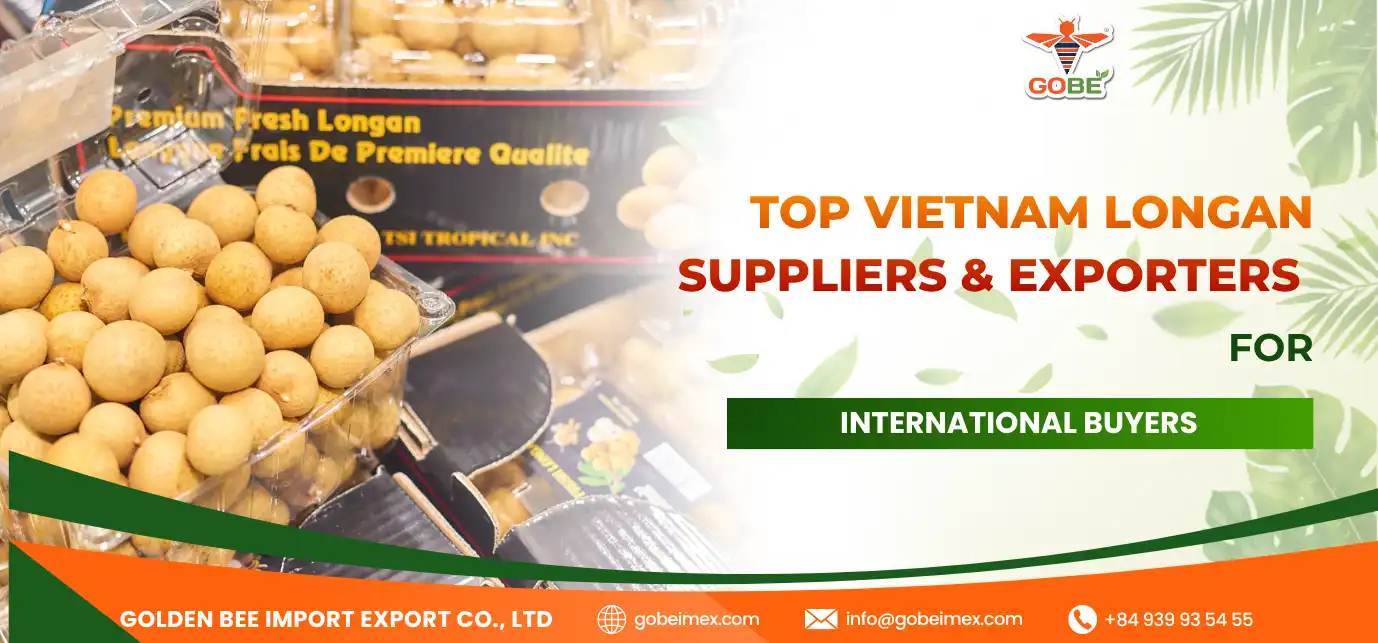
Top Vietnam Longan Suppliers & Exporters for International Buyers

Top Vietnam Longan Suppliers & Exporters for International Buyers

Vietnam is home to some of the most capable longan suppliers in Asia, with exporters serving markets across Europe, North America, the Middle East, and Asia-Pacific through certified, year-round supply chains. Leading names

Read More
Buy Wholesale Longan in Bulk: Top Exporters, MOQ & Factory Prices

Buy Wholesale Longan in Bulk: Top Exporters, MOQ & Factory Prices

Wholesale longan refers to longan purchased in large commercial quantities directly from exporters or packing facilities, available in fresh, frozen, dried, and IQF formats for importers, distributors, and supermarket chains worldwide. Buying longan

Read More
Longan Suppliers for Supermarkets: Where to Buy Fresh, Frozen & Canned

Longan Suppliers for Supermarkets: Where to Buy Fresh, Frozen & Canned

Longan suppliers for supermarkets can be sourced through three primary channels: direct exporters and packers in producing countries, B2B marketplaces such as Alibaba and Global Sources, and international trade shows including Fruit Logistica

Read More
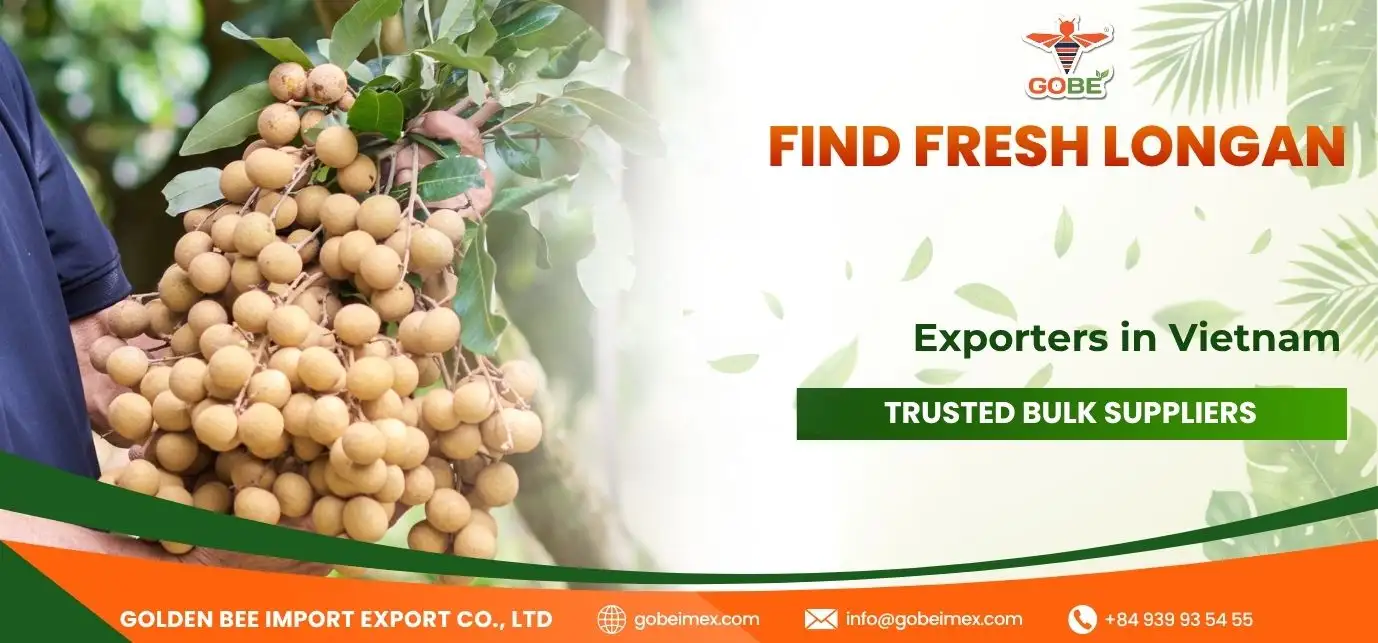
Find Fresh Longan Exporters in Vietnam: Trusted Bulk Suppliers

Find Fresh Longan Exporters in Vietnam: Trusted Bulk Suppliers

Fresh longan exporters in Vietnam are concentrated across key growing provinces including Hung Yen, Son La, Tien Giang, and Dong Thap, with the most reliable bulk suppliers holding internationally recognized certifications such as

Read More
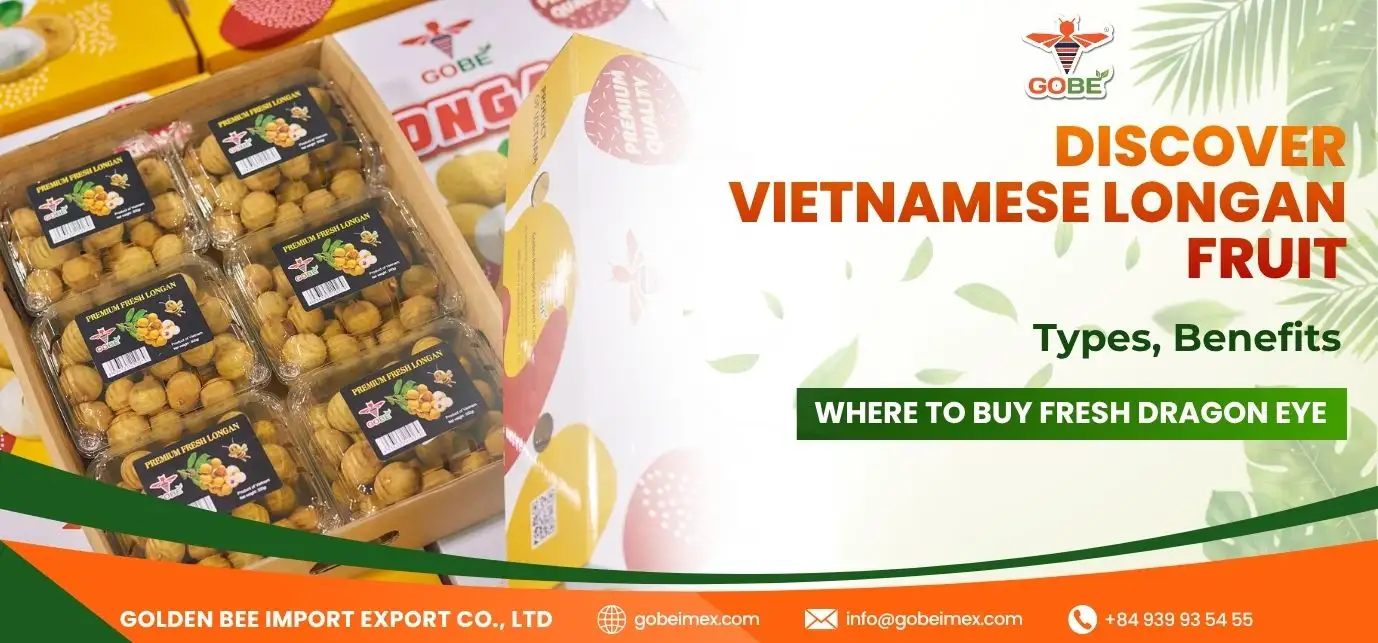
Discover Vietnamese Longan Fruit: Types, Benefits Where to Buy Fresh Dragon Eye

Discover Vietnamese Longan Fruit: Types, Benefits Where to Buy Fresh Dragon Eye

Vietnamese longan fruit, scientifically known as Dimocarpus longan and popularly called “Dragon Eye,” is a premium tropical fruit native to Southeast Asia, with Vietnam standing as one of the world’s largest producers. Grown

Read More
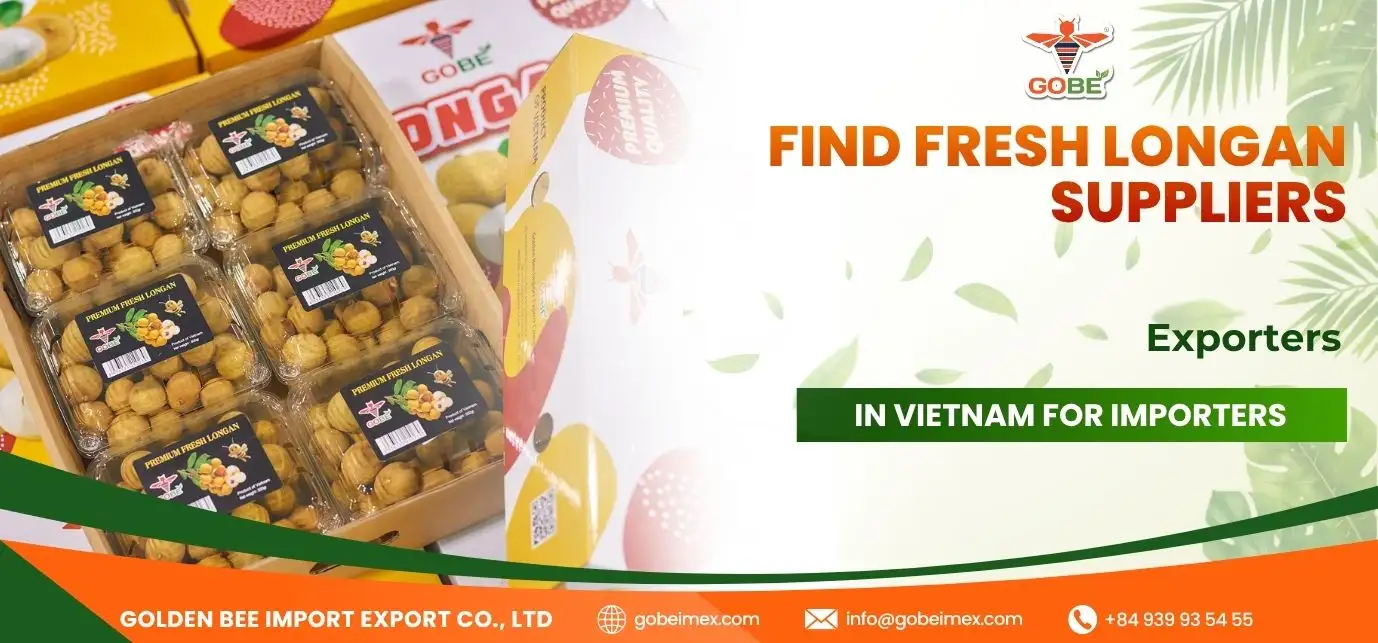
Find Fresh Longan Suppliers Exporters in Vietnam for Importers

Find Fresh Longan Suppliers Exporters in Vietnam for Importers

Fresh longan from Vietnam is a premium tropical export fruit with thin skin, thick translucent flesh, and a clean sweet flavor, grown across four major producing regions: Hung Yen, Son La, Tien Giang,

Read More